Comparison
ATOM Mobility vs. Vulog
Compare two mobility software platforms across pricing, functionality, integrations, operations and scalability.
OVERALL RATING
ATOM Mobility
40 reviews on Capterra

4.8
Vulog
No source for verified reviews

Compare two mobility software platforms across pricing, functionality, integrations, operations and scalability.
40 reviews on Capterra
No source for verified reviews
Vulog is built primarily for automotive OEMs and large-scale car-sharing deployments, with three-year contracts and limited flexibility on hardware and payment integrations. Some operators in the 300-700 vehicle range have reported concerns about feature development pace and pricing. ATOM Mobility offers transparent pricing, flexible contract terms, support for multiple vehicle types and business models, and has already onboarded operators who previously used Vulog.
Switching from Vulog? Talk to usProjects launched
Vehicles connected
Rides monthly
Uptime
ATOM Mobility is a multimodal vehicle-sharing platform powering more than 55,000 vehicles across 80+ countries. Vulog is a car-focused enterprise platform backed by $62 million in funding and primarily serving automotive OEMs. Both platforms support car sharing, digital rental, vehicle subscriptions, and corporate fleet management.
The key differences are that ATOM Mobility supports multiple vehicle types at scale and enables expansion across business models- from car sharing to rental and ride-hailing. ATOM Mobility offers transparent pricing starting at €490 per month, supports 30+ IoT hardware brands and integrates with 30+ payment providers. Vulog does not publish its pricing, requires three-year enterprise contracts, offers less flexibility in hardware and payment integrations, and has seen some car-sharing operators explore alternative platforms.
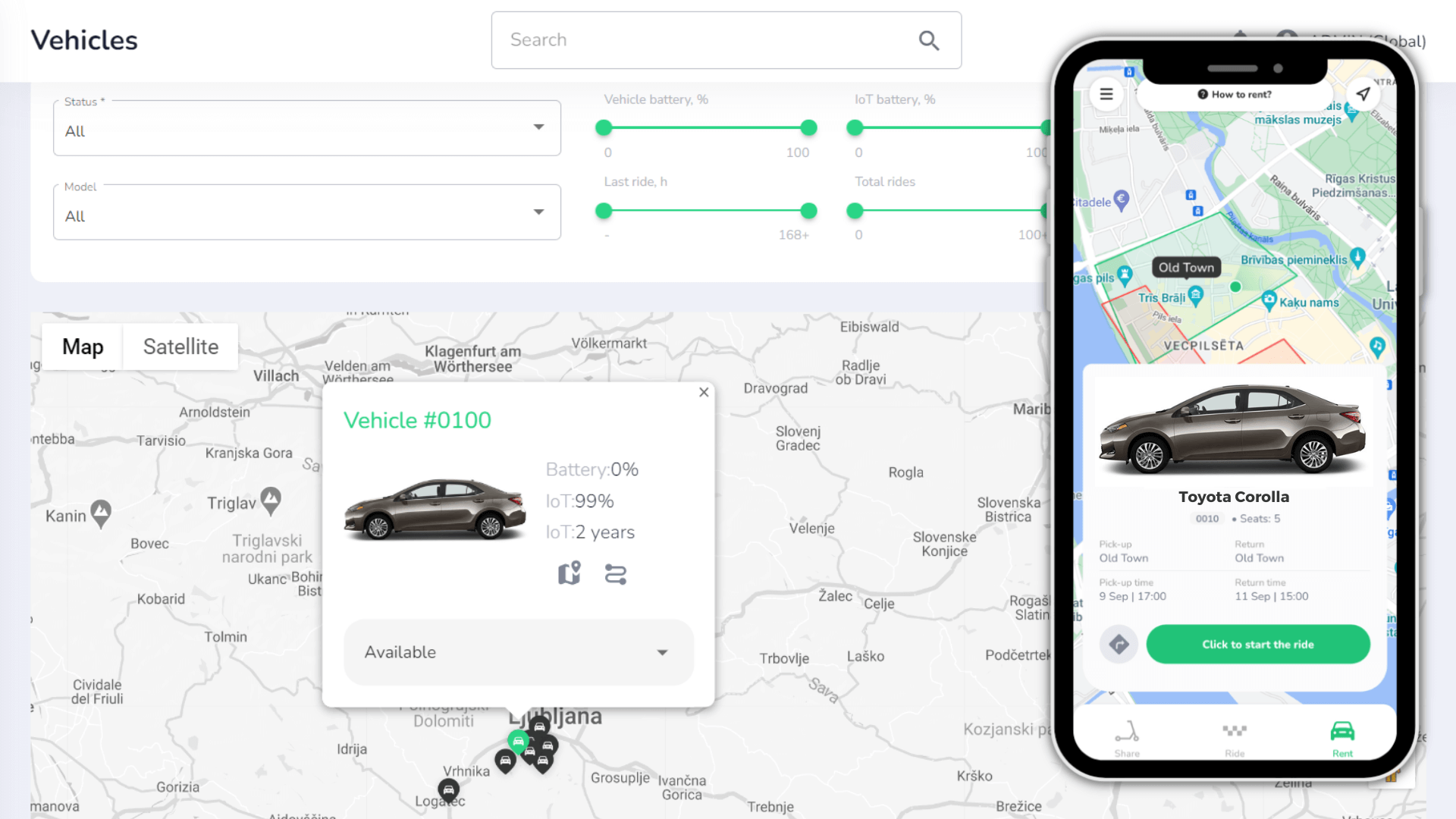
All the technology you need to launch and scale your own sharing and rental business.








See how ATOM Mobility can support your fleet, integrations and business model or discuss migrating your existing operation.
استخدم بيانات اعتماد الاختبار لتسجيل الدخول - رقم الهاتف: +1 123123123، الكود: 777777


بيانات اعتماد الإصدار التجريبي من تطبيق Driver - البريد الإلكتروني: test@atom.com، كلمة المرور: برنامج التشغيل

