Las empresas de micromovilidad más exitosas del mundo: ¿cómo lo hicieron?
July 5, 2021
lectura mínima


Vehicle-sharing and micro-mobility soon became a trend had brought tremendous success to entrepreneurs that jumped into a crazy ride by establishing a company in this field. Bird reached a $1 billion valuation in seven months, thus becoming the fastest startup ever to reach unicorn status. Lime reached unicorn status in 18 months. This year Helbiz plans to become the first micro-mobility company listed on NASDAQ. Vehicle-sharing and micro-mobility are still on the rise and it is still possible to create a successful business.
According to McKinsey & Company's "Micromobility’s 15,000-mile check-up" report, market potential by the year 2030 is:
- $200 billion to $300 billion in the United States;
- $100 billion to $150 billion in Europe;
- $30 billion to $50 billion in China.
This equals about a quarter of McKinsey & Company's forecasted global shared autonomous-driving market potential of roughly $1,600 billion in 2030. So if you are considering starting your own business with sharing, this is the right time to do it. But let's look at how leaders are doing, the milestones of their business success, and the trends they are setting for the future in the sharing business.
The fastest double unicorn ever
The company Bird attained this status soon after it was founded in September 2017 by Travis VanderZanden. He was already familiar with the market as previously he had worked as an executive at Lyft and Uber. Bird got its first round of funding in February 2018 raising $15 million. Series B round followed in March for $100 million. And the funding round of $150 million in May granted the fastest ever unicorn status. In June 2018, Bird raised an additional $300 million, valuing the company at $2 billion. Prior to Bird, this valuation had never been reached so fast by any startup. Currently, its valuation is estimated at $2.3 billion. Bird has raised $765 million in total funding across five funding rounds. It plans to reach $308 million gross profit by 2023.
Bird is a last-mile electric scooter rental service. What is important here - the company has reached its success with just one vehicle type while others have been adding several types of vehicles to their portfolio. Bird operates in 200 cities globally. Overall more than 95 million rides have been made up to date.

Bird started its business by offering customers a Xiaomi M365 scooter. With the launch of the BirdOne model, the company stopped buying and distributing Segway models.
The price for the service is €1 or $1 (depending on the country) to unlock the scooter. A one-minute ride on the scooter costs €/$0.15. There is also a monthly fee available for renting a scooter - $25. However, prices may vary depending on the country, currency, and local laws.
At the beginning of this year, Bird introduced Global Ride Pass - new pricing plans designed to save money and accelerate the shift away from cars for short-distance trips. Currently, there are four new Global Ride Pass options available:
- Daily Unlimited Rides Pass
- Monthly Unlimited Rides Pass
- Monthly Unlimited Unlocks Pass
- 3-Month Unlimited Unlocks Pass
In the second half of 2020, the company launched Bird Pay that is piloted in two California hubs. This provides users with the opportunity to pay via the Bird app for the purchase in local shops, restaurants, or food trucks as they move around on the scooter.
This year Bird announced that the company is investing $150 million in Europe. The company said that funds will be used to open safe, sustainable micro-mobility programs in over 50 new European cities. The company is also planning to go public by merging with special purpose acquisition company Switchback II. However, it is not yet clear when this could happen.
Alex Wilhelm, a journalist at TechCrunch wrote in 2018 that Bird’s gross margin is 19 percent. He explored that revenues are split as follows - 47% charging, 14% repairs, 11% credit card processing, 5% regulatory costs, and 3% customer support and insurance.
Runner up for the unicorn status
Lime is the brand of the transportation company Neutron Holdings, Inc., previously known also as LimeBike. The company is based in San Francisco, USA. In comparison with Bird, Lime’s vehicle-sharing business takes different forms: electric scooters, electric bikes, regular pedal bikes, electric mopeds, and car-sharing systems in various cities around the world. Lime operates with dockless vehicles that users find and unlock via a mobile app. It finds the location of available vehicles via GPS.
Lime was founded in January 2017 by Brad Bao and Toby Sun - former executives of the venture capital firm Fosun International. Over a period of two months, the company raised US$12 million in venture funding led by Andreessen Horowitz. Lime's first location was the University of North Carolina at Greensboro and they launched with 125 bicycles. In October 2017 the company closed a Series B round. Afterward Lime announced that it was valued at $225 million. It became a unicorn in 2018 following a $335 million funding round and $1.1 billion valuations. To date, Lime has raised $935 million in total funding across five rounds.
Lime operated in more than 120 cities over 30 countries as of September 2019. It started 2020 with the announcement that it had added 11 locations to this list, including several US metropolitan areas such as Atlanta. In the first quarter of 2021 Lime announced that it has allocated $50 million to its bike-share operation, an investment that has been used to develop a new e-bike and will fund its expansion this year to another 25 cities in North America, Europe, Australia, and New Zealand.
This announcement came a month after Lime announced plans to add electric mopeds to its micromobility platform. Lime is launching the effort by deploying 600 electric mopeds on its platform in Washington, D.C. The company is also working with officials to pilot the mopeds in Paris. Lime mopeds are manufactured by NIU, a Chinese company that also supplies mopeds to New York City-based mobility company Revel. NIU’s mopeds typically have a range of between 25–100 miles. Lime’s mopeds will be speed limited to 28 mph and can be controlled and monitored via wireless connectivity.
Lime uses many different manufacturers for the production of bikes and scooters. Other vehicles in Lime's fleet include:
- Lime-S electric scooters - four different models are currently in use: Lime-S Ninebot ES4, made by Segway with the extra battery attached on to the Main Pole, Lime-S Generation 1, Lime-S Generation 2, Lime-S Generation 3, Lime-S Generation 4.
- Lime-E electric-assist bikes.
- LimeBike - the classic dock-free bicycle.
- LimePod - colorfully branded Fiat 500s, a small, two-door model.
The fee to start any Lime ride is $1.00 and has to be paid no matter what. Afterwards, the user has to pay per minute to ride. Charges are rounded up to the nearest minute and rates and promotions. Users also pay $1 to unlock the car and an additional 40 cents per minute they drive.
In May 2021 Lime rolled out a new monthly subscription service for its electric scooters named Lime Prime. For $5.99 a month, users won't have to pay an initial fee. And in markets with no unlock fees, riders will receive 25 percent off the price of their ride. Subscribers will still pay the per-minute charge, but Lime says that someone who uses one of its scooters every day would save approximately $25 a month under the subscription plan.
Lime made its first quarterly profit in Q3 in 2019 according to Reuters. Wayne Ting, CEO of Lime said that the company generated positive free cash flow in the third quarter, having exited some markets where it was losing money, optimized the operation of its two-wheelers, and cut head office costs. “With these improvements, I believe we’re on track to be fully profitable in the full year 2021,” he told Reuters in an interview.
With micro-mobility to NASDAQ
The first company providing micro-mobility services and making up to NASDAQ seems to be Helbiz. It operates in North America and Europe. With more than 200 employees around the world, the company is the market leader in Italy and it operates e-scooters, e-bicycles and e-mopeds in over 20 cities around the world including Washington D.C., Alexandria, Arlington, Atlanta, Miami, Richmond, Milan and Rome. Helbiz was founded on 16 October 2015 by Italian serial entrepreneur, Salvatore Palella and was the first company to introduce the shared electric scooter model in Italy back in October 2018 through the legalization and regulation of the electric scooters in Italy.
Helbiz announced the intention to have a public offering on NASDAQ and on the Borsa Italiana AIM Italia exchange. In August 2019, the company announced it has completed the initial investment round for approximately $7.13 million. In October 2019, Forever Sharing, a China-based company producing electric smart mobility vehicles has acquired 5% of the Helbiz. This Chinese company invested 8 million dollars in Helbiz by valuing it at 160 million dollars. As a result, Forever Sharing agreed to supply Helbiz with 20,000 electric bicycles and e-scooters by the end of 2019 and the beginning of 2020 to deploy globally. There was no IPO.
Helbiz has raised a total of $56.9M in funding over 10 rounds. The company’s revenues reached nearly $4 million in 2020 but it plans to have $449M revenue by 2025.

Helbiz offers three vehicle types - e-scooters, e-bikes, and e-mopeds. The company offers the same payment plan for their customers as its competitors - users pay $1 to unlock the vehicle and an additional 30 cents per minute. The exception is the e-moped that charges only 26 cents per minute. Also Helbiz has an unlimited program that costs 29.99 a month.
Helbiz is planning to move forward by using penetration and user base to launch new products - public transit integration & ticketing, HelbizKitchen food delivery, and Native Wallet & Payment System. The company is in the process of obtaining its fintech license in Europe.
To sum it all up:

There is a lot we can learn from the success of these big companies. However, they usually focus on big cities with huge populations, complicated infrastructure, and a big investment required to launch there. At the same time, all over the world small cities are seeking to improve their micro-mobility capabilities. And this is the opportunity. ATOM team se encargará del software, una de las partes más complicadas de este negocio. Como tenemos varios años de experiencia en el negocio de vehículos compartidos, también estaremos encantados de ayudarte con cualquier otra pregunta que puedas tener. Es posible empezar rápidamente y lanzar un negocio de vehículos compartidos en muy poco tiempo. Aquí está el enlace a nuestro blog. Allí encontrará mucha información útil.
PD: Enlaces útiles:
Presentación para inversores de Bird: Haga clic aquí
Presentación de Helbiz para inversores: Haga clic aquí
Haga clic a continuación para obtener más información o solicitar una demostración.

The micromobility industry doesn’t need another generic mobility conference. 🚫🎤 It needs real conversations between operators who are actually in the field. ⚙️ That’s exactly what ATOM Connect 2026 is built for. 🎯🤝
The shared mobility industry is evolving rapidly. Operators are navigating scaling challenges, regulatory complexity, hardware decisions, fleet optimization, and new integration models, all while aiming for sustainable growth.
That’s exactly why ATOM Mobility is organizing ATOM Connect 2026.
Our previous edition of ATOM Connect brought together professionals from the car sharing and rental industry for focused, high-quality discussions and networking. This year, we are narrowing the focus and dedicating the entire event to one fast-moving segment of the industry: shared micromobility.
ATOM Connect 2026 is designed specifically for operators, partners, and decision-makers working in shared micromobility. It is not a broad mobility conference or a public exhibition. It is a curated space for industry professionals to exchange practical experience, insights, and lessons learned.
On May 14th, 2026 in Riga, we will once again bring the community together, this time with a clear focus on micromobility.
This year’s agenda will address the real operational and strategic questions shaping shared micromobility today:
As usual, we aim to host both local and international operators from smaller, fast-growing fleets to established large-scale players alongside hardware providers and ecosystem partners.
On stage, you’ll hear from leading shared mobility companies - including Segway on hardware partnerships, Umob on MaaS integration, Anadue on data-driven fleet intelligence, Elerent on multi-vehicle operational realities and more insightful discussions.
The goal is simple: meaningful discussions with people who understand the operational realities of the industry.
ATOM Connect is free to attend, but participation is industry-focused (each submission is manually reviewed and verified). We are intentionally keeping the audience relevant and aligned to ensure high-quality conversations and valuable networking.
If you work in shared micromobility and would like to join the event, you can find the full agenda and register here:
👉 https://www.atommobility.com/atom-connect-2026
In the coming weeks, we will be revealing more speakers and additional agenda updates. We look forward to bringing the industry together again.
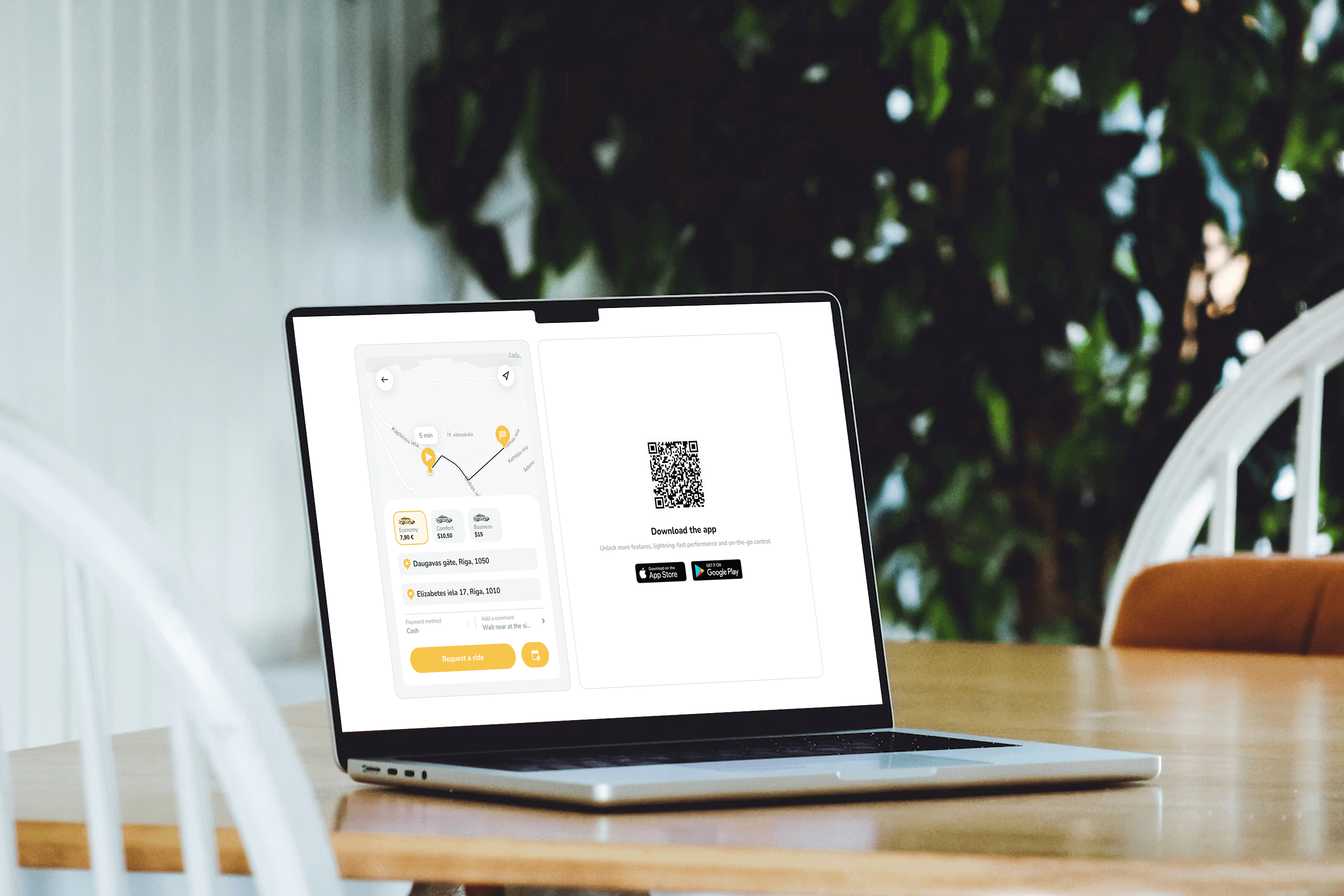
🚕 Web-booker is a lightweight ride-hail widget that lets users book rides directly from a website or mobile browser - no app install required. It reduces booking friction, supports hotel and partner demand, and keeps every ride fully synced with the taxi operator’s app and dashboard.
What if ordering a taxi was as easy as booking a room or clicking “Reserve table” on a website?
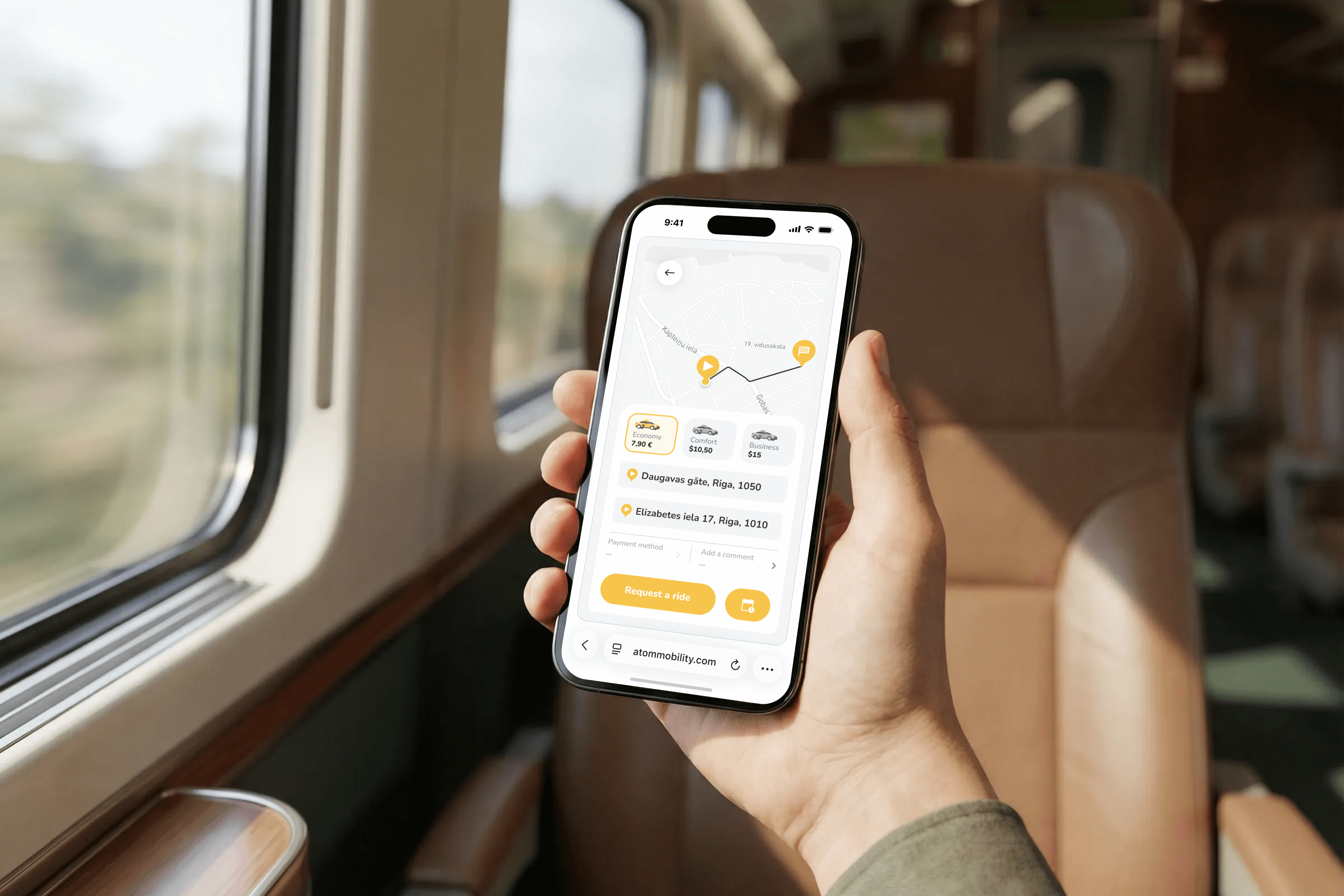
Meet Web-booker - a lightweight ride-hail booking widget that lets users request a cab directly from a website, without installing or opening the mobile app.
Perfect for hotels, business centers, event venues, airports, and corporate partners.
👉 Live demo: https://app.atommobility.com/taxi-widget
Web-booker is a browser-based ride-hail widget that operators can embed or link to from any website.
The booking happens on the web, but the ride is fully synchronized with the mobile app and operator dashboard.
No redirects. No app-store friction. No lost users.
This keeps fraud low while preserving conversion.
Web-booker addresses one of the most common friction points in ride-hailing: users who need a ride now but are not willing to download an app first. By allowing bookings directly from a website, operators can capture high-intent demand at the exact moment it occurs - whether that is on a hotel website, an event page, or a partner landing page.
At the same time, Web-booker makes partnerships with hotels and venues significantly easier. Instead of complex integrations or manual ordering flows, partners can simply place a button or link and immediately enable ride ordering for their guests. Importantly, this approach does not block long-term app growth. The booking flow still promotes the mobile app through QR codes and store links, allowing operators to convert web users into app users over time - without forcing the install upfront.
Web-booker is not designed to replace the mobile app. It extends the acquisition funnel by adding a low-friction entry point, while keeping all bookings fully synchronized with the operator’s app and dashboard.
👉 Try the demo
https://app.atommobility.com/taxi-widget
Want to explore a ride-hail or taxi solution for your business - or migrate to a more flexible platform? Visit: https://www.atommobility.com/products/ride-hailing
Credenciales de demostración de Driver App - Correo electrónico: test@atom.com, contraseña: conductor

