ATOM Mobility review 2026: Pricing, features, and who it's actually for
July 31, 2026
min. read

Choosing mobility software is a long-term decision. Once a platform is integrated into daily operations, replacing it can take months and require significant time and resources. That's why it's worth looking beyond feature lists and understanding how a platform performs in practice.
ATOM Mobility has become the leading white-label mobility platform for operators launching and scaling vehicle-sharing, car rental, and ride-hailing businesses. This review covers how the platform works, how its pricing is structured, what customers say about it, and the types of businesses it's best suited for.
ATOM Mobility is a white-label SaaS platform built specifically for mobility businesses.
Instead of developing software in-house, operators can launch their own branded mobility service using an established platform that already includes the infrastructure needed to run daily operations.
The platform brings together three products:
All three run on the same technology, allowing operators to manage multiple mobility services without maintaining separate software platforms.
ATOM Mobility uses a transparent pricing model based on a one-time implementation fee followed by a subscription that scales with the business. The exact cost depends on the products, integrations, and level of customization required, but customers know what is included from the start, without unexpected licensing costs or hidden platform fees.
Compared to building proprietary software or purchasing enterprise mobility platforms, ATOM Mobility can be up to five times more affordable, depending on the project and deployment requirements.
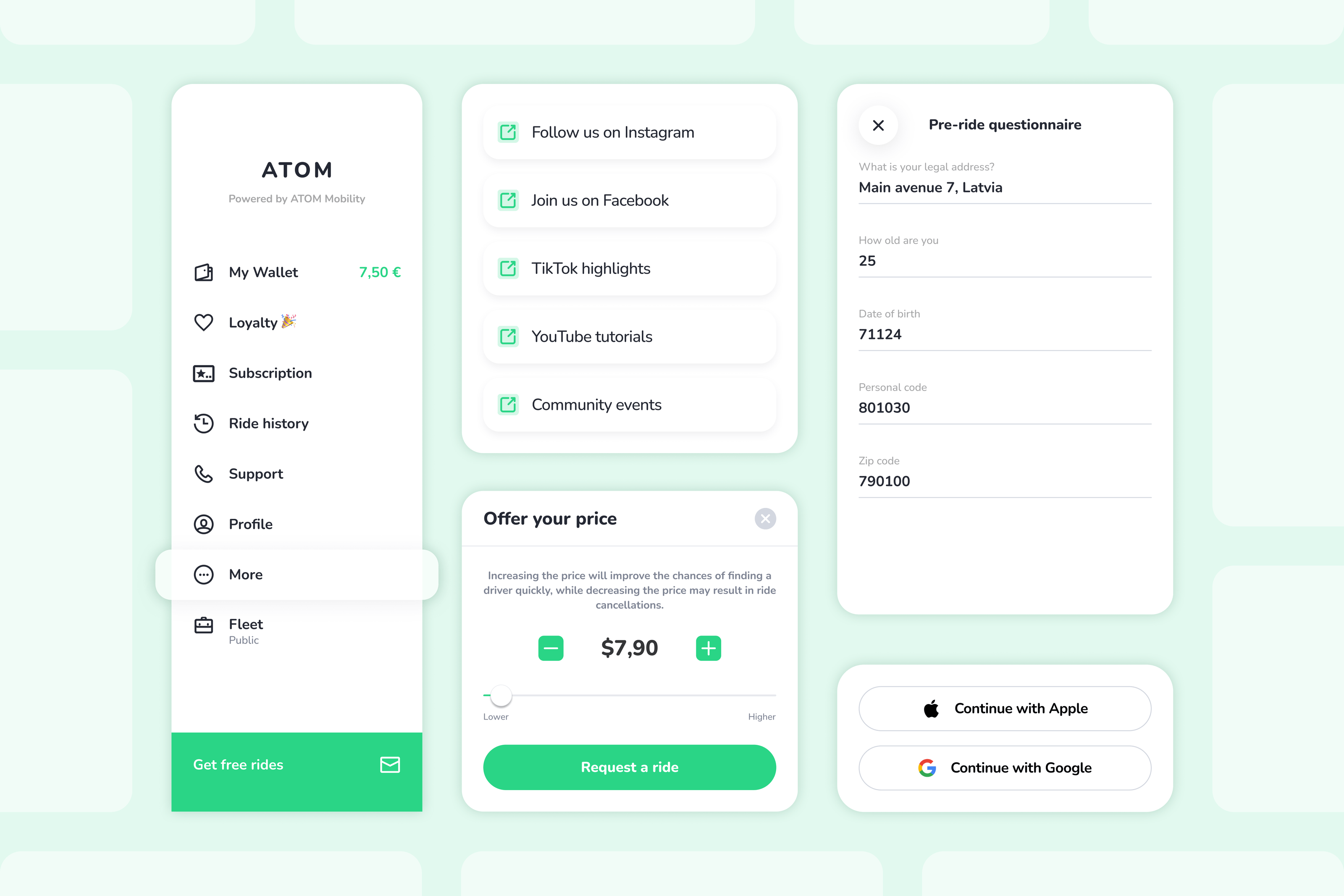
The rider app is an important part but not the only service on the platform. Customers use the mobile app to register, verify their identity, locate nearby vehicles, unlock them, make payments, purchase subscriptions, and manage bookings.
Operators manage the business through a web dashboard that provides access to fleet monitoring, pricing, reservations, customer management, payments, analytics, maintenance workflows, reporting, promotions, and day-to-day operations.
For fleet management, ATOM Mobility also offers a dedicated Operator app, designed to help teams manage vehicles, tasks, damages, and routes while on the go.
Companies offering ride-hailing services also receive a dedicated driver app, allowing drivers to accept rides, navigate trips, and track their earnings within the same ecosystem.
Altogether, the platform includes more than 300 features and 100+ integrations designed specifically for mobility operators, allowing businesses to launch 8-15 times faster than building comparable software from scratch.
One of ATOM Mobility's biggest advantages is its hardware flexibility. The platform works with numerous IoT providers and vehicle manufacturers, meaning operators are not locked into a single hardware supplier.
For example, if a business decides to replace its smart locks or expand its fleet with vehicles from another manufacturer, it doesn't need to replace the software platform as well. This gives operators more flexibility as their business evolves and reduces the risk of becoming dependent on a single hardware vendor. To name just a few, ATOM Mobility already supports integrations with Segway, Teltonika, Acton, Omni, Okai, Fitrider, Freego, Zimo, Marti, Comodule, Hongji, Yadea, NIU, NEXT, Geotab, Acacus, INVERS, Velco, Navee, Vaimoo, Dynasys, 2hire, Sentinel, Linka, and many others.
Launching a mobility business often requires close collaboration between the operator and the software provider, particularly during implementation and expansion.
ATOM Mobility provides support through email, WhatsApp, and scheduled calls with a dedicated team that has worked together for several years. Rather than speaking with a different representative every time, customers build relationships with specialists who become familiar with their business and operational goals. For urgent or business-critical matters, customers can also communicate directly with company leadership, including the CEO when needed.
ATOM Mobility has received consistently positive reviews on Capterra, where customers frequently highlight both the quality of the platform and the team behind it.
Some of the reviews describe ATOM Mobility as:
"ATOM is an exceptional app developer."
"Clear communication and good service."
"Atom has been a reliable partner to us for 3 seasons now."
"Great Partnership with the ATOM Team."
"Reliable Partner with Great Support and Continuous Improvements."
Across the reviews, the same themes appear repeatedly: responsive communication, long-term partnerships, and continuous product development.
ATOM Mobility is designed for companies that want to launch, operate, or scale a mobility business without spending years developing proprietary software. The platform is ideal for entrepreneurs launching their first mobility service, SMEs entering the shared mobility market, established operators expanding into new cities or mobility verticals, and fleet operators managing anywhere from a single vehicle to more than 10,000 vehicles who need a modern, feature-rich platform at a reasonable cost.
Because the platform is white-label, operators keep full control over their branding, pricing strategy, and customer experience while relying on technology that has already been proven across more than 80 different markets.
ATOM Mobility is built specifically for vehicle sharing, car rental, and ride-hailing businesses. Companies such as Uber, Bolt, Lime, and Voi have invested hundreds of millions of dollars and many years into developing proprietary software, creating platforms that are deeply integrated into their operations. While replacing such systems could potentially deliver commercial benefits, the migration effort, operational risk, and loss of flexibility that comes with owning and customizing their own technology make a complete platform switch unlikely. As a result, these companies typically continue investing in their in-house platforms rather than adopting third-party software.
Similarly, companies looking to build software outside the mobility sector or develop entirely different types of platforms may find that ATOM Mobility's feature set is too focused on its core products.
Like any software platform, ATOM Mobility has strengths as well as situations where another approach may be a better fit.
Pros
Potential limitations
For startups, SMEs, and growing mobility operators, ATOM Mobility offers a practical alternative to building software in-house. The platform combines three mobility products in a single ecosystem, supports a wide range of hardware providers, and includes the operational tools needed to launch and scale a business. Beyond the technology itself, customers gain access to ATOM Academy - industry expertise, best practices, and educational resources, helping them avoid common mistakes and build a successful mobility business faster.
It isn't intended to replace proprietary platforms developed by companies such as Uber or Bolt, nor is it designed for businesses outside the mobility sector. For operators looking for an established white-label platform backed by long-term customer support and continuous product development, ATOM Mobility is a solution worth considering.
🌍 Reach more riders with ATOM Mobility and Umob. The integration gives shared mobility operators an additional distribution channel, helping attract new customers, generate more bookings and improve fleet utilization.
The future of mobility is not just about operating vehicles. It is about creating convenient journeys that bring different transportation options together in one simple customer experience.
That is why we are excited to highlight our partnership with Umob, helping mobility operators expand their reach and become part of a growing multimodal mobility ecosystem.
Whether you operate shared cars, scooters, bikes or mopeds through the ATOM Mobility platform, integrating with Umob allows your service to become accessible to thousands of Umob users looking for a convenient way to travel.
Today's users expect flexibility. They don't think in terms of individual mobility providers, they simply want the fastest, easiest, and most convenient route from A to B.
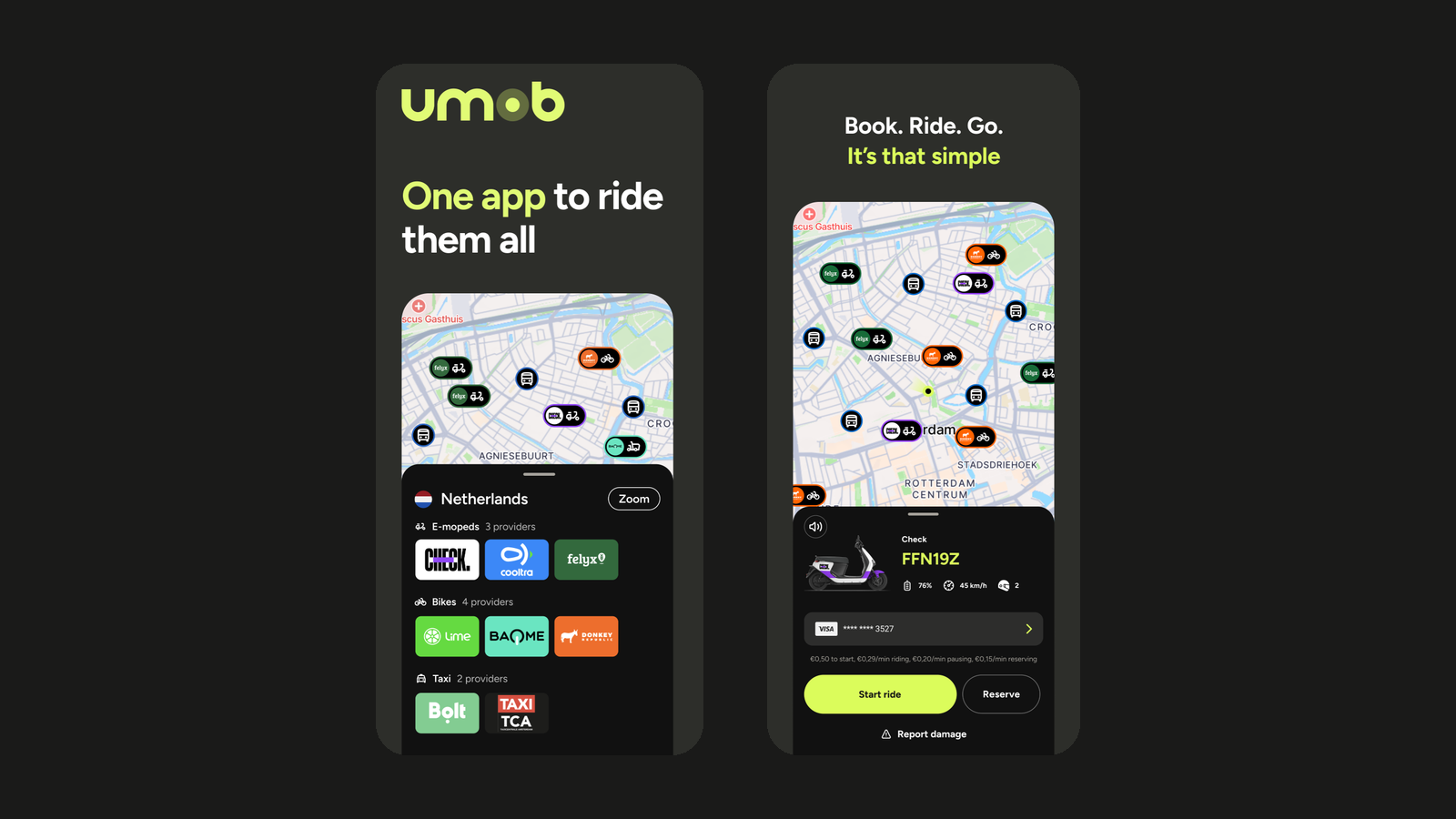
Umob brings different mobility providers and transport options together in one app. Users can find, compare, book and pay for different mobility options without having to download a separate app or create a new account for every provider.
By connecting your fleet to Umob, operators can:
For ATOM Mobility customers, the integration is designed to provide a straightforward way to unlock new distribution opportunities while continuing to manage their core operations through the ATOM Mobility platform.
Through the ATOM Mobility platform, participating operators can connect their fleets with Umob, enabling users to discover and use available vehicles directly through the Umob app.
Once connected, vehicles from participating operators can appear in Umob alongside other available mobility options, giving users one clear overview of the different ways they can get from A to B.
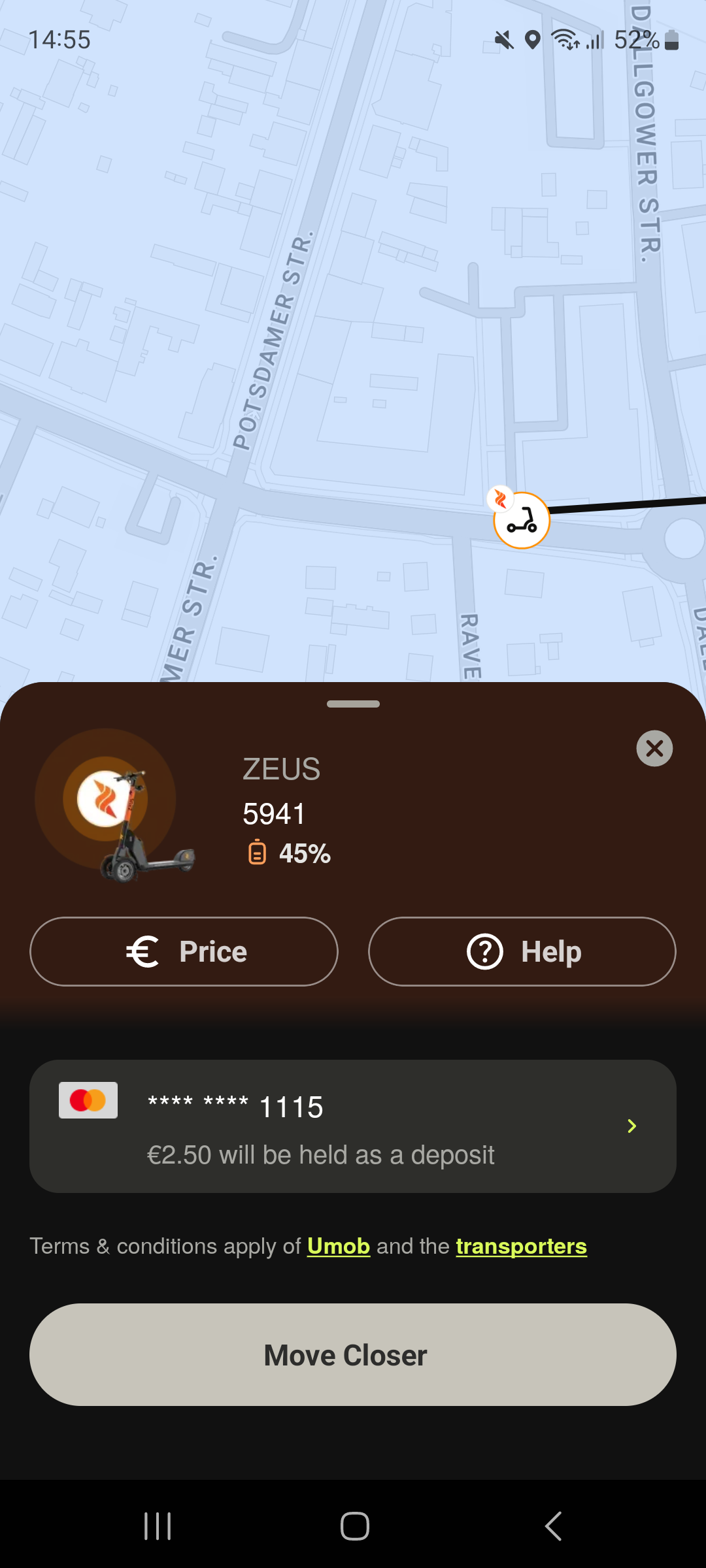
Users can discover an available vehicle, reserve and unlock it, start and end their ride, and pay directly through Umob.
The integration is designed to support:
Operators continue to manage their fleet, pricing, service areas and day-to-day operations through the ATOM Mobility platform, while Umob provides an additional channel through which users can discover and access their vehicles.
For mobility operators, connecting with Umob creates an additional distribution channel without changing the way they manage their day-to-day operations through ATOM Mobility.
By making vehicles available to thousands of Umob users, operators can increase their visibility at the moment people are actively looking for a ride. This creates the potential to attract new users, generate additional bookings and improve fleet utilization over time.
Every market is different, but many operators see MaaS partnerships as an important part of their long-term growth strategy.
One of the first ATOM Mobility operators to launch through the Umob integration is ZEUS Mobility, an ambitious European e-scooter sharing provider with a strong focus on innovation, a dynamic approach and challenging the established players in the market.
Fittingly, the partnership itself started through the ATOM Mobility network.
ZEUS and Umob first met at an ATOM Mobility event in Riga. While the initial introduction happened during the event, it was over drinks later that evening that the conversation really started.
ZEUS had already come across the Umob brand on mobility vehicles while travelling and had been impressed by the professional approach the company was taking. That recognition quickly turned into a conversation about how both companies could strengthen their propositions by working together.
From there, the integration moved forward quickly. ZEUS describes the preparation and integration process so far as “clean, professional and smooth.”
For ZEUS, the partnership creates an opportunity to strengthen the visibility of its brand, reach new customers and support its wider European growth ambitions.
Following its acquisition of Superpedestrian in May 2026, ZEUS is looking to accelerate its growth throughout 2026 and 2027, with the Umob partnership forming part of that ambition.
“ZEUS is thrilled to be partnering with Umob in European markets. Following our acquisition of Superpedestrian in May 2026, ZEUS is seeking to rapidly grow through 2026 and 2027. This partnership can help to drive this growth and reach new customers in new markets. We look forward to a rewarding partnership.” - Damian Young, ZEUS Mobility
One app to ride them all. Umob is an all-in-one mobility platform that brings different mobility providers and transport options together in one app.
Users can find, compare, book and pay for shared bikes, e-bikes, scooters, mopeds, public transport, taxis and other available mobility options through one account and one payment experience. Instead of downloading and registering with a separate app for every provider or every new city, users can open Umob and see the available mobility options around them.
Today, Umob is available in 28+ countries and 300+ cities, giving thousands of users an easier way to access different forms of mobility both at home and while travelling.
Key facts
If you're already operating your shared mobility service on the ATOM Mobility platform, connecting with Umob could be the next step toward reaching more users and becoming part of a truly connected mobility ecosystem.
If you're interested in enabling the integration or learning more about how it works, get in touch with our team. We look forward to helping more operators connect, collaborate, and make sustainable mobility easier for everyone.
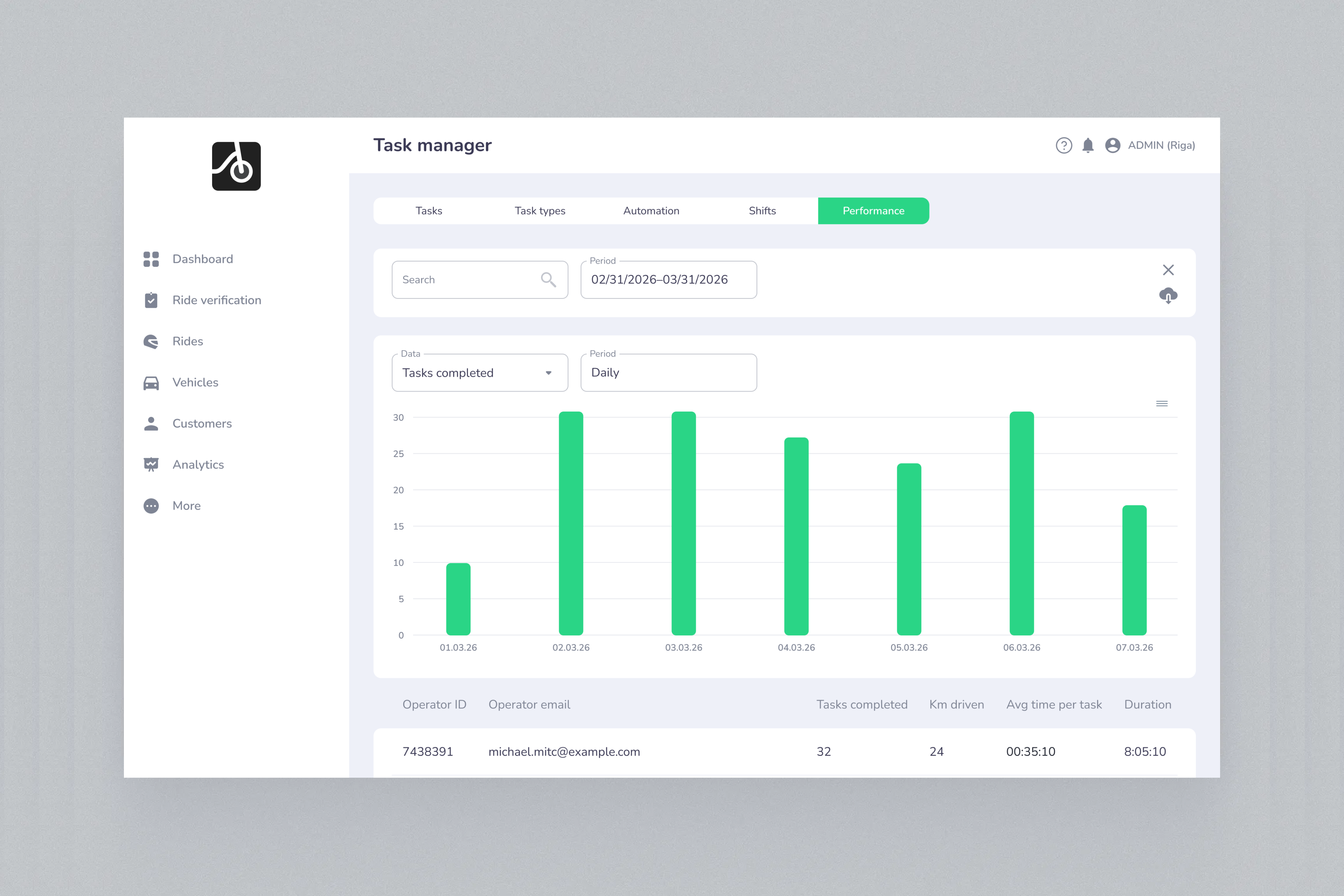
👷📊 ATOM Task Manager now goes beyond task distribution with new Shifts and Operator Performance functionality. Track shift routes, distance, completed tasks, time per task and individual operator performance - giving fleet managers a much clearer picture of field operations and efficiency.
Managing a large shared mobility or rental fleet isn't only about knowing which tasks were completed. It's also about understanding how efficiently field teams are working. We've significantly expanded ATOM Mobility Task Manager with new Shifts and Performance functionality, giving fleet managers much better visibility into operator activity, workload, routes and performance.
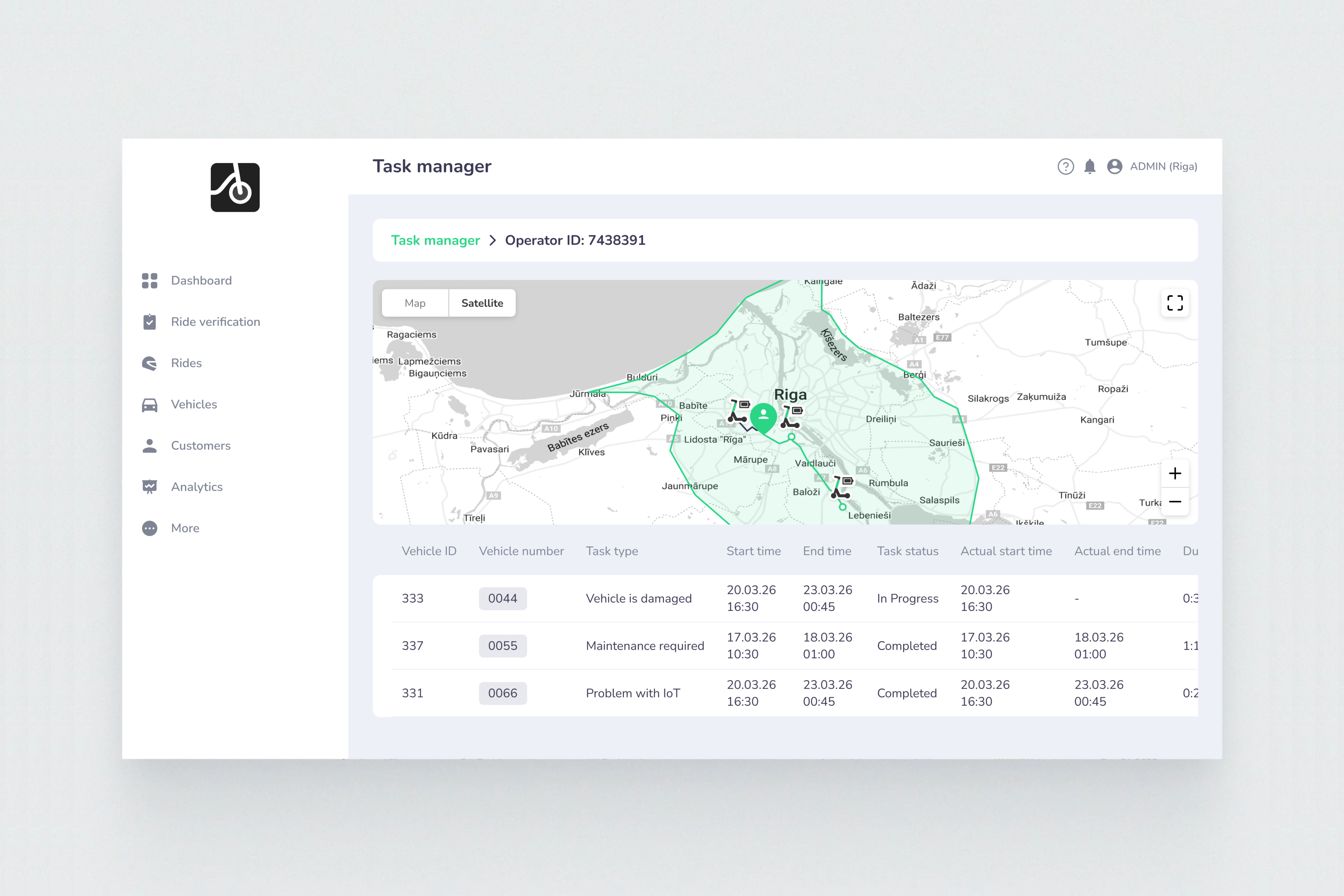
The new Shifts tab gives managers a centralized overview of all operator shifts, including:
Managers can open any individual shift to see the complete operational picture. For every task, you can see the vehicle, task type, planned start and deadline, actual start and completion times, status and total task duration.
Each shift also includes a map showing the operator's complete movement during the shift and where individual tasks were performed. For shifts currently in progress, managers can also see the operator's current location.
This makes it much easier to understand the actual route, workload and decisions behind each shift — and identify opportunities to improve how field teams manage fleet maintenance and operations.
The new Performance tab aggregates operational results for every operator over a selected period.
Managers can track:
Instead of reviewing hundreds of individual tasks, managers can quickly compare operators, identify top performers and spot areas where additional training or operational improvements may be needed.
To make performance data accurate and useful, we've also introduced a new shift and task workflow in the ATOM Operator app. Operators now start and end their shifts directly in the app, while individual task start and completion times are recorded automatically.
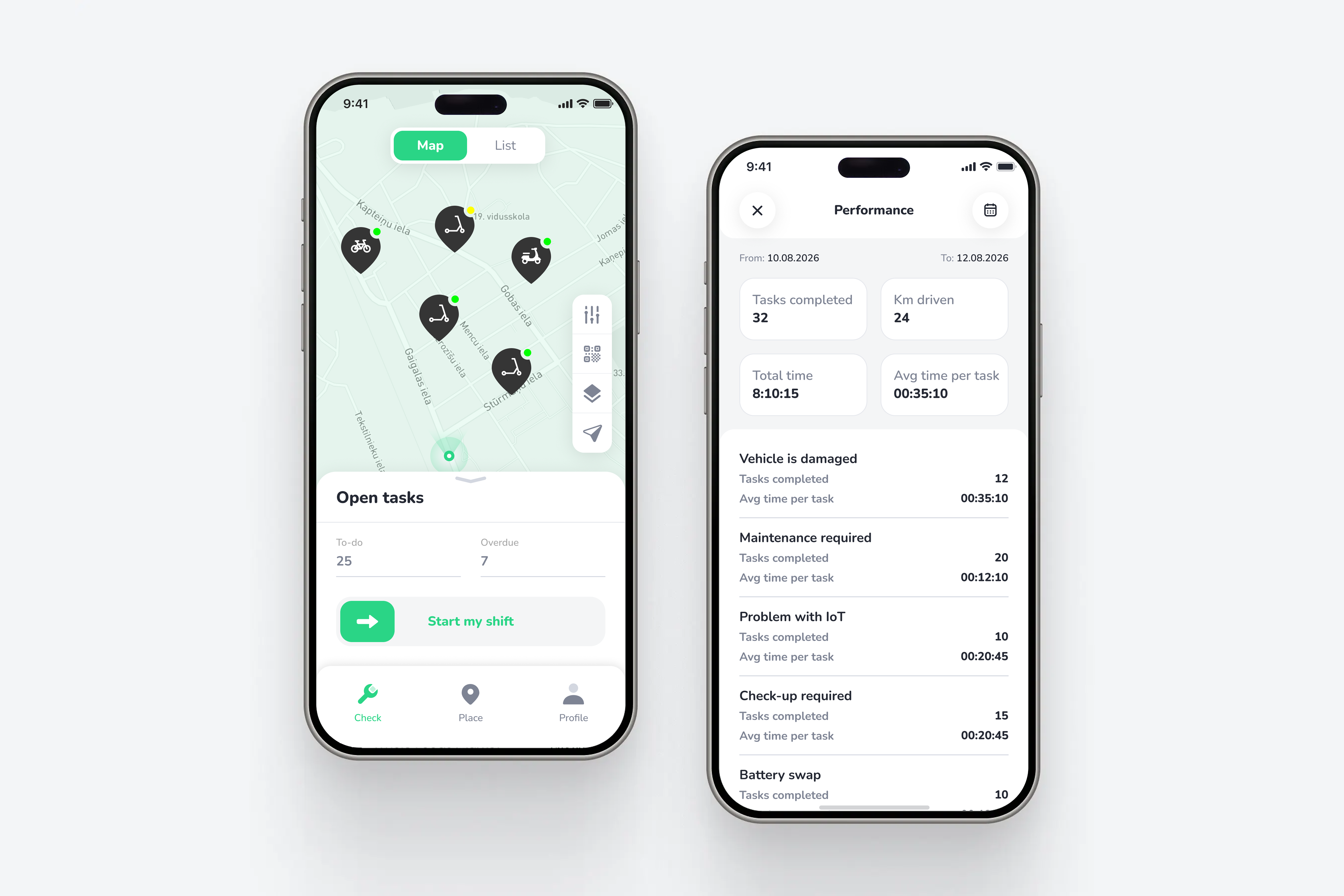
We've also added:
Together, these updates turn ATOM Task Manager from a task distribution tool into a much more complete field operations performance and optimization system. Operators get a clearer workflow and visibility into their own performance, while managers get the data they need to understand how their field operations actually work and where they can become more efficient.
The new functionality is available for ATOM Mobility's Vehicle sharing and Digital rental modules.
👉 Read more about our latest platform updates:
https://www.atommobility.com/atomupdates
Use test credentials to log in - Phone number: +1 123123123, Code: 777777


Driver App demo credentials - Email: test@atom.com, Password: driver