Lime improved GPS. But parking compliance may need more than that
March 25, 2026
min. read

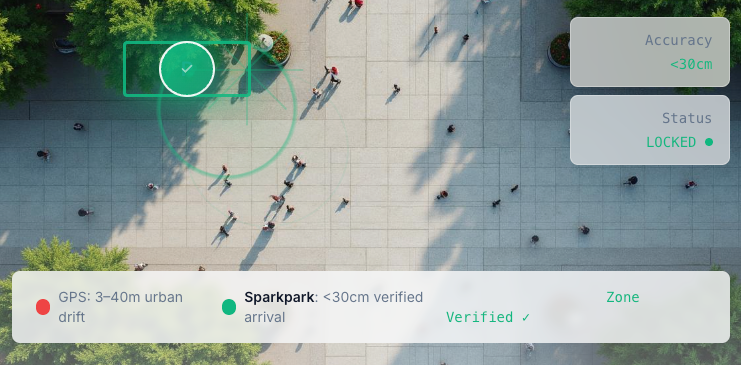
Lime just raised the bar for GPS-based parking compliance. But the bigger question is this: when cities want verified parking, is better GPS enough, or do operators need physical proof? That question matters more than ever.
Lime’s new LimeBike rollout in the UK comes with a major location upgrade. Lime says its new bikes can locate themselves to within 1.5 metres, a significant improvement from the roughly 12.3 metres typical in dense urban environments (this means that based on GPS data, a vehicle can be up to 12 meters farther or closer than the reported GPS location. Now this error is just 1.5 meters). That is real progress.
Lime’s upgrade is a meaningful step forward for GPS-based positioning. At the same time, cities are increasingly looking beyond positioning accuracy toward verifiable parking compliance.
Cities are becoming much less tolerant of parking disorder. In Kensington & Chelsea, the council seized 1,000 rental e-bikes by November 2025 and collected more than £81,000 in charges from operators.
That is the real backdrop for every operator today:
So yes, better GPS is good news. But it does not automatically mean cities will see parking as “solved.” A vehicle may be near a bay, beside a bay, or slightly outside it. In dense urban areas, that difference matters. Traditional GPS struggles there because of building interference, blocked satellite visibility, and signal reflections.
So the strategic question is no longer:
“Can we improve GPS?”
It is:
“What kind of system gives cities enough confidence to enforce parking rules fairly and consistently?”
A European Commission-backed pilot in Prague tested a different approach: Bluetooth-based parking verification.
Across 25 parking locations and 989 parking events, the results were clear:
When the goal is verified parking inside a defined zone, infrastructure-based validation can significantly outperform vehicle-only (GPS) positioning.
Lime’s move shows how far vehicle-side intelligence is improving. SparkPark points to a different model: verify the parking zone itself.
That distinction matters.
Those are fundamentally different approach.
One of the key findings from the Prague pilot is not just technical - it is institutional. Cities often rely on operator-provided data to assess compliance. That creates a trust gap. What cities increasingly want:
This is why the conversation is shifting from “better accuracy” → “verifiable proof.”
Parking compliance is becoming more important than ever:
Operators who can demonstrate verifiable compliance may have a clear advantage.
With ATOM Mobility, partners can explore:
Instead of waiting for hardware cycles, operators can move faster and adapt to changing city expectations.
Lime deserves credit for pushing GPS accuracy forward. It is a meaningful step for the industry. But the Prague pilot highlights something equally important:
Micromobility parking may not be solved by better positioning alone. It may also require verification.
Not:
“Where is the vehicle likely parked?”
But:
“Can this parking event be verified with confidence?”
The future of parking compliance is likely evolving across two complementary paths:
Path 1: improve GPS accuracy
Path 2: implement physical verification
The first makes parking smarter. The second makes it more reliable and verifiable.
And in regulated urban mobility, confidence and trust often matter as much as precision.
Want to explore how ATOM Mobility can support stricter parking compliance workflows and how SparkPark technology works alongside the ATOM Mobility platform? Get in touch with our team to discuss integration options and city-facing parking control setups.
Sources:
Lime GPS upgrade announcement:
https://www.smartcitiesworld.net/micromobility/new-lime-bike-upgrade-to-hit-uk-streets-this-month-12568
West Midlands LimeBike rollout:
https://www.wmca.org.uk/news/new-limebike-to-launch-in-west-midlands/
Kensington & Chelsea enforcement data:
https://www.rbkc.gov.uk/newsroom/1000-e-bikes-seized-borough
Prague SparkPark pilot (EIT Urban Mobility):
https://marketplace.eiturbanmobility.eu/best-practices/high-precision-parking-for-shared-micromobility-in-prague
SparkPark:
https://sparkpark.no
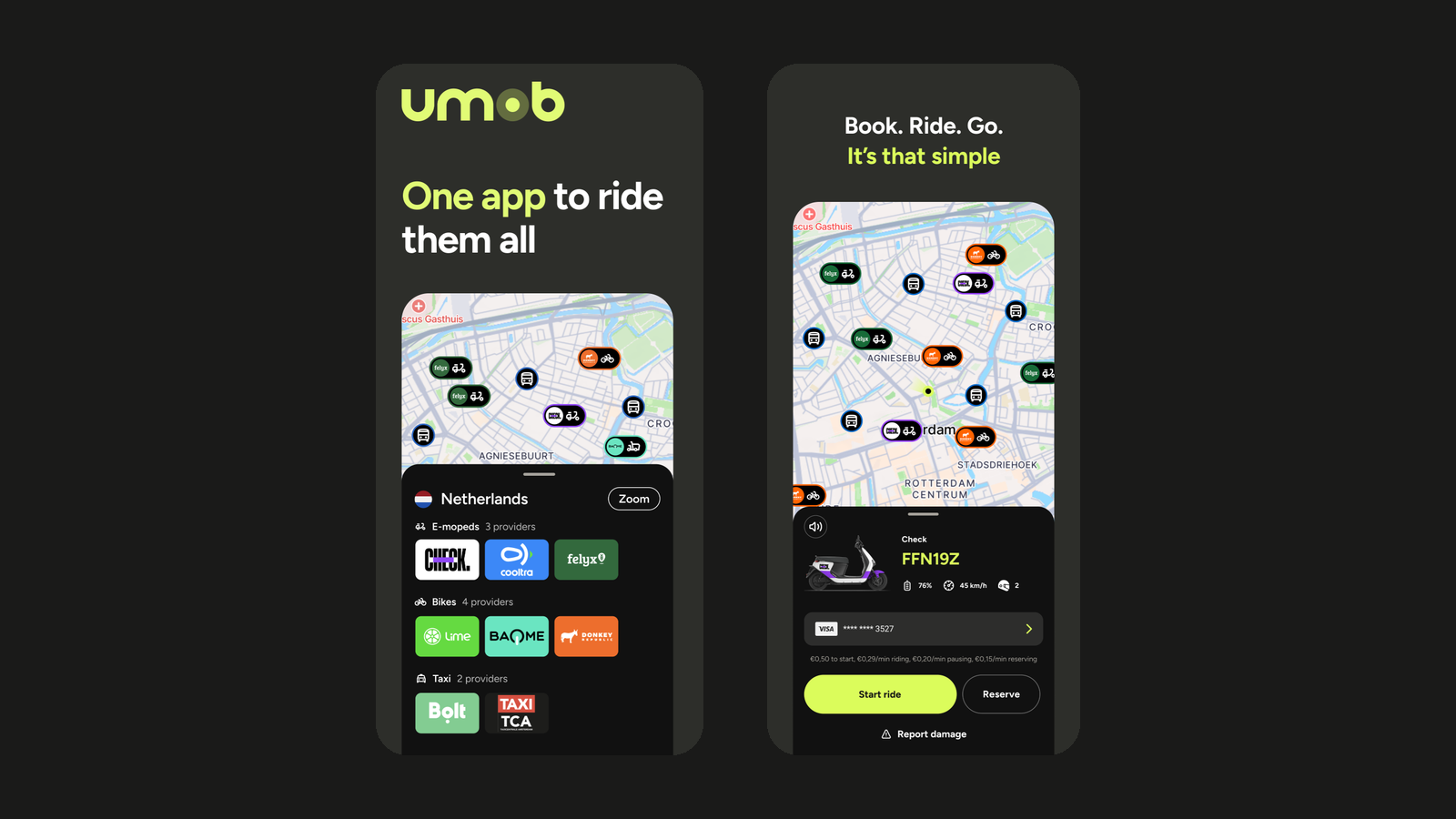
🌍 Reach more riders with ATOM Mobility and Umob. The integration gives shared mobility operators an additional distribution channel, helping attract new customers, generate more bookings and improve fleet utilization.
The future of mobility is not just about operating vehicles. It is about creating convenient journeys that bring different transportation options together in one simple customer experience.
That is why we are excited to highlight our partnership with Umob, helping mobility operators expand their reach and become part of a growing multimodal mobility ecosystem.
Whether you operate shared cars, scooters, bikes or mopeds through the ATOM Mobility platform, integrating with Umob allows your service to become accessible to thousands of Umob users looking for a convenient way to travel.
Today's users expect flexibility. They don't think in terms of individual mobility providers, they simply want the fastest, easiest, and most convenient route from A to B.
Umob brings different mobility providers and transport options together in one app. Users can find, compare, book and pay for different mobility options without having to download a separate app or create a new account for every provider.
By connecting your fleet to Umob, operators can:
For ATOM Mobility customers, the integration is designed to provide a straightforward way to unlock new distribution opportunities while continuing to manage their core operations through the ATOM Mobility platform.
Through the ATOM Mobility platform, participating operators can connect their fleets with Umob, enabling users to discover and use available vehicles directly through the Umob app.
Once connected, vehicles from participating operators can appear in Umob alongside other available mobility options, giving users one clear overview of the different ways they can get from A to B.
Users can discover an available vehicle, reserve and unlock it, start and end their ride, and pay directly through Umob.
The integration is designed to support:
Operators continue to manage their fleet, pricing, service areas and day-to-day operations through the ATOM Mobility platform, while Umob provides an additional channel through which users can discover and access their vehicles.
For mobility operators, connecting with Umob creates an additional distribution channel without changing the way they manage their day-to-day operations through ATOM Mobility.
By making vehicles available to thousands of Umob users, operators can increase their visibility at the moment people are actively looking for a ride. This creates the potential to attract new users, generate additional bookings and improve fleet utilization over time.
Every market is different, but many operators see MaaS partnerships as an important part of their long-term growth strategy.
One of the first ATOM Mobility operators to launch through the Umob integration is ZEUS Mobility, an ambitious European e-scooter sharing provider with a strong focus on innovation, a dynamic approach and challenging the established players in the market.
Fittingly, the partnership itself started through the ATOM Mobility network.
ZEUS and Umob first met at an ATOM Mobility event in Riga. While the initial introduction happened during the event, it was over drinks later that evening that the conversation really started.
ZEUS had already come across the Umob brand on mobility vehicles while travelling and had been impressed by the professional approach the company was taking. That recognition quickly turned into a conversation about how both companies could strengthen their propositions by working together.
From there, the integration moved forward quickly. ZEUS describes the preparation and integration process so far as “clean, professional and smooth.”
For ZEUS, the partnership creates an opportunity to strengthen the visibility of its brand, reach new customers and support its wider European growth ambitions.
Following its acquisition of Superpedestrian in May 2026, ZEUS is looking to accelerate its growth throughout 2026 and 2027, with the Umob partnership forming part of that ambition.
“ZEUS is thrilled to be partnering with Umob in European markets. Following our acquisition of Superpedestrian in May 2026, ZEUS is seeking to rapidly grow through 2026 and 2027. This partnership can help to drive this growth and reach new customers in new markets. We look forward to a rewarding partnership.” - Damian Young, ZEUS Mobility
One app to ride them all. Umob is an all-in-one mobility platform that brings different mobility providers and transport options together in one app.
Users can find, compare, book and pay for shared bikes, e-bikes, scooters, mopeds, public transport, taxis and other available mobility options through one account and one payment experience. Instead of downloading and registering with a separate app for every provider or every new city, users can open Umob and see the available mobility options around them.
Today, Umob is available in 28+ countries and 300+ cities, giving thousands of users an easier way to access different forms of mobility both at home and while travelling.
Key facts
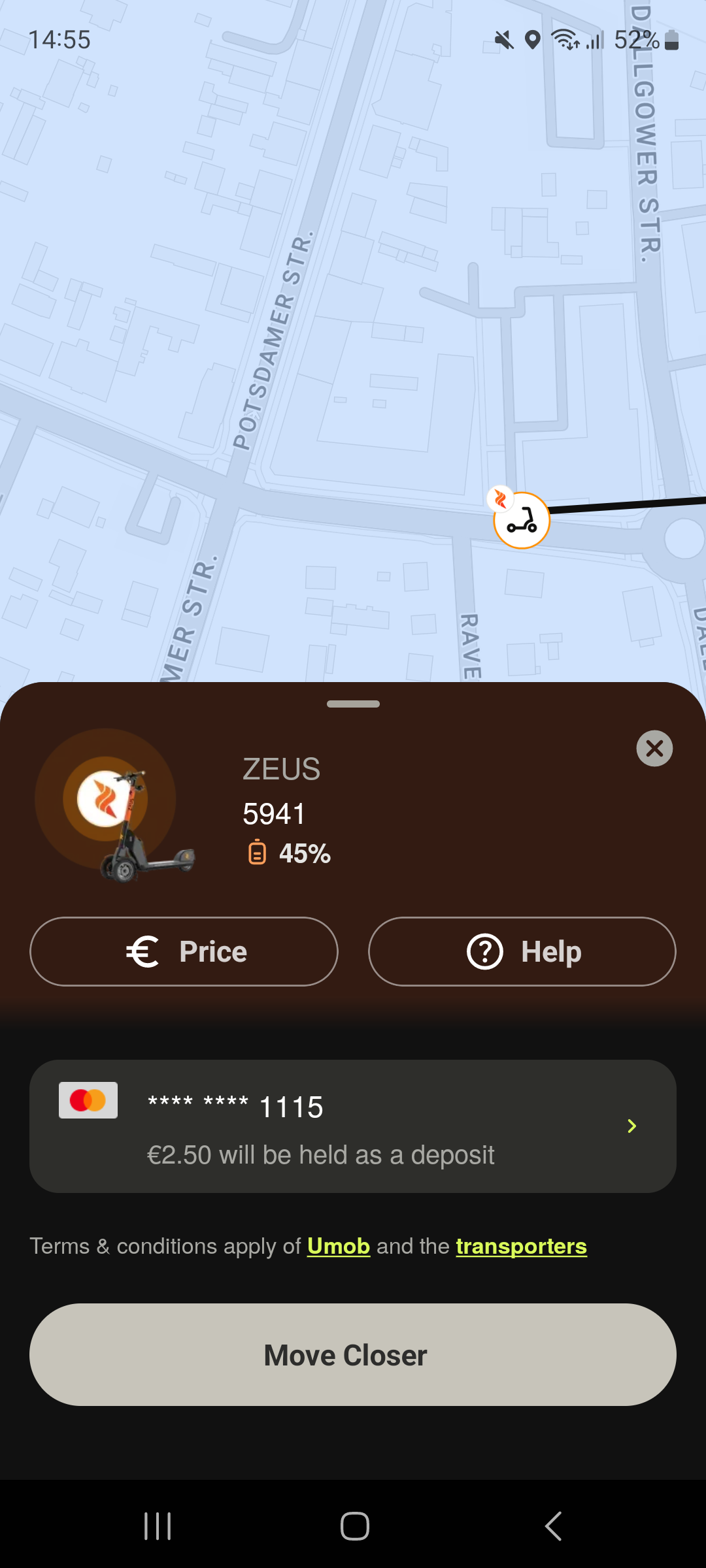
If you're already operating your shared mobility service on the ATOM Mobility platform, connecting with Umob could be the next step toward reaching more users and becoming part of a truly connected mobility ecosystem.
If you're interested in enabling the integration or learning more about how it works, get in touch with our team. We look forward to helping more operators connect, collaborate, and make sustainable mobility easier for everyone.
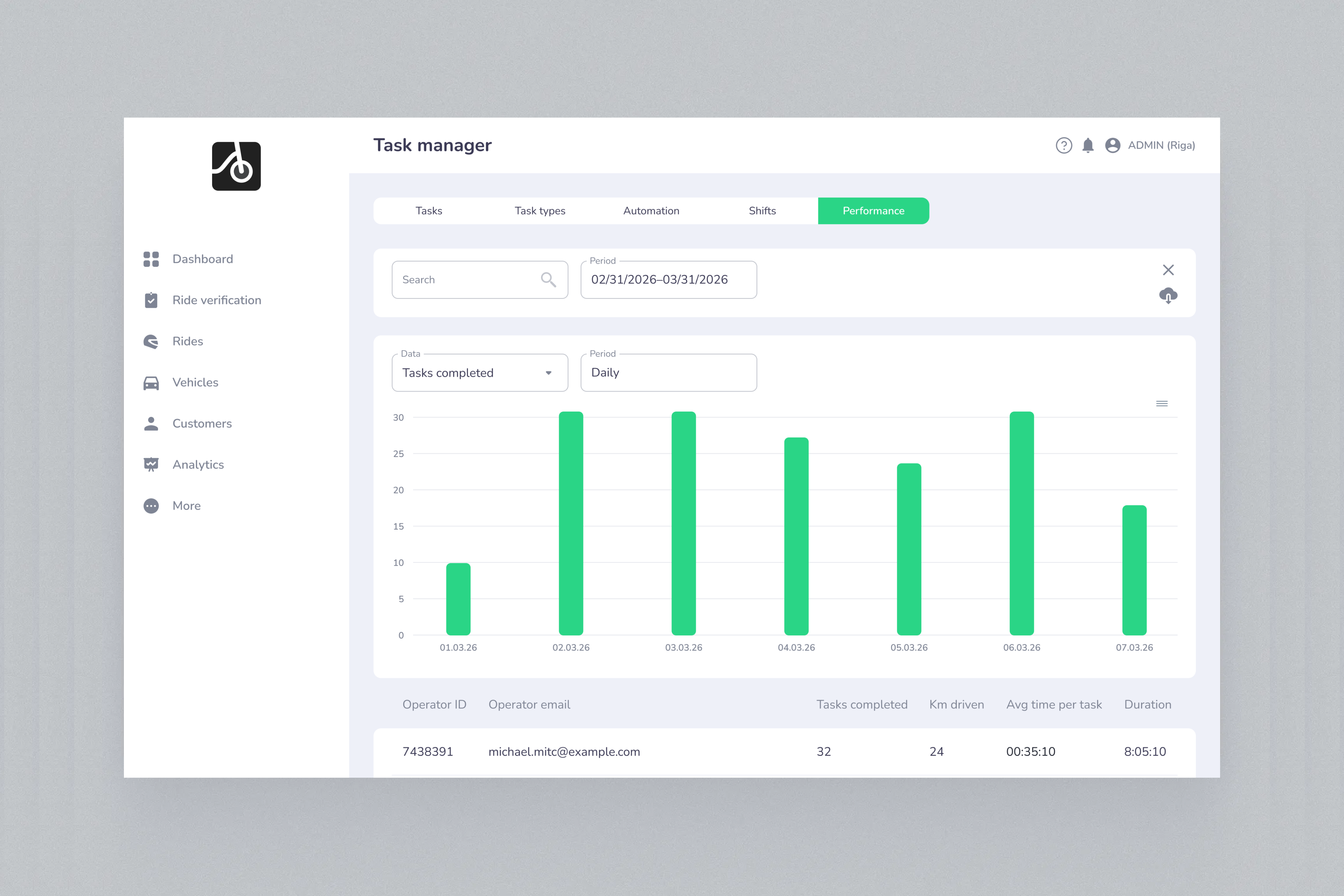
👷📊 ATOM Task Manager now goes beyond task distribution with new Shifts and Operator Performance functionality. Track shift routes, distance, completed tasks, time per task and individual operator performance - giving fleet managers a much clearer picture of field operations and efficiency.
Managing a large shared mobility or rental fleet isn't only about knowing which tasks were completed. It's also about understanding how efficiently field teams are working. We've significantly expanded ATOM Mobility Task Manager with new Shifts and Performance functionality, giving fleet managers much better visibility into operator activity, workload, routes and performance.
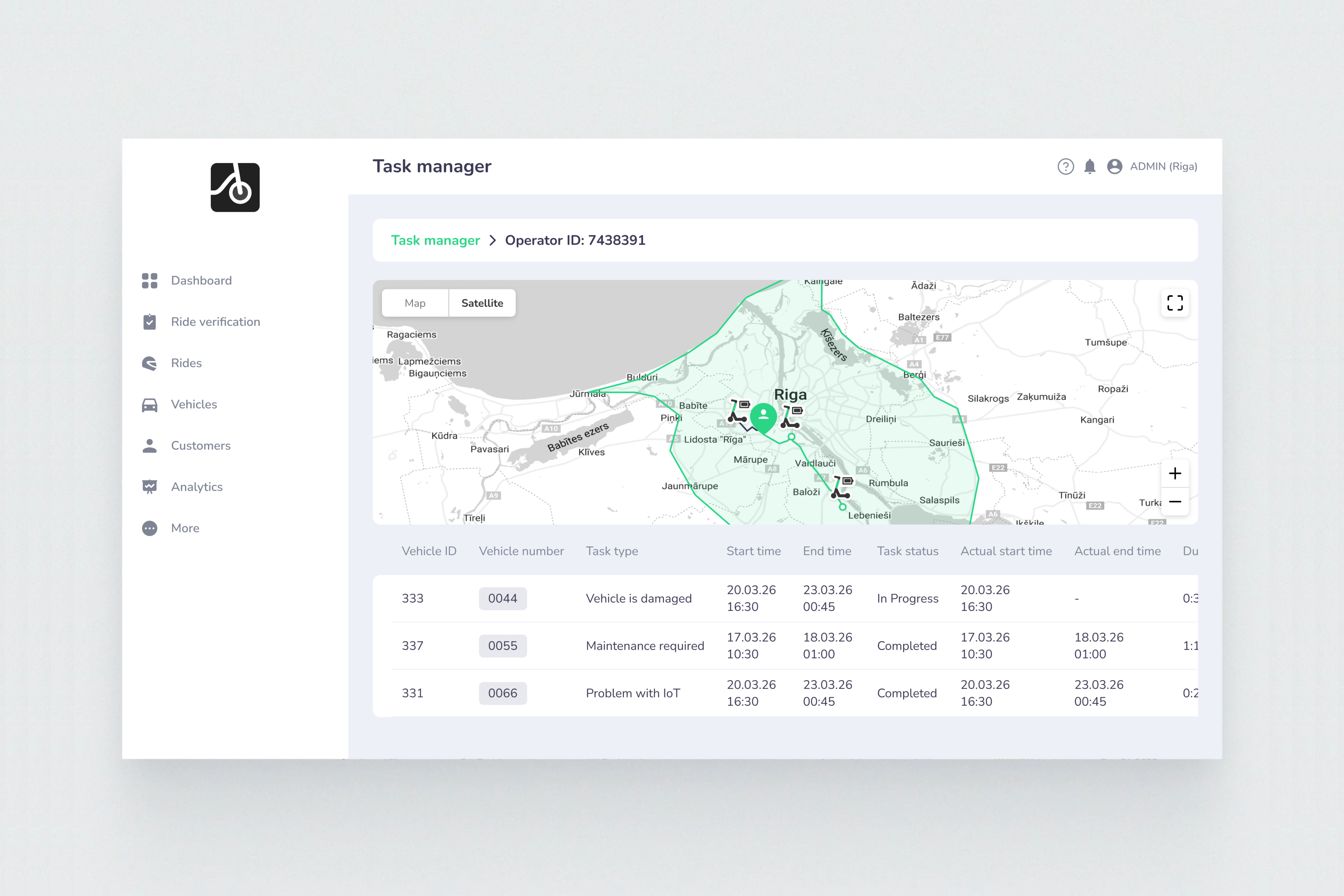
The new Shifts tab gives managers a centralized overview of all operator shifts, including:
Managers can open any individual shift to see the complete operational picture. For every task, you can see the vehicle, task type, planned start and deadline, actual start and completion times, status and total task duration.
Each shift also includes a map showing the operator's complete movement during the shift and where individual tasks were performed. For shifts currently in progress, managers can also see the operator's current location.
This makes it much easier to understand the actual route, workload and decisions behind each shift — and identify opportunities to improve how field teams manage fleet maintenance and operations.
The new Performance tab aggregates operational results for every operator over a selected period.
Managers can track:
Instead of reviewing hundreds of individual tasks, managers can quickly compare operators, identify top performers and spot areas where additional training or operational improvements may be needed.
To make performance data accurate and useful, we've also introduced a new shift and task workflow in the ATOM Operator app. Operators now start and end their shifts directly in the app, while individual task start and completion times are recorded automatically.
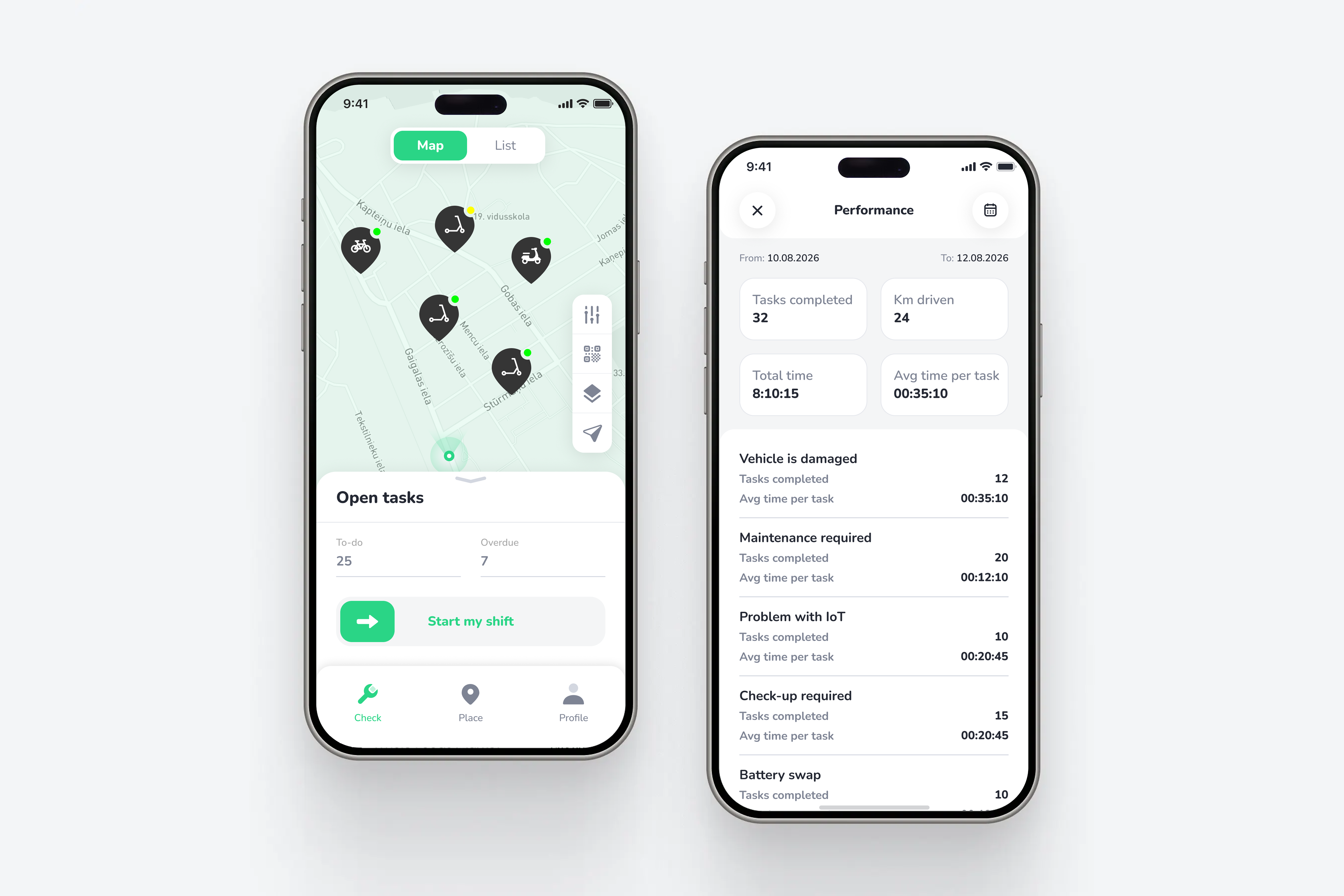
We've also added:
Together, these updates turn ATOM Task Manager from a task distribution tool into a much more complete field operations performance and optimization system. Operators get a clearer workflow and visibility into their own performance, while managers get the data they need to understand how their field operations actually work and where they can become more efficient.
The new functionality is available for ATOM Mobility's Vehicle sharing and Digital rental modules.
👉 Read more about our latest platform updates:
https://www.atommobility.com/atomupdates
Use test credentials to log in - Phone number: +1 123123123, Code: 777777


Driver App demo credentials - Email: test@atom.com, Password: driver