Blog
Insights and news from the ATOM Mobility team
We started our blog to share free valuable information about the mobility industry: inspirational stories, financial analysis, marketing ideas, practical tips, new feature announcements and more.

We started our blog to share free valuable information about the mobility industry: inspirational stories, financial analysis, marketing ideas, practical tips, new feature announcements and more.
%20(1).jpg)
🚗 Choosing car sharing software? Look beyond the rider app. Our checklist covers what to test in a demo, from keyless access and fleet operations to costs and support for both car sharing and digital rental.
Choosing car sharing software is more than choosing an app where customers can find and unlock a car. The same system has to verify drivers, take payments, communicate with vehicles, handle problems during a trip, and give your team the tools to keep cars available. The difference between two platforms often becomes clear only when something goes wrong: a customer cannot unlock a car, a payment fails, a vehicle needs to be taken out of service, or an operator wants to introduce advance bookings alongside short trips.
If you are comparing providers, ask them to show how these situations work in the actual product. Here is what to check.
“Car sharing” can mean several different things. A free-floating service lets customers find a nearby car and end a trip within an allowed area. A station-based service may require them to return the car to a specific location. Corporate fleets, peer-to-peer services, and self-service rentals have different booking, access, and approval rules.
Write down how your service will work before requesting demos:
Ask the provider to configure these rules in a demo. A platform that supports “car sharing” in general may still require development to support your exact model.
The app needs to do more than display vehicles on a map. Follow one booking from the first app open to the final receipt. Check registration, ID and driver's licence verification, vehicle discovery, booking, payment authorisation, keyless access, trip extension, damage reporting, and trip completion.
For advance rentals, check whether customers can book from your website as well as the app. Ask to see the complete web-to-app journey: selecting a vehicle and dates, confirming the reservation, and continuing to payment, licence verification, and vehicle access. Find out whether the website can complete the entire rental or whether customers must install the app after booking. ATOM Mobility's web-booker, for example, lets customers reserve on the web and then complete payment, and ID verification in the app.
Then test the exceptions. What does the customer see if verification fails, the car does not unlock, the vehicle is no longer available, or the payment cannot be collected? Can your support team see what happened and resolve it without contacting a developer?
This matters because customers judge the entire journey, including how quickly they can recover when a step fails.
Car sharing depends on reliable communication between the platform and the vehicle. Depending on the vehicle and hardware, this may include location, lock and unlock commands, mileage, fuel or battery level, and other status data. Ask for a list of supported telematics providers, rather than accepting a general statement that the platform is “hardware agnostic.” For your proposed fleet, establish:
Hardware flexibility is valuable when you expand or change suppliers, but the integration for the vehicles you plan to buy now is the first thing to verify.
The customer app gets the attention, but your team will spend much of its time in the management dashboard and operator tools. Ask a provider to show how staff:
Try these tasks with the roles your own team would use. The question is not only whether a feature exists, but how many manual steps it takes to run your fleet every day.
Car sharing and digital rental increasingly overlap. An operator might offer cars for short city trips and also accept bookings for a weekend. A rental business may begin with advance reservations and later add app-based, keyless access for shorter trips.
The technology shares many components, but the booking rules can differ. A rental may require advance pickup and return times, vehicle or category allocation, availability calendars, deposits, extensions, and different customer handover processes.
If you may operate both models, ask for a demonstration of both: an immediate hourly trip and an advance weekend booking. Check how the system prevents overlapping reservations, applies the correct pricing and deposit rules, and gives your team a clear view of availability. Also establish whether both models can use the same customer account and management setup, or whether additional products and fees are required.
ATOM Mobility supports vehicle sharing and digital rental on its platform. The useful question for any provider, including us, is how your exact combination of models would be configured and operated.
A low monthly licence fee can be attractive, but it may be only one part of the cost. Request a proposal that separates:
Launch, Setup, branding, app publication, migration, and training
Monthly minimums, fees per vehicle or booking, and included modules
Payment processing, refunds, deposits, and any additional transaction fees
Telematics hardware, installation, data plans, and new integrations
Ongoing work such as support level, custom development, and third-party services
Compare the likely cost at your launch fleet size and at a realistic larger fleet. Ask what happens if the fleet is seasonal or grows more slowly than planned.
Building in-house can make sense when a company has the engineering capacity and needs a customer experience or operating model that available platforms cannot support. It also means taking responsibility for project management, app updates, payments, vehicle integrations, security, monitoring, and support long after launch.
A white-label platform can shorten the route to market and spread that technical work across an established product. In return, you depend on the provider's supported features, integrations, development priorities, and service levels.
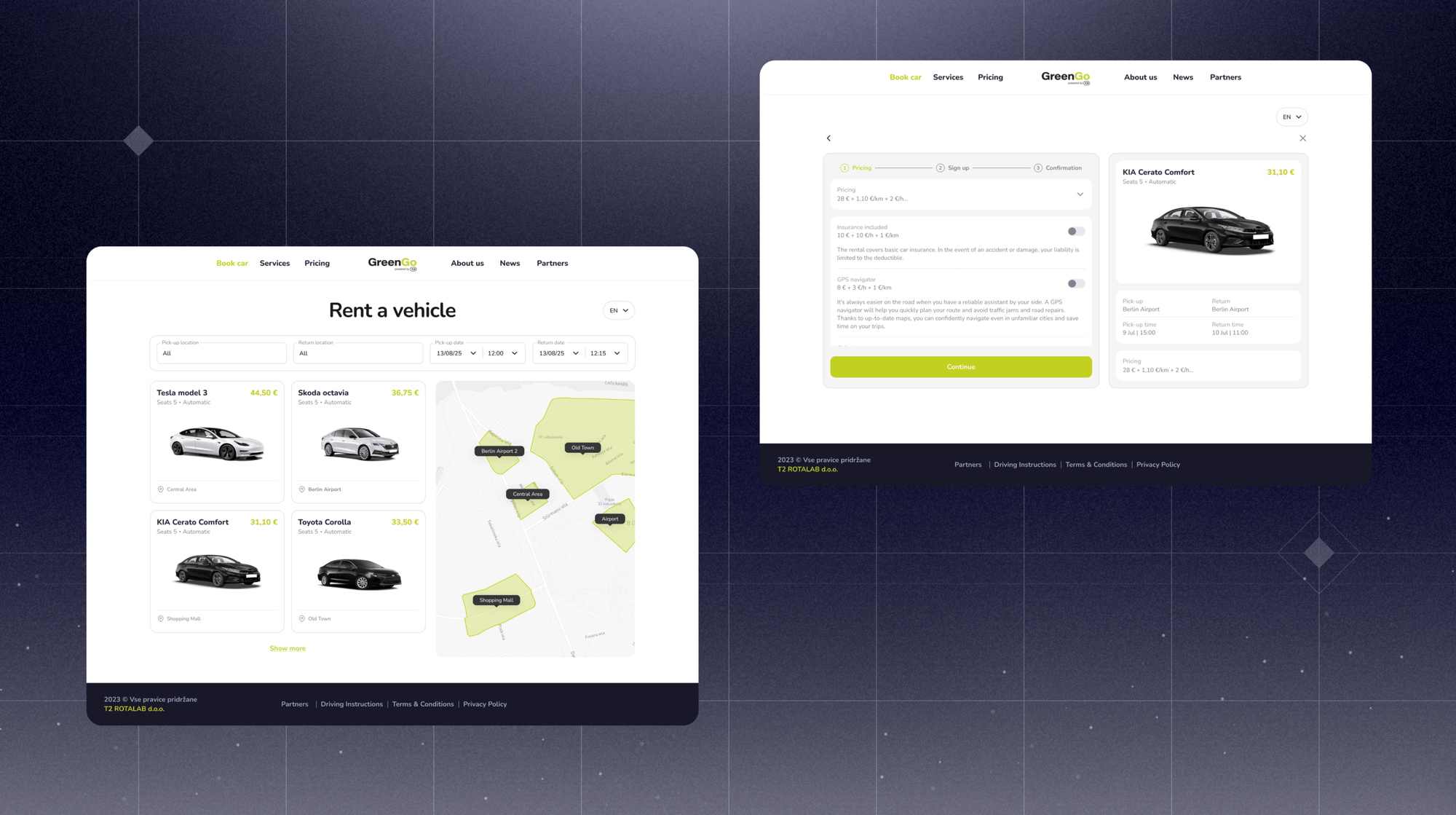
Slovenian car-sharing operator GreenGo initially spent two years developing its own app before switching to ATOM Mobility. Its experience shows why it is worth comparing the time and resources required to build with what an existing platform can already deliver. Read GreenGo's story: https://www.atommobility.com/blog/greengo-chooses-atom-mobility-to-power-its-electric-car-sharing-business
There is also a middle option: use a platform for core bookings, fleet management, and vehicle connectivity while building selected experiences or integrations yourself through APIs. If this is your plan, review the API documentation and confirm what your team can actually read, change, and automate.
Before signing, ask each shortlisted provider to demonstrate the same scenarios:
Use your intended vehicle models, payment markets, and operating rules in the discussion. For anything that cannot be shown, ask whether it is already available, needs configuration, requires paid development, or is only planned.
The best car sharing software is the one that supports your model reliably, gives your team control over daily operations, and leaves room for the business you intend to build next. A practical demo and a complete cost proposal will tell you more than a long feature list.
If you are evaluating car sharing alongside self-service rental, talk to ATOM Mobility about your fleet and operating model. We can show you how both models work on the platform and help you plan migration and scaling.
🚀📱2025 was all about automating more and reducing friction across mobility. ATOM Mobility introduced OpenAPI, new sign-in flows, a rental web-booker, smarter fleet automation, and a wide range of new hardware and payment integrations. A faster, more flexible, more scalable mobility platform - built for operators who want to grow.
2025 has been a defining year for shared mobility, digital rentals, and ride-hailing. Competition is stronger, operational costs are rising, and users expect instant, reliable digital experiences. Operators who succeed are the ones who automate more, reduce friction, and stay flexible with hardware, payments, and integrations.
This year, ATOM Mobility shipped a series of features designed to help operators achieve exactly that:
grow revenue, reduce costs, improve fleet quality, and scale into new markets with less complexity.
Here are the 10 most impactful (out of more than 70) features ATOM Mobility released in 2025, and why they matter.

The launch of ATOM’s OpenAPI marks a major step forward for operators seeking greater flexibility, automation, and integration possibilities.
What it is
A fully documented API layer allowing operators and partners to build custom flows, integrations, booking systems, analytics dashboards, or MaaS connections on top of ATOM Mobility.
Who it helps
All verticals: micromobility, car-sharing, moped sharing, rentals, ride-hail, and enterprise partners.
How it works
OpenAPI enables third-party developers to build on top of the ATOM Mobility infrastructure, allowing seamless integrations with external apps, internal tools, and automated workflows. With OpenAPI, operators can extend their service in almost any direction: a partner app (like FreeNow or Uber) can show your vehicles, unlock them, and process payments on your behalf; or internal systems can trigger automated actions - such as sending a survey email after every completed ride. The possibilities are nearly unlimited, giving operators full flexibility to innovate and scale however they choose.
Why it matters
- Enables deeper integrations with partners and local platforms
- Supports custom business logic and automations
- Makes it easier to enter new markets with local-specific requirements
- Opens the door to MaaS distribution and enterprise collaborations

Across mobility, the registration flow is often the first point of friction. ATOM Mobility introduced modern authentication options to simplify onboarding.
What it is
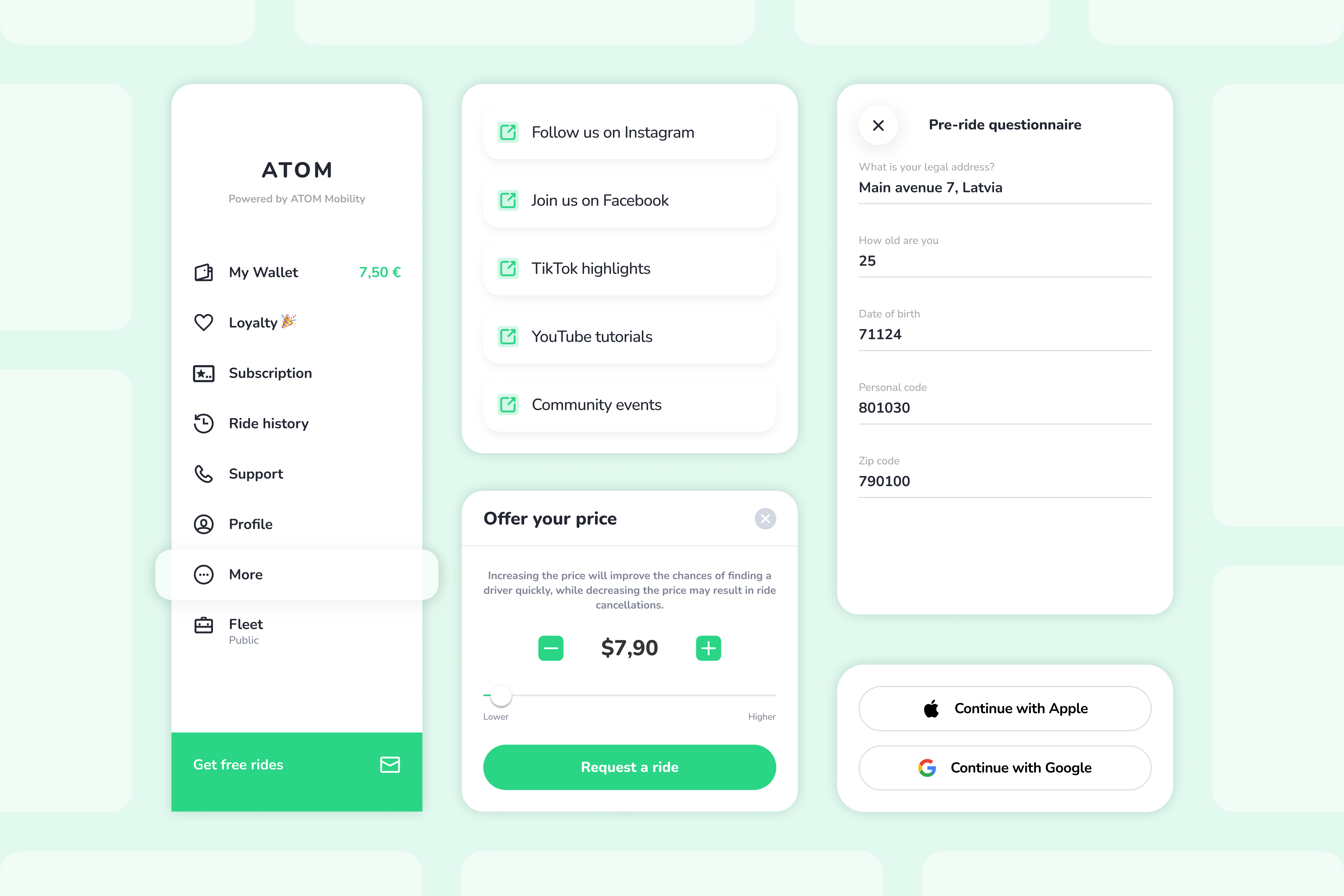
One-tap sign-in using Apple ID or Google Account instead of relying solely on SMS verification.
Who it helps
All operators - especially those targeting tourists, or markets with unreliable SMS delivery.
How it works
When creating a new account or logging in, users can choose to log in/register using Apple ID or Google Account - this will allow account creation in just 2 taps.
Why it matters
- Faster user onboarding experience -> happier rider -> more frequent rides
- Fewer SMS-related issues (and lower SMS related costs) and failed verifications
- Reduced support load from login problems

What it is
A customizable slot in the app menu where operators can add up to five external links - websites, ecommerce pages, tour pages, extra FAQ pages, social media, partner offers, etc.
How it works
- Enable in Settings → System preferences → External links
- Add titles + URLs
- Links automaticaly appear in the app under “More”
Value for operators
- A space where you can display any information you consider important for the user
- Supports cross-promotion and partnership campaigns
- Allows communication updates without app releases
- Creates additional monetisation opportunities, such as launching your own e-commerce or merchandise shop
What it is
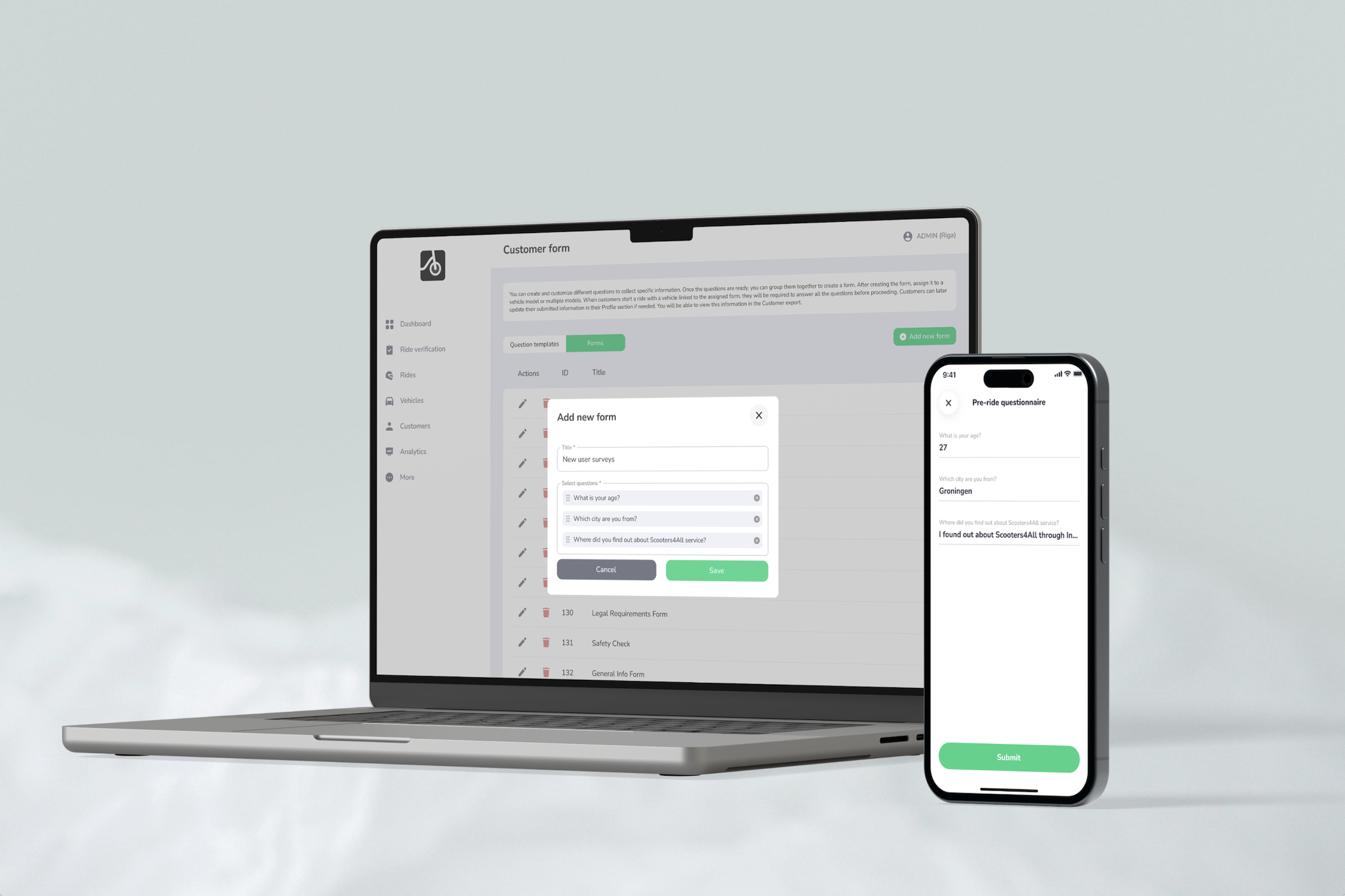
A form that users must complete before starting a ride - ideal for compliance, reporting, invoicing, or gathering important data.
Who it helps
Operators needing regulatory data, reporting, consent collection, or structured user feedback.
How it works
Create a question (or several) in “Customer form” -> Group questions into a pre-ride form -> Assign a form to specific vehicle models/classes.
Once completed, the customer must answer predefined questions before starting the ride. Their responses appear in both customer and ride exports. For example, you can ask for a personal ID code, legal address, or any other required information.
Value for operators
- Helps meet regulatory or municipal requirements
- Ensures correct invoicing details
- Provides a structured way to capture essential user data
What it is
Automatic payout splitting: driver earnings go to the driver’s payout account, and platform commission goes to the operator - all processed automatically after each ride.
Who it helps
Ride-hail operators using Stripe or Adyen.
How it works
- Operator has a Stripe/Adyen merchant account
- Drivers onboard as payout recipients
- After completed rides, payouts split automatically
- Supports mixed payment methods (cash and non-cash)
Value for operators
- Reduces manual payout work
- Minimises accounting errors
- Improves driver experience through transparency and instant pay out
- Makes scaling easier when the driver base grow
What it is
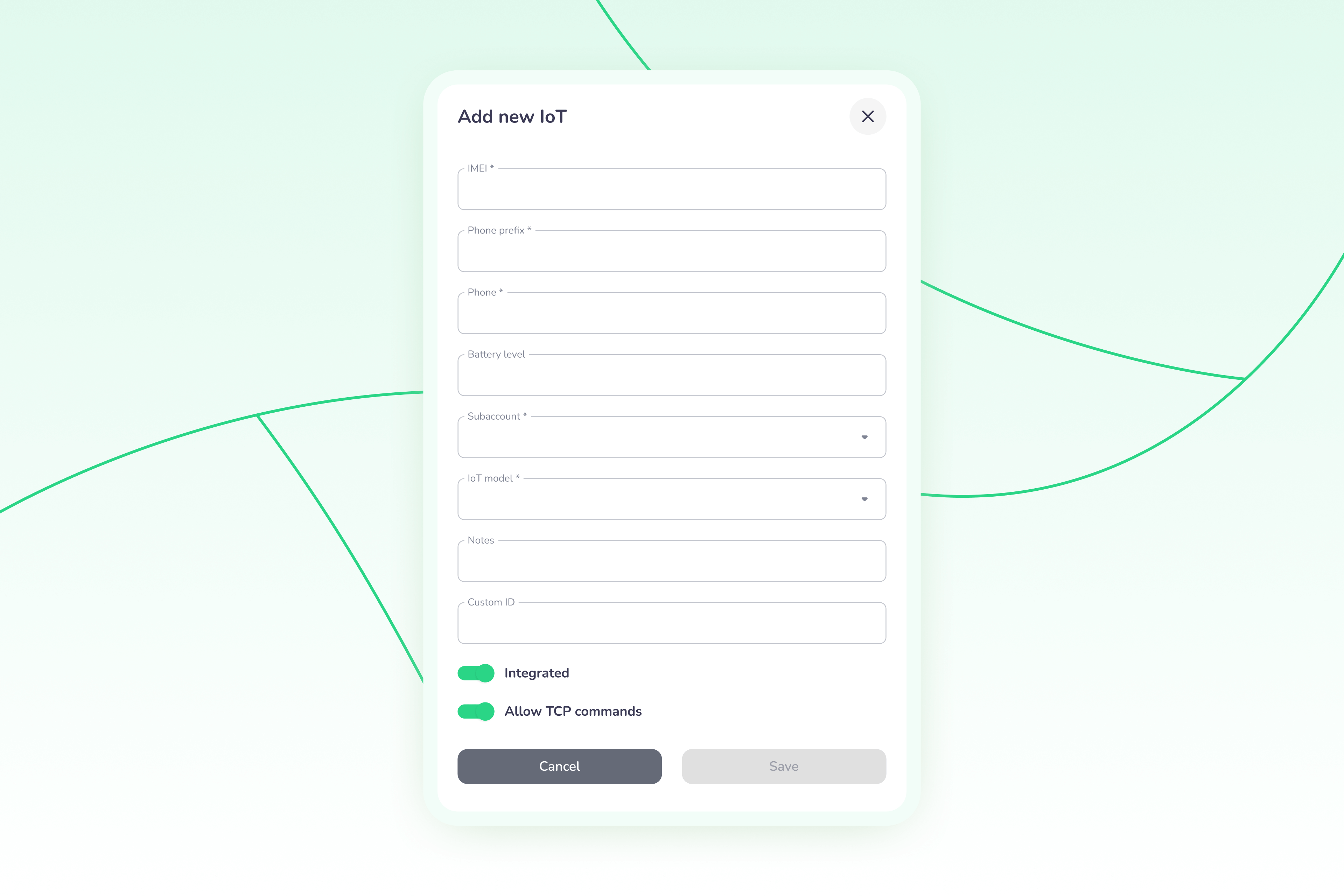
A tool to override or manually set a vehicle’s GPS position when IoT data is unavailable (no IoT placed on the vehicle at all) or inaccurate.
Who it helps
Operators with underground parking, poor GPS coverage, or long-term rentals without IoT can use this setup. A typical scenario is long-term bike rental without IoT: the user completes ID verification, payment, and booking in the app, then sees the vehicle assigned to a predefined location (station) where it is picked up and later returned. This serves as a workaround for vehicles that do not support IoT or where adding IoT device is too costly.
How it works
Edit vehicle → update “Location” field. The system assumes this as the correct coordinate. Works for individual vehicles or via mass import.
Value for operators
- Avoids user frustration when vehicles appear in the wrong location
- Supports business modesl with fleets operating without IoT devices
What it is
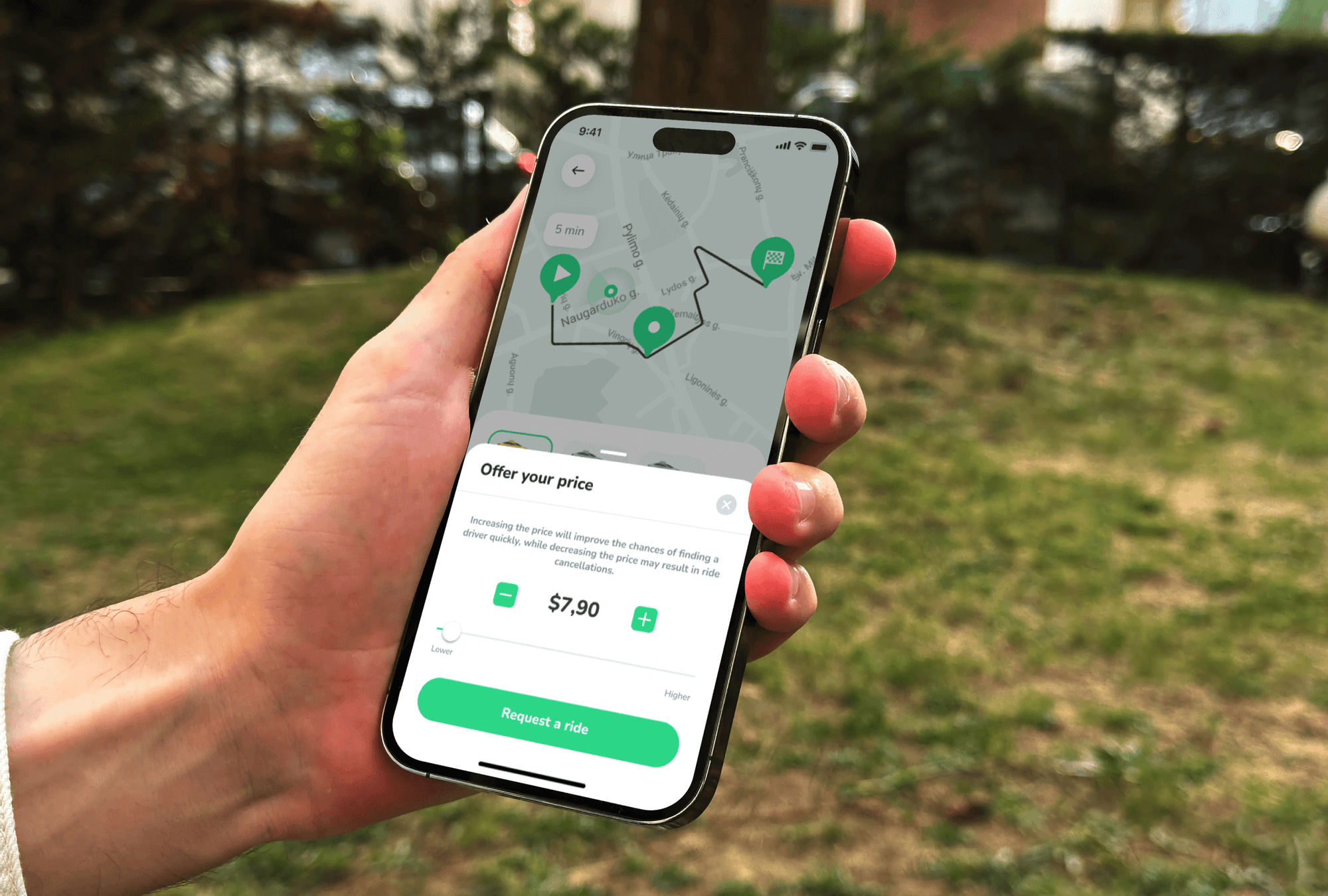
A flexible pricing feature that lets passengers propose their own fare - higher or lower than the system-calculated price, within limits set by the operator. Drivers see the offer instantly and can choose to accept or reject it.
Who it helps
Ride-hailing operators in competitive, price-sensitive, or highly dynamic markets where price shifts demand quickly.
How it works
When requesting a ride, the user selects “Offer your price”. A slider or +/– buttons allow them to adjust the fare within operator-defined boundaries. If the user lowers the price, the app explains that the offer may reduce the chance of driver acceptance.
Drivers see a clear banner showing whether the rider is offering more or less than the standard fare. Drivers can accept or decline based on their preference.
Operators can enable or disable the feature per vehicle class.
Why it matters
- Creates a clear differentiator in markets dominated by fixed-fare competitors
- Helps convert riders who compare multiple apps before booking
- Gives drivers more control over their earnings and decisions, improving transparency and satisfaction
- Supports better ride matching during off-peak hours or less profitable routes
- Allows operators to experiment with more flexible pricing strategies without changing their core fare model
What it is
A lightweight, embeddable booking widget that lets customers reserve a rental vehicle directly from your website - without installing the mobile app first. It’s designed to capture spontaneous bookings, convert website visitors, and unify online and in-app rental experiences.
Who it helps
Car, moped, and bike rental operators, as well as hospitality and tourism partners such as hotels, resorts, coworking spaces, real-estate developers, and travel service providers.
How it works
Every operator receives a branded rental URL: merchantname.atommobility.com/rent
Users select their area, vehicle type, and rental period directly in the widget. Once confirmed and the account created, the booking syncs automatically into the ATOM Mobility dashboard. Customers see a confirmation screen with a QR code to open the booking in the mobile app. Payment, ID verification, and vehicle unlock actions are completed in the ATOM Mobility-powered app before the trip begins.
The widget automatically adapts to the operator’s brand color for a visually seamless integration. In the dashboard, each booking displays its source: App, Web, or Booker - helping operators track where rentals originate.
Why it matters
- Converts first-time users browsing your website into paying customers - without forcing an app install
- Enables plug-and-play rental flows for partners such as hotels, rental desks, cafés, coworking spaces, or tourist spots
- Supports QR-based rental journeys from physical locations
- Reduces friction for users who want a fast, simple booking experience
- Helps operators expand distribution with minimal effort, unlocking new sales channels
- Unifies online and mobile rental flows under a single backend and operational system
Demo: https://app.atommobility.com/rental-widget
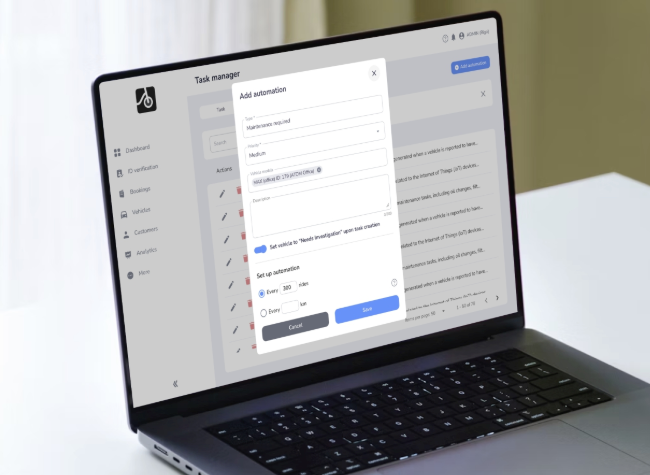
What it is
Bad user experiences often happen when several riders encounter the same faulty vehicle. ATOM Mobility now prevents this automatically. Automation rules detect problematic vehicles and instantly set them to “Needs investigation,” hiding them from the user app so the operator can inspect the vehicle before the next rider can take it.
Who it helps
Sharing and rental operators managing medium or large fleets.
How it works
System monitors low ratings, repeated short rides, and user reports. When triggered, it:
- creates a maintenance task
- switches vehicle status
- hides the vehicle from users
Why it matters
- Prevents recurring complaints from the same issue
- Reduces refunds and reputational damage
- Helps maintain a healthier, more reliable fleet
- Automates routine operational checks
What was added
2025 brought a wave of new integrations that give operators more flexibility in choosing hardware, payments, charging, and regulatory tools. What was added:
- Ridemovi IoT
- Wave payment gateway
- Linka smart lock support
- 2Hire IoT
- Kuhmute charging stations
- Eskiz.uz OTP service
- Atmos payment gateway
- Chiron API (regulatory)
- Fitrider charging station
- Azericard payment gateway
Why it matters
- Easier entry into markets with local payment or OTP requirements
- More hardware options for scooters, bikes, e-bikes, and cars
- Better compatibility with charging infrastructure
- Reduced integration time when expanding
- Support for regulatory compliance where required
These ten features represent only a small selection of what we delivered this year. In total, our team shipped more than 70 new features, dozens of integrations, and countless small improvements that quietly make the platform faster, more stable, and more enjoyable for operators and end-users every single day. Behind each release is a team focused on one idea: helping entrepreneurs build stronger, more efficient, and more profitable mobility businesses.
And we’re just getting started.
Our 2026 tech pipeline is already packed with ambitious and exciting solutions - from deeper AI-powered automation to smarter fleet intelligence and new tools that will change how operators run mobility services. We're looking forward to pushing the industry even further together.
🛴📡 That smooth ride you just took? It was powered by a whole ecosystem of hardware and software you never saw. From IoT modules in the vehicle to real-time dashboards and rider apps, shared mobility relies on a solid tech stack to stay online, secure, and profitable.
You open an app, spot a scooter on the map, and within seconds it unlocks with a click. You ride off, expecting the battery to be charged, the brakes to work, and the whole process to feel effortless. From the very first ride, shared mobility set the standard: vehicles should always be nearby, ready to go, and the whole experience should feel seamless. What most riders never think about, though, is the complex mix of hardware and software working in the background to make every smooth ride possible.
Technology is the baseline for the shared mobility business model. Every ride depends on it. Vehicles need IoT hardware to lock, unlock, and report their status. Connectivity has to be stable so operators always know where assets are and what condition they’re in.
On the software side, riders expect apps that feel instant and intuitive, while operators rely on dashboards for fleet health, pricing, and support. Add in the realities of theft, battery swaps, downtime, and local regulations, and the stakes become clear. Without a reliable tech stack, even small failures – a scooter that won’t unlock or a payment that stalls – can quickly break user trust and hurt the business.
Over the years, several manufacturers have entered the shared mobility IoT space, offering different hardware configurations, network technologies, and integrations. Companies like Teltonika (Lithuania), Comodule (Estonia), Invers (Germany), OMNI (China) and others produce modules compatible with various vehicle types and connectivity standards. Each provider focuses on specific strengths – some prioritize energy efficiency or compact design, others emphasize global coverage or advanced diagnostics. Choosing between them depends on the type of vehicles, operational scale, and software ecosystem an operator plans to use.
Our partner, Comodule was already developing IoT for micromobility when the Corona pandemic hit. Overnight, cities shifted and everyone needed their own safe, private way to move around. Shared scooters and bikes suddenly went from being a niche service to an essential part of urban transport, and the demand for IoT skyrocketed. For IoT manufacturers, it meant long days in development and manufacturing, pushing hard to deliver reliable devices at scale for brands like Uber, Lime, and Hive.
That sharp rise in demand forced them to grow quickly and gave valuable experience in building technology that could perform under real pressure. Fleets that trusted Comodule devices had a backbone they could rely on: vehicles that could be located, unlocked, secured, and managed internationally. Just as important, the IoT had to integrate seamlessly with software systems (like ATOM Mobility). That’s why building robust API and SDK tools became critical – enabling operators to connect hardware to their platforms, control fleets in real time, and access the information needed to keep moving.

Inside every connected scooter or bike sits a IoT module, the “brain” that links the vehicle to the cloud. It connects through cellular networks, constantly sending data about location, speed, and battery status. When a rider taps “unlock” in the app, that command travels through the cloud to the module, which triggers the electronic lock and wakes up the vehicle. The same connection allows operators to set geofenced no-parking zones, push over-the-air updates, or activate a sound alarm if the scooter is being tampered with. Battery sensors inside the module report charging cycles and health, so operators know exactly when a pack needs to be swapped or replaced.
All of this data is streamed in real time to the fleet management system, giving providers the ability to monitor hundreds or even thousands of vehicles simultaneously. For operators, these capabilities mean higher uptime, faster theft recovery, and precise control over the entire fleet – the difference between running a struggling operation and a profitable one.
As shared mobility matured, the bar kept getting higher. New scooter generations came with swappable batteries, sturdier frames, and better onboard electronics. Riders got used to apps that respond instantly, process payments in seconds, and show vehicle availability with pinpoint accuracy.
At the same time, competition rose, not only from global players but also from smaller, local operators launching fleets in their own cities. For these companies, reliable hardware was no longer enough. They needed the software layer that connects everything: smooth rider apps, powerful operator dashboards, and analytics to make smarter decisions. Yet many lacked the time and resources to build software on their own.

As fleets grew and competition intensified, operators realized they did not have time or funds to develop their own software layer. They needed a market-ready platform that ties everything together – apps that riders enjoy using and dashboards that give operators full control of their business. That’s where solutions like ATOM Mobility come in.
Platform connects directly with Comodule IoT through APIs and SDKs, so every unlock command, error code, or battery update flows instantly between the rider’s app and the operator’s dashboard. Almost any company can launch a fleet with this stack – from large-scale operators to small, local newcomers.
When hardware and software work seamlessly, the rider experience feels effortless. A simple tap in the app sends a command through the cloud to IoT, which unlocks the vehicle and streams live data back in milliseconds. The operator instantly sees the vehicle’s status in the dashboard: battery level, GPS position, and any error codes.
If the scooter leaves a geofenced area, the system reacts automatically. If maintenance is needed, the alert is flagged before it becomes a breakdown. By combining the hardware with software, fleet providers get one complete ecosystem – a stack built to keep vehicles online and users satisfied.
From a rider’s perspective, shared mobility should always “just work.” That won’t change. But the technology stack behind it is becoming more sophisticated every year. Stricter regulations demand safer and more transparent services, while cities are pushing for integration into broader Mobility-as-a-Service platforms. IoT and software together provide the data and control that operators need, not only to stay compliant but also to improve fleet efficiency and sustainability and to provide insights for city planning.
For users, that sophistication will translate into something simple: services that are more reliable, safer for everyone on the road, and smarter – with data from real-world usage helping to shape better vehicles, better infrastructure, and better cities in the future.
*This article was created together with our partner Comodule.

🚗 The car rental industry is finally catching up with modern mobility. From Norway to Mexico, users are skipping the desk and unlocking their rental cars with just a tap on their phone. Paper contracts, front desks, and "similar model" surprises are being replaced by fast, app-based experiences. Operators like Hyre, Sixt, and Avis are proving that going digital boosts revenue and improves customer satisfaction.
The car rental industry is finally going digital. Not with just a website and an app, but with a real transformation of how rentals work – from booking to unlocking the vehicle. Customers no longer want paper contracts, counters, or “similar model” surprises. They want convenience, predictability, and self-service.
That’s exactly what happened at Norway’s largest airports, where traditional rental giant Europcar lost its presence to Hyre – a local operator offering a mobile-first, fully digital blend of car rental and sharing. But it’s not just new players like Hyre pushing this shift. Established giants like Sixt and Avis are rapidly digitalising their rental flow as well – rolling out features like app-based bookings, mobile ID verification, and keyless access across key markets.
At ATOM Mobility, we’ve helped operators move toward this digital future for over seven years. The goal is simple: modernise outdated processes, improve the user experience, and create more profitable operations. And right now, the timing for this shift couldn’t be better.
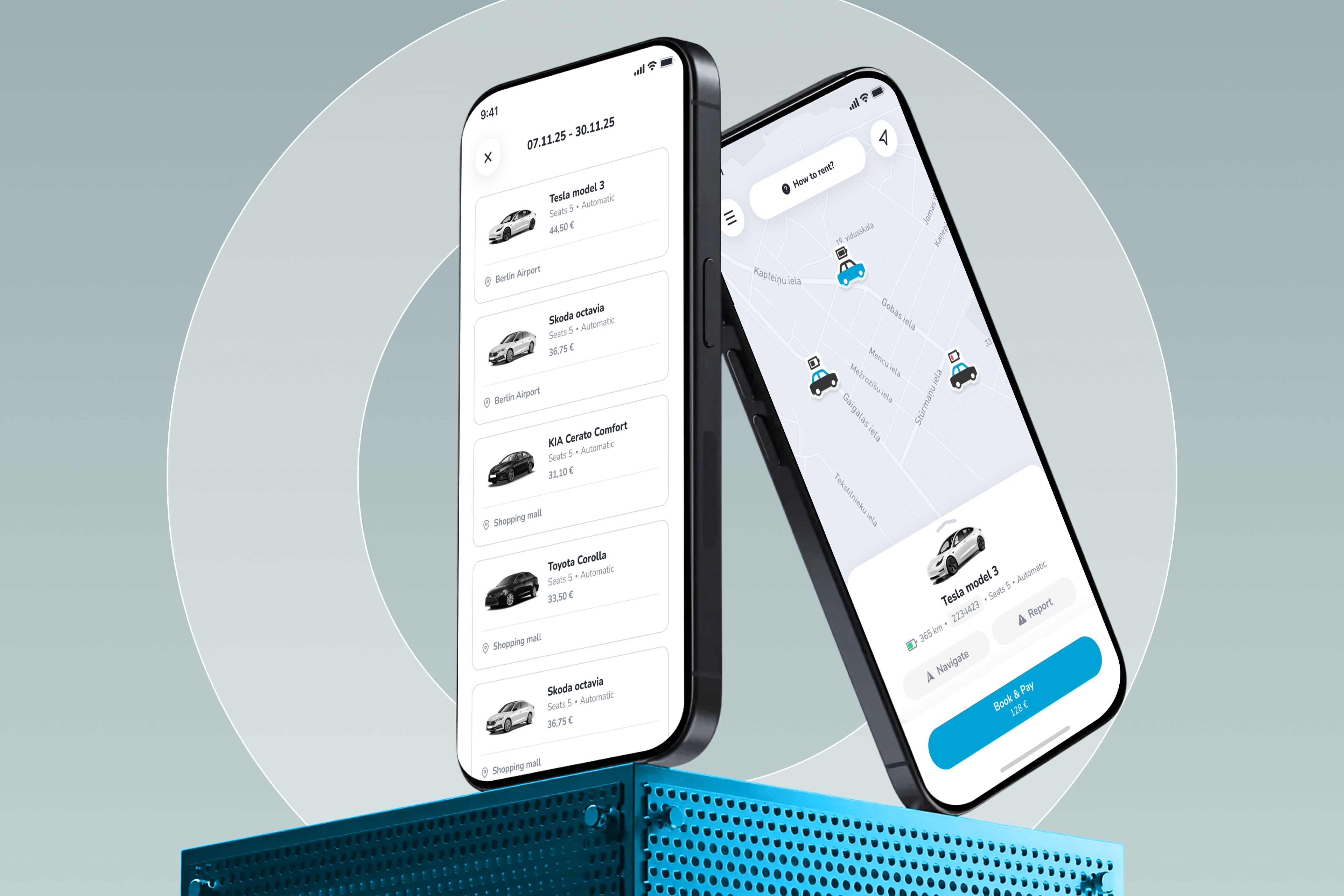
From counters to apps: Why the rental experience is changing
Customer expectations have changed. Today’s users – especially younger ones and business travellers – are used to seamless, mobile-first journeys. They don’t want to queue at a desk, hand over their ID, wait for paperwork, or discover they’re getting a different car than they booked. And in many cases, they simply won’t accept it.
Hyre’s model responds to this new demand:
And the results are impressive:
This shift is not just a trend in Norway. It’s a glimpse of where the car rental market is heading across Europe and beyond.
What users gain from a digital rental experience
The benefits for customers are obvious – and powerful:
This is what the modern traveller wants: clarity, control, and speed.
Why operators are embracing digitalisation
While the user benefits are clear, the real business case lies in how much better digitalisation makes operations:
Real examples: Hyre, Sixt, Avis, and Beyond
These companies understand that digitalisation isn’t about offering an app – it’s about rebuilding the rental experience around the user. And it's paying off.
What this means for operators (and how ATOM Mobility can help)
If you’re running a rental operation and still relying on paperwork, front desks, or disconnected tools, now’s the time to evolve.
Here’s how you can modernise your operations with help from ATOM Mobility:
ATOM Mobility provides all the building blocks to power this shift. Whether you’re a traditional rental company l
ooking to go mobile-first, or a new operator exploring flexible mobility, we’ve built the tech to get you there.
The rental counter is going away
Car rental is becoming more like e-commerce: fast, digital, and customer-led. The counter, the queue, the paperwork – these are all parts of an older model that no longer meets expectations. The future lies in seamless, app-based access that lets users pick the car they want, when they want it.
The Hyre example shows what’s possible with the right model. Sixt and Avis show how even large incumbents are adapting. If you’re an operator – big or small – the time to start this shift is now.
And if you’re looking for a trusted partner to support you on that journey, ATOM Mobility digital rental software is ready. We help rental and car sharing businesses launch, scale, and thrive – with the tech that powers modern mobility.

When global players skipped smaller cities, Elerent saw opportunity. They built a franchise-first network that now spans 60+ cities across Southern Europe. After migrating from another platform that struggled with complex IoT (10+ device types!), they found a scalable partner in ATOM Mobility.
🌍 When global players skipped smaller cities, Elerent saw opportunity. They built a franchise-first network that now spans 60+ cities across Southern Europe. After migrating from another platform that struggled with complex IoT (10+ device types!), they found a scalable partner in ATOM Mobility - and now they’re even taking on ride-hailing with WOPPH, a new Italian alternative to Uber.
When Alessio Treglia first encountered shared scooters on a trip to Lisbon in 2019, he instantly saw potential. At the time, Italy had no similar micromobility services, and the simplicity of the scooter-sharing experience – especially how easy it was through the app – left a strong impression.
That moment led to the creation of Elerent, a company that now operates in more than 60 cities across Italy, Malta, Greece, and Spain. Built entirely on a franchise model, Elerent empowers local entrepreneurs to run their own fleets under a unified brand and tech platform. Today, Elerent is expanding across new cities, vehicle types, and even business models – including a ride-hailing app called WOPPH, designed specifically for the Italian market.
Launch date: June 2020. Migrated to ATOM Mobility in May 2025
Country: Italy, Malta, Greece, and Spain
App downloads: Over 100,000 (Android)
App rating: 4,7 / 5 from 965+ reviews (Google Play) and 4.6 / 5 from 1600+ reviews (App Store)
Fleet: Over 4,000 vehicles across 60+ cities
Web page: https://elerent.com
App Store: https://apps.apple.com/it/app/elerent/id1518090808
Google Play: https://play.google.com/store/apps/details?id=com.elerent.elerent
Starting with inspiration – and a delayed launch
Alessio was already managing several businesses in Italy when he came across Tier scooters in Lisbon. Curious about the model and impressed by how easily it worked, he returned to Rome with the idea of starting something similar. He began researching the sector, gathered insights from local entrepreneurs, and launched a pilot project. Everything was ready by early 2020, but the pandemic delayed the official launch. Instead of stopping, Alessio used that time to study the market more deeply and refine the model. In June 2020, the first Elerent city went live.
Focusing on cities the big players skipped
From the start, Elerent’s strategy was clear: avoid direct competition with large operators like Dott or Bird in crowded urban centres. Instead, the team focused on small and mid-sized cities, especially those with strong tourism traffic. The franchise model made this possible. Local partners handled daily operations and worked directly with municipalities, while Elerent provided the brand, tech platform, and support. This approach allowed the company to scale efficiently, without needing large operational teams in each location.
One supplier per vehicle type
Elerent began with scooters, later adding bikes, mopeds, and in some cities, cars. Scooters are still the most popular option across their network, especially in resort towns. Bike sharing is growing fast and has become a key focus for expansion. Mopeds, on the other hand, have proven more complex to manage and scale. To keep things efficient, the team prefers working with a single hardware supplier per category. For scooters, that’s mostly Segway. Standardizing hardware has made training, maintenance, and spare part sourcing easier across all cities.
.jpeg)
Running the business day-to-day
Each city is run by a local entrepreneur who manages deployment, maintenance, and local relationships. These franchisees are incentivised to ensure smooth operations – they earn directly from ride revenue. Elerent monitors each location using a few simple metrics: average rides per vehicle per day, and how many vehicles are active. This helps the team identify issues like maintenance delays or low demand, and offer support where needed. “They know their cities better than we ever could,” Alessio explains. “That’s why the model works.”
Switching platforms and finding the right tech
Before partnering with ATOM Mobility, Elerent had worked with several other fleet management platforms. Alessio is direct about what he learned through that experience: frequent migrations are expensive, risky, and damaging to customer trust. “Every migration costs you money, time, and reputation,” he says. “That’s why it’s so important to choose the right software partner early and stick with them.”
After testing different solutions, Alessio chose ATOM Mobility based on the platform’s reliability, flexibility, and partner-first approach. “We found a solid product that does what we need it to do,” he says. “It’s stable, it’s scalable, and it supports our franchise structure and multi-vehicle operations across many cities. That’s not easy to find.”
He also values the working relationship. “The ATOM team actually listens. We’ve been able to suggest changes and improvements, and they respond fast,” he adds. “They understand how operators think. It’s not just a software provider – it’s a real partner.”
Smarter decisions with AI
To improve fleet performance and decision-making, Elerent has integrated Switch’s Urban Copilot – an AI-driven tool that supports operators with actionable data insights. “Everyone talks about AI, but this is one of the only tools that actually delivers results,” says Alessio. “We don’t have our own analytics team, but with Switch, we get the insights we need to make better decisions.”
Supporting local launches
Whenever a new city goes live, Elerent supports the franchisee with launch marketing, hands-on training, and operational onboarding. This includes local promotions with hotels and restaurants, technical setup, and on-the-ground support during the first week of service. The goal is to make each new launch consistent, reliable, and locally relevant.
.jpeg)
WOPPH: An alternative to ride-hailing in Italy
WOPPH (pronounced “wopp”) is Elerent’s newest product – a ride-hailing app designed specifically for the Italian market, where traditional platforms like Uber are limited to taxi dispatching. WOPPH allows private individuals to offer rides to others, using a peer-to-peer model that fits within the local legal framework. Users can book rides, view pricing, and track arrivals – all through the app (powered by ATOM Mobility). The service has already launched in Rome and is set to expand to ten more cities in the coming months.
WOPPH is also experimenting with other modes of transport, including golf carts, delivery vehicles, and even private planes for day trips. The app will also allow users to turn their personal vehicles into shared cars using IoT devices – letting drivers choose between offering rides or enabling self-service access. “It’s an ambitious product,” Alessio says. “But the market response has been very positive.”
Looking ahead: growth through opportunity
Alessio believes the timing is right for continued expansion. With hardware costs falling and large operators focusing more on profitability than growth, there’s room for companies like Elerent to expand into new markets, especially with second-hand vehicles. “We can buy nearly-new units from major suppliers at half the price,” he says. “That opens a lot of doors.”
The focus now is on growing Elerent’s reach, continuing to support franchisees, and scaling WOPPH into a national mobility platform. With multiple projects moving forward in parallel, Elerent is positioning itself as a flexible, tech-enabled operator in markets that global players often overlook.

"State of art technology in mobile apps and dashboard, very good SLA!"
"Easy, nice looking, continuously updated and developed every month and most of all very reliable with a extreme high uptime"
"We used to work with a different service provider which wasn't fitting our needs. Switching to ATOM was an improvement on our side"
Use test credentials to log in - Phone number: +1 123123123, Code: 777777


Driver App demo credentials - Email: test@atom.com, Password: driver