Blog
Insights and news from the ATOM Mobility team
We started our blog to share free valuable information about the mobility industry: inspirational stories, financial analysis, marketing ideas, practical tips, new feature announcements and more.

We started our blog to share free valuable information about the mobility industry: inspirational stories, financial analysis, marketing ideas, practical tips, new feature announcements and more.
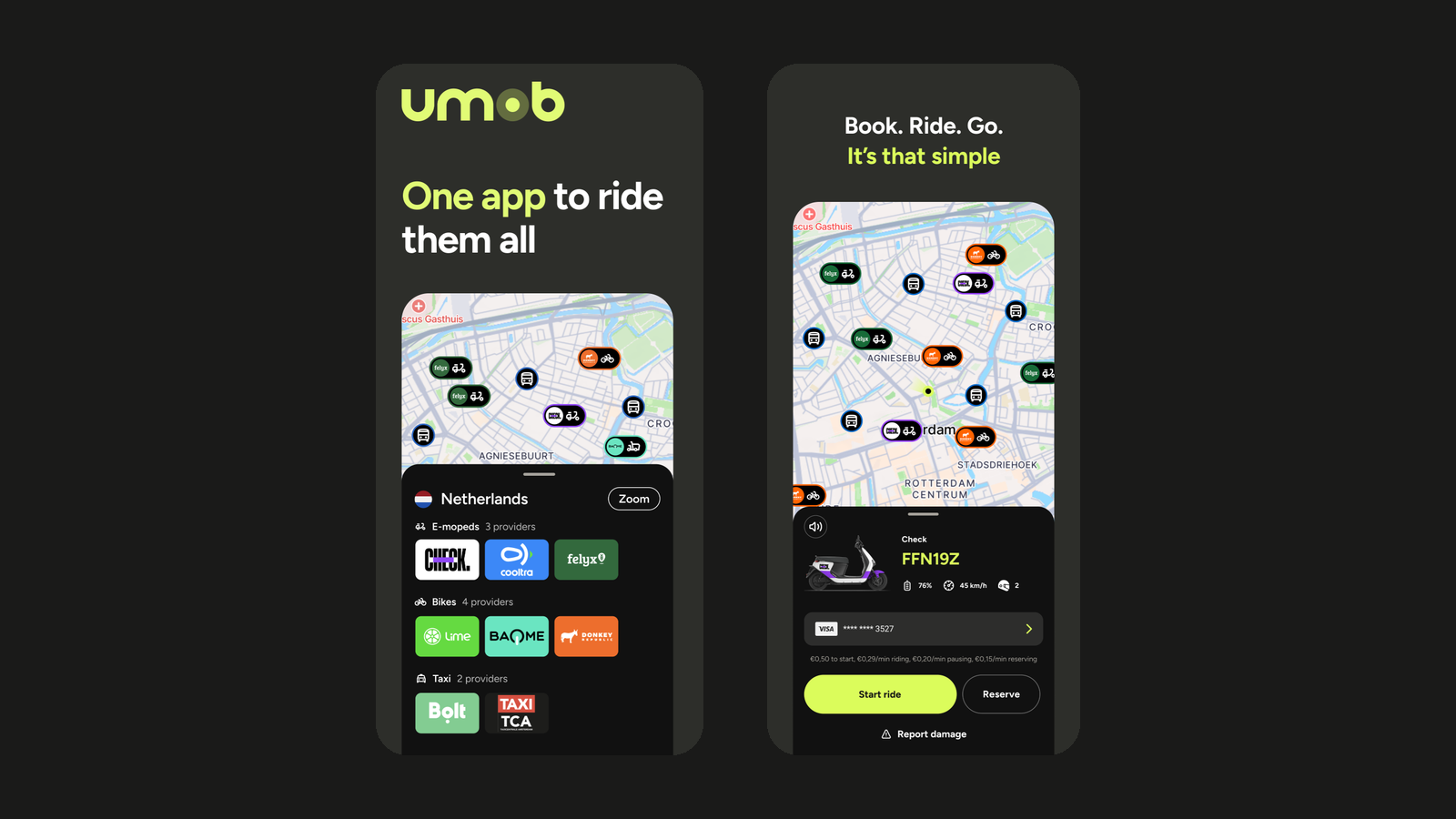
🌍 Reach more riders with ATOM Mobility and Umob. The integration gives shared mobility operators an additional distribution channel, helping attract new customers, generate more bookings and improve fleet utilization.
The future of mobility is not just about operating vehicles. It is about creating convenient journeys that bring different transportation options together in one simple customer experience.
That is why we are excited to highlight our partnership with Umob, helping mobility operators expand their reach and become part of a growing multimodal mobility ecosystem.
Whether you operate shared cars, scooters, bikes or mopeds through the ATOM Mobility platform, integrating with Umob allows your service to become accessible to thousands of Umob users looking for a convenient way to travel.
Today's users expect flexibility. They don't think in terms of individual mobility providers, they simply want the fastest, easiest, and most convenient route from A to B.
Umob brings different mobility providers and transport options together in one app. Users can find, compare, book and pay for different mobility options without having to download a separate app or create a new account for every provider.
By connecting your fleet to Umob, operators can:
For ATOM Mobility customers, the integration is designed to provide a straightforward way to unlock new distribution opportunities while continuing to manage their core operations through the ATOM Mobility platform.
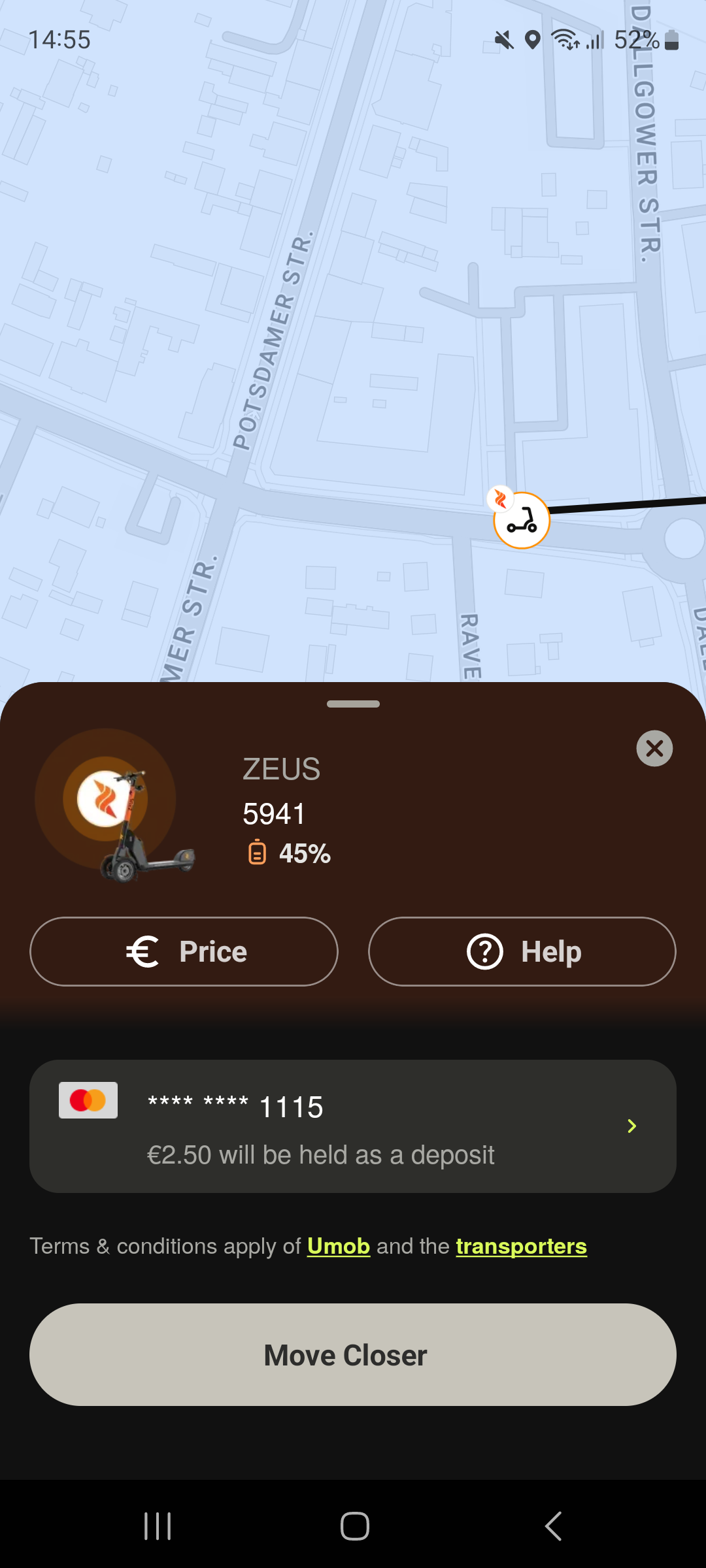
Through the ATOM Mobility platform, participating operators can connect their fleets with Umob, enabling users to discover and use available vehicles directly through the Umob app.
Once connected, vehicles from participating operators can appear in Umob alongside other available mobility options, giving users one clear overview of the different ways they can get from A to B.
Users can discover an available vehicle, reserve and unlock it, start and end their ride, and pay directly through Umob.
The integration is designed to support:
Operators continue to manage their fleet, pricing, service areas and day-to-day operations through the ATOM Mobility platform, while Umob provides an additional channel through which users can discover and access their vehicles.
For mobility operators, connecting with Umob creates an additional distribution channel without changing the way they manage their day-to-day operations through ATOM Mobility.
By making vehicles available to thousands of Umob users, operators can increase their visibility at the moment people are actively looking for a ride. This creates the potential to attract new users, generate additional bookings and improve fleet utilization over time.
Every market is different, but many operators see MaaS partnerships as an important part of their long-term growth strategy.
One of the first ATOM Mobility operators to launch through the Umob integration is ZEUS Mobility, an ambitious European e-scooter sharing provider with a strong focus on innovation, a dynamic approach and challenging the established players in the market.
Fittingly, the partnership itself started through the ATOM Mobility network.
ZEUS and Umob first met at an ATOM Mobility event in Riga. While the initial introduction happened during the event, it was over drinks later that evening that the conversation really started.
ZEUS had already come across the Umob brand on mobility vehicles while travelling and had been impressed by the professional approach the company was taking. That recognition quickly turned into a conversation about how both companies could strengthen their propositions by working together.
From there, the integration moved forward quickly. ZEUS describes the preparation and integration process so far as “clean, professional and smooth.”
For ZEUS, the partnership creates an opportunity to strengthen the visibility of its brand, reach new customers and support its wider European growth ambitions.
Following its acquisition of Superpedestrian in May 2026, ZEUS is looking to accelerate its growth throughout 2026 and 2027, with the Umob partnership forming part of that ambition.
“ZEUS is thrilled to be partnering with Umob in European markets. Following our acquisition of Superpedestrian in May 2026, ZEUS is seeking to rapidly grow through 2026 and 2027. This partnership can help to drive this growth and reach new customers in new markets. We look forward to a rewarding partnership.” - Damian Young, ZEUS Mobility
One app to ride them all. Umob is an all-in-one mobility platform that brings different mobility providers and transport options together in one app.
Users can find, compare, book and pay for shared bikes, e-bikes, scooters, mopeds, public transport, taxis and other available mobility options through one account and one payment experience. Instead of downloading and registering with a separate app for every provider or every new city, users can open Umob and see the available mobility options around them.
Today, Umob is available in 28+ countries and 300+ cities, giving thousands of users an easier way to access different forms of mobility both at home and while travelling.
Key facts
If you're already operating your shared mobility service on the ATOM Mobility platform, connecting with Umob could be the next step toward reaching more users and becoming part of a truly connected mobility ecosystem.
If you're interested in enabling the integration or learning more about how it works, get in touch with our team. We look forward to helping more operators connect, collaborate, and make sustainable mobility easier for everyone.

Most taxi companies don’t fail because of tech - they fail because no one knows they exist 👀 In today’s market, competing with Uber isn’t about features, it’s about demand. 📈 No brand, random marketing, “Later” mindset results in low utilization & slow growth. In this article, we break down the most common mistakes - and how to build a marketing system that actually drives rides 🚀
Most taxi and ride-hailing companies don’t fail because of bad technology. They fail because no one knows they exist. In a market shaped by players like Uber, demand is no longer something that “just happens.” It’s engineered. Built. Optimized. Repeated.
Yet many operators still treat marketing as something secondary - something to figure out after the launch, after the fleet is ready, after drivers are onboarded. By then, it’s already too late.
A common pattern we see is this: a company launches with a functional product, maybe even a solid operational setup, but without a clear brand or acquisition strategy. A few campaigns are tested, some budget is spent across different channels, but nothing is consistent. There is no clear positioning, no defined audience, and no system to measure what actually works.
The result is predictable. Growth is slow, utilization stays low, and pressure starts to build. At that point, marketing becomes reactive - driven by urgency rather than strategy. Discounts increase, experiments multiply, and costs rise faster than revenue.
This is where many businesses lose control of their unit economics.
Poor marketing rarely comes from a lack of effort. It usually comes from wrong priorities. Many operators believe they have more urgent problems to solve - fleet, drivers, operations - and that marketing can wait. It feels logical in the short term, but in reality it’s a short-sighted decision that creates much bigger problems later.
Another common issue is lack of direction. Marketing activities exist, but they are scattered and unstructured. There is no clear target audience, no defined positioning, and no consistent brand language. Without that foundation, even well-funded campaigns struggle to deliver results.
This is where the gap between smaller operators and companies like Uber becomes obvious. The difference is not just budget - it’s clarity. They know exactly who they target, how they communicate, and how they measure success.
Without that clarity, marketing becomes noise. And noise doesn’t convert.
In early stages, many companies treat marketing as a “nice to have.” Budgets are allocated to everything else first, and whatever remains is used for promotion - if anything is left at all. The assumption is simple: launch first, invest in marketing later.
The same thinking often leads to another mistake - launching with a weak or non-existent brand. A generic app, no clear identity, no differentiation. It may save money initially, but it creates a much bigger problem: people don’t remember you, and you can’t build demand around something that has no identity.
At some point, reality catches up. Growth is slower than expected, revenues don’t match projections, and pressure builds. That’s when companies switch into reactive mode. Marketing becomes urgent instead of strategic. Discounts increase. Random campaigns are launched. Budgets are spent faster, but results don’t improve. Panic replaces planning - and panic-driven marketing almost never works.
Forget random marketing. It doesn’t scale. If you want predictable growth, start here:
The earlier you build this system, the faster you reach profitability.
At ATOM Mobility, we’ve seen this dynamic across hundreds of mobility businesses globally. The difference between those who scale and those who stall rarely comes down to technology alone. Execution is what separates them.
That’s also why we expanded beyond software and, together with industry experts, launched a dedicated marketing service to support operators directly.
We help mobility businesses go from zero to scalable demand - covering go-to-market strategy, branding, performance marketing, app store optimization, and continuous growth management, all tailored specifically for ride-hailing and taxi operators.
👉 Learn more and see how we can support your growth:
https://www.atommobility.com/marketing-agency
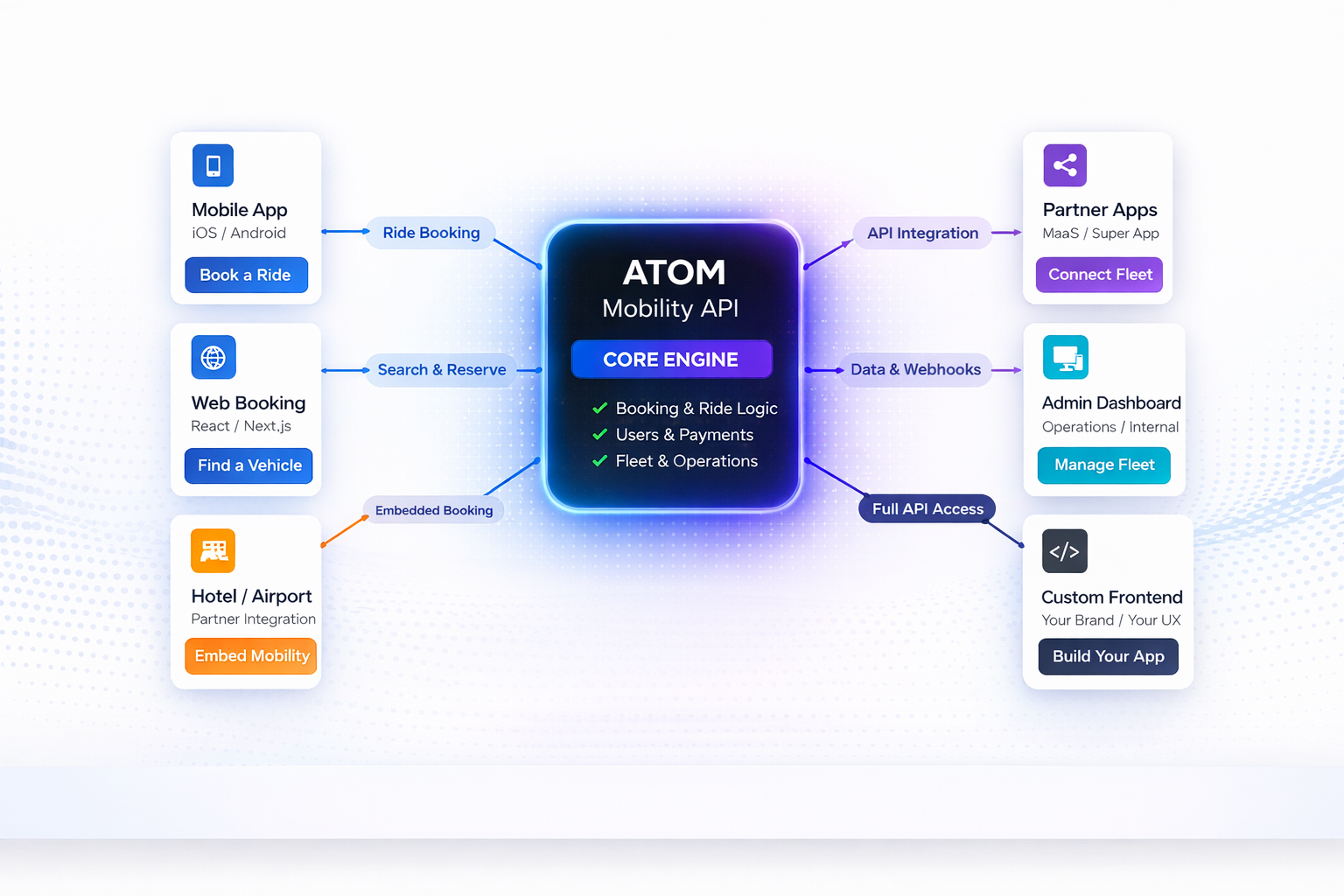
⚡ Launch faster and integrate anywhere with ATOM Mobility API. Build your own mobility experience without rebuilding the backend. Learn how ATOM Mobility API lets you integrate, customize, and scale faster.
Shared mobility is moving beyond standalone apps. Operators today are expected to integrate into existing ecosystems - from hotel and airport platforms to corporate travel tools and MaaS apps. Building all of that from scratch is slow, expensive, and hard to scale.
That’s why ATOM Mobility offers a fully developed OpenAPI - allowing you to build your own mobility experience on top of a proven backend.
Most mobility solutions are still built as closed systems. That creates friction: integrations take time, custom features require heavy development, and expanding into new channels becomes complicated.
An API-first approach changes this.
Instead of rebuilding core functionality, operators can use ATOM Mobility as the underlying system and build their own layer on top. Booking flows, payments, vehicle control, and operational logic are already there - accessible via API.
With API access, mobility can be embedded directly where users already are.
- A ride can be booked from a hotel website. A car can be unlocked through a partner app. A custom frontend can be built for a specific market without touching the backend.
- At the same time, operators can connect their own tools: from internal dashboards to finance and reporting systems (for example, Power BI) creating a more automated and scalable operation.
The result is not just a mobility app, but a flexible system that can adapt to different markets, partners, and use cases.
🚗 Booking & ride management - search vehicles, reserve and unlock, start and end trips, manage ride status.
💳 Payments & users - create and manage users, handle payments and pricing, access booking history.
🛴 Fleet & operations - vehicle status and location, zones and restrictions, pricing configuration.
🔌 Integrations - connect third-party apps, sync with external systems, automate workflows and more...
1. Embedded mobility in partner platforms
Booking directly from (no app download needed):
2. Custom frontends and apps
Operators build:
All powered by ATOM Mobility backend.
3. IoT and hardware integrations
4. Automation & internal tools
Instead of spending months building core systems, operators can use ATOM API and focus on what actually drives growth - distribution and partnerships.
Learn more:
https://www.atommobility.com/api
Explore the API:
https://app.rideatom.com/api/docs
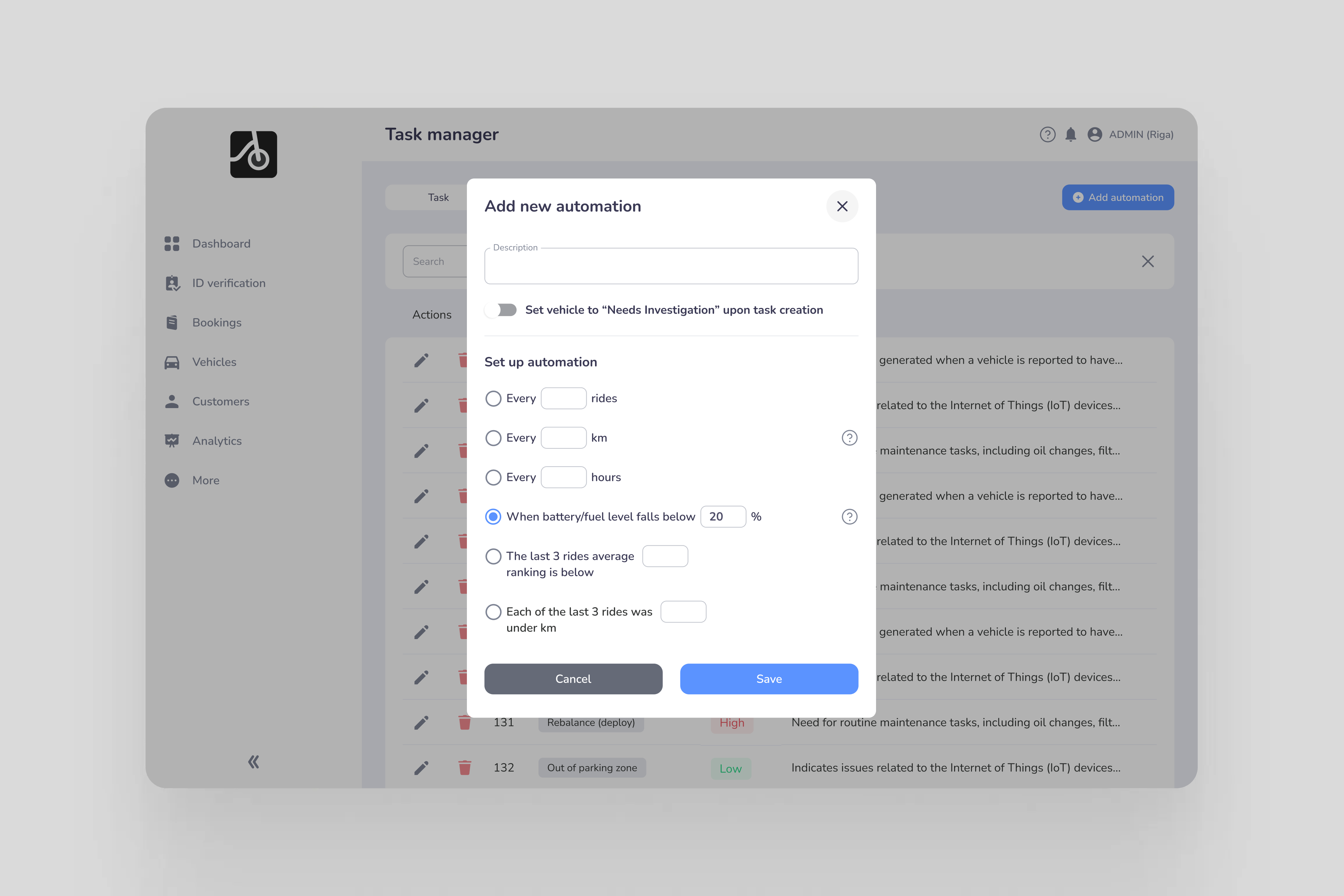
🚗 Scaling a rental fleet without automating maintenance? That’s risky. Spreadsheets and routine checks might work at 20 vehicles, but once you grow past 50, things start slipping. More operators are using IoT telematics, automatic error codes, and mileage-based service alerts to catch issues early and keep vehicles available. See how rental fleet maintenance automation helps you scale without chaos.
How to automate maintenance alerts for rental fleets
Rental fleet maintenance automation is becoming essential for operators who want to scale without increasing operational complexity. Whether you manage cars, scooters, bikes, or mixed fleets, manual inspections and spreadsheets quickly fail once your fleet grows beyond a few dozen vehicles.
Breakdowns, missed services, and delayed repairs directly affect uptime, revenue, and customer satisfaction. Modern fleet technology makes it possible to automate maintenance using IoT telematics, onboard sensors, automatic error codes, mileage-based triggers, and structured dashboards.
Why manual maintenance tracking does not scale
In small fleets, maintenance is reactive. A customer reports an issue. A staff member checks the vehicle. Someone creates a task manually. This works for 20 vehicles, but for 200 it’s just too much work.
As fleets expand, issues are discovered too late, standards vary between locations, and staff spend more time coordinating than fixing. Rental fleet maintenance automation shifts operations from reactive repairs to preventive, system-driven workflows.
Using IoT telematics to monitor vehicles in real time
IoT telematics devices collect live data such as location, battery level, ignition status, engine health, and mileage. In car rental and car sharing fleets, telematics also track fuel levels, driving behaviour, and diagnostic information.
Instead of waiting for user reports, the system can trigger alerts automatically. For example:
This data feeds directly into the fleet platform, where workflows assign tasks automatically, reducing response times and eliminating internal coordination delays.
Onboard sensors and automatic error codes
Modern vehicles generate diagnostic trouble codes when systems fail. In connected fleets, these codes appear instantly in the operator dashboard.
If a vehicle reports a brake or engine warning, the system can block it from new bookings, notify technicians, and create a repair task automatically. In micromobility fleets, IoT modules detect tilt events, battery degradation, failed unlock attempts, or controller errors.
Digital reporting further improves vehicle availability. ATOM Mobility’s vehicle damage management feature shows how structured workflows reduce downtime and improve transparency.
Mileage-based and time-based service automation
Rule-based servicing is one of the most effective elements of rental fleet maintenance automation.
Operators can set simple service rules, such as:
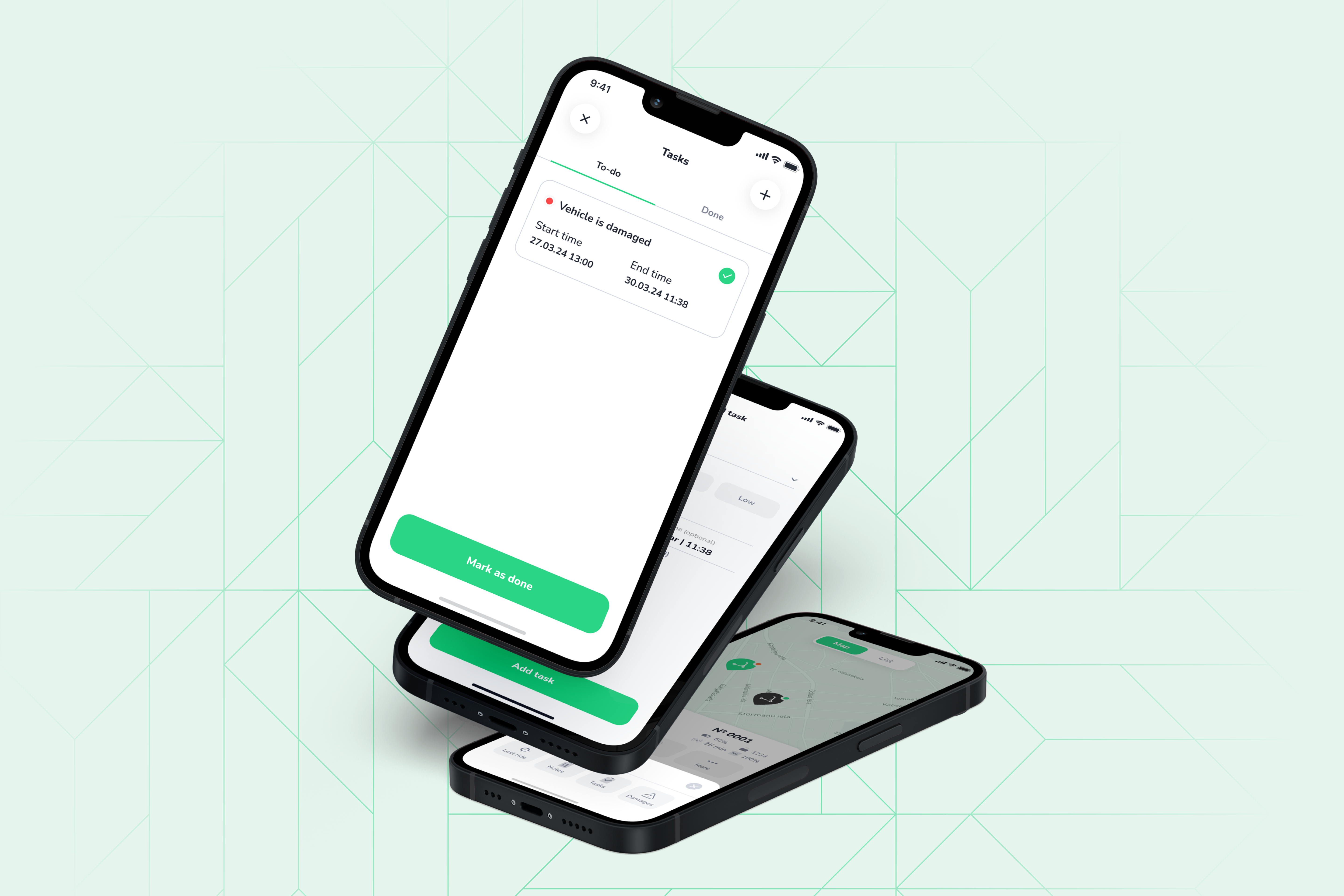
When a vehicle reaches one of these limits, the system creates a task automatically. The vehicle can also be temporarily removed from booking until the service is done. This becomes especially important when operating in multiple cities, because it keeps safety standards consistent across the entire fleet.
Maintenance dashboards and task automation
A maintenance dashboard centralises alerts, open issues, and upcoming service requirements.
With structured task management, teams can assign jobs, set priorities, track resolution times, and analyse recurring issues. ATOM Mobility’s Task Manager feature enables operators to convert alerts directly into trackable actions within one system. Alerts that turn into tasks automatically make it clear what needs fixing and when it should be handled.
From reactive to predictive maintenance
With enough historical data, fleets can move beyond fixed intervals. Operators can identify patterns such as faster brake wear in specific models or higher damage rates in certain areas. Predictive maintenance allows servicing based on actual usage intensity, reducing unnecessary costs while preventing major failures.
For operators growing from 50 to 500 vehicles, automation delivers clear advantages:
Automation supports maintenance teams with clearer priorities and better data.
Building the right automation stack
Effective rental fleet maintenance automation typically requires:
When these components are connected, maintenance becomes scalable and controlled instead of reactive. This is especially important for operators running scooter, bike, car sharing, or rental businesses, where uptime directly impacts revenue and retention.
Rental fleet maintenance automation makes maintenance more organised and easier to manage as you grow. IoT telematics, automatic diagnostics, mileage alerts, and task dashboards help create clear processes that support expansion.
For rental and shared mobility operators who want to grow steadily, automating maintenance is essential. It helps keep operations stable and supports long-term profitability.
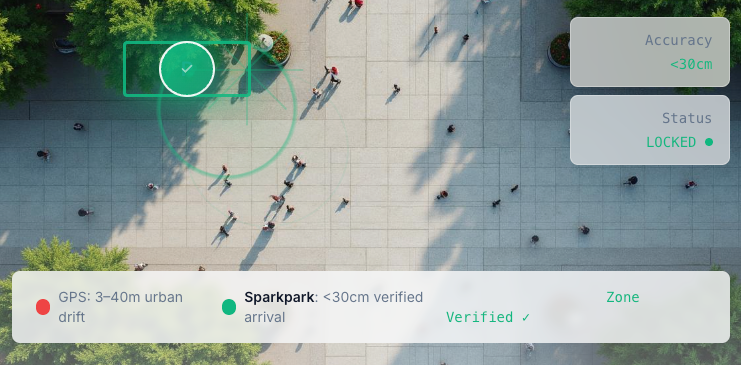
Lime improved GPS from 12m to ~1.5m accuracy - a big step forward for micromobility. 🚀 But parking compliance isn’t just about knowing where a vehicle is - it’s about proving it’s parked correctly. Real-world pilots (like Prague) show that physical verification (e.g. Bluetooth beacons) can significantly outperform GPS when it comes to actual compliance.
Lime just raised the bar for GPS-based parking compliance. But the bigger question is this: when cities want verified parking, is better GPS enough, or do operators need physical proof? That question matters more than ever.
Lime’s new LimeBike rollout in the UK comes with a major location upgrade. Lime says its new bikes can locate themselves to within 1.5 metres, a significant improvement from the roughly 12.3 metres typical in dense urban environments (this means that based on GPS data, a vehicle can be up to 12 meters farther or closer than the reported GPS location. Now this error is just 1.5 meters). That is real progress.
Lime’s upgrade is a meaningful step forward for GPS-based positioning. At the same time, cities are increasingly looking beyond positioning accuracy toward verifiable parking compliance.
Cities are becoming much less tolerant of parking disorder. In Kensington & Chelsea, the council seized 1,000 rental e-bikes by November 2025 and collected more than £81,000 in charges from operators.
That is the real backdrop for every operator today:
So yes, better GPS is good news. But it does not automatically mean cities will see parking as “solved.” A vehicle may be near a bay, beside a bay, or slightly outside it. In dense urban areas, that difference matters. Traditional GPS struggles there because of building interference, blocked satellite visibility, and signal reflections.
So the strategic question is no longer:
“Can we improve GPS?”
It is:
“What kind of system gives cities enough confidence to enforce parking rules fairly and consistently?”
A European Commission-backed pilot in Prague tested a different approach: Bluetooth-based parking verification.
Across 25 parking locations and 989 parking events, the results were clear:
When the goal is verified parking inside a defined zone, infrastructure-based validation can significantly outperform vehicle-only (GPS) positioning.
Lime’s move shows how far vehicle-side intelligence is improving. SparkPark points to a different model: verify the parking zone itself.
That distinction matters.
Those are fundamentally different approach.
One of the key findings from the Prague pilot is not just technical - it is institutional. Cities often rely on operator-provided data to assess compliance. That creates a trust gap. What cities increasingly want:
This is why the conversation is shifting from “better accuracy” → “verifiable proof.”
Parking compliance is becoming more important than ever:
Operators who can demonstrate verifiable compliance may have a clear advantage.
With ATOM Mobility, partners can explore:
Instead of waiting for hardware cycles, operators can move faster and adapt to changing city expectations.
Lime deserves credit for pushing GPS accuracy forward. It is a meaningful step for the industry. But the Prague pilot highlights something equally important:
Micromobility parking may not be solved by better positioning alone. It may also require verification.
Not:
“Where is the vehicle likely parked?”
But:
“Can this parking event be verified with confidence?”
The future of parking compliance is likely evolving across two complementary paths:
Path 1: improve GPS accuracy
Path 2: implement physical verification
The first makes parking smarter. The second makes it more reliable and verifiable.
And in regulated urban mobility, confidence and trust often matter as much as precision.
Want to explore how ATOM Mobility can support stricter parking compliance workflows and how SparkPark technology works alongside the ATOM Mobility platform? Get in touch with our team to discuss integration options and city-facing parking control setups.
Sources:
Lime GPS upgrade announcement:
https://www.smartcitiesworld.net/micromobility/new-lime-bike-upgrade-to-hit-uk-streets-this-month-12568
West Midlands LimeBike rollout:
https://www.wmca.org.uk/news/new-limebike-to-launch-in-west-midlands/
Kensington & Chelsea enforcement data:
https://www.rbkc.gov.uk/newsroom/1000-e-bikes-seized-borough
Prague SparkPark pilot (EIT Urban Mobility):
https://marketplace.eiturbanmobility.eu/best-practices/high-precision-parking-for-shared-micromobility-in-prague
SparkPark:
https://sparkpark.no

"State of art technology in mobile apps and dashboard, very good SLA!"
"Easy, nice looking, continuously updated and developed every month and most of all very reliable with a extreme high uptime"
"We used to work with a different service provider which wasn't fitting our needs. Switching to ATOM was an improvement on our side"
Use test credentials to log in - Phone number: +1 123123123, Code: 777777


Driver App demo credentials - Email: test@atom.com, Password: driver