Hardwareübersicht für geteilte Mikromobilität (1/3): Roller, E-Bikes und Mopeds
April 12, 2020
min. Lesedauer



At ATOM Mobility, we know there is a lot to consider when starting a mobility company. To help make the process easier, we’ve put together a breakdown of some most frequently recommended manufacturers and vehicle models on the market that are currently integrated with ATOM Mobility. Contact us in case you need a guidance or more information.
What are the most reliable vehicles that are available right now on the market?
Scooters
Acton specializes in electronic scooters specifically designed for fleet operations. The company currently offers two different e-scooter models, as well as one e-bike model.

The Acton M Pro robust design includes industry-leading strength ratings, heavy duty welds, and proprietary aluminum extrusions.
Top speed: 18.6 MPH / 30.9 KMPH
Range: 30 miles / 48 km
Charge: 6 hours
Price: Contact us or ACTON directly

The Acton Topswap is e-scooter designed to include a patented battery swap system (on the same Acton M Pro model basis)
Top speed: 18.6 MPH / 30.9 KMPH
Range: 30 miles / 48 km
Charge: 6 hours
Price: Contact us or ACTON directly
Located in Hangzhou of China. Fitrider is an innovative high-tech company with variety of products: escooters, ebikes, swappable battery solutions, IoT/GPS, smart locks and docking/charging stations.

FitRider Scooter T2S with swappable battery design, 10’inch wheels, solid tyres and drum/disc brakes.
Top speed: 15.5MPH / 25 KMPH
Range: 20 miles / 35 km
Charge: 4-5 hours
Price: Contact us
Freego is the largest manufacturer and the first exporter of self balancing scooters from South China.
Top speed: 15.5MPH / 25 KMPH
Range: 30 miles / 48 km
Charge: 3-5 hours
Price: 600 USD / 556 EUR
Zhejiang Okai Vehicle Co., Ltd. produces professional high quality scooters, both electric and gasoline. Scooters of this company is widely used by largest scooter sharing companies in Europe.

The ES400 model is specifically designed for highly efficient sharing platforms. Swappable battery, very durable and fully hidden cables.
Top speed: 18.6 MPH / 29.9 KMPH
Range: 16Ah = approx. 32 miles / 51.5 km, 9.6Ah = approx. 24 miles / 39 km
Charge: 3-4 hours
Price: ES400 - 700 USD / 650 EUR, ES200 (non swappable battery) - 595 USD / 550 EUR
Segway Inc. is the worldwide leader in personal electric transportation. Almost all major sharing companies using or used scooter manufactured by Segway.

The Segway Ninebot ES4 model was the first model widely used for sharing. It comes with a dual-battery offering and solid design. However, the durability of this model is low comparing to other vehicles in this review.
Top speed: 18.6 MPH / 29.9 KMPH
Range: 28 miles / 45 km
Charge: 6-7 hours
Price: 300-400 USD / 250-350 EUR

The 10-inch pneumatic tires on the Kickscooter MAX can climb slopes that have a 20% incline. Special cable protection. Durable model with option to upgrade to PRO with swappable battery function.
Top speed: 18.6 MPH / 29.9 KMPH
Range: Approx. 23 miles / 37 km
Charge: 6-7 hours
Price: 480 - 580 USD / 440 - 540 EUR
Superpedestrian offers the first micro mobility platform built on intelligent electric vehicles and cloud tools.

Das Superdestrian-Modell des gleichnamigen US-amerikanischen Mobilitätsunternehmens bietet eine Fahrzeuglebensdauer von mehr als 12 Monaten, Sicherheitschecks in Echtzeit, aktive Schutzsysteme und ein robustes Design.
Höchstgeschwindigkeit: 15,5 MPH/25 KM/H
Reichweite: 56 Meilen/90 km
Aufladen: 7 Stunden
Preis: -
Elektrofahrräder/Mopeds

Dieses elektronische Fahrradmodell wurde speziell für gemeinsame Flottendienste entwickelt und wird im Frühjahr 2020 mit vollständig integriertem IoT auf den Markt kommen.
Höchstgeschwindigkeit: 21,75 MPH/35 KM/H
Reichweite: 35 Meilen/56 km
Aufladen: 6 Stunden
Preis: Kontaktieren Sie uns oder ACTON direkt
NIU liefert Elektrofahrzeuge der Zweiradklasse, die von einem Bosch-Elektromotor und einer Panasonic-Lithiumbatterie angetrieben werden.

Dieses elektronische Fahrradmodell wurde speziell für gemeinsame Flottendienste entwickelt und wird im Frühjahr 2020 mit vollständig integriertem IoT auf den Markt kommen.
Höchstgeschwindigkeit: 28 MPH/45 KM/H
Reichweite: 35-45 Meilen/50-70 km
Aufladen: 6 Stunden
Preis: 2593 USD/2400 EUR

Das Gonbike Pab-Modell ist ein voll integriertes E-Bike mit nativer IoT-Integration und einer hohen Batteriekapazität von bis zu 49,7 m/80 km.
Höchstgeschwindigkeit: 15,5 MPH/25 KM/H
Reichweite: 50 Meilen/80 km
Aufladen: 6 Stunden
Preis: 995 USD/930 EUR
FitRider M2 E-Bike

Austauschbares Batteriedesign, 14- oder 16-Zoll-Räder, starker Rahmen, Trommelbremse und eingebautes IoT/GPS.
Höchstgeschwindigkeit: 15,5 MPH/25 KM/H
Reichweite: 45 Meilen/70 km
Aufladen: 3—5 Stunden
Preis: Kontaktiere uns
Dies ist der erste Teil der Hardwareübersicht. Im nächsten Blogbeitrag werden wir uns mit IoT-/GPS-Geräten und dann mit intelligenten Schlössern befassen. Wenden Sie sich an ATOM Mobility, wenn Sie weitere Fragen oder Anfragen zu verfügbaren Produkten und Lieferanten haben.
ATOM Mobility - Wir ermöglichen Unternehmern, Plattformen für die gemeinsame Nutzung von Fahrzeugen auf den Markt zu bringen.
Klicken Sie unten, um mehr zu erfahren oder eine Demo anzufordern.

The micromobility industry doesn’t need another generic mobility conference. 🚫🎤 It needs real conversations between operators who are actually in the field. ⚙️ That’s exactly what ATOM Connect 2026 is built for. 🎯🤝
The shared mobility industry is evolving rapidly. Operators are navigating scaling challenges, regulatory complexity, hardware decisions, fleet optimization, and new integration models, all while aiming for sustainable growth.
That’s exactly why ATOM Mobility is organizing ATOM Connect 2026.
Our previous edition of ATOM Connect brought together professionals from the car sharing and rental industry for focused, high-quality discussions and networking. This year, we are narrowing the focus and dedicating the entire event to one fast-moving segment of the industry: shared micromobility.
ATOM Connect 2026 is designed specifically for operators, partners, and decision-makers working in shared micromobility. It is not a broad mobility conference or a public exhibition. It is a curated space for industry professionals to exchange practical experience, insights, and lessons learned.
On May 14th, 2026 in Riga, we will once again bring the community together, this time with a clear focus on micromobility.
This year’s agenda will address the real operational and strategic questions shaping shared micromobility today:
As usual, we aim to host both local and international operators from smaller, fast-growing fleets to established large-scale players alongside hardware providers and ecosystem partners.
On stage, you’ll hear from leading shared mobility companies - including Segway on hardware partnerships, Umob on MaaS integration, Anadue on data-driven fleet intelligence, Elerent on multi-vehicle operational realities and more insightful discussions.
The goal is simple: meaningful discussions with people who understand the operational realities of the industry.
ATOM Connect is free to attend, but participation is industry-focused (each submission is manually reviewed and verified). We are intentionally keeping the audience relevant and aligned to ensure high-quality conversations and valuable networking.
If you work in shared micromobility and would like to join the event, you can find the full agenda and register here:
👉 https://www.atommobility.com/atom-connect-2026
In the coming weeks, we will be revealing more speakers and additional agenda updates. We look forward to bringing the industry together again.
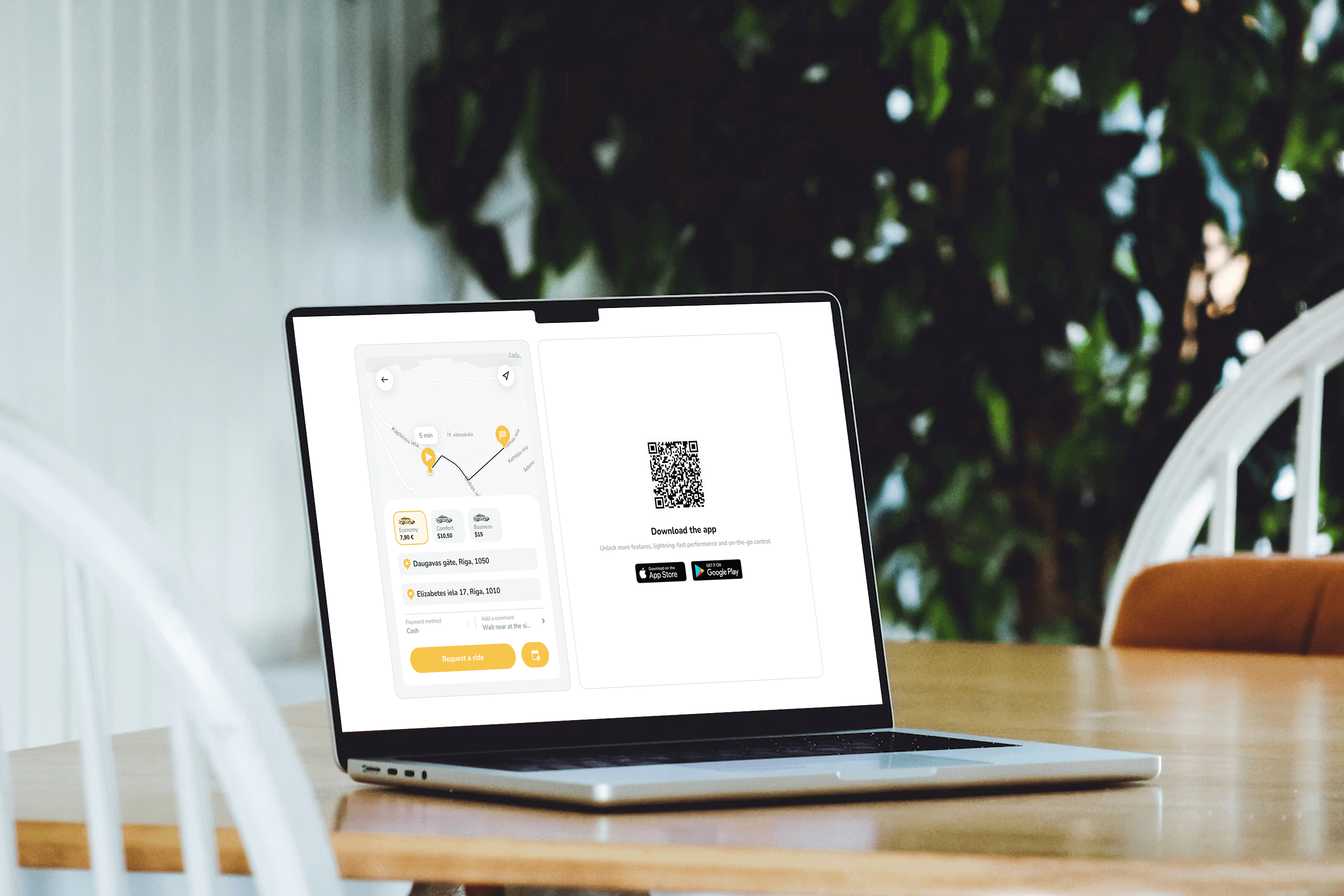
🚕 Web-booker is a lightweight ride-hail widget that lets users book rides directly from a website or mobile browser - no app install required. It reduces booking friction, supports hotel and partner demand, and keeps every ride fully synced with the taxi operator’s app and dashboard.
What if ordering a taxi was as easy as booking a room or clicking “Reserve table” on a website?
Meet Web-booker - a lightweight ride-hail booking widget that lets users request a cab directly from a website, without installing or opening the mobile app.
Perfect for hotels, business centers, event venues, airports, and corporate partners.
👉 Live demo: https://app.atommobility.com/taxi-widget
Web-booker is a browser-based ride-hail widget that operators can embed or link to from any website.
The booking happens on the web, but the ride is fully synchronized with the mobile app and operator dashboard.
No redirects. No app-store friction. No lost users.
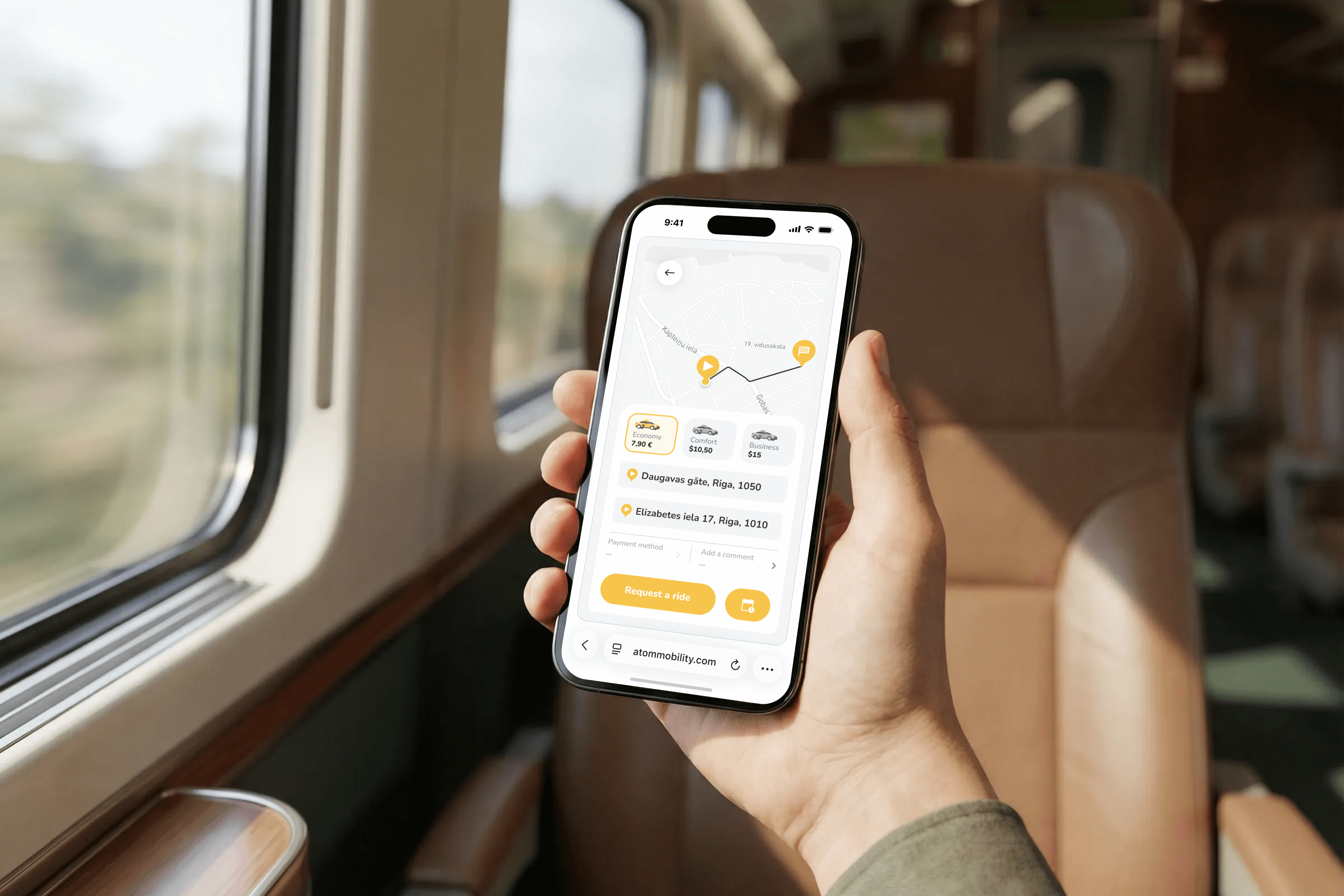
This keeps fraud low while preserving conversion.
Web-booker addresses one of the most common friction points in ride-hailing: users who need a ride now but are not willing to download an app first. By allowing bookings directly from a website, operators can capture high-intent demand at the exact moment it occurs - whether that is on a hotel website, an event page, or a partner landing page.
At the same time, Web-booker makes partnerships with hotels and venues significantly easier. Instead of complex integrations or manual ordering flows, partners can simply place a button or link and immediately enable ride ordering for their guests. Importantly, this approach does not block long-term app growth. The booking flow still promotes the mobile app through QR codes and store links, allowing operators to convert web users into app users over time - without forcing the install upfront.
Web-booker is not designed to replace the mobile app. It extends the acquisition funnel by adding a low-friction entry point, while keeping all bookings fully synchronized with the operator’s app and dashboard.
👉 Try the demo
https://app.atommobility.com/taxi-widget
Want to explore a ride-hail or taxi solution for your business - or migrate to a more flexible platform? Visit: https://www.atommobility.com/products/ride-hailing
Anmeldedaten für die Driver App-Demo - E-Mail: test@atom.com, Passwort: Treiber

