Blog
Insights and news from the ATOM Mobility team
We started our blog to share free valuable information about the mobility industry: inspirational stories, financial analysis, marketing ideas, practical tips, new feature announcements and more.

We started our blog to share free valuable information about the mobility industry: inspirational stories, financial analysis, marketing ideas, practical tips, new feature announcements and more.
%20(1).jpg)
🚗 Choosing car sharing software? Look beyond the rider app. Our checklist covers what to test in a demo, from keyless access and fleet operations to costs and support for both car sharing and digital rental.
Choosing car sharing software is more than choosing an app where customers can find and unlock a car. The same system has to verify drivers, take payments, communicate with vehicles, handle problems during a trip, and give your team the tools to keep cars available. The difference between two platforms often becomes clear only when something goes wrong: a customer cannot unlock a car, a payment fails, a vehicle needs to be taken out of service, or an operator wants to introduce advance bookings alongside short trips.
If you are comparing providers, ask them to show how these situations work in the actual product. Here is what to check.
“Car sharing” can mean several different things. A free-floating service lets customers find a nearby car and end a trip within an allowed area. A station-based service may require them to return the car to a specific location. Corporate fleets, peer-to-peer services, and self-service rentals have different booking, access, and approval rules.
Write down how your service will work before requesting demos:
Ask the provider to configure these rules in a demo. A platform that supports “car sharing” in general may still require development to support your exact model.
The app needs to do more than display vehicles on a map. Follow one booking from the first app open to the final receipt. Check registration, ID and driver's licence verification, vehicle discovery, booking, payment authorisation, keyless access, trip extension, damage reporting, and trip completion.
For advance rentals, check whether customers can book from your website as well as the app. Ask to see the complete web-to-app journey: selecting a vehicle and dates, confirming the reservation, and continuing to payment, licence verification, and vehicle access. Find out whether the website can complete the entire rental or whether customers must install the app after booking. ATOM Mobility's web-booker, for example, lets customers reserve on the web and then complete payment, and ID verification in the app.
Then test the exceptions. What does the customer see if verification fails, the car does not unlock, the vehicle is no longer available, or the payment cannot be collected? Can your support team see what happened and resolve it without contacting a developer?
This matters because customers judge the entire journey, including how quickly they can recover when a step fails.
Car sharing depends on reliable communication between the platform and the vehicle. Depending on the vehicle and hardware, this may include location, lock and unlock commands, mileage, fuel or battery level, and other status data. Ask for a list of supported telematics providers, rather than accepting a general statement that the platform is “hardware agnostic.” For your proposed fleet, establish:
Hardware flexibility is valuable when you expand or change suppliers, but the integration for the vehicles you plan to buy now is the first thing to verify.
The customer app gets the attention, but your team will spend much of its time in the management dashboard and operator tools. Ask a provider to show how staff:
Try these tasks with the roles your own team would use. The question is not only whether a feature exists, but how many manual steps it takes to run your fleet every day.
Car sharing and digital rental increasingly overlap. An operator might offer cars for short city trips and also accept bookings for a weekend. A rental business may begin with advance reservations and later add app-based, keyless access for shorter trips.
The technology shares many components, but the booking rules can differ. A rental may require advance pickup and return times, vehicle or category allocation, availability calendars, deposits, extensions, and different customer handover processes.
If you may operate both models, ask for a demonstration of both: an immediate hourly trip and an advance weekend booking. Check how the system prevents overlapping reservations, applies the correct pricing and deposit rules, and gives your team a clear view of availability. Also establish whether both models can use the same customer account and management setup, or whether additional products and fees are required.
ATOM Mobility supports vehicle sharing and digital rental on its platform. The useful question for any provider, including us, is how your exact combination of models would be configured and operated.
A low monthly licence fee can be attractive, but it may be only one part of the cost. Request a proposal that separates:
Launch, Setup, branding, app publication, migration, and training
Monthly minimums, fees per vehicle or booking, and included modules
Payment processing, refunds, deposits, and any additional transaction fees
Telematics hardware, installation, data plans, and new integrations
Ongoing work such as support level, custom development, and third-party services
Compare the likely cost at your launch fleet size and at a realistic larger fleet. Ask what happens if the fleet is seasonal or grows more slowly than planned.
Building in-house can make sense when a company has the engineering capacity and needs a customer experience or operating model that available platforms cannot support. It also means taking responsibility for project management, app updates, payments, vehicle integrations, security, monitoring, and support long after launch.
A white-label platform can shorten the route to market and spread that technical work across an established product. In return, you depend on the provider's supported features, integrations, development priorities, and service levels.
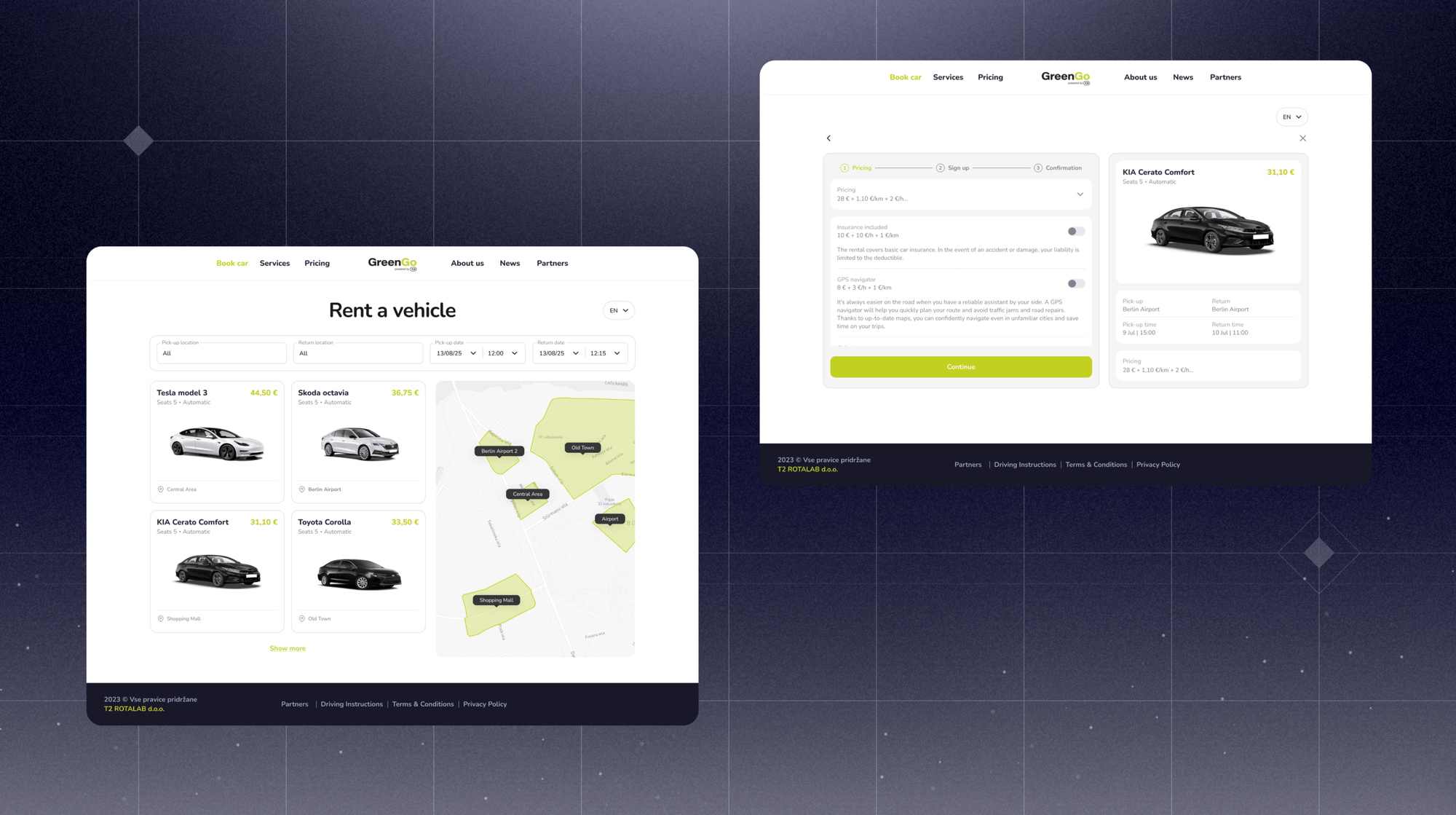
Slovenian car-sharing operator GreenGo initially spent two years developing its own app before switching to ATOM Mobility. Its experience shows why it is worth comparing the time and resources required to build with what an existing platform can already deliver. Read GreenGo's story: https://www.atommobility.com/blog/greengo-chooses-atom-mobility-to-power-its-electric-car-sharing-business
There is also a middle option: use a platform for core bookings, fleet management, and vehicle connectivity while building selected experiences or integrations yourself through APIs. If this is your plan, review the API documentation and confirm what your team can actually read, change, and automate.
Before signing, ask each shortlisted provider to demonstrate the same scenarios:
Use your intended vehicle models, payment markets, and operating rules in the discussion. For anything that cannot be shown, ask whether it is already available, needs configuration, requires paid development, or is only planned.
The best car sharing software is the one that supports your model reliably, gives your team control over daily operations, and leaves room for the business you intend to build next. A practical demo and a complete cost proposal will tell you more than a long feature list.
If you are evaluating car sharing alongside self-service rental, talk to ATOM Mobility about your fleet and operating model. We can show you how both models work on the platform and help you plan migration and scaling.

🚲 Cleaner air, less traffic, and better city living - bike-sharing apps are making it happen. With seamless apps, smart integration, and the right infrastructure, shared bikes are becoming a real alternative to cars in cities across Europe.💡 See how bike-sharing supports sustainable mobility and what cities and operators can do to get it right.
Bike-sharing apps are reshaping urban mobility. What began as a practical way to get around without owning a bike is now part of a bigger shift toward sustainable transport.
These services are doing more than replacing short car trips. They help cities cut emissions, reduce congestion, improve health, and connect better with public transport.
As more cities rethink how people move, bike sharing continues to grow as one of the fastest and most affordable tools to support this change.
Bike-sharing services now operate in over 150 European cities, with more than 438,000 bikes in circulation. These systems help prevent around 46,000 tonnes of CO₂ emissions annually and reduce reliance on private cars in dense urban areas. They also improve air quality, lower noise levels, and make cities more pleasant to live in.
A recent study by EIT Urban Mobility and Cycling Industries Europe, carried out by EY, found that bike-sharing services generate around €305 million in annual benefits across Europe. This includes reduced emissions, lower healthcare costs, time saved from less congestion, and broader access to jobs and services.
For cities, the numbers speak for themselves: every euro invested yields a 10% annual return, generating €1.10 in positive externalities. By 2030, these benefits could triple to €1 billion if bike-sharing is prioritized.
Bike sharing works best when it fits into the wider transport system. Most car trips that bike sharing replaces are short and often happen when public transport doesn’t quite reach the destination. That last kilometer between a bus stop and your home or office can be enough to make people choose the car instead.
Placing shared bikes near metro stations, tram stops, or bus terminals makes it easier for people to leave their cars behind. This “last-mile” connection helps more people use public transport for the long part of their trip and hop on a bike for the short part. Over time, that encourages more consistent use of both bikes and transit.
In cities where bike sharing is integrated into travel passes or mobility platforms, users can combine modes in a single journey. That flexibility supports wider access and makes shared bikes part of everyday mobility, not just something used occasionally.
The digital experience behind bike sharing is a big part of why it works. People can check availability, unlock a bike, pay, and end their trip – all in one app. This makes it quick, simple, and consistent.
Good bike-sharing apps also offer:
When users don’t need to think twice about how the system works, they’re more likely to build regular habits around it. That habit shift is what makes a long-term difference for both users and cities.
Bike sharing isn’t just a transport service. It helps cities meet public goals – cleaner air, lower traffic, healthier residents, and better access to services. When someone chooses a bike instead of a car, it reduces the demand for fuel, parking, and space on the road.
The €305 million annual benefit includes health savings due to increased physical activity, avoided emissions, time gained from reduced congestion, and the creation of jobs tied to fleet operations. Many bike-sharing schemes also improve equity by giving people access to mobility in areas that are underserved by public transport or where car ownership isn’t affordable.
Shared bikes are especially useful in mid-sized cities where distances are manageable and car traffic still dominates. With the right policy support, even small fleets can have a noticeable impact on mobility patterns and public health.
Not every bike-sharing system succeeds. To be reliable and scalable, a few things must work together:
Successful systems often grow in partnership with city governments, public transport agencies, and private operators who bring technology, logistics, and know-how.
Reliable software is what keeps all parts of the system connected. From unlocking a bike to seeing usage trends across the city, operators need tools that are stable, flexible, and easy to manage. For those launching or scaling a fleet, platforms like ATOM Mobility offer ready-made solutions that handle booking, payments, ID checks, live tracking, and fleet control in one place.
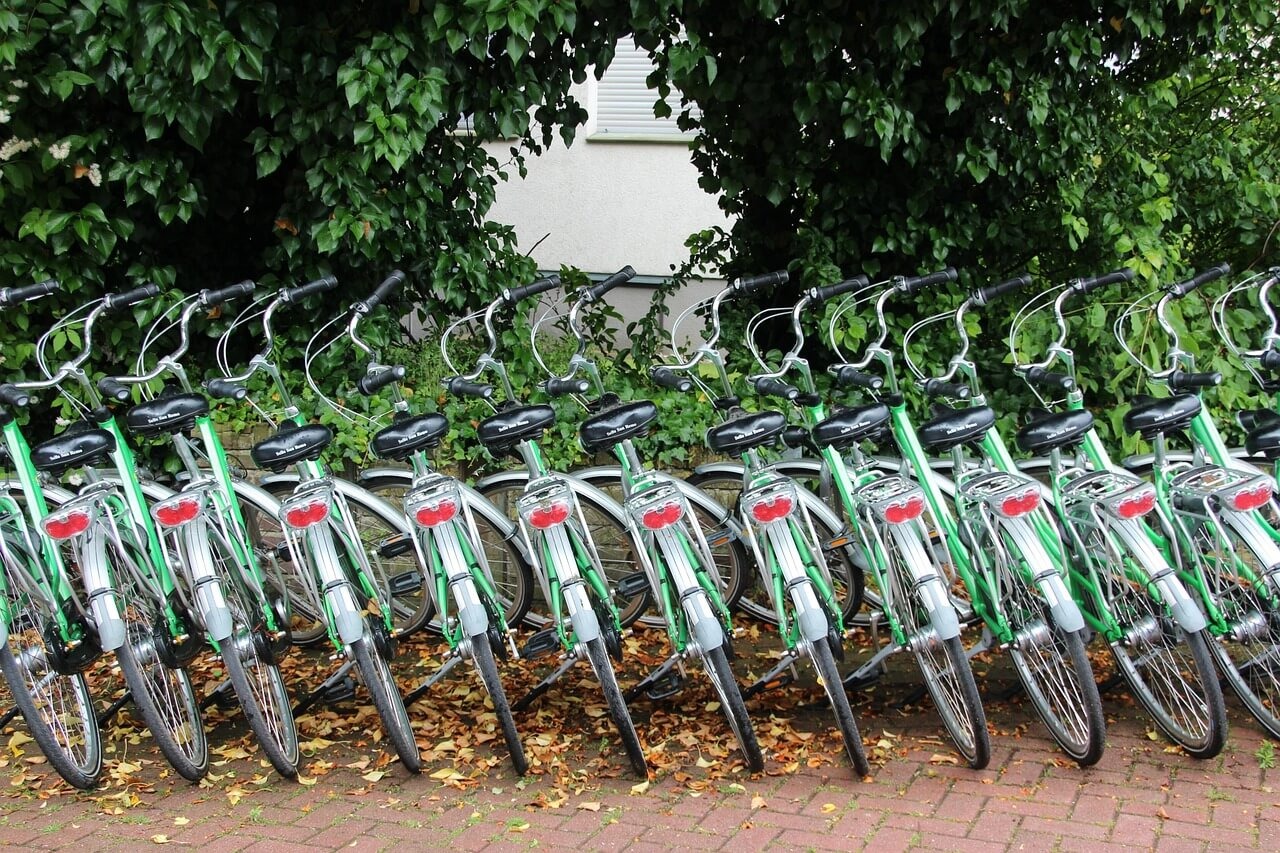
The platform supports both electric and mechanical bikes, offers branded apps, and integrates with smart locks or IoT modules for remote vehicle access. It also lets operators adjust pricing, monitor vehicle health, and manage customer support in real time. That means smaller teams can launch faster and scale smarter, without having to build every tool from scratch.
Bike sharing won’t replace all car trips, but even a small shift makes a difference. A few short rides per week can reduce emissions, improve fitness, and save time spent in traffic. When these trips are supported by good infrastructure, public awareness, and seamless apps, the impact grows.
As cities continue to prioritise sustainability, shared micromobility will play a bigger role in helping people move in cleaner, healthier, and more flexible ways. With the right technology and planning, bike sharing becomes more than a service – it becomes a habit that supports better cities for everyone.
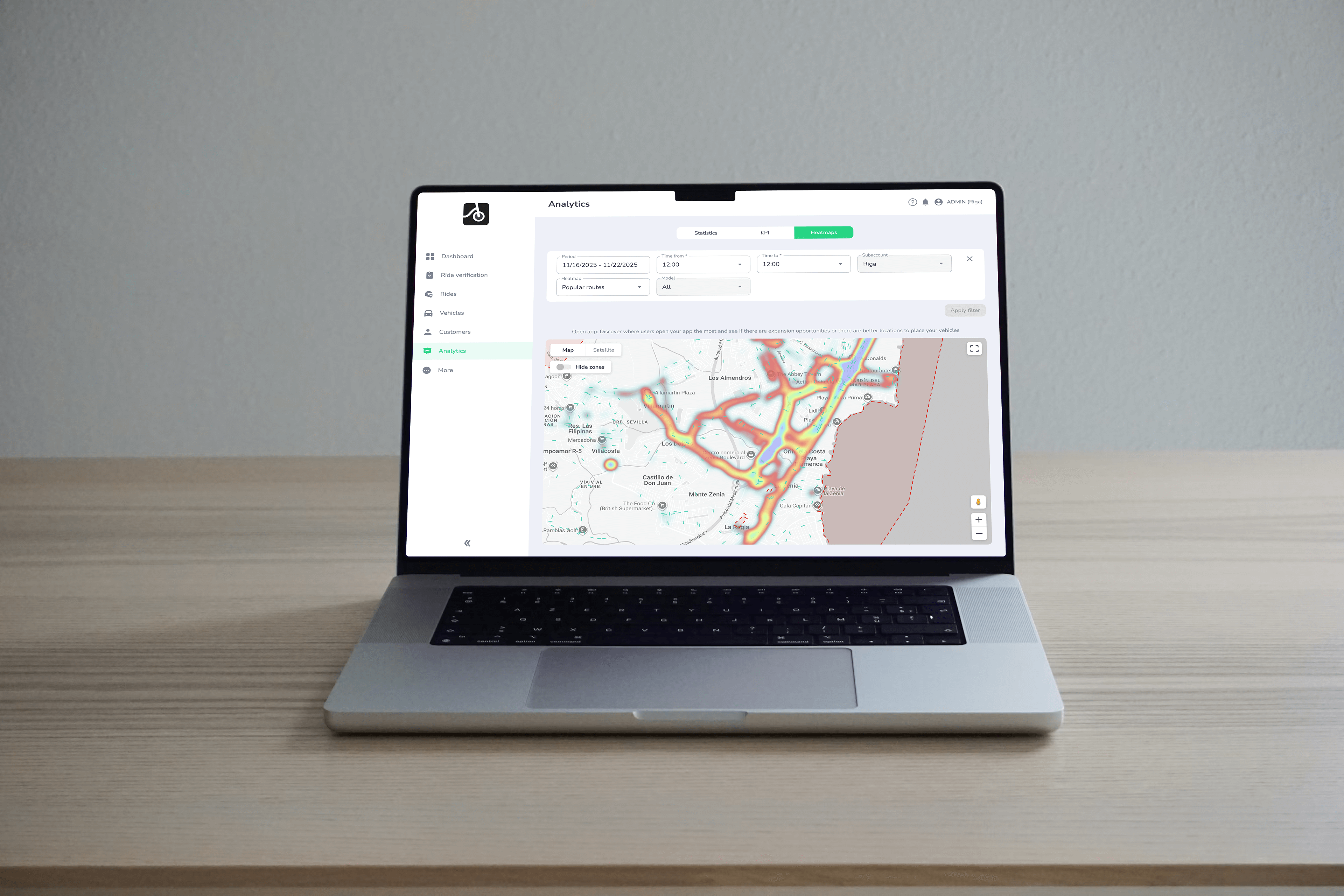
📊 One of the most requested features in ATOM Mobility is finally live. Meet Popular route heatmap - a new analytics layer that shows which streets and areas your riders actually use most, based on real ride data over time.
📊 One of the most requested features in ATOM Mobility is finally live. Meet Popular route heatmap - a new analytics layer that shows which streets and areas your riders actually use most, based on real ride data over time.
Until now, operators could see where rides start and end. Now you can see how people move in between.
Why it matters?
With Popular Route Heatmap, operators can:
🚲 Optimize vehicle placement based on real rider behavior
🏙️ Support discussions with municipalities using clear, visual usage data
📍 Identify missing infrastructure where demand already exists
📊 Make smarter, data-backed operational decisions
The feature was the #1 most upvoted idea on our merchant suggestion platform for years - and we’re excited to finally ship it.
.png)
How to use it
Go to Analytics → Heatmaps
Select heatmap type Popular routes
Filter by time period and city
Zoom in to see the busiest routes your riders take
Data availability: Popular route data is available from November 1, 2025 and will continue accumulating going forward.
Inspired by how athletes analyze movement patterns with Strava - now applied to shared mobility operations.

🚗📲 Whether you're renting out cars, bikes or scooters, the best rental businesses in 2025 are fully digital. No more paper contracts or office keys – just tap, unlock, and go. In our latest article, we explore top apps (like Donkey Republic, MOBY Bikes and Forest) that show what a modern rental experience looks like. Plus, we explain where a full platform like ATOM Mobility fits in when you're ready to scale.
Running a rental or sharing business today means delivering a smooth, digital-first experience. Whether you rent cars, bikes, scooters or other vehicles – users expect to book online, pay, verify identity if needed, unlock a vehicle, and ride or drive without extra friction.
To make that happen reliably, you need good vehicle rental software or platform backing your service. Below are some successful examples of apps and platforms that show how this works and what is possible.
Operates in several European cities offering shared bikes and e‑bikes. Users find a bike in the app, unlock it with a smartphone, ride, then park at a designated drop‑off spot and end the rental. Pay‑as‑you‑go, daily rates or memberships are all handled via the app.
Targets electric bicycles and e‑cargo bikes across certain regions, with a “tap‑and‑ride” system that uses its proprietary app for booking, unlocking, and rental management. The platform supports mixed-use fleets (shared bikes, cargo bikes, delivery fleet, even B2B rentals), which illustrates flexibility – useful for operators exploring different business models beyond simple consumer rentals.
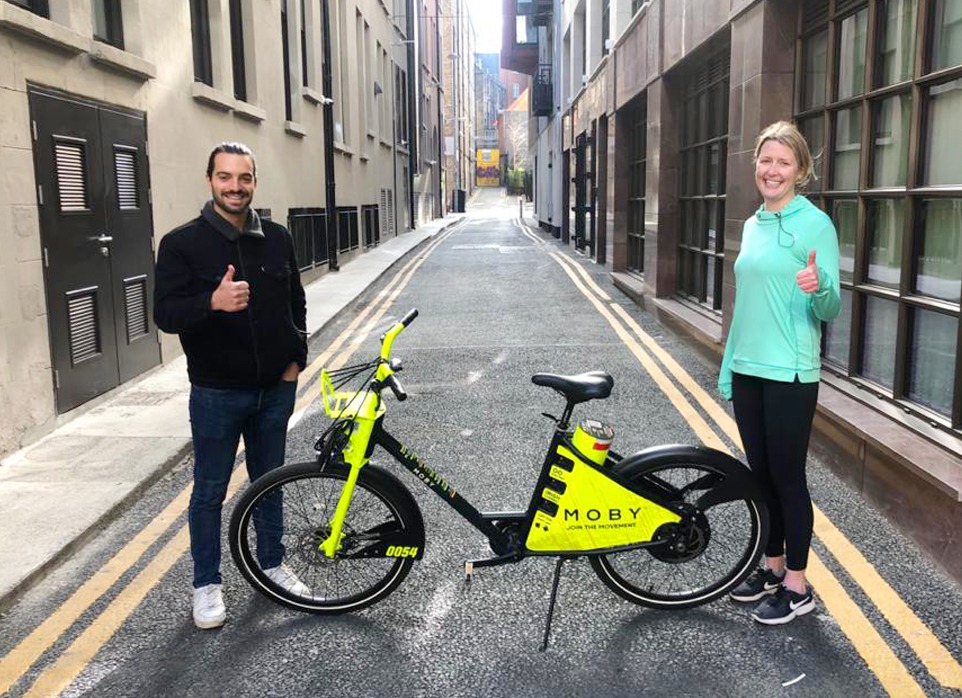
It is a dockless e‑bike sharing operator in London. It runs a large fleet and offers bike‑sharing through a mobile app. The service demonstrates how a relatively simple, dockless rental model can scale at urban level using app‑based rentals, unlocking, and flexible parking.

These examples show how micromobility‑focused services already rely on booking, payment, unlocking and fleet management tech – the same core capabilities needed by any modern vehicle rental business.
From these operators you can observe several useful traits that a good rental/sharing software should provide:
These are exactly the kinds of features you need when you move from small‑scale operation to proper fleet business.
If you plan to just test the market or to operate a larger and more complex fleet - multiple vehicle types, multiple cities, or advanced operational requirements - a full-stack platform like ATOM Mobility becomes essential.
ATOM Mobility is designed for operators who need full control over the entire mobility operation: booking flows, unlocking logic, payments, KYC/ID verification, backend administration, fleet analytics, dynamic pricing, and multi-modal rentals across cars, scooters, bikes, and more.
The platform provides a unified backend that supports cars, scooters, e-bikes, mopeds, and additional vehicle types within a single system. Operators can manage bookings, payments, users, smart locks or connected vehicles, fleet health, and city-level scaling without fragmenting their tech stack as the business grows.
This approach offers far greater flexibility than single-vehicle or bike-only solutions and removes the need to migrate systems when expanding into new vehicle categories or markets. Check out the full service here.
Join a franchising when you:
- prefer operating under an established brand
- value a clear operational playbook and central support
- want simpler marketing thanks to brand recognition
- are comfortable with limited control over technology and product decisions
- accept franchise fees or revenue sharing in exchange for convenience
- don’t need heavy customization or experimentation
Use a full platform (like ATOM Mobility) when you:
- aim to manage a larger, mixed fleet (cars, scooters, bikes, e-bikes)
- need full backend control (admin, analytics, pricing, reporting)
- require payments, KYC/ID verification, and automation built in
- want freedom to customize booking flows, pricing, and partnerships
- plan to scale across cities or add new vehicle types over time
- prioritise brand ownership and customer relationship control
- want no revenue sharing or franchise fees
For simple bike or e-bike fleets, the technology barrier is already low. Joining a franchise can be a fast way to get operations running with minimal setup.
However, operators with long-term ambitions - expanding into multiple vehicle types, scaling across locations, or maintaining consistent service quality - typically outgrow narrow tools. In those cases, a full-stack platform like ATOM Mobility offers the flexibility and control needed to support growth without rebuilding the tech foundation later.
Some operators start small and migrate as complexity increases. Others choose to build on a full platform from day one to avoid future transitions. The right choice depends on how clearly you define your growth path, desired level of control, and operational complexity from the start.
📱AI in shared mobility isn’t a future trend – it’s already here, and for good. From detecting car damage to forecasting demand and verifying parking in real time, operators are using AI to reduce manual work and run more efficient fleets. In this new article, we break down 3 real use cases already live on the ATOM Mobility platform: 👁️ Vision AI, 🔍 Precision AI, 📊 Prediction AI. See how AI is changing shared mobility, and how you can start using it now.
Artificial intelligence is no longer just a trend in mobility. For modern vehicle sharing and rental services, AI is already solving real operational problems and unlocking new ways to grow. At ATOM Mobility, several AI-powered features have already been implemented into live products and tested by operators across Europe.
This article shares three real-world AI use cases that are already helping operators reduce manual work, improve asset control, and better match vehicle availability to demand.
1. Vision AI: Camera-based parking control for micromobility
Micromobility parking continues to be a challenge in cities where dockless vehicles can end up blocking sidewalks, crossings or entrances. Manual checks are costly and often too slow to solve the problem in real time.
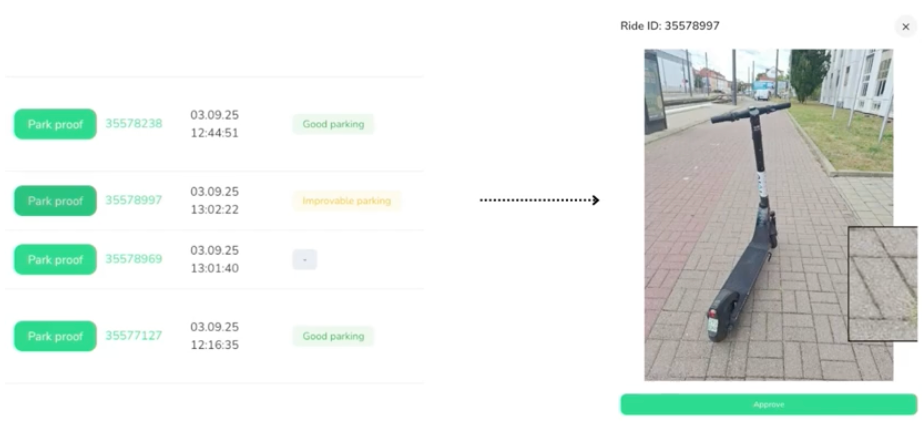
ATOM Mobility now uses computer vision to solve this. With Vision AI, riders take a photo when ending their ride. The system analyses the image using a neural network to understand if the vehicle is parked correctly – within a designated zone and without creating obstructions. If not, the app notifies the user and prevents trip completion until the parking is corrected.Each parking photo is automatically tagged as “Good parking”, “Improvable parking” (the user receives guidance on how to improve the parking), or “Bad parking” (the user is asked to re-park).
If the user fails to submit a “Good parking” photo after several attempts, the system will accept the photo with its current tag (“Improvable” or “Bad parking”) and flag it in the dashboard for further customer support review.
This solution has been live with many operators already. It helps reduce complaints, improve compliance with city regulations, and lowers the need for manual reviews.
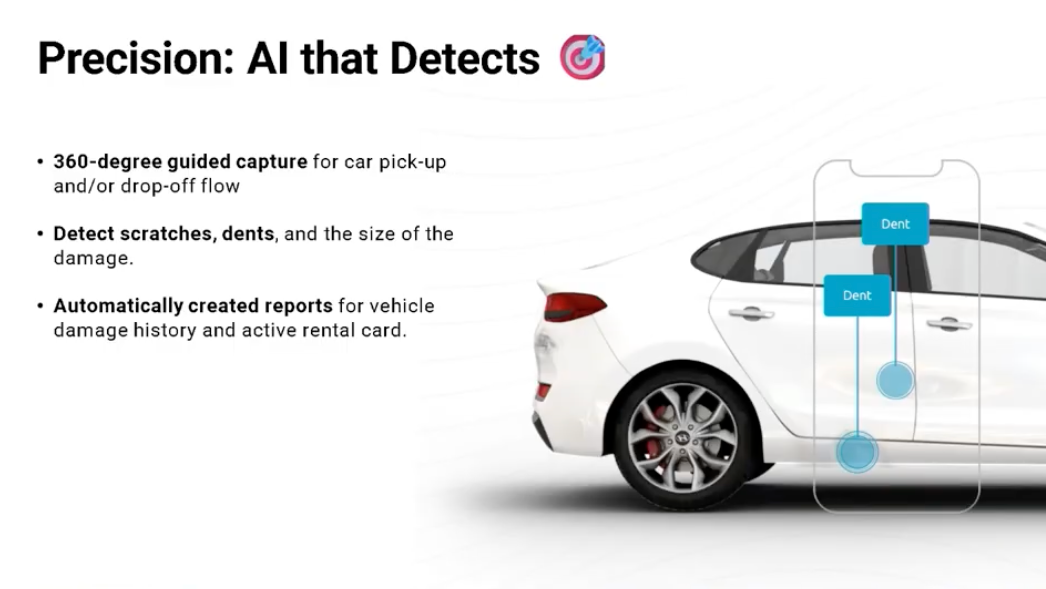
2. Precision AI: Detecting car rental damages with cameras and machine learning
In traditional car rental, damage inspection is slow, manual, and often inconsistent. With self-service rentals becoming more popular, operators need a smarter and faster way to verify a vehicle’s condition between trips.
ATOM Mobility has integrated AI-powered damage detection using computer vision. Customers scan the vehicle at pick-up and drop-off. The app compares images and flags scratches, dents, or other visible damage with high accuracy. This allows operators to quickly assess responsibility and reduce disputes.
The system helps protect the fleet, lowers repair costs, and adds trust for both users and operators. It’s especially useful for car sharing and self-service rental models where physical handovers are skipped.
3. Prediction AI: Forecasting demand and automating vehicle relocation
One of the biggest cost factors in shared mobility is rebalancing the fleet. If scooters or cars are idle in the wrong location, revenue is lost. At the same time, relocating vehicles manually is expensive and not always efficient.
ATOM’s AI models use historical trip data, usage trends and contextual signals (such as day of the week or weather) to forecast demand and suggest the best relocation zones. This gives operators a map of where and when to move vehicles – improving utilisation and saving time.
The system can even be combined with automated relocation logic, where users are incentivised to park in high-demand areas. This shifts part of the rebalancing cost from operators to riders and keeps the fleet productive.
Why this matters now
AI tools are finally reaching the stage where they can operate reliably, even in complex environments like cities. These examples are not abstract ideas or lab tests. They’re active features helping ourcustomers run leaner, smarter fleets today.
For micromobility operators, Vision AI reduces complaints and ensures regulatory compliance. For car rental providers, Precision AI saves hours of staff time and improves trust. And for both, Prediction AI improves margins by making sure vehicles are where users need them.
What’s up next?
These are just the first steps. AI in mobility will continue to expand with smarter pricing engines, voice-based support, predictive maintenance, and more. But the examples above already prove that even small AI integrations can bring major improvements.
At ATOM Mobility, we continue building these tools directly into our platform so that operators don’t need to develop them in-house. If you want to see how these AI-powered features work in action, get in touch with our team.
AI in shared mobility is not about replacing people. It’s about giving operators better tools to run faster, smarter, and more efficient services.

"State of art technology in mobile apps and dashboard, very good SLA!"
"Easy, nice looking, continuously updated and developed every month and most of all very reliable with a extreme high uptime"
"We used to work with a different service provider which wasn't fitting our needs. Switching to ATOM was an improvement on our side"
Use test credentials to log in - Phone number: +1 123123123, Code: 777777


Driver App demo credentials - Email: test@atom.com, Password: driver