Blog
Insights and news from the ATOM Mobility team
We started our blog to share free valuable information about the mobility industry: inspirational stories, financial analysis, marketing ideas, practical tips, new feature announcements and more.

We started our blog to share free valuable information about the mobility industry: inspirational stories, financial analysis, marketing ideas, practical tips, new feature announcements and more.
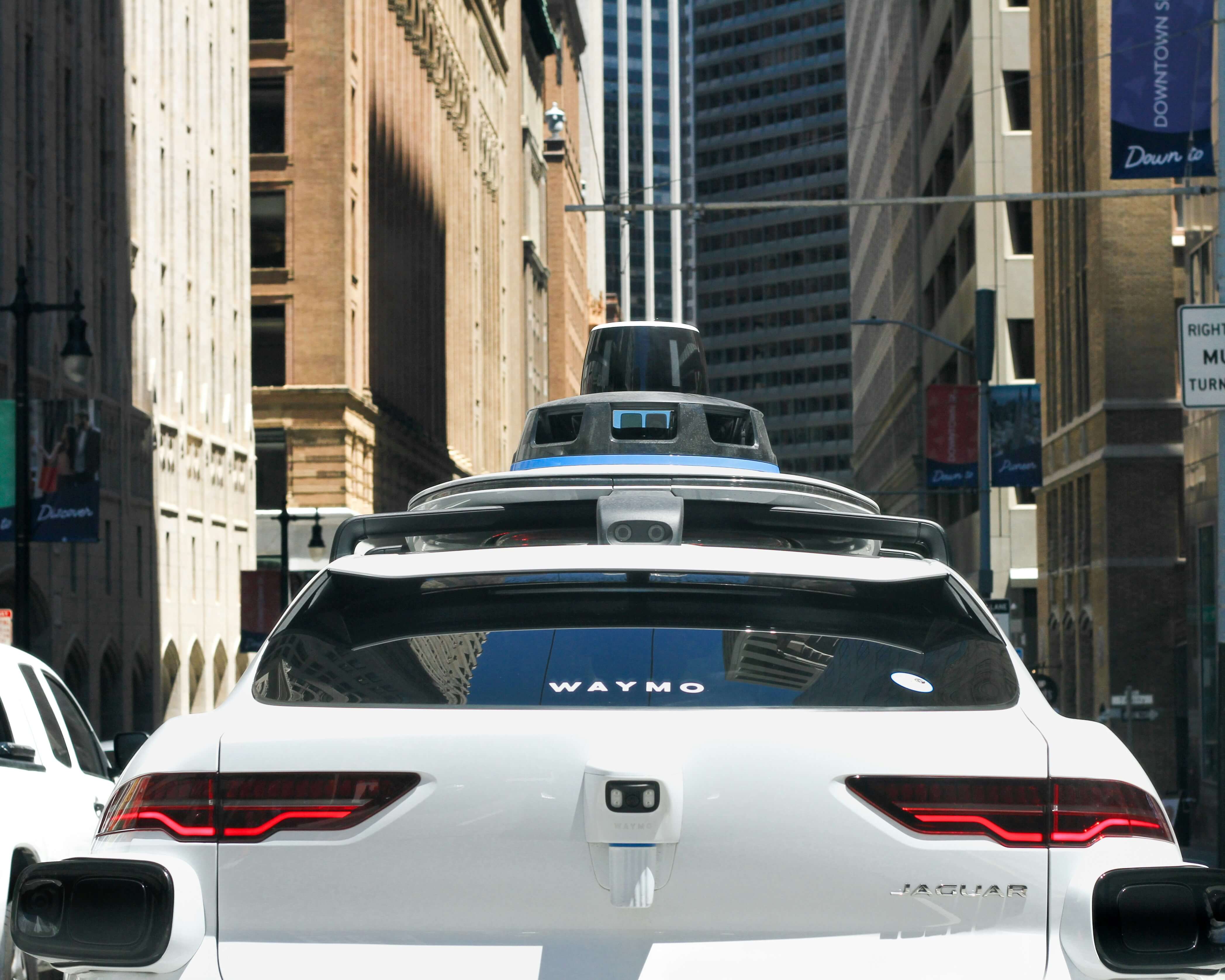
🤖 Who will actually operate Europe’s robotaxi fleets? Autonomous driving may remove the driver, but it doesn’t remove the work behind the car. Robotaxis still need charging, cleaning, maintenance, depots, customer support and someone managing the fleet every day. Early projects in Zagreb, Madrid and London illustrate different stages of deployment and how AV technology providers, fleet operators and booking platforms can work together. Taxi, rental and car-sharing companies already handle many of these tasks. What would it take to turn that experience into an autonomous fleet business?
For a taxi fleet owner, autonomous vehicles may seem to remove the most important part of the current business – the driver. But even without drivers, someone still needs to take care of the cars. They need to be owned or financed, charged, cleaned, inspected and repaired. Someone also needs to manage depots, deal with incidents, help customers and make sure enough cars are available.
The first robotaxi services and tests in Europe are already showing how this could work. The company that develops the autonomous driving technology does not always own or operate the cars. The app where customers book their rides may come from another company too. This could leave an important role for taxi, rental, car-sharing and other fleet companies that already know how to manage vehicles.
A taxi company today manages both cars and drivers. Drivers need to be recruited, scheduled, paid and supported. With a driverless fleet, these tasks would eventually disappear, but most of the work related to the cars would stay.
Autonomous cars still need charging or refuelling, cleaning, tyres, inspections, repairs and insurance. They also need somewhere to park when they are not working. If there is an accident or a technical problem, someone needs to deal with it and get the car back on the road. Customer support is still needed too when there are problems with bookings or payments, or when someone leaves something in the car.
Some of these tasks may even become more important. Robotaxis are expensive, and every hour a car spends charging, being cleaned or waiting for maintenance is an hour when it cannot take passengers. Moove, for example, already provides fleet ownership, depots, charging, maintenance and 24/7 operations for autonomous vehicles.
Drivers also do more than drive: they notice damage, report faults, help passengers and respond when something goes wrong. Without a driver, these responsibilities need clear processes and dedicated support. Existing fleet experience is an advantage, but operators will need to adapt it to vehicles running without someone behind the wheel.
There can be several companies behind one robotaxi ride. One provides autonomous driving technology, another may own the cars, and a local company can take care of the fleet. A platform such as Uber can then connect the cars with passengers. Sometimes one company may do several of these things, but this is not always the case.
Zagreb is one example. Pony.ai provides the autonomous driving system, Verne owns and operates the fleet, and Uber connects it with customers through its app. Autonomous rides became commercially available through Uber in August 2026 with a licensed operator onboard. On 10 September, Pony.ai and Verne also started fully driverless passenger test rides on a 22-kilometre route connecting parts of Zagreb with the airport. These are still limited test rides, not a fully driverless service across the whole city.
A similar model is being tested in Madrid. WeRide, Uber and AVOMO received permission in September 2026 to start testing and mapping under Spain’s ES-AV framework. The first 20 vehicles have an onboard specialist. WeRide provides the autonomous technology, Uber connects the cars with passengers, and AVOMO takes care of fleet operations. Commercial operations are planned for later in 2026, but the current permit is for testing and preparation rather than a general driverless taxi service.
In London, Wayve and Uber launched supervised autonomous passenger rides in September 2026. Customers can be matched with an autonomous vehicle through the Uber app, but there is still a licensed driver in the car.
The plans for the next few years are already much bigger. Pony.ai and Uber announced in August 2026 that they plan to deploy more than 2,000 robotaxis in Europe, starting with Zagreb and later expanding to four more European cities.
Bolt and Lucid announced another partnership in September, with Bolt aiming to deploy at least 25,000 autonomous Lucid vehicles across European cities. This is a future target, not 25,000 cars already operating today.
How these fleets are owned and operated may also be different from one city to another. Local regulations, available vehicles, charging and depot infrastructure and partnerships will all have an effect on how each service is set up.
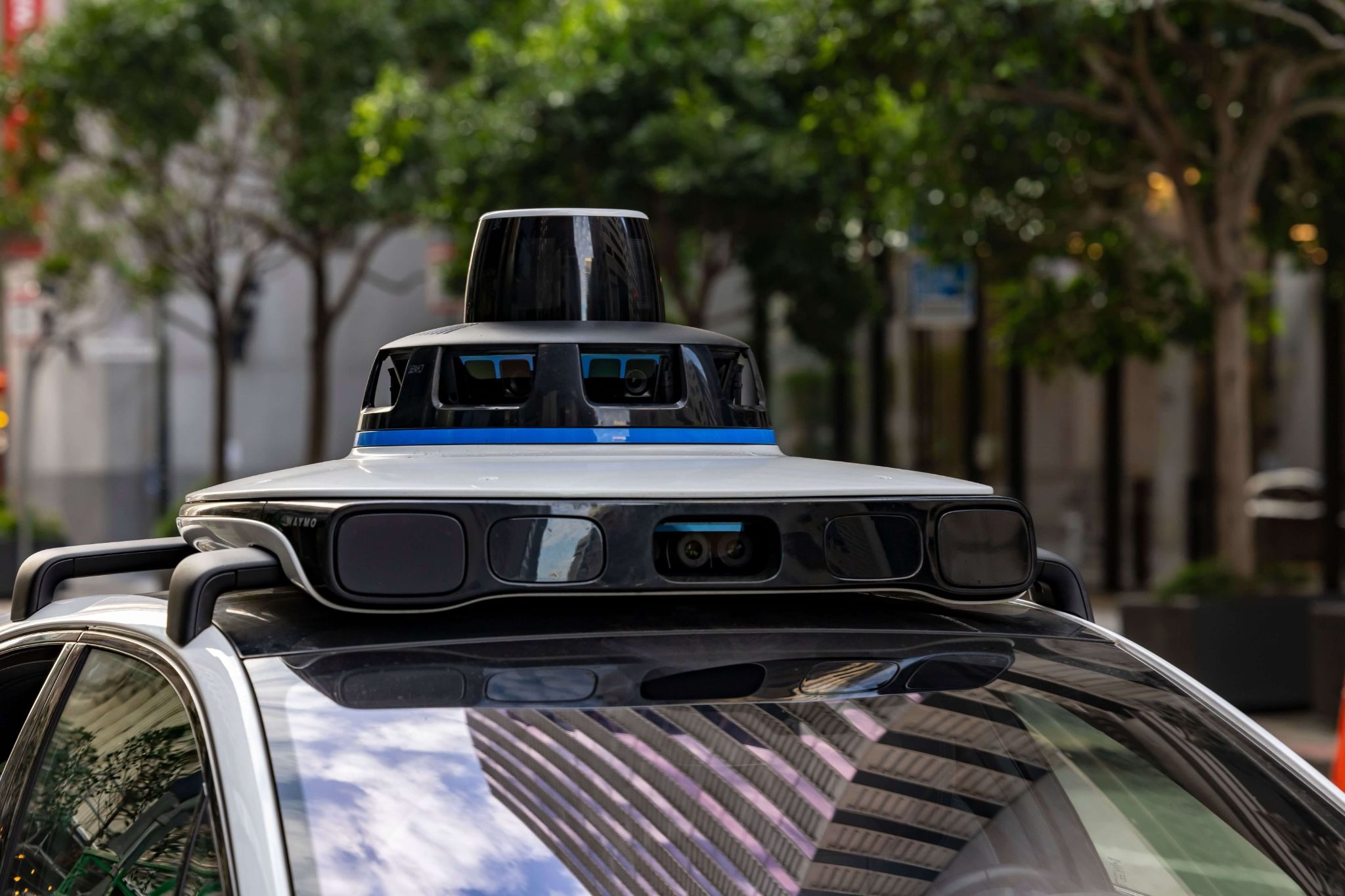
Taxi companies already do many of the things that would still be needed with an autonomous fleet. They maintain cars, deal with insurance and incidents, provide customer support and make sure enough vehicles are available. Some also already have their own depots, charging infrastructure or maintenance partners.
One possible model can already be seen in Zagreb. A local company owns and operates the autonomous fleet, while a larger ride-hailing platform brings customers. In the future, an existing taxi company could potentially have a similar role. Instead of managing cars and drivers, it could manage autonomous cars that receive bookings through a larger platform.
This does not mean platforms such as Uber will always rely on other companies to own the cars. Uber’s 2026 agreement with Rivian includes up to $1.25 billion in milestone-dependent investment and says that Uber or its fleet partners may purchase the autonomous vehicles. Uber is also developing infrastructure for autonomous fleets. Different ownership models are therefore possible.
Autonomous vehicles could also become interesting for rental and car-sharing companies, although this is probably further in the future. These businesses already manage vehicles, maintenance, cleaning, charging, bookings, customer accounts and payments, so much of the practical work is similar.
Autonomous driving could also change how rental and sharing cars are moved. Today, an employee may need to drive a car from one location to another. In the future, the vehicle could potentially do this itself within an area where autonomous driving is approved. It could even become possible for a rental car to drive itself to a customer’s pickup point.
Without drivers, it becomes especially important to understand how much time each vehicle is actually working. Every hour spent charging, being cleaned, waiting for maintenance or simply sitting unused means less time carrying paying passengers.
Some useful KPIs could be available hours per vehicle, paid trips per vehicle each day, revenue per available vehicle/day, empty kilometres, charging and maintenance downtime, cost per trip and incidents that need human help. These are most popular robotaxi industry KPIs of what a company could measure during a pilot.
For example, if cars spend too much time waiting to charge, the charging setup may need to change. A lot of empty kilometres could mean the cars are not in the right places, while too much maintenance downtime could make a vehicle more expensive to operate.
For either model, the business case depends on the partnership terms: who finances the vehicles, who carries the risk when demand is low, and how revenue and operating costs are shared. Operators should assess what remains after vehicle financing, insurance, charging, maintenance and partner fees. Depots, local service teams and reliable fleet availability could make an operator a valuable partner, but profitability still needs to be demonstrated.
One option for taxi fleets would be to work with an autonomous driving company and a larger ride-hailing platform. The local company could own or manage the cars and take care of the fleet, while customers book their rides through the larger platform.
Another option could be possible in cities where large ride-hailing platforms are not present or have limited coverage. A local company could work with an approved AV provider while using its own app, bookings, payments, customer support and fleet management.
In both cases, a company cannot simply buy autonomous cars and start offering rides. The technology needs to be approved, and local rules have to allow the service. These rules will also be different across Europe. Great Britain, for example, introduced its Automated Passenger Services permitting framework in 2026. Services similar to taxis or private hire vehicles need consent from the relevant local authority, while responsibility for the autonomous driving technology and the passenger service are treated separately.
A company does not need to have autonomous cars today to start preparing. A good first step is understanding the current fleet in detail – what each vehicle costs, how many hours it is available, how much time it spends charging or being repaired, and when cars are used the most.
Charging, cleaning, maintenance and depot processes are also worth looking at because all of these will still be needed with autonomous vehicles. A company interested in an AV pilot can then choose a location and use case, look at the local permit process and start talking to autonomous driving technology providers.
The software will also need some preparation. Customers still need to book and pay for rides, while the company needs fleet information, customer support, reporting and connections between its own systems and the AV technology. Starting with a small pilot makes it possible to test all of this before trying to build a larger service.
ATOM Mobility already provides many of the software functions used by taxi, ride-hailing, rental and sharing companies, including customer apps, bookings, payments, fleet management, maintenance tasks, analytics and APIs. Its ride-hailing software includes passenger and driver apps, dispatch, payments, fleet data, analytics and integrations. The ATOM Mobility API can also exchange data about vehicles, bookings, rides, payments, telemetry and maintenance tasks.
ATOM Mobility does not provide autonomous driving technology. This would come from a specialised AV company, and each project would have its own technical requirements and local approvals. For an AV pilot, ATOM Mobility could work with the fleet company and AV provider on the rider experience, integrations, fleet management and the data needed to measure how the pilot is working.
If you operate a taxi, rental or sharing fleet and want to explore an AV pilot, ATOM Mobility can help plan the booking and fleet-management setup, integrations and metrics you would need to test together with an AV technology partner.

“It is a rapidly growing global phenomenon: bikes of different breeds zipping through cities, being picked up and deposited at will. They belong to companies, not members of the public. The future of cycling could be sharing, not owning one,” wrote The Bike Europe, source of industry news, data, and analysis for the e-bike and bicycle industry’s decision-makers, at the start of this year. And the pandemic hasn't changed the situation significantly.
“It is a rapidly growing global phenomenon: bikes of different breeds zipping through cities, being picked up and deposited at will. They belong to companies, not members of the public. The future of cycling could be sharing, not owning one,” wrote The Bike Europe, source of industry news, data, and analysis for the e-bike and bicycle industry’s decision-makers, at the start of this year. And the pandemic hasn't changed the situation significantly.
According to a recent eight nation survey Oliver Wyman conducted with approximately 6,000 respondents, 44% of riders said they would be willing to increase their dependence on the service (shared vehicles and ride-hailing) in the future. 34% said they planned to use it as much as before the pandemic.
Accordingly, there is a pretty big interest in starting a business based on a bike-sharing service. Every business should start with a detailed business plan. Here, we are going to explain how to create a business plan that it would be appropriate to implement in your business.
If you are a newcomer or even if you have ride-sharing business experience, the first thing to remember before preparing a business plan - every vehicle sharing model is specific and has its own differences to keep in mind.
In regard to bikes, it is important to remember that users are usually willing to take the bike from one docking station and return it to another. Sometimes, it is located on the other side of the city. So the service provider should calculate capacity, as well as vehicle availability in the most popular parts of the city during rush hours. That might be crucial.
Before taking further steps and making any decision you must know your audience. So it is the right time to do market research. The first thing to do is to define the characteristics of your customer by identifying:
Usually, several groups can be identified according to these characteristics. The next step is to find people that are representing each group, talk to them and test your hypothesis and assumptions towards them.
You can also calculate quite precisely the size of your target market. You can find it out by calculating the TAM, SAM, and SOM. TAM is the total available market for the service, for example, the total amount of users. SAM is a serviceable available market in the area you have chosen to operate. SOM is a serviceable obtainable market - a portion of the available market that you are willing to serve.
After you have defined your target market and potential audience, you may start to consider what works best for your customer. There are three options to choose your bike-sharing business from and to put into your bike-sharing business plan:
To sum it all up, the dockless bike-sharing model is more convenient for users but involves higher risks for service providers. Station-based bike-sharing is less risky for the service provider, but not as convenient for the end-user. So while making the bike-sharing business plan, the choice should be made depending on the other market players and the risks you are willing to take. And if you have a corporate partner, who is willing to buy bikes and you have to operate the fleet - do it, but remember that you can be left alone at some point.
The most important part of the business plan is to find a balance between revenue and costs. If you haven't had a ride-sharing business previously, you would be wise to understand and consider all costs that you will have to cover with your revenue stream. Here are the most important positions you have to think of:
You should consider making a total investment of EUR 15,000-30,000 to launch a small test bike-sharing fleet (30-50 bikes). For a proper full-scale and successful launch with several hundreds of bikes, you will need a total investment of EUR 70,000-100,000.
Your business model is the way you will get revenues from your service. A lot of different business models exist in the bike-sharing market. When you think of yours, take a look at what your competitors are doing and think of ways how you can be more attractive to customers. In addition, you have to consider location and take seasonality into account. And one more thing - act fast! This can be crucial for your future success. ATOM allows you to launch your bike-sharing business within a few weeks with a bike sharing software. Learn more about ATOM's solution for shared mobility.

After analysing thousands of rides and hundreds of feature recommendations, we are excited to launch brand new ATOM Mobility dashboard that will help you manage shared micro-mobility services even more successfully. We listened to customer requests and also evaluated trends in order to enrich the new dashboard with more functionalities and richer capabilities.
After analysing thousands of rides and hundreds of feature recommendations, we are excited to launch brand new ATOM Mobility dashboard that will help you manage shared micro-mobility services even more successfully. We listened to customer requests and also evaluated trends in order to enrich the new dashboard with more functionalities and richer capabilities.
With a new updated design, technological superpower and data centric approach you will not regret the minutes you spend working in the new dashboard. Plus, it works super fast, too 🚀
The dashboard includes some structural changes but more importantly, we have added:
✅ More layers to Rides, Vehicles and Customers to help you drill down to an individual level and track every activity happened to particular ride, vehicle or customer at every moment. For example, track when ride was paused and for how long and did the vehicle entered no-go zone during the ride;
✅ Comments. Leave comment for each vehicle or customer if needed so your team keep track record of everything that need to be done with the vehicle;
✅ Activity tracker. Track which commands, by whom and why are send to particular vehicle;
✅ Additional filters. You will find options to filter vehicles by vehicle models, statuses, battery, IoT signal and last ride within a given amount of hours. Mix and match these as you please. These are intended to quickly locate problematic vehicles and also get a good picture of your operations;
✅ More user roles. To help you find business partners and effectively manage existing employees, we have launched new user roles in the dashboard. Choose from 10 different roles with various access levels to your operations, statistics, and confidential information.
💡 Clever insights. In addition, we are now also showing insights regarding average customer satisfaction with your service, rebalancing of vehicles not in use, and problems with IoT signals. This information combined with heatmaps will surely set you ahead of the game as you will have the necessary data to optimize your operations.
If you have any questions regarding the new dashboard or would like to start using our platform, contact us. Chose ATOM Mobility as your partner in the upcoming summer season and stay ahead of competition.

Following the global trend of subscription based businesses and popularity of subscriptions in the micro-mobility space, ATOM Mobility introduces a new product - Subscriptions. Last summer Lime expanded its scooter subscription service LimePass to include daily and monthly passes. A monthly pass with five rides a day would cost around $16.99 and 10 rides a day for $29.99. It was only the beginning of a trend as other operators like Voi and Helbiz also launched their subscription offering and in some countries this type of offer is getting good traction.
Following the global trend of subscription based businesses and popularity of subscriptions in the micro-mobility space, ATOM Mobility introduces a new product - Subscriptions. Last summer Lime expanded its scooter subscription service LimePass to include daily and monthly passes. A monthly pass with five rides a day would cost around $16.99 and 10 rides a day for $29.99. It was only the beginning of a trend as other operators like Voi and Helbiz also launched their subscription offering and in some countries this type of offer is getting good traction.
Subscription offering is not stopping there with subscription based car rentals getting more popularity. Companies like Audi (Audi Select), Lexus (Lexus Complete Subscription), Porsche (Drive) and Sixt (Sixt+) are offering access to vehicles on a monthly subscription basis. This trend opens a completely new market for startups such as Borrow and Revolve. These companies are offering flexibility in choosing the car for a flat monthly fee with no long-term commitments.
Following this technological change in the market, ATOM Mobility is happy to support different types of businesses - does not matter if a subscription is just a nice-to-have feature in your vehicle sharing business or the whole business model relies on subscriptions only.
Now you can offer unlimited access to vehicles that users can rent using subscriptions. Popular subscription types include daily, weekly, and monthly passes. Set daily limits such as unlocks, ride minutes, pause minutes, and ride distance that are included in the subscriptions. Set an appealing price and watch your users benefit from this offer! You can create various types of subscriptions, launch them at any time and see statistics regarding the purchases and usage of the subscriptions, all from one place - ATOM dashboard.
First, ATOM Mobility launched the subscriptions feature in December 2020 adding significant improvements in January and February and planning to add even more features to this product in the future.
Interested to learn more about our subscription offering? Reach out to our sales team.
About ATOM Mobility
ATOM Mobility provides reliable and proven white label technology helping companies to launch and scale shared mobility platforms. Now serving customers in over 20 countries worldwide.

With the growing number of shared scooters, bikes, mopeds and cars on our street, fraud-prevention and ID verification problems become highly important. Recently, several European cities required local operators to verify user identity even for shared kick-scooters. This may be a hard and time-consuming process, but not with Veriff.
With the growing number of shared scooters, bikes, mopeds and cars on our street, fraud-prevention and ID verification problems become highly important. Recently, several European cities required local operators to verify user identity even for shared kick-scooters. This may be a hard and time-consuming process, but not with Veriff.
In order to verify users’ identity and check that they have the necessary documents to enjoy shared mobility services, we have speed up the verification process by choosing automatic document reviews done by our partner Veriff.
Veriff's API enables ATOM Mobility to integrate verification processes directly to mobile apps making the process as smooth as possible for the rider. It takes less than 2 minutes for the Veriff to automatically verify the document.
How to add Veriff to your shared mobility app?
Super easy! Just open an account with them and let us know you would like to add verification to your app. Your users will be asked to verify their documents such as ID, passport, driver’s license before taking their first ride. You can choose which type of documents has to be submitted. The process is straightforward and you will not have to worry about anything. Users will submit photos of their documents and Veriff will do the rest notifying your clients of the verification process and outcome.
About Veriff
Veriff is building the infrastructure for trust online, they allow any website and mobile application to match a person with their government-issued ID. With the help of artificial intelligence, Veriff analyses thousands of technological and behavioral variables in seconds, verifying people from 190+ countries.
About ATOM Mobility
ATOM Mobility provides reliable and proven white label technology helping companies to launch and scale shared mobility platforms. Now serving customers in over 18 countries worldwide.

"State of art technology in mobile apps and dashboard, very good SLA!"
"Easy, nice looking, continuously updated and developed every month and most of all very reliable with a extreme high uptime"
"We used to work with a different service provider which wasn't fitting our needs. Switching to ATOM was an improvement on our side"
Use test credentials to log in - Phone number: +1 123123123, Code: 777777


Driver App demo credentials - Email: test@atom.com, Password: driver