Blog
Insights and news from the ATOM Mobility team
We started our blog to share free valuable information about the mobility industry: inspirational stories, financial analysis, marketing ideas, practical tips, new feature announcements and more.

We started our blog to share free valuable information about the mobility industry: inspirational stories, financial analysis, marketing ideas, practical tips, new feature announcements and more.
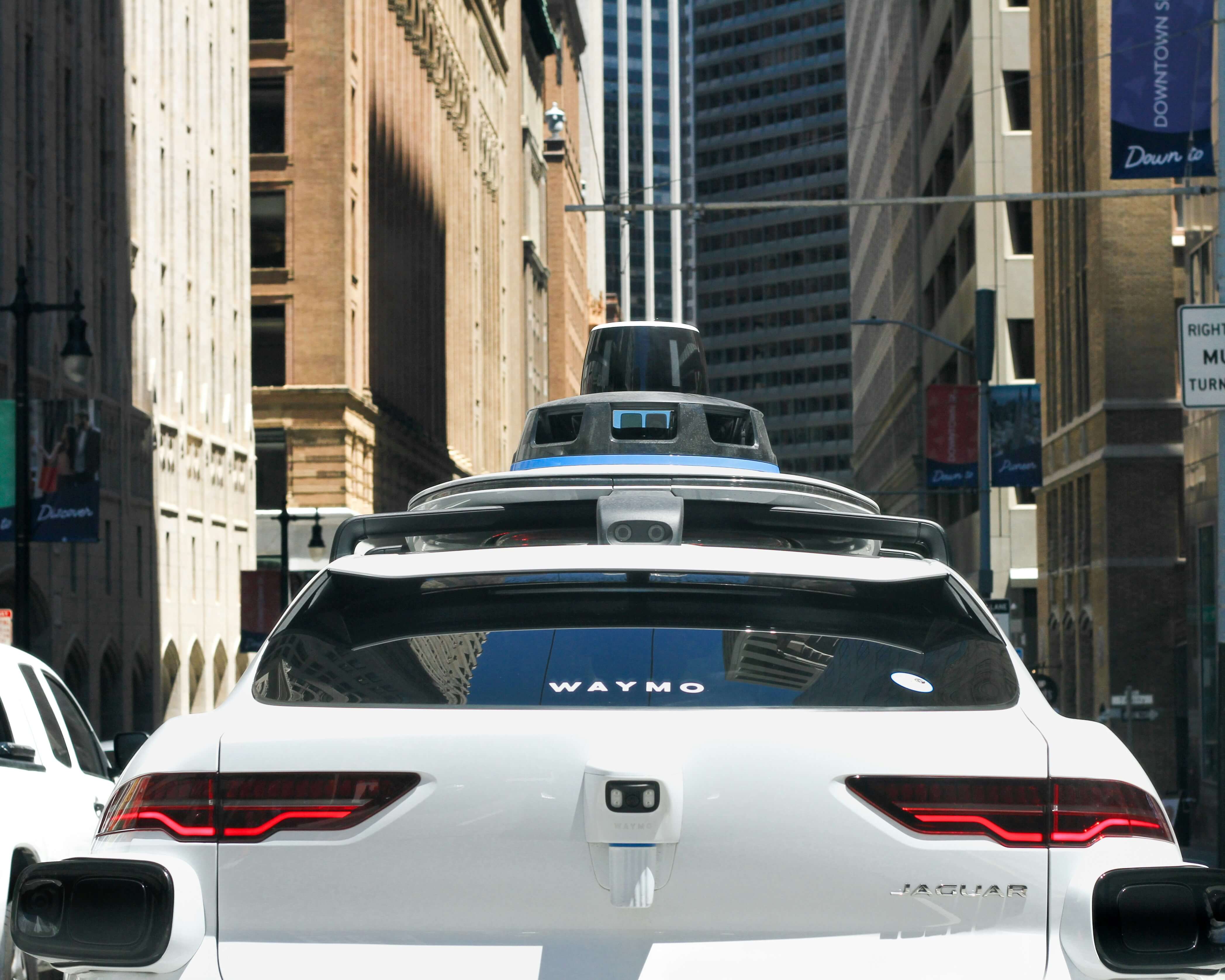
🤖 Who will actually operate Europe’s robotaxi fleets? Autonomous driving may remove the driver, but it doesn’t remove the work behind the car. Robotaxis still need charging, cleaning, maintenance, depots, customer support and someone managing the fleet every day. Early projects in Zagreb, Madrid and London illustrate different stages of deployment and how AV technology providers, fleet operators and booking platforms can work together. Taxi, rental and car-sharing companies already handle many of these tasks. What would it take to turn that experience into an autonomous fleet business?
For a taxi fleet owner, autonomous vehicles may seem to remove the most important part of the current business – the driver. But even without drivers, someone still needs to take care of the cars. They need to be owned or financed, charged, cleaned, inspected and repaired. Someone also needs to manage depots, deal with incidents, help customers and make sure enough cars are available.
The first robotaxi services and tests in Europe are already showing how this could work. The company that develops the autonomous driving technology does not always own or operate the cars. The app where customers book their rides may come from another company too. This could leave an important role for taxi, rental, car-sharing and other fleet companies that already know how to manage vehicles.
A taxi company today manages both cars and drivers. Drivers need to be recruited, scheduled, paid and supported. With a driverless fleet, these tasks would eventually disappear, but most of the work related to the cars would stay.
Autonomous cars still need charging or refuelling, cleaning, tyres, inspections, repairs and insurance. They also need somewhere to park when they are not working. If there is an accident or a technical problem, someone needs to deal with it and get the car back on the road. Customer support is still needed too when there are problems with bookings or payments, or when someone leaves something in the car.
Some of these tasks may even become more important. Robotaxis are expensive, and every hour a car spends charging, being cleaned or waiting for maintenance is an hour when it cannot take passengers. Moove, for example, already provides fleet ownership, depots, charging, maintenance and 24/7 operations for autonomous vehicles.
Drivers also do more than drive: they notice damage, report faults, help passengers and respond when something goes wrong. Without a driver, these responsibilities need clear processes and dedicated support. Existing fleet experience is an advantage, but operators will need to adapt it to vehicles running without someone behind the wheel.
There can be several companies behind one robotaxi ride. One provides autonomous driving technology, another may own the cars, and a local company can take care of the fleet. A platform such as Uber can then connect the cars with passengers. Sometimes one company may do several of these things, but this is not always the case.
Zagreb is one example. Pony.ai provides the autonomous driving system, Verne owns and operates the fleet, and Uber connects it with customers through its app. Autonomous rides became commercially available through Uber in August 2026 with a licensed operator onboard. On 10 September, Pony.ai and Verne also started fully driverless passenger test rides on a 22-kilometre route connecting parts of Zagreb with the airport. These are still limited test rides, not a fully driverless service across the whole city.
A similar model is being tested in Madrid. WeRide, Uber and AVOMO received permission in September 2026 to start testing and mapping under Spain’s ES-AV framework. The first 20 vehicles have an onboard specialist. WeRide provides the autonomous technology, Uber connects the cars with passengers, and AVOMO takes care of fleet operations. Commercial operations are planned for later in 2026, but the current permit is for testing and preparation rather than a general driverless taxi service.
In London, Wayve and Uber launched supervised autonomous passenger rides in September 2026. Customers can be matched with an autonomous vehicle through the Uber app, but there is still a licensed driver in the car.
The plans for the next few years are already much bigger. Pony.ai and Uber announced in August 2026 that they plan to deploy more than 2,000 robotaxis in Europe, starting with Zagreb and later expanding to four more European cities.
Bolt and Lucid announced another partnership in September, with Bolt aiming to deploy at least 25,000 autonomous Lucid vehicles across European cities. This is a future target, not 25,000 cars already operating today.
How these fleets are owned and operated may also be different from one city to another. Local regulations, available vehicles, charging and depot infrastructure and partnerships will all have an effect on how each service is set up.
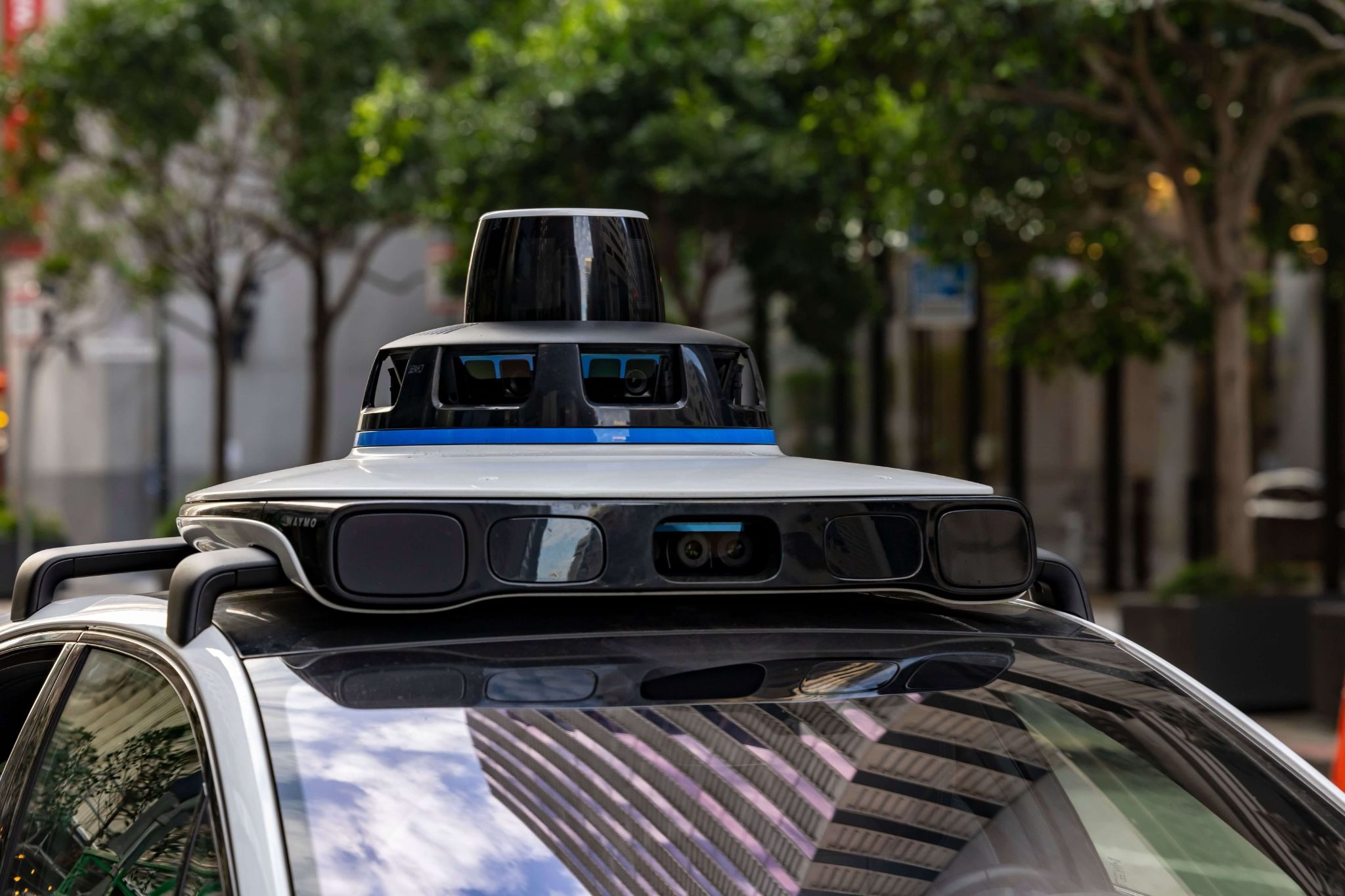
Taxi companies already do many of the things that would still be needed with an autonomous fleet. They maintain cars, deal with insurance and incidents, provide customer support and make sure enough vehicles are available. Some also already have their own depots, charging infrastructure or maintenance partners.
One possible model can already be seen in Zagreb. A local company owns and operates the autonomous fleet, while a larger ride-hailing platform brings customers. In the future, an existing taxi company could potentially have a similar role. Instead of managing cars and drivers, it could manage autonomous cars that receive bookings through a larger platform.
This does not mean platforms such as Uber will always rely on other companies to own the cars. Uber’s 2026 agreement with Rivian includes up to $1.25 billion in milestone-dependent investment and says that Uber or its fleet partners may purchase the autonomous vehicles. Uber is also developing infrastructure for autonomous fleets. Different ownership models are therefore possible.
Autonomous vehicles could also become interesting for rental and car-sharing companies, although this is probably further in the future. These businesses already manage vehicles, maintenance, cleaning, charging, bookings, customer accounts and payments, so much of the practical work is similar.
Autonomous driving could also change how rental and sharing cars are moved. Today, an employee may need to drive a car from one location to another. In the future, the vehicle could potentially do this itself within an area where autonomous driving is approved. It could even become possible for a rental car to drive itself to a customer’s pickup point.
Without drivers, it becomes especially important to understand how much time each vehicle is actually working. Every hour spent charging, being cleaned, waiting for maintenance or simply sitting unused means less time carrying paying passengers.
Some useful KPIs could be available hours per vehicle, paid trips per vehicle each day, revenue per available vehicle/day, empty kilometres, charging and maintenance downtime, cost per trip and incidents that need human help. These are most popular robotaxi industry KPIs of what a company could measure during a pilot.
For example, if cars spend too much time waiting to charge, the charging setup may need to change. A lot of empty kilometres could mean the cars are not in the right places, while too much maintenance downtime could make a vehicle more expensive to operate.
For either model, the business case depends on the partnership terms: who finances the vehicles, who carries the risk when demand is low, and how revenue and operating costs are shared. Operators should assess what remains after vehicle financing, insurance, charging, maintenance and partner fees. Depots, local service teams and reliable fleet availability could make an operator a valuable partner, but profitability still needs to be demonstrated.
One option for taxi fleets would be to work with an autonomous driving company and a larger ride-hailing platform. The local company could own or manage the cars and take care of the fleet, while customers book their rides through the larger platform.
Another option could be possible in cities where large ride-hailing platforms are not present or have limited coverage. A local company could work with an approved AV provider while using its own app, bookings, payments, customer support and fleet management.
In both cases, a company cannot simply buy autonomous cars and start offering rides. The technology needs to be approved, and local rules have to allow the service. These rules will also be different across Europe. Great Britain, for example, introduced its Automated Passenger Services permitting framework in 2026. Services similar to taxis or private hire vehicles need consent from the relevant local authority, while responsibility for the autonomous driving technology and the passenger service are treated separately.
A company does not need to have autonomous cars today to start preparing. A good first step is understanding the current fleet in detail – what each vehicle costs, how many hours it is available, how much time it spends charging or being repaired, and when cars are used the most.
Charging, cleaning, maintenance and depot processes are also worth looking at because all of these will still be needed with autonomous vehicles. A company interested in an AV pilot can then choose a location and use case, look at the local permit process and start talking to autonomous driving technology providers.
The software will also need some preparation. Customers still need to book and pay for rides, while the company needs fleet information, customer support, reporting and connections between its own systems and the AV technology. Starting with a small pilot makes it possible to test all of this before trying to build a larger service.
ATOM Mobility already provides many of the software functions used by taxi, ride-hailing, rental and sharing companies, including customer apps, bookings, payments, fleet management, maintenance tasks, analytics and APIs. Its ride-hailing software includes passenger and driver apps, dispatch, payments, fleet data, analytics and integrations. The ATOM Mobility API can also exchange data about vehicles, bookings, rides, payments, telemetry and maintenance tasks.
ATOM Mobility does not provide autonomous driving technology. This would come from a specialised AV company, and each project would have its own technical requirements and local approvals. For an AV pilot, ATOM Mobility could work with the fleet company and AV provider on the rider experience, integrations, fleet management and the data needed to measure how the pilot is working.
If you operate a taxi, rental or sharing fleet and want to explore an AV pilot, ATOM Mobility can help plan the booking and fleet-management setup, integrations and metrics you would need to test together with an AV technology partner.
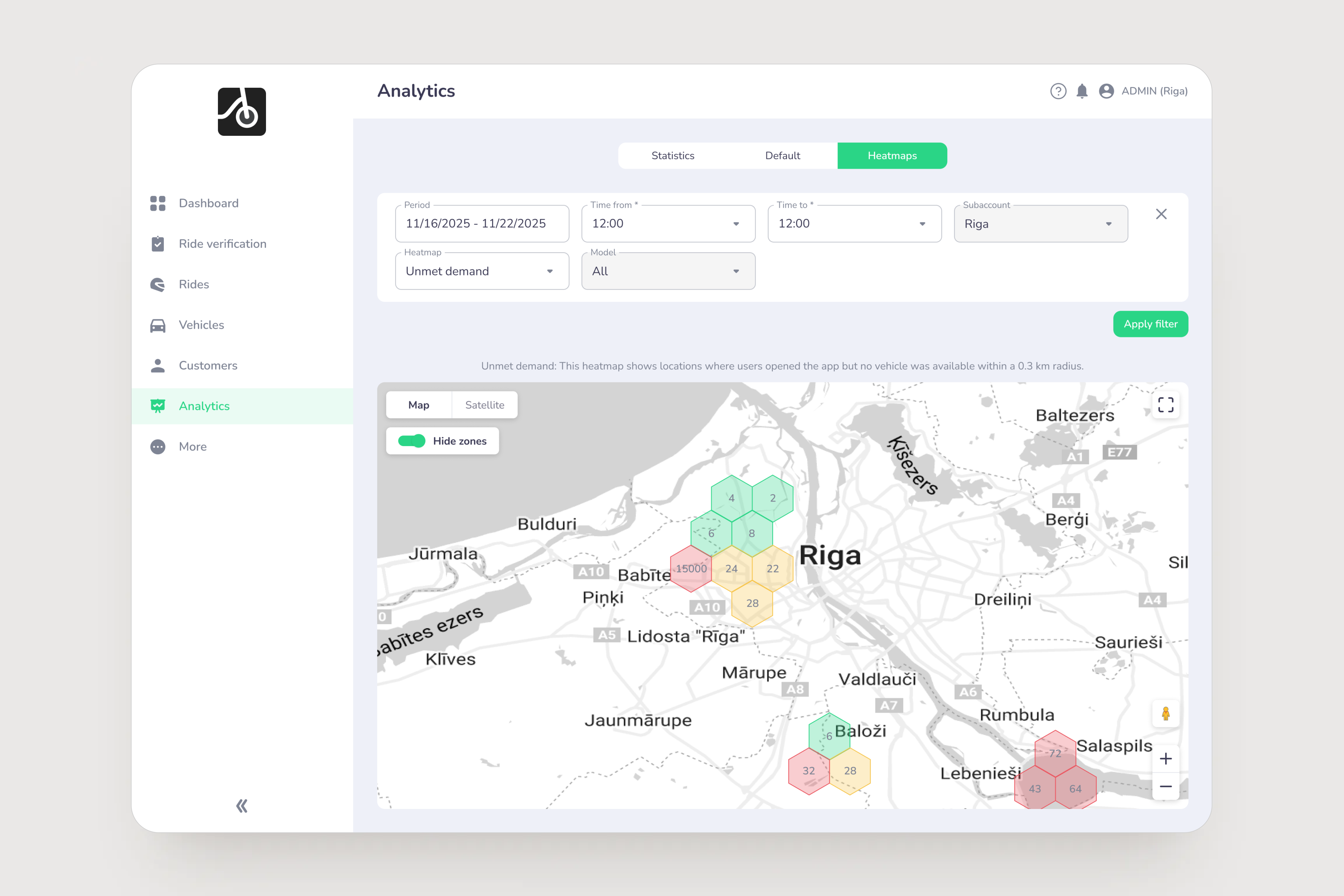
🚲 The biggest costs in shared mobility are often the ones riders never see. Behind every trip is a constant cycle of fleet balancing, maintenance, charging, customer support, and compliance. As fleets grow, these operational costs can have a bigger impact on profitability than the vehicles themselves. This article explores the hidden costs that shape every shared mobility business.
Shared mobility often looks simple from the outside. A user opens an app, unlocks a vehicle, completes a trip, and moves on with their day. But not everybody knows that the system behind every ride is a bit more complex and can be quite expensive. For many operators, the biggest expenses are not always the most obvious ones.
As shared mobility continues to grow across Europe, operators face increasing pressure to improve efficiency while maintaining service quality. According to the latest European Shared Mobility Index, shared mobility services generated more than 700 million trips across Europe in 2025, reflecting continued demand for alternative transportation options. At the same time, profitability remains one of the industry's biggest challenges.
Across more than 300 shared mobility projects worldwide, one pattern appears consistently: operators often underestimate operational costs during launch planning while focusing primarily on fleet acquisition, permits, and launch activities. The largest challenges often emerge later through day-to-day operations, where downtime, fleet balancing, maintenance, customer support, and compliance costs gradually impact profitability.
Every shared vehicle is an asset that only generates revenue when it is available to users. A scooter waiting for repairs, a bike with a flat tire, or a car that has not been inspected after damage generates no revenue at all. For example, a scooter generating an average of two rides per day at €3 per ride produces roughly €2,200 in annual revenue. If recurring maintenance issues keep that vehicle unavailable for two weeks each quarter, the shared mobility operator could lose more than €250 in annual revenue from that vehicle alone. Across hundreds or thousands of vehicles, downtime quickly becomes a significant operational cost.
Yet the costs continue to build up – insurance, depreciation, financing, storage, and operational overhead do not stop simply because a vehicle is unavailable.
This becomes particularly noticeable as fleets grow. A single inactive vehicle may not seem significant but hundreds of inactive vehicles spread across multiple cities quickly become a major financial problem.
That is why many operators invest heavily in fleet visibility and operational tools. Platforms such as ATOM Mobility's vehicle sharing software help operators monitor vehicle status in real time and identify issues before they affect large parts of the fleet.
One of the least visible costs in shared mobility is fleet redistribution. Users naturally travel between different parts of a city. Over time, vehicles begin clustering in some areas while disappearing from others. The result is familiar to most operators – too many vehicles where demand is low and not enough where demand is highest. Solving this problem requires people, vehicles, planning, and technology. Large operators often maintain dedicated teams responsible for things like fleet redistribution, battery swapping, charging operations, station monitoring and demand forecasting.
Academic studies of bike-sharing systems consistently identify balancing and redistribution as some of the biggest operational challenges because they directly affect both utilisation and customer satisfaction. When users cannot find a vehicle nearby, they often choose another transport option instead. It’s even more difficult during big events, tourist seasons, weather changes, and rush hours when demand patterns shift rapidly.
For operators managing electric scooters, bikes, and mopeds, battery charging creates another layer of operational complexity. Vehicles must be collected, charged, swapped, and returned to high-demand locations. Labour, logistics, warehouse space, charging infrastructure, and electricity costs all contribute to the overall cost of fleet operations.
As fleets grow, charging efficiency becomes increasingly important. Poor battery management can increase downtime, reduce vehicle availability, and create unnecessary operational costs. For operators managing thousands of electric vehicles, charging and battery-swapping operations can require dedicated teams, warehouses, charging infrastructure, and specialised software to coordinate daily tasks efficiently.
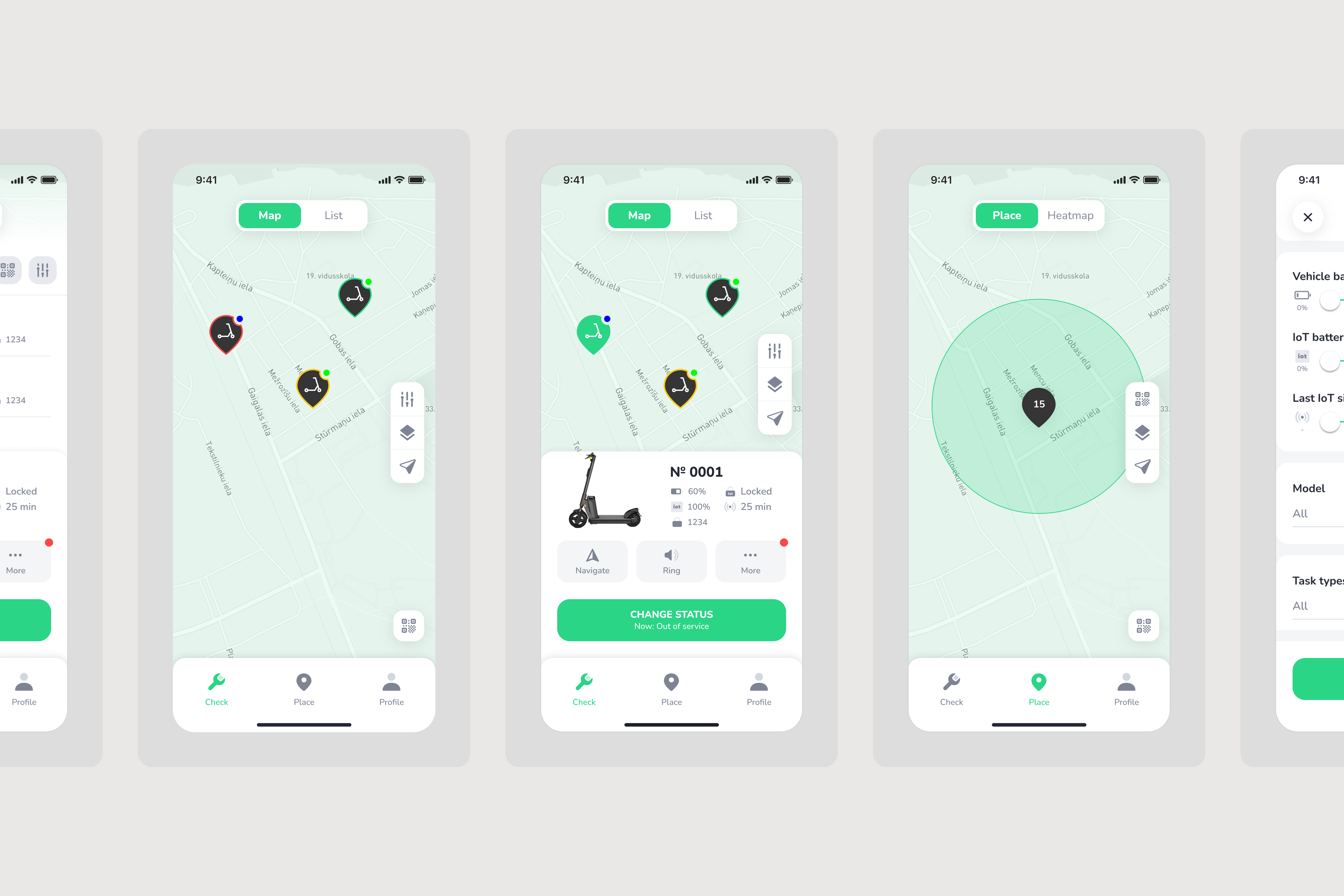
Most vehicle problems start as minor issues but then become a bigger problem. A slightly damaged brake, a worn tire, a loose component, or a battery performing below normal levels may not immediately remove a vehicle from service. Left unresolved, however, these issues often become larger repairs that require more time, more money, and more operational effort.
For this reason, maintenance is no longer viewed as a reactive task by many successful operators. Instead, it is becoming an ongoing operational process supported by automation, diagnostics, and task management systems. So it’s important to identify problems before users do.
Many operators are moving toward more structured maintenance workflows, similar to the approaches discussed in ATOM Mobility's fleet management automation insights.
Customer support is often not thought enough about during launch planning. Founders typically focus on vehicles, apps, and pricing. Few spend enough time calculating the operational cost of helping users when things go wrong.
Support requests usually involve payment issues, failed unlock attempts, damaged vehicles, parking questions, account verification, trip disputes and other day to day problems. A fleet generating 100,000 monthly rides may receive hundreds or even thousands of support requests related to payments, parking violations, damaged vehicles, or account verification.
The cost of poor support is often higher than the cost of support itself because unresolved issues directly affect retention and reviews.
The shared mobility industry has grown significantly. A decade ago, many cities welcomed operators with relatively few requirements. Today, most cities expect detailed reporting, parking compliance, safety measures, accessibility standards, and operational transparency.
Operators increasingly need to invest in:
These requirements create additional costs, but they are quickly becoming part of doing business in the sector. At the same time, cities are becoming more selective about which operators receive permits and long-term partnerships, making operational quality an increasingly important competitive advantage.
Hidden costs rarely appear in business plans or launch announcements. They emerge gradually through downtime, maintenance, balancing, customer support, charging operations, and compliance requirements. Individually, each cost may seem manageable. Together, they often determine whether a mobility business becomes profitable.
Shared mobility businesses often talk about fleet size, market expansion, and trip volume. The operators that build sustainable businesses tend to focus on a different set of metrics, including vehicle utilisation, downtime, maintenance efficiency, and operational automation. Growth still matters, but it becomes expensive quickly when operational control is lacking.
Across the shared mobility industry, operational excellence is increasingly becoming a stronger competitive advantage than fleet size alone.
Many of the hidden costs discussed in this article can be reduced through better operational visibility and automation. Modern mobility management platforms help operators monitor fleet health, detect issues before they lead to downtime, automate maintenance workflows, prioritise field operations, optimise redistribution using real-time demand data, coordinate charging and battery-swapping activities, automate refunds for unsuccessful rides, and generate compliance reports with no manual effort.
At ATOM Mobility, we've seen these challenges across more than 300 shared mobility projects worldwide. While every market is different, operators that invest in operational efficiency early are often better positioned to achieve sustainable growth and profitability.

🚲 While dockless scooters and e-bikes often seems to be the popular choice, many of Europe's most popular shared mobility programs are station-based bike-sharing networks. Systems like Vélib' in Paris, Bicing in Barcelona, and BikeMi in Milan continue to grow by combining predictable parking, strong integration with public transport, and increasingly popular e-bike fleets. What these programs have in common, how they operate at scale, and why many cities continue investing in station-based bike sharing?
During 2019-2025, most of the attention in shared mobility went to dockless scooters. They were quick to deploy, highly visible, and seemed like the future of urban transport. But while many scooter operators expanded, consolidated, or exited markets, station-based bike-sharing systems quietly continued growing.
According to the 2025 European Shared Mobility Index, public bike-sharing schemes generated around 238 million trips in Europe, while private bike-sharing operators recorded another 124 million trips. Together, bike-sharing services accounted for more than 360 million annual rides out of more than 700 million rides (the other half was generated by free-floating scooters). While the industry spent years experimenting with different models, station-based bike sharing remained remarkably resilient. In many cities, it has become part of everyday transport infrastructure rather than simply another mobility service.
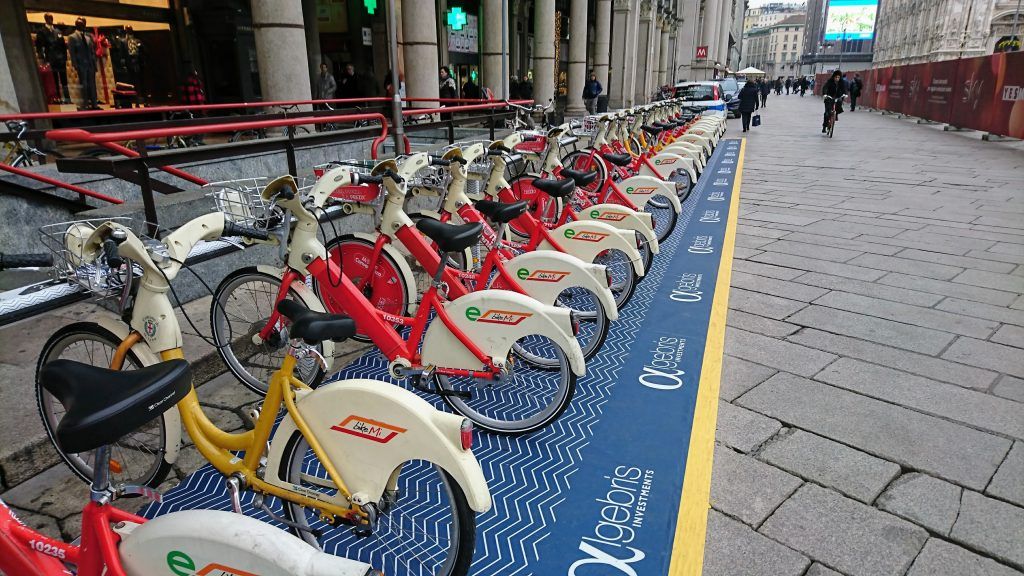
One of the clearest themes from the latest index is that the market is becoming more disciplined. Operators are no longer chasing every possible market. Instead, they are focusing on locations where shared mobility can operate sustainably over the long term. Cities are becoming more selective too, favouring systems that fit into wider transport networks rather than uncontrolled fleet expansion.
This shift has created favourable conditions for station-based bike-sharing systems. Unlike dockless fleets, station-based programs offer more predictable parking, easier fleet management, and stronger integration with public transport. These advantages become increasingly important as cities focus more on accessibility, compliance, and long-term mobility planning.
The strongest argument for station-based bike sharing is the performance of some of the world's largest programs.
Paris' Vélib' remains one of the most successful bike-sharing systems in Europe. The network combines thousands of regular bicycles and e-bikes across an extensive station network that covers much of the city. Vélib' generated approximately 48.5 million trips in 2025, making it the highest-ridership public bike-sharing system in Europe.
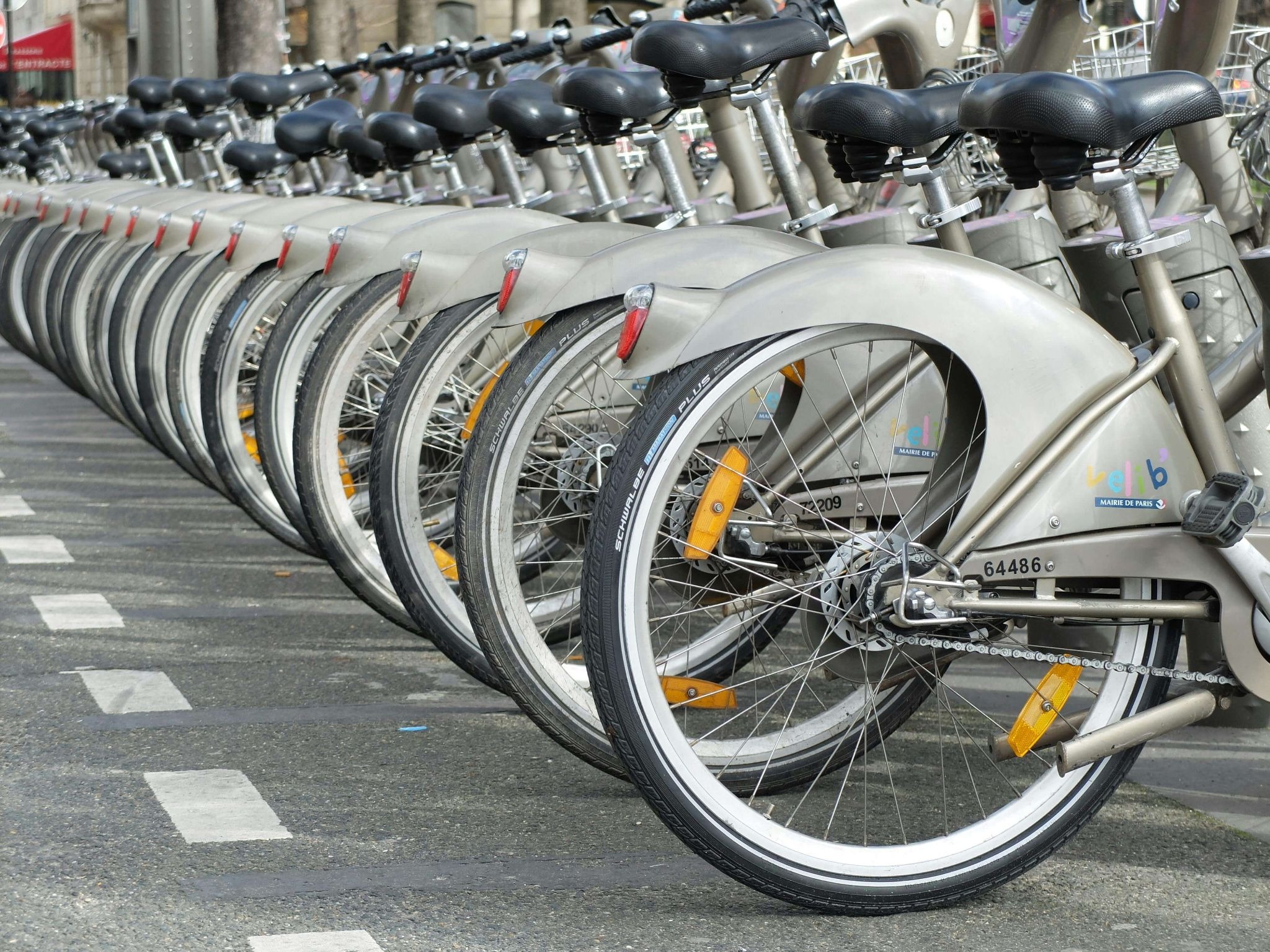
What makes Vélib' particularly interesting is that, for many Parisians, it has become part of their daily commute alongside buses, metros, and trains. That level of adoption only happens when riders know they can reliably find and return bikes where they need them.
Barcelona's Bicing demonstrates how station-based systems can scale with city support and careful planning. The system combines regular bicycles and e-bikes and has become deeply integrated into the city's transport ecosystem. Bicing recently surpassed 100 million total rides, making it one of the most successful public bike-sharing programs globally. Barcelona is becoming a fascinating mobility case study: shared scooters were banned, private dockless bike-sharing is being phased out, while the city continues expanding the public Bicing network. A clear signal that some cities are prioritizing station-based and publicly managed micromobility over free-floating models.
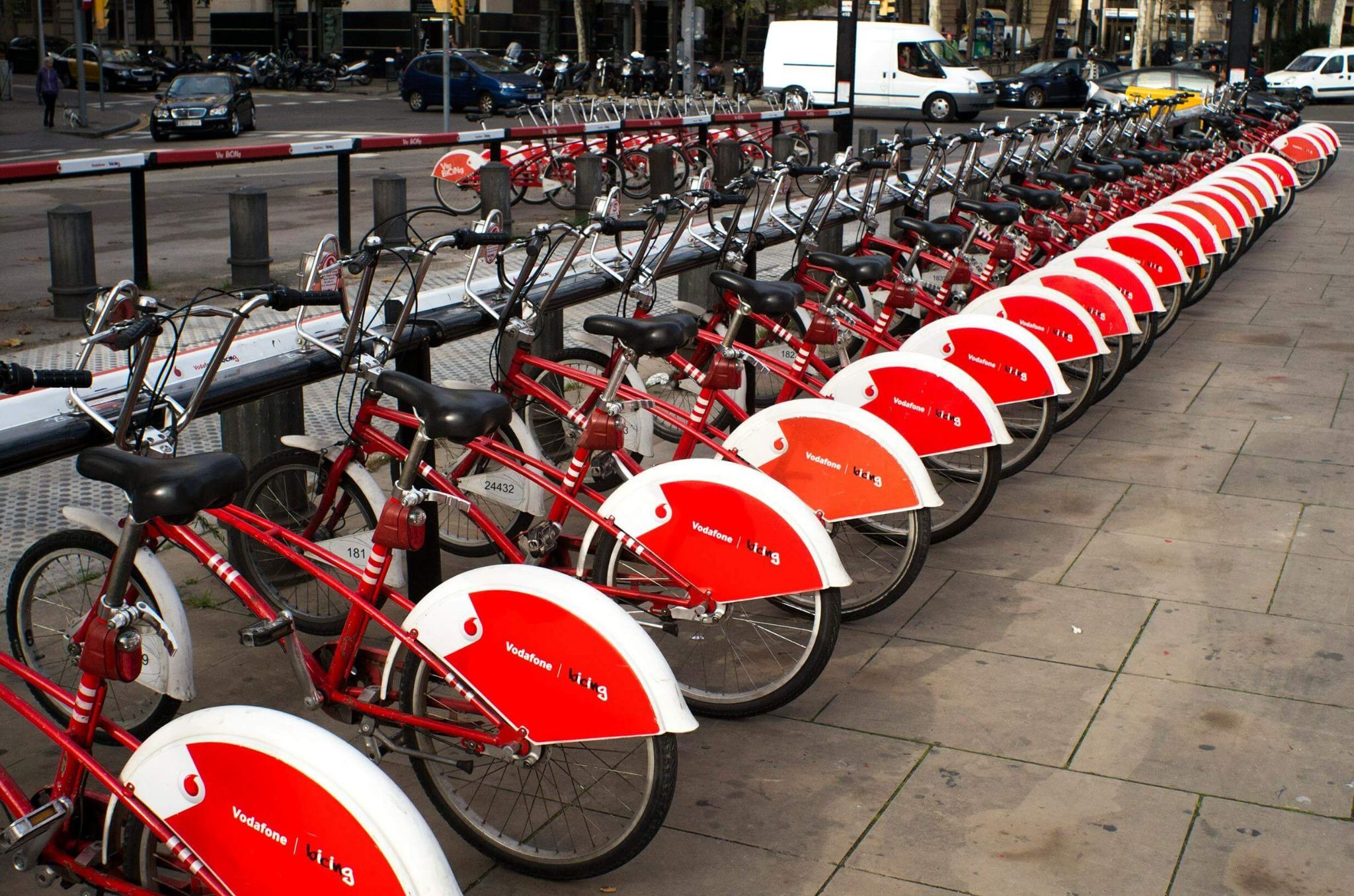
The success of Bicing also reflects a broader trend in Spain, where public bike-sharing systems continue receiving strong institutional support.
BikeMi in Milan offers a slightly different model. Rather than focusing on rapid expansion, the system grew steadily through dense station placement, strong commuter adoption, and integration with public transport. Now BikeMi combines traditional bicycles and e-bikes, providing a reliable transport option for both residents and visitors. Its success highlights an important lesson for operators: long-term utilisation often matters more than rapid fleet growth.

Although Vélib', Bicing, and BikeMi differ in scale and geography, they share several common characteristics. All three prioritise station density, integration with city transport networks, and predictable rider experiences.
One of the biggest developments in station-based bike sharing over the past few years has been the rapid growth of electric fleets. Public bike-sharing fleets are now approximately 48% electrified. More importantly for operators, electric bikes consistently generate more trips than traditional bicycles. Public systems average around 2.7 trips per vehicle per day, while some electric bike fleets achieve up to 4.6 trips per vehicle per day.
Higher utilisation means more revenue per vehicle, a faster return on investment, lower idle fleet costs, and stronger demand throughout the day. Electric bikes also make bike sharing accessible to a broader audience. Longer distances become practical, hills become less of a barrier, and riders who would not normally choose a bicycle are often willing to use an e-bike instead. This is one reason many newer station-based systems are launching with mixed fleets or even fully electric fleets from day one.
Across Europe, municipalities are placing greater emphasis on organised mobility systems that can be integrated into existing transport networks. The European Shared Mobility Index highlights several examples, including public support programs for bike-sharing subscriptions in Spain, continued investment in Barcelona's Bicing network, and London's decision to renew its Santander Cycles contract through a long-term investment programme.
For cities, the appeal is relatively clear. Station-based systems provide predictable parking, reduce street clutter, simplify accessibility planning, and make it easier to integrate bike sharing with buses, trains, and metro systems. As regulations become stricter and public space becomes more valuable, these advantages are becoming increasingly important.
As fleets grow, operators need visibility into station occupancy, vehicle availability, charging status, maintenance workflows, payments, rider activity, and customer support. Managing these processes manually quickly becomes difficult, especially when systems expand across multiple districts or cities.
Many operators use platforms such as ATOM Mobility's bike-sharing software to manage stations, vehicles, rider applications, payments, maintenance, and operational workflows through a single system rather than relying on multiple disconnected tools. The largest station-based programs did not become successful simply because they deployed more bikes. They built operational processes capable of supporting growth over many years.
The growth of systems like Vélib', Bicing, and BikeMi suggests that station-based bike sharing has found its place in modern cities long-term. The focus now is less on expansion alone and more on operating reliable, efficient networks that riders can depend on every da
Check out the full 2025 European Shared Mobility Index here: https://fluctuo.com/reports

🛴 🚲 At ATOM Connect 2026 in Riga, operators, technology providers, and industry experts came together to discuss where the market is heading and what will define successful operators in the coming years. The discussions covered everything from fleet economics and regulation to AI, insurance, MaaS, and operator growth stories.
Shared mobility continues to evolve quickly. At ATOM Connect 2026 in Riga, operators, technology providers, and industry experts came together to discuss where the market is heading and what will define successful operators in the coming years. The discussions covered everything from fleet economics and regulation to AI, insurance, MaaS, and operator growth stories.
One thing became increasingly clear throughout the event: The industry is entering a different phase. Growth is still happening, but the rules for winning are changing.
For years, shared e-scooters dominated headlines and rapid expansion stories. Now the conversation is gradually shifting.
Research presented by Frost & Sullivan suggests that e-bikes are increasingly becoming the preferred shared micromobility mode in many markets because of stronger unit economics, lighter regulatory friction, and changing rider behavior.
Some numbers presented:
Despite higher vehicle costs, e-bikes generate stronger long-term economics. We also saw examples from operators:
The interesting part is that e-bikes are gradually shifting from “fun transportation” toward everyday commuting infrastructure.
One surprising trend discussed during the event was that the European shared micromobility market continues growing despite relatively stable fleet sizes.
Normally, growth comes from deploying more vehicles. Now something different appears to be happening:
This is an important shift because it suggests the market is becoming more efficient. Instead of flooding cities with additional vehicles, operators are increasingly focused on generating more value from existing fleets.
Historically, shared mobility relied heavily on per-ride revenue. That model is also changing.
Frost & Sullivan highlighted subscriptions as one of the strongest trends for 2026, with subscription-heavy models showing positive profitability dynamics. This aligns with what many operators shared during discussions. Subscriptions bring several advantages:
The industry may gradually move toward a model that looks more like SaaS and memberships rather than only pay-per-use transportation.

AI was one of the strongest themes throughout the event. Only a few years ago, AI in mobility often meant pilots and interesting demos. Now operators increasingly use it for daily operations. Examples discussed included:
Frost & Sullivan identified AI-powered demand anticipation as one of the highest-impact trends for operators in 2026.
Yuri Narozniak from datafolio also shared examples where AI predicts high-risk insurance zones and dynamically adjusts risk models based on ride behavior. Datafolio additionally introduced integrated rider insurance options, with approximately 25% long-term rider adoption.
Regulation has become one of the biggest variables affecting operator success. Different cities continue taking very different approaches. Examples discussed included:
Positive developments:
Restrictions:
− Prague banning shared scooters
− Italy tightening compliance requirements
Cities want fewer operators, stronger compliance, and more accountability.
Winning a market increasingly depends on safety records, operational quality, data transparency, compliance history rather than simply deploying larger fleets.
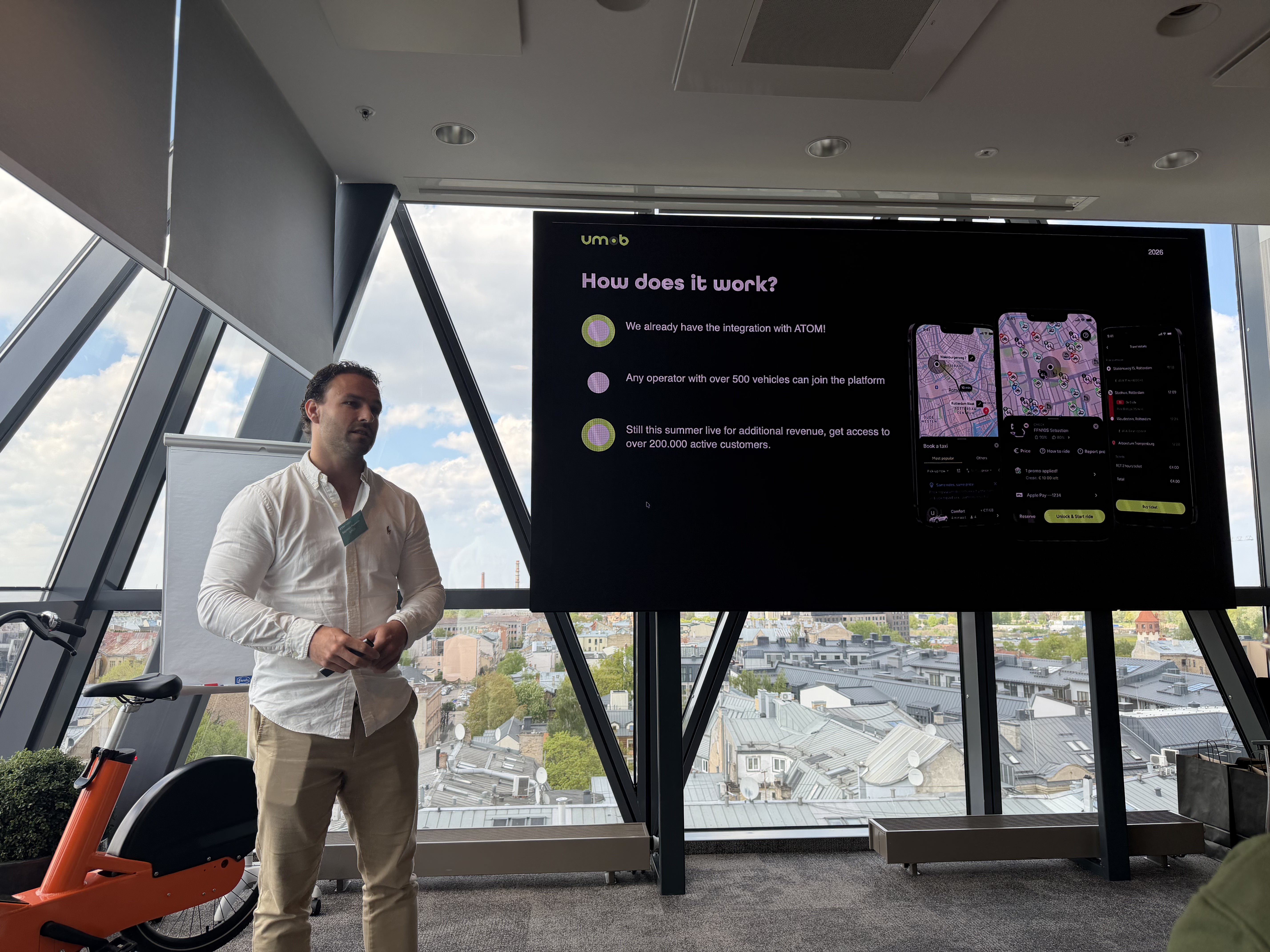
Raymon Pouwels shared the growth story behind umob and the continued expansion of Mobility-as-a-Service. The long-term vision remains simple: One interface, multiple transportation services.
Users increasingly expect transportation to behave similarly to digital services: Open one app -> See all options -> Choose what works best.
The market continues moving toward stronger integration between operators and MaaS platforms.
One slide from Frost & Sullivan summarized it particularly well:
"The operators still standing in 2026 didn't win on product - they won on discipline, selectivity, and city relationships."
Looking across both research and operator stories, common patterns repeatedly appeared:
✔ Lean and efficient operations
✔ Strategic market selection
✔ Diversified revenue streams
✔ Strong partnerships
✔ Data-driven decisions
✔ Safety and compliance focus
Thank you again to all speakers, partners, and participants who joined us at ATOM Connect 2026 and contributed to the discussions. We are excited to continue building the future of mobility together.
Want to continue the conversation? 🚀
Our team will be attending Micromobility Europe (June 2-3, Berlin) and we'll have a booth there. If you're attending too, come say hello, grab a coffee, and let's talk mobility ☕

🚗 A weak driver app slows down operations and pushes drivers to other platforms. In ride-hailing, drivers switch apps fast. If the experience is confusing, slow, or unreliable, they leave. That means fewer completed rides and higher costs for operators. A strong driver app improves navigation, keeps ride flow steady, makes earnings clear, and helps drivers stay longer. This article explains what actually matters in a driver app and how it affects your ability to grow and scale.
In any ride-hailing or mobility business, the driver app is a great tool. However, it is also the main interface drivers use every day to accept rides, navigate, track earnings, and communicate with the platform. If the experience is slow, confusing, or unreliable, drivers leave. If and when that happens, operations suffer immediately.
This is why driver experience has become an important factor in platform performance. According to industry insights, driver churn remains one of the biggest challenges in ride-hailing, with platforms needing to continuously recruit and onboard new drivers to maintain supply. The 2025 Gig Driver Report found that 68% of gig drivers use two or more platforms every month, which shows how easily drivers switch between apps when the experience, earnings, or payout process feels better elsewhere.
A well-built driver app does more than support operations. It improves efficiency, increases completed trips, and helps build long-term driver loyalty.
Drivers rely on the app for almost everything during a shift. It needs to work reliably in real conditions, including high demand, long hours, and unstable connections.
A modern driver app should allow drivers to:
Solutions like the ATOM Mobility driver app bring all of this into one system, reducing friction and making daily work simpler for drivers. When everything works in one place, drivers spend less time solving issues and more time completing trips.
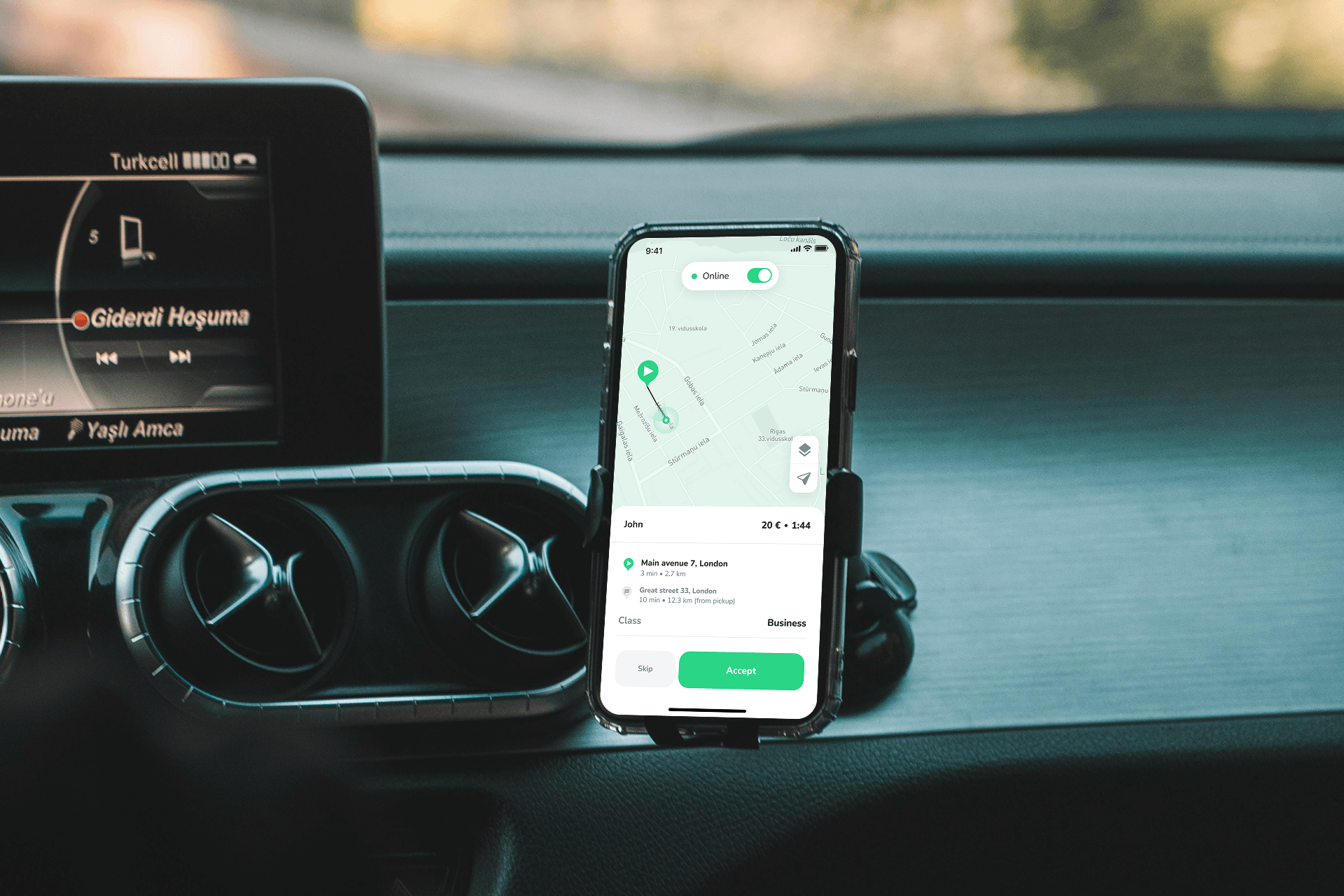
Accurate navigation and smart ride assignment are two of the biggest factors affecting driver productivity.
Drivers need to:
Even small improvements in routing and dispatch can make a difference. Better routing reduces wasted time and fuel use, which improves both driver earnings and operational efficiency across the platform.
At the same time, automated dispatch ensures drivers receive rides consistently. Features like back-to-back trip assignments reduce downtime and keep drivers active throughout their shift.
Drivers want clarity when it comes to earnings. If payouts are delayed or unclear, trust drops quickly.
A good driver app should show:
Clear earnings tracking reduces disputes and gives drivers confidence in the platform. It also simplifies operations for companies managing large fleets.
Driver experience is closely linked to retention. Small issues like unclear earnings, poor navigation, bad UI or inconsistent ride flow can push drivers to another platform.
This is why long-term retention strategies matter, especially in competitive markets where drivers have multiple options, as explained in how to retain drivers on your ride-hailing platform long term.
Platforms that invest in driver experience early reduce churn and avoid constant recruitment costs.
The driver app does not exist on its own. It is part of a broader system that includes rider apps, dispatch tools, analytics, and payment systems.
Most operators today do not build these systems from scratch. Instead, they launch using ready-made platforms where all components are connected, including the driver app, as explained in this guide on building a personalized white-label taxi app.
This approach allows companies to launch faster and scale without rebuilding core infrastructure.
Not all ride-hailing platforms are the same. Some focus on premium services, others on affordability, and others on specific local markets.
The driver app needs to support that positioning. Features, pricing logic, and workflows should reflect the type of service being offered, which is explored further in this article on finding your niche in the ride-hailing market.
When the product and the business model align, both drivers and passengers have a clearer experience.

Driver expectations continue to evolve. Features that were once optional are now standard.
Platforms that continue to improve their tools and workflows stay competitive longer. Many of these improvements come from real operational challenges, as seen in recent updates highlighted in ATOM Mobility’s latest platform features.
Small improvements in daily workflows can have a large impact when applied across hundreds or thousands of drivers.
The driver app is one of the most important parts of any mobility platform. It affects how drivers work, how much they earn, and whether they stay.
A reliable and well-designed app improves daily operations, reduces friction, and helps platforms scale more efficiently. It also builds long-term driver trust, which is one of the hardest things to maintain in a competitive market.
As mobility businesses continue to grow, the quality of the driver app will remain one of the key factors that determines whether a platform can scale successfully or struggles with constant churn.

"State of art technology in mobile apps and dashboard, very good SLA!"
"Easy, nice looking, continuously updated and developed every month and most of all very reliable with a extreme high uptime"
"We used to work with a different service provider which wasn't fitting our needs. Switching to ATOM was an improvement on our side"
Use test credentials to log in - Phone number: +1 123123123, Code: 777777


Driver App demo credentials - Email: test@atom.com, Password: driver