Blog
Insights and news from the ATOM Mobility team
We started our blog to share free valuable information about the mobility industry: inspirational stories, financial analysis, marketing ideas, practical tips, new feature announcements and more.

We started our blog to share free valuable information about the mobility industry: inspirational stories, financial analysis, marketing ideas, practical tips, new feature announcements and more.
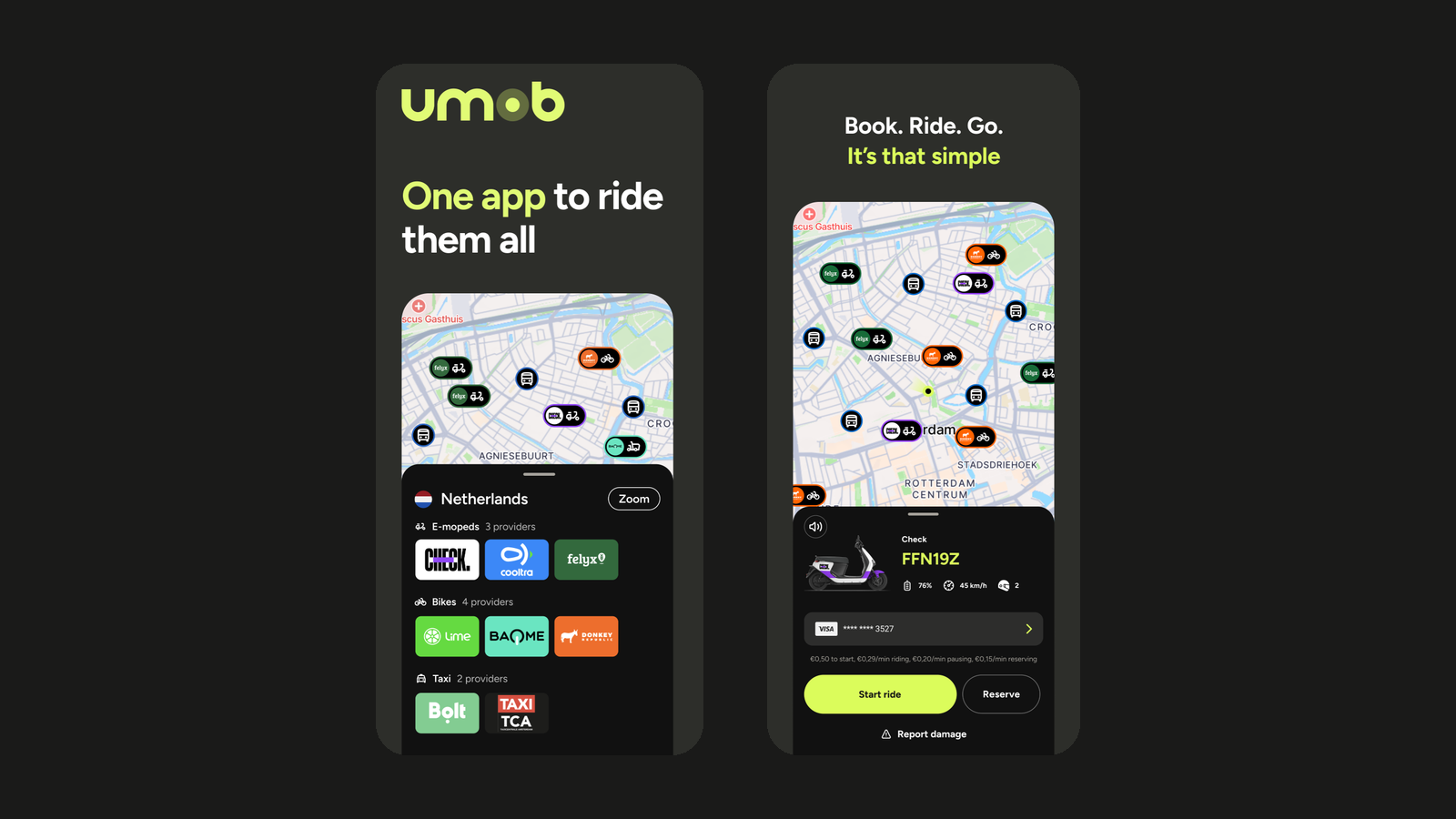
🌍 Reach more riders with ATOM Mobility and Umob. The integration gives shared mobility operators an additional distribution channel, helping attract new customers, generate more bookings and improve fleet utilization.
The future of mobility is not just about operating vehicles. It is about creating convenient journeys that bring different transportation options together in one simple customer experience.
That is why we are excited to highlight our partnership with Umob, helping mobility operators expand their reach and become part of a growing multimodal mobility ecosystem.
Whether you operate shared cars, scooters, bikes or mopeds through the ATOM Mobility platform, integrating with Umob allows your service to become accessible to thousands of Umob users looking for a convenient way to travel.
Today's users expect flexibility. They don't think in terms of individual mobility providers, they simply want the fastest, easiest, and most convenient route from A to B.
Umob brings different mobility providers and transport options together in one app. Users can find, compare, book and pay for different mobility options without having to download a separate app or create a new account for every provider.
By connecting your fleet to Umob, operators can:
For ATOM Mobility customers, the integration is designed to provide a straightforward way to unlock new distribution opportunities while continuing to manage their core operations through the ATOM Mobility platform.
Through the ATOM Mobility platform, participating operators can connect their fleets with Umob, enabling users to discover and use available vehicles directly through the Umob app.
Once connected, vehicles from participating operators can appear in Umob alongside other available mobility options, giving users one clear overview of the different ways they can get from A to B.
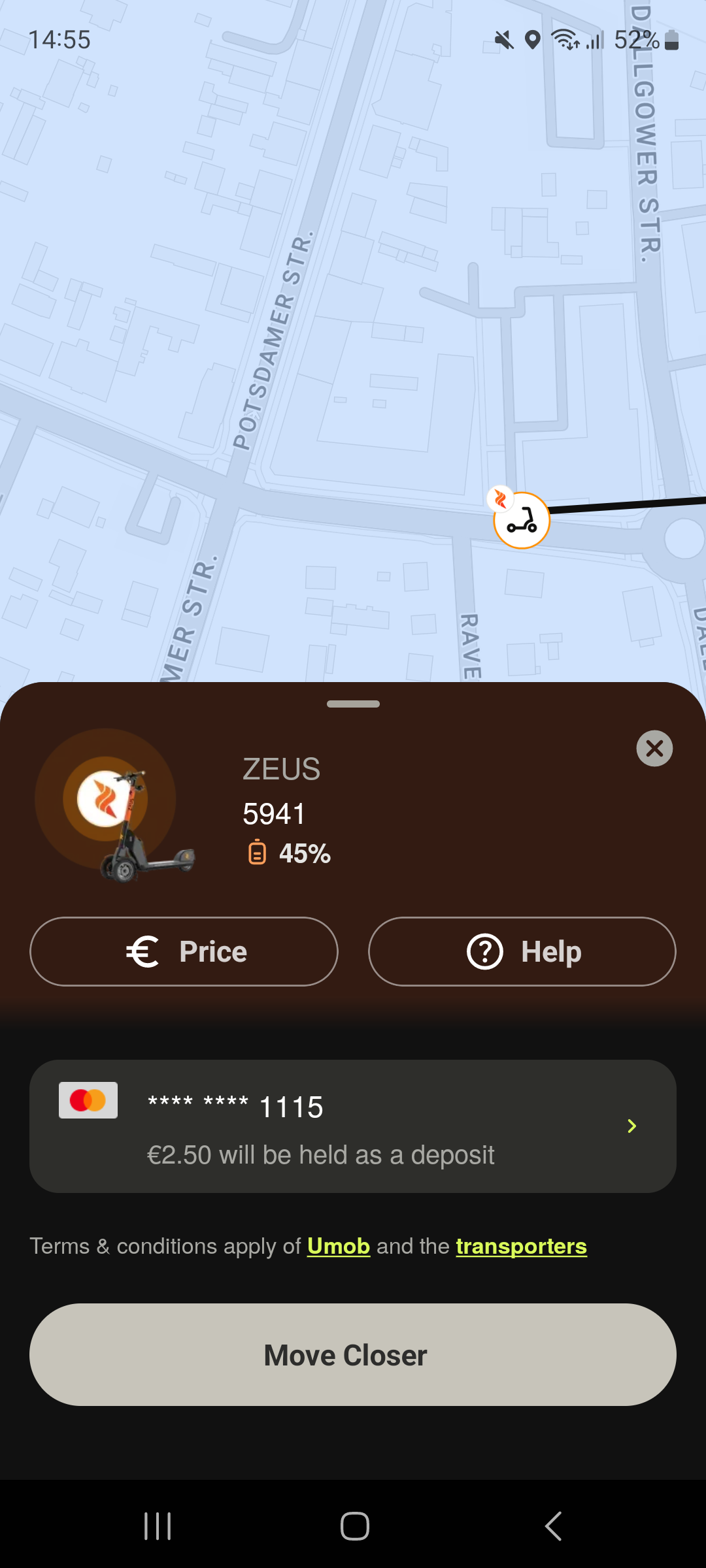
Users can discover an available vehicle, reserve and unlock it, start and end their ride, and pay directly through Umob.
The integration is designed to support:
Operators continue to manage their fleet, pricing, service areas and day-to-day operations through the ATOM Mobility platform, while Umob provides an additional channel through which users can discover and access their vehicles.
For mobility operators, connecting with Umob creates an additional distribution channel without changing the way they manage their day-to-day operations through ATOM Mobility.
By making vehicles available to thousands of Umob users, operators can increase their visibility at the moment people are actively looking for a ride. This creates the potential to attract new users, generate additional bookings and improve fleet utilization over time.
Every market is different, but many operators see MaaS partnerships as an important part of their long-term growth strategy.
One of the first ATOM Mobility operators to launch through the Umob integration is ZEUS Mobility, an ambitious European e-scooter sharing provider with a strong focus on innovation, a dynamic approach and challenging the established players in the market.
Fittingly, the partnership itself started through the ATOM Mobility network.
ZEUS and Umob first met at an ATOM Mobility event in Riga. While the initial introduction happened during the event, it was over drinks later that evening that the conversation really started.
ZEUS had already come across the Umob brand on mobility vehicles while travelling and had been impressed by the professional approach the company was taking. That recognition quickly turned into a conversation about how both companies could strengthen their propositions by working together.
From there, the integration moved forward quickly. ZEUS describes the preparation and integration process so far as “clean, professional and smooth.”
For ZEUS, the partnership creates an opportunity to strengthen the visibility of its brand, reach new customers and support its wider European growth ambitions.
Following its acquisition of Superpedestrian in May 2026, ZEUS is looking to accelerate its growth throughout 2026 and 2027, with the Umob partnership forming part of that ambition.
“ZEUS is thrilled to be partnering with Umob in European markets. Following our acquisition of Superpedestrian in May 2026, ZEUS is seeking to rapidly grow through 2026 and 2027. This partnership can help to drive this growth and reach new customers in new markets. We look forward to a rewarding partnership.” - Damian Young, ZEUS Mobility
One app to ride them all. Umob is an all-in-one mobility platform that brings different mobility providers and transport options together in one app.
Users can find, compare, book and pay for shared bikes, e-bikes, scooters, mopeds, public transport, taxis and other available mobility options through one account and one payment experience. Instead of downloading and registering with a separate app for every provider or every new city, users can open Umob and see the available mobility options around them.
Today, Umob is available in 28+ countries and 300+ cities, giving thousands of users an easier way to access different forms of mobility both at home and while travelling.
Key facts
If you're already operating your shared mobility service on the ATOM Mobility platform, connecting with Umob could be the next step toward reaching more users and becoming part of a truly connected mobility ecosystem.
If you're interested in enabling the integration or learning more about how it works, get in touch with our team. We look forward to helping more operators connect, collaborate, and make sustainable mobility easier for everyone.

Thirty years ago, the car was king. A lot has changed since then, and people increasingly see the value in environmentally friendlier micro-mobility transit options. All you have to do is follow the money – by 2030, according to McKinsey, the shared mobility sector will have generated $1 trillion in spending.
Thirty years ago, the car was king. A lot has changed since then, and people increasingly see the value in environmentally friendlier micro-mobility transit options. All you have to do is follow the money – by 2030, according to McKinsey, the shared mobility sector will have generated $1 trillion in spending.
All this means that micro-mobility is a serious business, and like all serious businesses, they have to think about marketing themselves. We've pulled together some of the most creative, fun, and effective shared mobility marketing campaigns out there. See what companies are doing, how they're addressing their audiences, and get inspired for your own campaigns.

Mobility vehicles: electric scooters, e-bikes, e-mopeds
Campaign geography: US, UK, Germany
About the campaign:
Lime, a micromobility company present in 150 cities in 30 countries, launched their “Break up with your ride” campaign in the summer of 2022, offering car owners incentives up to $3,500 in value to stop using their cars for a certain amount of time and choose shared mobility options instead.
They highlighted several of the downsides of using cars – ranging from environmental factors to sitting in traffic – to convince the drivers of a need for a break. The subtext, while not explicitly states, was that shared mobility is better for the environment and also eliminates many headaches associated with car ownership.
Lime timed the campaign to coincide with Earth Day, and drivers were able to pledge a certain amount of time that they would go car-free. Participants were able to win Lime merch, gift cards, an electric bike, and Lime rides up to $3,500 in value.
Why we love it:
Many shared mobility users are already carless. That's why shared vehicles are an attractive service – it helps them get around. What makes this campaign particularly effective is that they're going after a new segment – car owners. By tying it to Earth Day and positioning the “breakup” as an environmental act of kindness, they're able to tap into car owners' altruism and concern for the environment, rather than trying to sell them on shared mobility. Thus, the use of Lime's e-vehicles is seen as simply a nice side effect – a win-win for both.
Fun fact:
This campaign has proven to be so successful, that we’re seeing the same concept applied by other micromobility services like Bolt’s “Break up to break free” campaign.

Mobility vehicles: e-scooters, ride-hailing, car sharing
Campaign geography: global
About the campaign:
The branding team at Bolt, the Estonian-based micromobility service, saw a recurring trend – of street cats enjoying relaxing on their scooters' base (many photos being shared by Bolt users), which is black and warms up under the sun. They jumped on the observation, and put together a cardboard scratching post that looks just like a bolt scooter, complete with scratch pads and comfy cushions for optimal feline lounging.
The process was documented and shared on social channels – ranging from a series of photos on Linkedin to a video on TikTok. The posts have generated considerable engagement, the Linkedin post has over 2,000 responses and the TikTok has over 291,000 views – currently their most viewed video on their platform (the average views being around 5-6k). Their post includes a post scriptum message and link to a local Estonian animal shelter with cats looking for new homes.
Why we love it:
It's just a bit of good fun! Who doesn't love a wholesome campaign that has no explicit sales or profit motives, and with fun photos of cats, no less.
This is a masterful use of client-generated content (the cat photos), and the fun of going the extra mile, constructing a cat scratching post. The inclusion of a CTA (call to action) to support the local animal shelter gives the fun post a deeper, socially responsible message, and by repurposing the content for various social platforms they're able to spread their message to their users and demonstrate their brand values as well.

Mobility vehicles: ride-hailing
Campaign geography: global
About the campaign:
In response to Russia's invasion of Ukraine, a country in which Uber was present, Ukrainian Uber drivers started to use the app to help evacuate citizens in need. Uber stepped up to support these initiatives – opening up the platform for global donations to buy much-needed ambulances, and Uber itself committed to match donations up to $1M.
Within the scope of the campaign, Ukrainian filmmaker Oleg Tomin documented some of the drivers making the perilous journeys to evacuate stranded Ukrainians, and published the series on Youtube.
The results of the campaign include over 100,000 trips and $5M in donations from global Uber users. Uber is involved in transporting key support personnel and transporting, evacuating, and conserving artwork and archives.
Why we love it:
While micromobility businesses are just that – businesses – Uber demonstrated leadership in a time of crisis, mobilizing their resources in order to support Ukrainians in times of need and generating support using their global platform.
Transportation is undeniably a part of critical infrastructure, and Uber was able to play a major role in making sure that their systems, which were already in place could be made use of. While the campaign was not profit-driven, it showed the brand's humanity, a value that likely won't be forgotten by many who have been impacted by the war in Ukraine.

Mobility vehicles: car sharing
Geography: USA, UK, Australia
About the campaign:
Turo's “Find Your Drive” campaign highlights the unique pairing between person and car, matching a car's colour and “vibe” with a correspondingly dressed individual. The subtext communicates that your choice of vehicle is a direct embodiment of a person's style. Turo, which lets users choose from various vehicles (including fun, funky, and exclusive models), is saying that there is something that will suit everyone.
Why we love it:
The campaign is clever in its simplicity – no massive production budgets were required to convey the main message, which in this case is that whatever your personality and preference, there will be a car for hire that you’ll love.
These images could be repurposed for a variety of platforms, ranging from billboards to online content. The diversity in people photographed ensured that the campaign spoke to a diverse array of people, thus accessing a wider audience.

Mobility vehicles: electric scooters, e-bikes, e-mopeds
Campaign geography: London, Paris
About the campaign:
While electric scooter use is on the rise, they remain a point of contention in some cities more than in others. To address this concern, Lime created a series of print adverts showcasing some of the main negative opinions regarding electric scooters, with some of the posters reading “Sh*tty scooters!”, “Scooters really p*ss me off” and “These scooters are such a f*cking pain”.
The goal was to show the community that they were listening and that they were doing something to discourage bad behaviour, while also hoping to educate the public, their users, on respectful scooter use in the city.
Why we love it:
This campaign is eye-catching and makes waves thanks to its shock-value. More than that, it is also a simple yet highly effective way to address the concerns of society-at-large, while also subconsciously teaching their riders about scooter etiquette.

Mobility vehicles: e-mopeds
Campaign geography: Rotterdam
About the campaign:
Felyx, an e-moped sharing platform present in The Netherlands and Belgium, launched a social media campaign making use of hashtags to showcase the places you can go with Felyx mopeds. Two hashtag campaigns have been launched, one being #FelyxGreenFavorites, the other #Felyxhotspots.
They hosted photoshoots to create a series of images demonstrating interesting destinations within a moped’s ride, as well as different ways to live a greener lifestyle by using Felyx mopeds – from enjoying nature to visiting plant shops.
Why we love it:
The social campaign simultaneously gives people ideas as to how to use the mopeds, and by combining it with environmental messages, they increase eco-conscious individuals’ likelihood of remembering to choose Felyx over other mobility options. By providing a variety of destinations, they’re able to get their users’ creative juices flowing, and thus boosting demand for their services. What’s more is that this is an incredibly simple campaign to execute, and provides social media content – something your brand requires anyway.
These examples show us that there are no rules when it comes to shared mobility marketing campaigns. Simple is often impactful, and the campaigns don't always have to be profit-driven. You can use your campaigns to promote your brand values and personality, thus attracting clients that are on the same wavelength. In the end, they'll become your most loyal customers.

As you're getting close to launching your vehicle-sharing business, one of the important decisions is what payment gateway to use. Without one, you won't be able to collect payments from users via app. But choosing the right solution might feel daunting since so many options are available.
As you're getting close to launching your vehicle-sharing business, one of the important decisions is what payment gateway to use. Without one, you won't be able to collect payments from users via app. But choosing the right solution might feel daunting since so many options are available.
The good news is – we've got you covered.
In this article, you'll find an overview of what payment gateways are, what payment processing solutions integrate with ATOM Mobility, and the key factors to consider when choosing a payment gateway for your shared mobility venture.
Simply put, a payment gateway is the “bridge” between the customers' payment method and your bank account. It's the tool that validates your customer's card details or credentials for online payment methods (e.g., digital wallets such as ApplePay) to ensure that funds can be transferred to you, the operator.
For ATOM Mobility users, there's an option to choose between two types of payment gateways:
Hosted, when the client is taken to an external payment page hosted by the payment gateway provider to enter their payment details, such as credit card information or login credentials (e.g., PayPal or local bank integrations). In our case, the payment page opens in-app, meaning that the end customer won't know the payment takes place outside of the app.
Self-hosted/native SDK integration is when the payment gateway system is integrated into the app, allowing the client to complete the payment without leaving the site.
Most businesses nowadays use such hosted and integrated payment solutions – those are quick and easy to set up, and the solution provider takes responsibility for transaction validation and security.
Your business most likely has a bank account used to manage the company's cash flow. It's, for example, where you make and receive payments for invoices issued.
Now, to start accepting payments at scale, you need to set up a payment gateway that will allow you to automate the process of collecting payments. It's impossible to manually prepare and send an invoice to every customer for every ride – those could be thousands of invoices a day for relatively small amounts.
Payment gateways link your bank account with the customer's chosen payment method that they'll be asked to add when downloading your app. From then on, whenever clients use your shared mobility solution, your payment gateway will collect the money, then transfer it to your bank account within few days.
For their service, payment gateway service providers charge a processing fee, which can be either a specific amount or a percentage of the transaction value. The fees vary depending on the service provider, the type of card the client has added, and more.
For example, Stripe’s regualar fee is 1.5% + €0.25 for European cards. For a €4 transaction, they'd charge 1.5% of €4 + €0.25. That's a €0.265 commission in total.
As you estimate your business' expenses and potential profits, such processing fees must be carefully considered. In the shared mobility industry, such microcharges can quickly add up and “eat” as much as 6.6% of your revenue (see the Stripe example above).
The ATOM Mobility platform integrates with a number of payment gateway solutions, which will allow you to collect payments wherever your business is based. Once you've chosen the one that's right for your business and set up the account, you can connect it to your ATOM Mobility account.
But first things first – here are the many options available to you:
Stripe is one of the most popular payment processing solutions worldwide, allowing businesses to accept and manage online payments. It enables businesses to accept credit and debit card payments, digital payments, and more. Stripe also supports Apple Pay, Google Pay, Bancontact, iDEAL and more.
Pros
Cons
Payment processing fee (without discounts provided to ATOM Mobility clients):
Adyen is among the largest companies in the payment processing market. This payment processor supports over 250 payment methods, including Apple Pay, Google Pay, PayPal, and Klarna.
Pros:
Cons:
Payment processing fee:
Checkout.com allows merchants to accept payments from a variety of payment methods, including credit and debit cards, various alternative payment methods (PayPal, digital wallets), as well as various local payment methods. Checkout.com has great coverage where Adyen or Stripe do not operate.
Pros
Cons
Payment processing fees:
HyperPay provides payment processing solutions for businesses of all sizes and enables operators to accept both card and digital payments. HyperPay covers the MENA area – Middle East North Africa – and integrates with the ATOM Mobility system.
Pros
Cons
Payment processing fees:
Depends on the currency and payment method; not stated on the website.
A payment processing solution that's available in multiple countries around the world. It offers a range of payment options, including credit and debit cards, e-wallets such as PayPal and Alipay, and more.
Pros
Cons:
Payment processing fees:
Fixed fee ($0.10-$0.30) + percentage fee (1.7%-3.9%)
ATOM Mobility integrates with several regional payment gateways, which is helpful for businesses focusing on specific markets. Providing users with an option to pay for your services in their local currency and with a payment method they're familiar with, helps ensure customer satisfaction and loyalty.
A payment gateway for businesses in Latin America. Processing fees depend on the country and payment method but typically are between 2.5% and 5% per transaction.
A payment gateway for businesses in Africa. Transaction fees depend on the payment method and the volume of transactions – usually between 2.9% and 3.8% per transaction.
A payment system is primarily available in Ukraine and other countries in Eastern Europe. Payment processing fee – 1.5% per transaction.
A payment processing platform that's primarily available to businesses based in Ukraine. Fees for card transactions range from 1.5% to 3%.
A payment solution for businesses in the Baltic region of Europe. It allows users to make a payment by simply entering their phone numbers. Payment transaction fees start at 1.3% or min. €0.10.
A payment gateway that provides online payment solutions for businesses in Azerbaijan. The fee for card transactions is 5%.
Another option is to offer your clients to pay through their local bank integration. Since people tend to prefer payment solutions they are familiar with, offering your clients the option to pay through their local bank integration may help you convince new users to give your ride-sharing service a try.
A bank integration primarily for businesses operating in Azerbaijan, Bulgaria and Albania. Fees for card transactions typically range from 0.7% to 1.5%.
A bank integration primarily for businesses operating in Ukraine. Fees for card transactions typically range from 1.5% to 2.5%
A bank integration for businesses primarily operating across the Caribbean and Central America. Fees for card transactions vary – contact the bank for more information.
Currently, the ATOM team is working on 3 new payment integrations so our clients have more options and can find the most suitable solution for them. If you have a preference regarding the payment gateway, you can talk to our team, and we will plan the integration process together.
As you see, there are dozens of payment gateway solutions available. But which one is the one and only for your business?
Before you make your decision, here are six crucial things to consider:
Choosing the most appropriate and cost-efficient payment gateway may feel daunting at first, but the secret to making this process easier is just knowing exactly what you want and need.
Where is your business going to operate?
How big is your target market?
How much can you make in your first year in business? Be realistic.
Where do you see your venture in 3-5 years?
By answering these questions, you'll have a clearer picture of what you need from your payment gateway solution provider.
Good luck!

Whether you're an experienced mobility veteran or a first-time entrepreneur, there are several things you need to keep in mind when choosing or upgrading your fleet for the 2023 season – be it cars, ebikes, or scooters.
Whether you're an experienced mobility veteran or a first-time entrepreneur, there are several things you need to keep in mind when choosing or upgrading your fleet for the 2023 season – be it cars, ebikes, or scooters.
In 2023, we'll see cities and countries implement stricter mobility management regulations and new safety requirements. Customer expectations will continue to grow in tandem with rising competition. And technological advancements will push the electric mobility industry to new heights.
To stay competitive and meet customer demand in terms of both quality and quantity, it's crucial to not only choose the right fleet for your business, but also carefully manage the related decisions that come with such an order. This will help you avoid running into unwelcome surprises both in the short- and long-term.
Here are the aspects to keep in mind when choosing your fleet this year:
Following a hectic 2022 for logistics, 2023 brings good news for businesses – shipping prices have come down significantly and supply chains are finally starting to show some stability.
Recent research indicates that there has been a significant decline in freight rates, reducing shipping costs by up to 50% compared to last year's peaks. The falling cost of shipping provides mobility businesses with the opportunity to make better use of their resources and can even make a significant difference in business viability.
That said, it's difficult to accurately predict the trajectory of shipping prices going forward. Previous years have been characterized by perpetual instability and there is a possibility that costs may rise again due to global events. Hence, shipping expenses should be top-of-mind when considering ordering new vehicles, particularly from overseas.
It may be a smart idea to reinvest the savings from falling shipping costs into the vehicles themselves. While cheaper brands might look appealing, bear in mind that they typically require more maintenance than their more expensive counterparts.
Accordingly, a larger upfront investment into more durable and reputable vehicles may pay off in the long run, as you benefit from reduced need for maintenance and the labor that comes with it. Better durability also means a longer vehicle lifespan.
For example, some of the largest shared e-mobility operators purchase their fleet from OKAI, which vehicles are known for their durability and can be ordered from the company's warehousing facilities in Europe. Segway and Feishen are two other Chinese manufacturers that also provide stock from their European warehouses. If you prefer EU-manufactured vehicles, you may want to consider the Estonian scooter manufacturer Äike.
Cheaper models may still be a fantastic option for first-time mobility entrepreneurs aiming to validate their business idea. However, anyone in it for the long haul should carefully weigh the risks and benefits of large investments in lower-end models.
That said, if buying a brand-new fleet is too costly for your business, consider used vehicles that were previously owned by other operators in the EU. It can be a more cost-efficient alternative for operators just starting out. Check out our vehicle marketplace, reach out to us, and we'll help you put your fleet together.
The micromobility industry has long been loosely regulated, but now this is quickly changing. This year, we can expect new and stricter requirements, especially when it comes to kick scooters. And you must be ready to adapt your fleet to meet these emerging requirements.
In other words, along with swappable batteries and a durable design, things like scooter modularity and adaptability will become more important than ever before. These features are crucial not only for integrating new technologies as they emerge, but also in their ability to comply with newly introduced regulations.
For instance, the growing movement to make helmets a requirement with kick scooters should lead you to consider models that either have these locks, or can be retrofitted to add them. Otherwise, you may find yourself with an unusable fleet.
Researching and purchasing extra batteries and recommended spare parts beforehand can help reduce downtime and ensure that your fleet is always ready to perform at maximum efficiency. “Getting at least a 50% share of spare batteries along with the initial order is a good idea,” suggests Dominik Graaf, advisor at FEISHEN New Mobility.
Dominik also highlights that, when it comes to spare parts, it's better to stock up on extra ones, than to find yourself with an incapacitated fleet for months as you wait for critical parts to be shipped. The best way to determine which and how many parts you need is to ask your manufacturer of choice.
Manufacturers typically have comprehensive metrics about the performance of their own products – they know the weak points, they know the lifespan, and they know the most common issues. Accordingly, they're uniquely positioned to make good recommendations about spare parts and often offer pre-made packages along with the initial order. You can expect the cost for spares to be around 2-5% of the value of the scooter.
If you've been researching manufacturers and their prices, you'll probably have reached the conclusion that it's cheaper to order from overseas than buy locally. There are significant price differences between, for example, buying scooters in the EU vs Asia, even when purchasing from the same manufacturer.
But the price of the vehicle is only half the story.
According to Dominik Graaf, the reason for the price difference is import-associated costs – when ordering from Asia, you will have to bear all the costs for shipping, customs, and delivery. Not to mention the hassle of managing the entire process. Whereas when you buy from a European warehouse, the bulk of these costs have already been paid by the manufacturer and are accordingly priced into the scooter or other vehicle.
Once this is accounted for, the price difference falls sharply.
Moreover, buying in Europe confers various other advantages, the most important being dramatically shorter lead times, reducing the time until you see the first scooters from months to weeks. Additionally, it gives you a local contact point, as well as simplifies accounting and other managerial processes.
Do note that, at the end of the day, it may still prove cheaper to buy from overseas. However, unless you've got the experience and tenacity to deal with international shipping and its related headaches, we recommend starting as locally as possible.
To summarize – we're at a unique time when falling costs offer more businesses the option to consider longer-term investments. Be it more durable scooters or well-stocked backup parts, now is a good time to be forward-thinking.
With the right fleet and the right mobility platform and software, your business will be well-positioned to navigate the challenges and opportunities of the 2023 season.
If you're looking to purchase vehicles for your mobility-sharing business, start with exploring ATOM Mobility's vehicle marketplace.
Need help or advise on business, software, or vehicles? Let's talk!


“Upon our initial interaction with ATOM Mobility, we were immediately drawn to their interface and impressed by the quality of their customer service.”
Car-sharing company based in Ghana.
“Upon our initial interaction with ATOM Mobility, we were immediately drawn to their interface and impressed by the quality of their customer service. Throughout the process, they exhibited great flexibility in their approach and were able to assist us with any difficulties we encountered.”
– Deroy De Bordes, founder of Wheelz
Launch date: October 2021
Country: Ghana
Web page: https://wheelzgh.com
App Store: https://apps.apple.com/lt/app/id1590136064
Google Play: https://play.google.com/store/apps/details?id=wheelzgh.app
Wheelz was founded by Deroy De Bordes – an entrepreneur with a diverse background in business, including experience in HR and property development. Originally from Ghana, West Africa, he realized the potential of expanding into emerging markets while residing in the UK. During a trip back to Ghana, he recognized a potential market opportunity for a car-sharing service company.
During that time, traditional taxi services and a laborious car rental process that required your physical presence were the main options for customers in the country. The founder saw the opportunity to fulfill an unmet demand through the creation of a car-sharing service – which led to the launch of Wheelz.
In preparation for the launch, they evaluated multiple software providers and eventually went with ATOM Mobility. According to Deroy, they chose ATOM Mobility because of its superior customer service and user-friendly interface. Its integration with Geotab's fleet management platform was also a significant factor.
In the process of starting their business, Wheelz faced numerous challenges that required careful consideration and planning.
The company's journey began in the early 2020s when they traveled to Ghana to investigate the local market, identify any potential risks, and gain a thorough understanding of the relevant local laws and regulations.
As a company that heavily relies on connectivity, Wheelz had to address the associated risks of providing convenient and accessible services to its customers.
One significant challenge Wheelz faced was the unique characteristics of road infrastructure in Ghana compared to Europe. This situation necessitated the establishment of safe roadside parking zones, especially as many houses in the target market have gated compounds. To prevent any potential disagreements with other customers and ensure safety, Wheelz had to remind people not to park within these compounds.
Additionally, people may park on backstreets or narrow roads, potentially causing damage or injury to the vehicle. Therefore, Wheelz took extra caution in selecting parking zones and worked closely with their team to identify suitable locations within 10 to 15 minutes of each other. This effort aimed to ensure customers' easy access to their services.
Introducing a new product to the market posed a significant challenge for Wheelz, as it was unlike the traditional car hire services that customers were accustomed to.
“Our concept was new in a way that it depended solely on smartphones as the main way of accessing our service. The first thing we had to do was test the technology thoroughly to ensure its stability and security before it could be deployed in the field. Then, we needed to familiarize potential customers with the app's functionality.” – Deroy De Bordes
For marketing purposes, the company used a multi-phase approach. The first phase focused on creating brand awareness through billboards, radio, and television ads. The second phase involved marketing campaigns on various platforms, including YouTube, Google, Instagram, Facebook, and banner ads. This generated a significant amount of interest in the product.
Wheelz's pricing strategy was significantly more competitive than traditional taxi services. For instance, a one-hour journey in their most affordable vehicle costs 60 Ghanaian cedi, while a half-hour ride in a traditional taxi would cost around 50 to 60 Ghanaian cedi. This pricing strategy proved to be an attractive offer, as customers sought value for their money.
"Essentially, customers who choose Wheelz can get twice the travel time for their money," Deroy explains.
By introducing this new product and pricing strategy, Wheelz established itself as a disruptor in the market. Now, as the company continues to grow and expand its services, they remain committed to providing excellent customer service and safe, reliable transportation to its clients.
“Though we faced early obstacles, we persevered. Today, our innovative approach to car hire services has earned us a favorable standing in the market.” – Deroy De Bordes
The success of Wheelz thus far has not led to complacency, and the company has no intention of resting on its laurels. In May 2023, they have plans to participate in a trade show in Ghana – this will allow the company to promote its brand and explore the possibility of expanding into new markets across Africa. They are also considering a franchise model to facilitate their expansion efforts.
Wheelz also plans to expand to other cities in Ghana, including Kumasi, Tamale, Takoradi, and Cape Coast. Each of these cities will have a minimum of 10 cars assigned to them. But in the nearest future, the plan is to explore opportunities to increase the number of parking zones across the capital city, Accra.

"State of art technology in mobile apps and dashboard, very good SLA!"
"Easy, nice looking, continuously updated and developed every month and most of all very reliable with a extreme high uptime"
"We used to work with a different service provider which wasn't fitting our needs. Switching to ATOM was an improvement on our side"
Use test credentials to log in - Phone number: +1 123123123, Code: 777777


Driver App demo credentials - Email: test@atom.com, Password: driver