Blog
Insights and news from the ATOM Mobility team
We started our blog to share free valuable information about the mobility industry: inspirational stories, financial analysis, marketing ideas, practical tips, new feature announcements and more.

We started our blog to share free valuable information about the mobility industry: inspirational stories, financial analysis, marketing ideas, practical tips, new feature announcements and more.
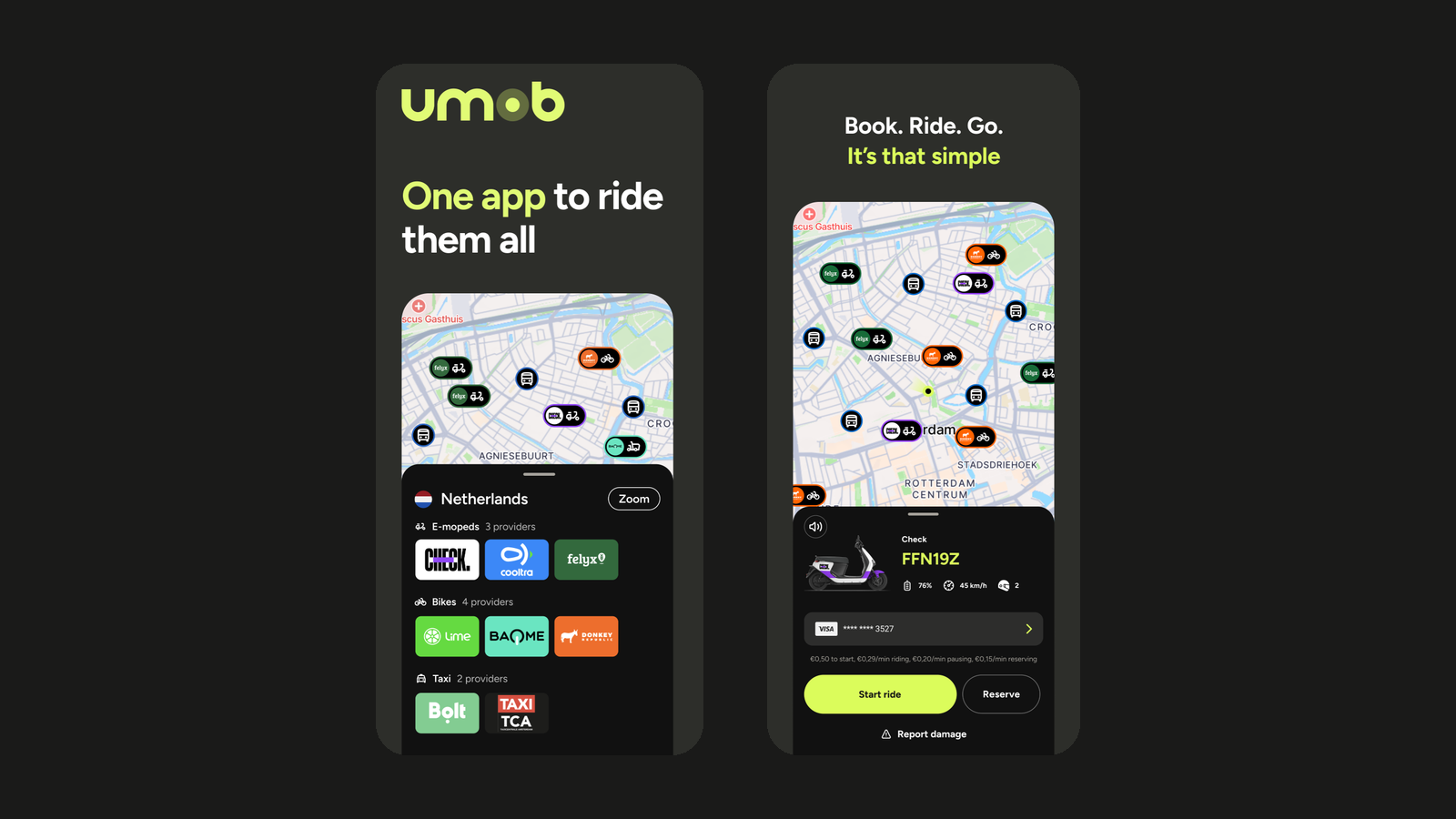
🌍 Reach more riders with ATOM Mobility and Umob. The integration gives shared mobility operators an additional distribution channel, helping attract new customers, generate more bookings and improve fleet utilization.
The future of mobility is not just about operating vehicles. It is about creating convenient journeys that bring different transportation options together in one simple customer experience.
That is why we are excited to highlight our partnership with Umob, helping mobility operators expand their reach and become part of a growing multimodal mobility ecosystem.
Whether you operate shared cars, scooters, bikes or mopeds through the ATOM Mobility platform, integrating with Umob allows your service to become accessible to thousands of Umob users looking for a convenient way to travel.
Today's users expect flexibility. They don't think in terms of individual mobility providers, they simply want the fastest, easiest, and most convenient route from A to B.
Umob brings different mobility providers and transport options together in one app. Users can find, compare, book and pay for different mobility options without having to download a separate app or create a new account for every provider.
By connecting your fleet to Umob, operators can:
For ATOM Mobility customers, the integration is designed to provide a straightforward way to unlock new distribution opportunities while continuing to manage their core operations through the ATOM Mobility platform.
Through the ATOM Mobility platform, participating operators can connect their fleets with Umob, enabling users to discover and use available vehicles directly through the Umob app.
Once connected, vehicles from participating operators can appear in Umob alongside other available mobility options, giving users one clear overview of the different ways they can get from A to B.
Users can discover an available vehicle, reserve and unlock it, start and end their ride, and pay directly through Umob.
The integration is designed to support:
Operators continue to manage their fleet, pricing, service areas and day-to-day operations through the ATOM Mobility platform, while Umob provides an additional channel through which users can discover and access their vehicles.
For mobility operators, connecting with Umob creates an additional distribution channel without changing the way they manage their day-to-day operations through ATOM Mobility.
By making vehicles available to thousands of Umob users, operators can increase their visibility at the moment people are actively looking for a ride. This creates the potential to attract new users, generate additional bookings and improve fleet utilization over time.
Every market is different, but many operators see MaaS partnerships as an important part of their long-term growth strategy.
One of the first ATOM Mobility operators to launch through the Umob integration is ZEUS Mobility, an ambitious European e-scooter sharing provider with a strong focus on innovation, a dynamic approach and challenging the established players in the market.
Fittingly, the partnership itself started through the ATOM Mobility network.
ZEUS and Umob first met at an ATOM Mobility event in Riga. While the initial introduction happened during the event, it was over drinks later that evening that the conversation really started.
ZEUS had already come across the Umob brand on mobility vehicles while travelling and had been impressed by the professional approach the company was taking. That recognition quickly turned into a conversation about how both companies could strengthen their propositions by working together.
From there, the integration moved forward quickly. ZEUS describes the preparation and integration process so far as “clean, professional and smooth.”
For ZEUS, the partnership creates an opportunity to strengthen the visibility of its brand, reach new customers and support its wider European growth ambitions.
Following its acquisition of Superpedestrian in May 2026, ZEUS is looking to accelerate its growth throughout 2026 and 2027, with the Umob partnership forming part of that ambition.
“ZEUS is thrilled to be partnering with Umob in European markets. Following our acquisition of Superpedestrian in May 2026, ZEUS is seeking to rapidly grow through 2026 and 2027. This partnership can help to drive this growth and reach new customers in new markets. We look forward to a rewarding partnership.” - Damian Young, ZEUS Mobility
One app to ride them all. Umob is an all-in-one mobility platform that brings different mobility providers and transport options together in one app.
Users can find, compare, book and pay for shared bikes, e-bikes, scooters, mopeds, public transport, taxis and other available mobility options through one account and one payment experience. Instead of downloading and registering with a separate app for every provider or every new city, users can open Umob and see the available mobility options around them.
Today, Umob is available in 28+ countries and 300+ cities, giving thousands of users an easier way to access different forms of mobility both at home and while travelling.
Key facts
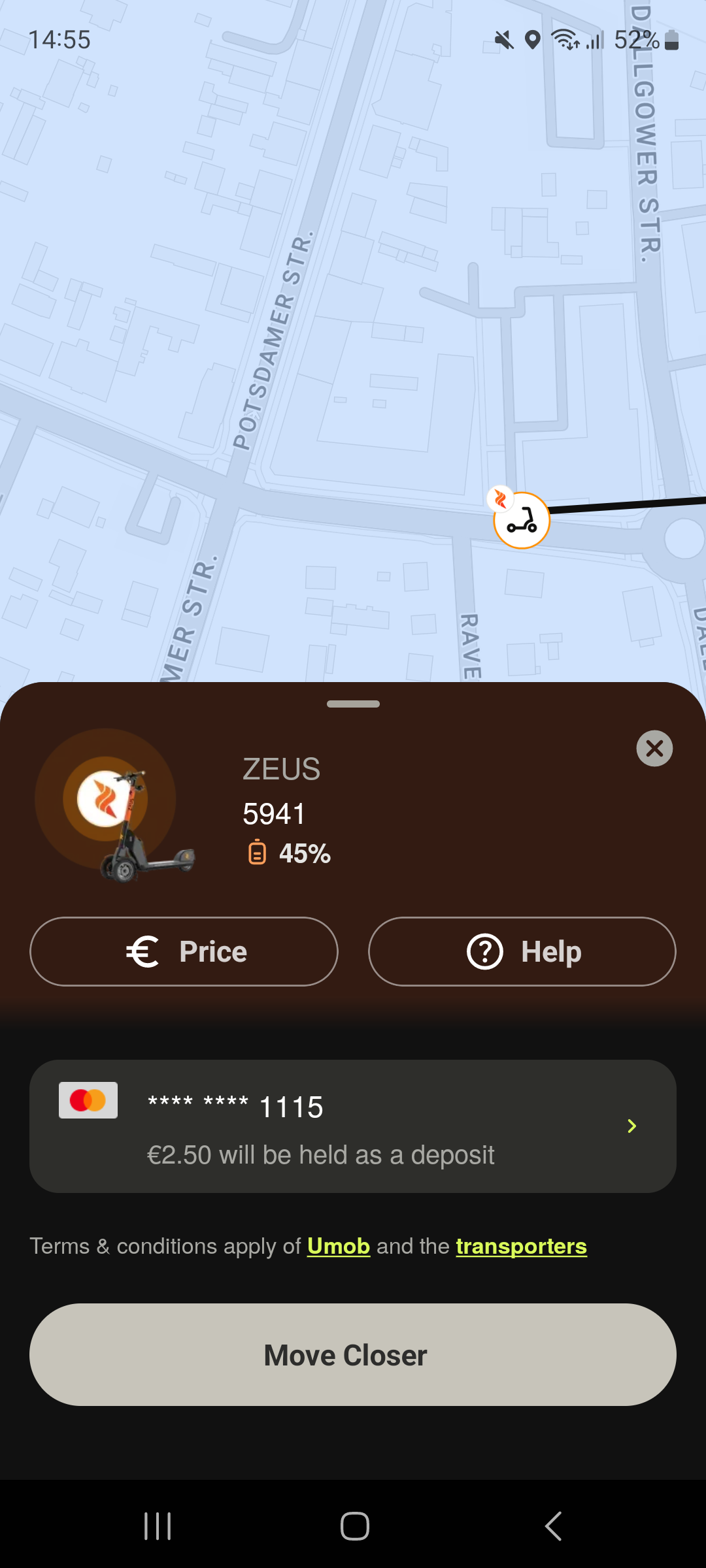
If you're already operating your shared mobility service on the ATOM Mobility platform, connecting with Umob could be the next step toward reaching more users and becoming part of a truly connected mobility ecosystem.
If you're interested in enabling the integration or learning more about how it works, get in touch with our team. We look forward to helping more operators connect, collaborate, and make sustainable mobility easier for everyone.

Climate changes this summer have warned us as never before. Greenhouse gas (GHG) emissions from transportation account for about 29 percent of total U.S. greenhouse gas emissions alone, making it the largest contributor of U.S. GHG emissions. It is not easy to refuse the comfort that car ownership provides. However, nowadays you have the option of sharing cars and only using them when necessary.
Climate changes this summer have warned us as never before. Greenhouse gas (GHG) emissions from transportation account for about 29 percent of total U.S. greenhouse gas emissions alone, making it the largest contributor of U.S. GHG emissions. It is not easy to refuse the comfort that car ownership provides. However, nowadays you have the option of sharing cars and only using them when necessary.
At first glance, owning a car looks convenient, and indeed it is in terms of driving. But it also means constant costs and the loss of value of your property - your vehicle. Experts say that a car loses between 15% and 20% of its value each year.
What else do car owners pay for? Constant investments have to be made in repairs and maintenance, for example, when washing the car or changing the oil and filling it with gas, or charging in the case of an electric vehicle. In addition, adjustments to the weather conditions are mandatory, for example, changing tires before the winter and summer seasons. The car should have insurance while in traffic and you should also cover parking costs not to mention the fact that you have to have places to park your car that could be easily reached from home, as well as from the office.
You can avoid all those troubles when choosing a ride-sharing option - your car will always be full of gas or charged, clean, and with the equipment that is adjusted to the season. No additional costs - just pay for your ride and leave the car where it is convenient for you. Moreover, if you need a bigger car for the ride with the whole family, you can have it! Just choose a SUV closer to you with the car-sharing option. And pay less for a small car if you are riding alone.
Car sharing is also more convenient than renting a car. Renting invariably means planning, scheduling, and getting to the parking lot for rented cars. Renting sometimes also involves hidden costs. Car-sharing is easier - if the car is not available at the moment at the closest to your location, look around in the app and you will definitely find a spot, where a car is available near you.
Nearly 90% of Americans own cars. Unfortunately, this means not only a convenience for car owners but also traffic jams and pollution. And according to The Guardian, this quantity of cars costs the economy $124bn. So car-sharing has been seen as a real game-changer. According to a Berkeley study, one car for sharing can replace 7 to 11 privately owned vehicles. Thus cities can become greener not only in the context of reduced levels of air pollution, but also significantly reduced parking lots. Moreover, this means less wear on roads as fewer cars drives around the streets.
Fine, but what is the real advantage, when there are still a lot of cars on the street? How does this actually help to save the planet? Well, with car-sharing there still will be fewer cars on streets and in traffic. Car-sharing providers are thinking of their business so they will always choose the most fuel-efficient cars. Whenever possible, electric cars are going to be included in their fleet. Electric cars have zero emissions. Also, more small cars are going to be available as people who are driving alone don't need big cars or ones that consume a lot of fuel. This means less air pollution. And the air is also less polluted during the manufacturing process because 1/5 of emissions released in a car’s lifetime come from its production. This amount is even smaller with electric cars as they are smaller themselves so they cause less greenhouse gas emissions in production.
Of course, there are also some downsides to switching to car sharing. For example, manufacturers cannot be happy with smaller demand. A lot of factory workers and their families depend on the demand and income from car production. In addition, fewer public transport users mean less income for public transport companies.
There are still quite a lot of struggles for car-sharing business owners. For example, experts emphasize that car sharing is beneficial only in areas with the appropriate population density. In other words, there should be a demand for the service. The biggest challenge of the car-sharing business is to survive in small villages where people usually travel large distances to work and it is more convenient and probably even cheaper for them to have their own cars.
The other issue worth mentioning, which is a challenge faced by big cities is parking lots. There should be enough free spaces in the city to park cars. Especially in high-density areas. If this possibility is not available and users have to travel long distances from the parking lot to the office or house, users will soon lose interest in the service.
What other obstacles should car-sharing business owners consider? Demand for cars via sharing is not constant. There are peak hours that are hard to manage due to the limited amount of vehicles, while users easily get upset if a car is not available when they need it. In addition, people want to use car-sharing across as wide a geographical area as possible. This creates challenges for car-sharing business owners, as there should be enough users all around, who are willing to use the service.
App Store Rating: 4.8/5
Google Play Rating: 4.4/5
There is no monthly or membership fee - users pay while using the service. Rates depend on vehicle and location and gas is included in the price so there is no need to refuel. There is a 24-hour limit on rental time or the option to select the trip package while indicating the length of the trip. No reservations are required - pick up and drop off the vehicle anywhere within the area of operation.
App Store Rating: 4.5/5
Google Play Rating: 3.8/5
Zipcar charges $7 per month or a $70 per year membership fee. There is also a one-time $25 application fee. Car sharing service costs $10 per hour or $82 a day. It is possible to rent a car for hours or days however there are a few plans available. Prices vary depending on location. Gas, insurance, and 180 miles are included in the price.
App Store Rating: 4.7/5
Google Play Rating: 3.7/5
This app has a $99 hardware fee. After three months, a $20 per month subscription fee kicks in. Daily rental rates can range from $20 to $80 depending on vehicle quality and insurance is included in the price. A variety of privately-owned cars, vans, and trucks are available. It is possible to rent them by day or hours. Drivers pay for gas and replace what they have used.
App Store Rating: 4.8/5
Google Play Rating: 4.9/5
Cars are available on the app anywhere from $20 to $100 depending on vehicle quality and only daily rentals are possible. It has classic and specialty vehicles. Drivers pay for gas and must replace what they have used. Cars can also be delivered to a location if required.
You can take part in the car-sharing business as a user, as well as a car-sharing business owner. If you want to create your own platform, this is what you have to consider and keep in mind.

The bike-sharing industry is on the rise. It is the only mobility industry that statistics indicate didn't experience significant losses during the pandemic. The future is also bright as there are government initiatives around the world to support bike-sharing. However, there are things that newcomers in the business can learn from the previous leaders - success in the industry with high demand is no guarantee that the company will be a success.
The bike-sharing industry is on the rise. It is the only mobility industry that statistics indicate didn't experience significant losses during the pandemic. The future is also bright as there are government initiatives around the world to support bike-sharing. However, there are things that newcomers in the business can learn from the previous leaders - success in the industry with high demand is no guarantee that the company will be a success.
A bike is a comfortable means of transportation in regions where motorized vehicles are widely used but create heavy traffic jams and pollute the air. This is a problem in regions like Asia-Pacific, North America, and Europe. And this is where and why bike-sharing has become popular. According to the Statista Mobility Outlook, bike-sharing was the only mobility sector that grew its global revenues during the pandemic by a third in 2020. The single-person set-up and open-air nature of bike riding made it the perfect mode of transportation for the pandemic.

Bike-sharing is a shared transport service in which convectional bikes or electric bikes are made available for shared use to individuals on a short-term basis for a price or free. Development of software, GPS technologies, mobile payments, and IoT devices, as well as reduced locking and tracking system costs for bikes, have recently led to the popularity of a dockless bike-sharing system that allows users to leave the bike anywhere convenient.
According to Mordor Intelligence, the bike-sharing market was valued at USD 3 billion in 2020, and it is anticipated that it will reach USD 4 billion by 2026. The COVID-19 pandemic affected the bike-sharing sector in several countries. The most negative consequences were the daily decline in bike bookings.

Bike demand is majorly driven by developing countries, such as China and India that especially focus on e-bikes. China has always been the largest exporter of e-bikes. According to China’s Ministry of Industry and Information Technology, the country's output of electric bicycles reached 25.48 million during the first 10 months of 2020, a year-on-year increase of 33.4%. During this period, the revenue of major bicycle manufacturing companies reached about USD 22 billion, an increase of 16.8%. According to the China Bicycle Association, from January to September 2020, the volume of bicycle exports was 12% up on the same period last year, rising to USD 2.43 billion.
However, the bike-sharing market growth in Europe is predicted to be the fastest across the globe, as it is anticipated that a large number of service providers will venture into the region in the coming years. In regional countries, bikes are being rapidly made available near major transit hubs, such as railway stations, thereby offering users convenience and ease of travel. In addition, the European Union (EU) also promotes such services, because they are environment-friendly and help to reduce traffic.
Global bike-sharing service market size between 2020 and 2026 in billion U.S. dollars according to Statista:

Currently, major players in the bike-sharing market are:
- Uber Technologies Inc. - provides opportunities to rent a bike in a partnership with Lime. Jump brand bikes are available after Lime acquired the Jump company.
- Lyft Inc. - in November 2018, Lyft acquired Motivate, a bicycle-sharing system and the operator of Capital Bikeshare and Citi Bike. It thus became the largest bike-share service in the United States.
- Hellobike - a transportation service platform based in Shanghai, China. Founded in 2016, the company merged with Youon Bike the following year. In a series of fundraising rounds dating back to 2016, Hellobike has raised over US$1.8 billion from investors.
- DiDi Bike - Didi Chuxing Technology Co. is a Chinese vehicle for hire company headquartered in Beijing with over 550 million users and tens of millions of drivers. The company provides app-based transportation services, including bike-sharing.
The biggest companies in the market are associated with China as are the biggest deals. Looking at the recent biggest deals in bike-sharing, the first worth mentioning involved Didi Chuxing’s bike-sharing arm Qingju. It raised USD 600 million in a Series B equity fundraising round and will be granted an additional USD 400 million in loans.
What was also interesting that at the end of 2020 the mobile application of Mobike, one of China's earliest and largest bike-sharing providers, went offline after its acquisition by Meituan three years before. Mobike was acquired by Meituan for USD 2.7 billion in April 2018. In January 2019, in an internal letter to employees Wang Huiwen, co-founder and Senior Vice-President of Meituan, informed them that Mobike will be renamed Meituan Bike and that the firm would become a unit of the new parent's location-based service department.
The growing interest in e-bikes
One trend that will definitely influence the industry in the near future is the growing interest in e-bike sharing. Pedelecs or pedal electric cycles or EPAC (Electronically Power Assisted Cycles) are becoming increasingly popular. This is a type of electric bicycle where the rider’s pedaling is assisted by a small electric motor. Such vehicles are capable of higher speeds, compared to manually operated bikes. As the demand for higher speeds for short-distance traveling increases, so does the preference for e-bikes. People are ignoring the fact that sharing services on pedal-assisted bikes are cheaper than e-bikes, as the latter offers effortless driving, more convenience, and variable motor power, as well as higher speeds.
One of the most interesting investment deals in 2020 that underlines the interest in e-bikes involved London-based free-to-use shared electric bike firm London-based HumanForest. It announced in September that it had raised £1.8 million. HumanForest offers 20 minutes free per day and a corporate subscription service. It launched in June 2020. In just four months of the company’s operations, 14,000 riders have taken almost 42,000 rides with the number of rides increasing by over 100% month on month!
Later that year, the company raised £1.27m via crowdfunding with the support of over 520 investors, of whom approximately 30% were trial users. The company says that it ran a successful trial during summer 2020 in London with 200 e-bikes. The new funds will be used to expand the fleet to 1,500 e-bikes.
HumanForest’s business model is based on three sources of revenue - users pay 15p per minute after their free daily 10-minute ride is up, while partner companies pay to advertise their brand on the HumanForest digital platform and companies pay to offer their employees further minutes for the HumanForest fleet.
Bike-sharing - more positive than negative aspects
If we analyze positive, as well as negative aspects that could influence the future of bike-sharing, the positive aspects far exceed the negative ones. The only negative aspects are high initial investment costs, as well as the rise in bike vandalism and theft. Positive aspects that could stimulate the bike-sharing business in the future are growing venture capital investments, an increase in the inclusion of e-bikes in the sharing fleet, as well as technological advances in bike-sharing systems.
There is also increased interest from governments in different initiatives for the development of bike-sharing infrastructure. Furthermore, governments are offering subsidies to service providers for developing stations and expanding their reach to a large number of commuters. For instance, in 2018, Chinese Municipal governments subsidized the Public Bike Sharing Program development to encourage non-motorized transport and offer convenient, flexible, and low-cost mobility options. Meanwhile, in Europe, the new public bike-sharing system was launched in the Italian Municipality of Trieste in February 2020. The system, known as BiTS, is being implemented as part of the city's Integrated Sustainable Urban Development Plan at a cost of EUR 390,000, with the aim of developing sustainable mobility by promoting walking and cycling to reduce urban pollution.
Despite the fact that interest in bike-sharing is rising and will continue to do so, it is equally important to learn and not forget the mistakes of pioneers of the industry. For example, the company Ofo was founded in 2014 as a university project, but soon afterward raised $866 million from investors led by Chinese e-commerce giant Alibaba. Ofo was a station-free bike-sharing platform operated via an online mobile application. In total, over the course of nine investment rounds, the company has raised USD 2.2 billion but has still consistently experienced cash flow problems that were driven largely by intense competition in a market that has yet to be proven to be commercially viable according to analysts interviewed by Forbes.
Fees dropped to 1 yuan ($0.14) for each hour of use and sometimes were even free. Despite this fact, Ofo still managed to reach a valuation of $2 billion in a 2017 funding round and around $3 billion at its highest point, and at one time the company deployed more than 10 million bikes globally and attracted as many as 200 million users. “The company’s cash-burning operations and high valuation have combined to deter potential investors, and when capital became scarce, the startup could no longer cover its once sprawling operations,” wrote Forbes.
In 2018, Ofo announced a massive reduction in operations, and by 2020 it faced a large amount of unpayable debt as a result of which the company was no longer operating bike rentals. “Explanations of what exactly went wrong are still evolving, but it seems likely that the mind-boggling amounts of cash pumped into what wasn't essentially a "bike-sharing" model, but rather a rental business pepped up by a smartphone app, had something to do with it. Yes, the company bought bikes and placed them in the streets without docks for anybody to use, and that was somewhat new. And yes, a smartphone app served as the key. But the company owned the bikes, just like any old-fashioned rental shop, and incurred huge maintenance costs,” explained analysts from Roland Berger Strategy Consultants, who were quoted in its magazine “Own the future”.
So it doesn't matter how big the demand for the service is, you should always apply simple business principles to your business.

If you have decided to launch your vehicle sharing business using existing software, without developing it from scratch, this article will help you to understand what software features you could seek and ask for.
If you have decided to launch your vehicle sharing business using existing software, without developing it from scratch, this article will help you to understand what software features you could seek and ask for.
The sharing business is growing worldwide, as is the number of sharing app providers. At ATOM Mobility from time to time we meet clients who are already using some platform, but are not totally happy with it. Moreover they don't know about the multitude of built-in features that they can have at no extra cost. So let's look at some default as well as “nice to have” features that the best sharing software solutions must have.
Starting the ride
There are several options to start the ride, so the software should be adjustable for all options. It is possible to put a QR code on the vehicle so that the code can be scanned through the app by the user. For the software it means that there should be a functionality in the app that allows the QR code to be scanned, finding the particular vehicle, and allowing the user to drive it as well as letting the system and others know that this vehicle is not currently available.
Another option for the user to start the ride is by clicking the button on the app, thus unlocking it. This function is especially popular in car and moped sharing. The app should link the particular user to the vehicle and the software should allow the ride. Despite the fact that QR codes are more popular, at ATOM we invite our customers to think it over. Unlocking via the app can sometimes be a more reliable choice because QR codes could be broken or not fully visible. In addition, users could have issues with their cameras, so why not start the ride with just one click?
Although it is not very popular, some vehicle sharing companies still offer users the option of making a reservation for the vehicle. In this case, software should do all the jobs - the user identifies the vehicle on the map, makes the reservation, and the vehicle should then wait for this particular user, who scans the QR code or pushes the button when he is ready for the ride. This functionality of keeping the vehicle for a particular time and later offering it to another user should also be automatically managed by the software.
Another challenge is how to avoid the problem of users who missed the previous ride making a reservation for the next ride? And what happens if the same user doesn't show up two times in a row? These limitations on reservations should also be directly available on the platform.
And what happens if a user starts using a vehicle other than the one that was reserved for him? The possibility that this might occur is low, but still should be tested.
Connectivity and tracking the vehicle
Connection to IoT lies on two shoulders – the IoT device that is on the vehicle and the software. It is crucial for you and the operators to always know where the vehicle is located and what its current status is. The software should provide the opportunity to track vehicles and obtain overall information about driving speed, acceleration, and errors. It should also have system alerts in case something happens; for example, someone tries to steal the vehicle or a rider drives outside the parking zone.
Remember that every vehicle makes money for your business every minute that it spends on the street. If something is wrong, then it is in your best interest to know this as soon as possible, as well as to locate the vehicle and dispatch the service team to conduct a check-up. Additionally, if you take care of the fleet and keep it in good condition, malfunctioning risks and additional costs in long term are going to be minimized.
ATOM Mobility software currently supports Segway, Teltonika, Acton, Omni, Okai, Fitrider, Freego, Zimo, Comodule, Hongji, Yadea and Niu IoT devices. Existing integrations allow ATOM Mobility customers to quickly scale the fleet, test and add new vehicle models, and not be limited to their plans. Of course, it is also possible to do custom integrations upon request.
Everything revolves around payments and preventing fraud
Before having anything to do with the user, it is crucial to identify him. In some countries, it is even mandatory, including for scooter and bike-sharing services. But it is also important for your own safety. ATOM Mobility has recently started to collaborate with Veriff – an API solution that allows any website and mobile application to match a person with their government-issued ID. So if the vehicle sharing service provider is using ATOM Mobility software, Veriff's API will directly enable integration of verification processes into mobile apps. It takes less than 2 minutes for Veriff to automatically verify the document. ATOM Mobility supports also other ID verification tools such as Sumsub. However, it is vital to make sure that the tool is robust, offers a good user experience, and is automated and lightning fast before integrating it.
By the way, user experience is very important not only concerning identification, payments, or other separate features but also in regard to the overall convenience of using the platform. Players in the vehicle-sharing business fight for conversions. And this can mean a lot in terms of money. For example, if the software has a conversion rate of 20% on average, then registration for the first ride from 100,000 clients reached will bring less than EUR 225,000 in turnover per month compared to the company that has an average conversion rate of 50%.
When it comes to payments, nowadays there are a lot of payment providers that can be integrated with sharing mobility software. Before choosing one, it is crucial to collect feedback and make sure that integration has a convenient user interface, it is safe and the service provider is stable, i.e. there won't be any significant disruptions. ATOM Mobility clients usually use the most popular global payment providers such as Stripe, Adyen, Paypal and Klarna. In some cases, local payment providers are needed due to legal restrictions, for example, in Saudi Arabia we partner with Hyperpay and in Ukraine, we partner with Concord. So integration with these payment providers is already set up within ATOM Mobility software. Of course, custom integrations can also be done and additional service providers added.
After the payment has been made and the ride has been completed, the invoice should be delivered straight to the user's e-mail box and also made available through the customer profile on the app. For brand awareness and user convenience, it is good that the software is able to personalize the invoice by adding logo and other company details. You can probably even add promotional messages for the next ride. And you should check whether an e-invoice delivered straight to the e-mail address is mandatory, because in some countries it is.
Of course, the most valuable client for the company is one, who makes recurring payments and rides more than once. Recently major players in the field have announced subscription services. In May 2021 Lime rolled out the monthly subscription service Lime Prime. In contrast, Bird offers a monthly fee rent their scooters. The best fleet sharing software has subscription functionality available, so you should definitely consider using it also for your business.
Access through the dashboard and the most advanced features
All the information and functionality mentioned above and a lot more should be accessible through the dashboard available, together with the software and the app. Every employee of the company involved in the vehicle sharing organization process should have convenient access to it from any available device. However, there should be an opportunity to regulate which user has access to what features - different reasons, not every team member needs full access to the dashboard.
Usually, the dashboard helps to manage the fleet, rides, and customers. For the convenience of data analysis, the dashboard should have reporting and data exporting capabilities. An additional feature that you definitely need to look for is heatmaps and rebalancing suggestions, which will help you to plan your fleet and the location of your vehicles by predicting the busiest areas in the city, where vehicles are in the highest demand during certain hours of the day. This functionality is automatically also available through the best software.
Private fleets and working with corporates
And last but not least. Sometimes there is an opportunity to make at least part of your fleet private. This is a corporate and private sharing scheme. In corporate sharing schemes, for example, you can offer part of your fleet to some large company, so this company’s employees have exclusive access to this fleet. In private sharing schemes, you can grant exclusive access to the vehicles to residents of a specific hotel or building. There are many other options available, but the main message is that even this functionality is integrated into the best fleet sharing software, so choose your software partner carefully and wisely.
Software reliability
None of the features discussed here matter if you don’t have an appropriate platform. The biggest complaints from the end users that sharing businesses receive concern the instability of the platform. So always remember to start by checking SLA. It is the indicator of stability that shows the number of minutes during the month that the system experienced some problems. The platform should have indicator of 99.5% -99.9%. If the SLA is lower, all other features don’t make sense as you will definitely received a lot of complaints from the user that something is not working. If you have any additional questions or are interested in integrating some custom features, contact the ATOM Mobility team to find out more. We are one of the biggest and one of the most experienced players in the market.


Tretty team decided to change the software provider and chose ATOM Mobility. Now with a new app, they are getting a significant amount of new users as the registration is a lot faster.
Nowadays it is possible to run several businesses and one of them can be a vehicle sharing service. Amir Timo Marouf (in the picture on the left) is living proof of this. He is a dentist and runs the mobility company tretty in Münster, Germany.
Nowadays it is possible to run several businesses and one of them can be a vehicle sharing service. Amir Timo Marouf (in the picture on the left) is living proof of this. He is a dentist and runs the mobility company tretty in Münster, Germany.
Launch date: Spring of 2020
Country: Germany, Münster
Fleet: muscle-powered kick-scooters and bikes
Web page: https://www.tretty.de
Linkedin: https://www.linkedin.com/company/tretty
App Store: https://apps.apple.com/de/app/tretty/id1509734922
Google Play: https://play.google.com/store/apps/details?id=de.tretty.app
Amir Timo Marouf founded the mobility company tretty together with Max Weldert. “It all started in school when we knew that one day we would do something together. What exactly was not yet clear back then,” Amir tells the story of how the company started. He says that he always had a passion for sharing, so he considered starting something around it. Max always has been and still is into mobility with the focus on muscle-powered vehicles. “So directly after my exam in dentistry, we took a trip with two lying bikes from Münster to Lisbon. We covered a distance of 2600 kilometers. During this time we more or less developed the whole idea around tretty, because we had a lot of time to think,” Amir remembers.

Motivation and passion
After getting back, Amir and Max set up a team. They found an accountant who took care of all the finances and an engineer. “When our engineer heard of the idea, he was fascinated. And we decided that in the beginning, we won't work for money. It was only motivation and passion that drove us further,” says Amir.
However, it was still not clear what vehicle should be used and whether people living in Münster want to have this service at all... “So we just started a crowdfunding campaign and set a very high target of EUR 50 000. This would be enough to buy 100 scooters. And we succeeded! And we even got 20% more financing,” Amir recalls.
In the crowdfunding announcement, the founders wrote that they will develop their own scooters. As they now had the money, there was pressure on them to do it. And it was only then that Max and Amir realized how big the project would actually be... But they did it!
Struggle with IT
The tretty engineer made a drawing on the basis of which the scooter is built from the scratch by tretty. The team found a manufacturer in the Czech Republic and did a lot just by doing. “In the beginning, I built a website using WordPress. You can learn everything nowadays from videos on the internet if you're motivated. Afterwards, we were very lucky to have two students on the team. They were both at university doing their Master's and they had both experiences in IT. They managed to build a website for the maintenance team,” says Amir.
Next step – the tretty team started to develop its own app. “We realized the importance of the time and also the fact that our business is not building IT solutions. We started to compare existing app developers, who offer white-label solutions. We compared all the big ones. But as we wanted to keep everything local, we hired a company that is focusing on car sharing without any experience in free- floating. It took a long time to register in the app and type in all the information required…” recalls Amir.
So at some point, tretty team decided to change the software provided and chose ATOM. Now with a new app, they are getting a significant amount of new users as the registration is a lot faster. That was one of the main reasons why they switched initially. “I'm also happy that ATOM is always open to optimizations and is ready to talk about alternatives,” says Amir.

Private and business clients, locals, and tourists
Users of the service are people living in Münster and around, including tourists. There are a lot of students in the city - around 60 000 of all the 314 000 people living there. And students are among the most active scooter users. The weather has a big impact - if it is appropriate for riding, the number of daily users increases.
tretty also has one private fleet in Münster, which is owned by a big insurance company. Right now, tretty is also currently discussing possible collaborations with other B2B partners. “There are two options available. We can set up the software for the partner and provide it with vehicles. Then they could use tretty brand and have a franchise. Or they can create their own brand,” explains Amir.
What's next?
The team of tretty is considering different scenarios for expansion. However, Amir says that they still have some homework to do: “The focus is currently on Münster. As soon as we have validated we will consider expansion.”
And what is the plan for Amir? Let's not forget that he is also working as a dentist. “I think one of the main reasons why you can do more than one thing is the enormous speed of digitalization of everything. With a smartphone, you can answer emails from everywhere and even design things and build websites. I think this would not have been possible 10 years ago. It is, of course, tough to multi-task. Mondays are my tretty days. Before and after work as well as at weekends I do tretty. Then I try to schedule my time for my girlfriend and for myself. I'd say that a month or two ago it was really tough but now it’s starting to get better. I think the main reason why it works is that it comes from passion and not from pressure.”

"State of art technology in mobile apps and dashboard, very good SLA!"
"Easy, nice looking, continuously updated and developed every month and most of all very reliable with a extreme high uptime"
"We used to work with a different service provider which wasn't fitting our needs. Switching to ATOM was an improvement on our side"
Use test credentials to log in - Phone number: +1 123123123, Code: 777777


Driver App demo credentials - Email: test@atom.com, Password: driver