Blog
Insights and news from the ATOM Mobility team
We started our blog to share free valuable information about the mobility industry: inspirational stories, financial analysis, marketing ideas, practical tips, new feature announcements and more.

We started our blog to share free valuable information about the mobility industry: inspirational stories, financial analysis, marketing ideas, practical tips, new feature announcements and more.
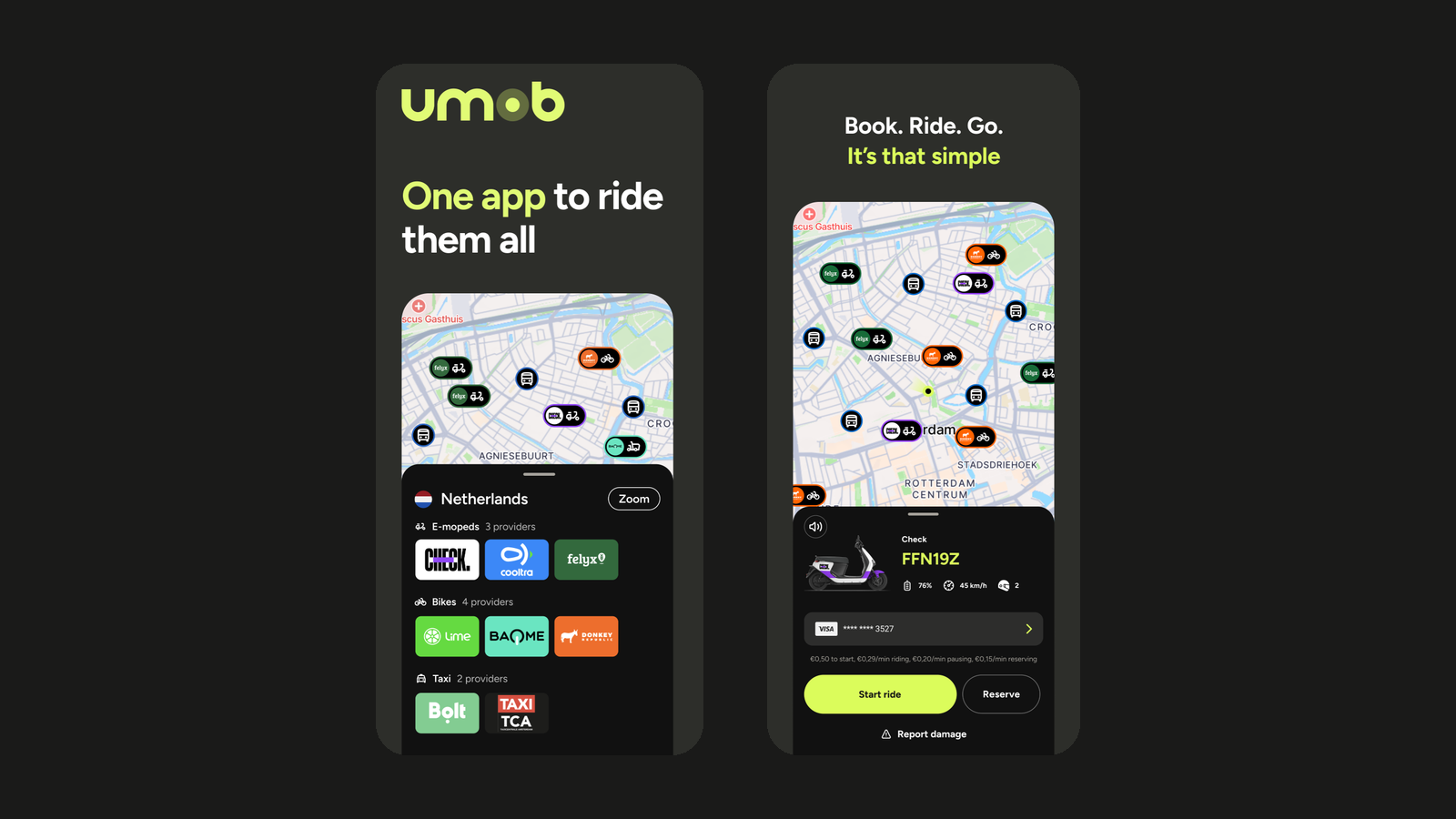
🌍 Reach more riders with ATOM Mobility and Umob. The integration gives shared mobility operators an additional distribution channel, helping attract new customers, generate more bookings and improve fleet utilization.
The future of mobility is not just about operating vehicles. It is about creating convenient journeys that bring different transportation options together in one simple customer experience.
That is why we are excited to highlight our partnership with Umob, helping mobility operators expand their reach and become part of a growing multimodal mobility ecosystem.
Whether you operate shared cars, scooters, bikes or mopeds through the ATOM Mobility platform, integrating with Umob allows your service to become accessible to thousands of Umob users looking for a convenient way to travel.
Today's users expect flexibility. They don't think in terms of individual mobility providers, they simply want the fastest, easiest, and most convenient route from A to B.
Umob brings different mobility providers and transport options together in one app. Users can find, compare, book and pay for different mobility options without having to download a separate app or create a new account for every provider.
By connecting your fleet to Umob, operators can:
For ATOM Mobility customers, the integration is designed to provide a straightforward way to unlock new distribution opportunities while continuing to manage their core operations through the ATOM Mobility platform.
Through the ATOM Mobility platform, participating operators can connect their fleets with Umob, enabling users to discover and use available vehicles directly through the Umob app.
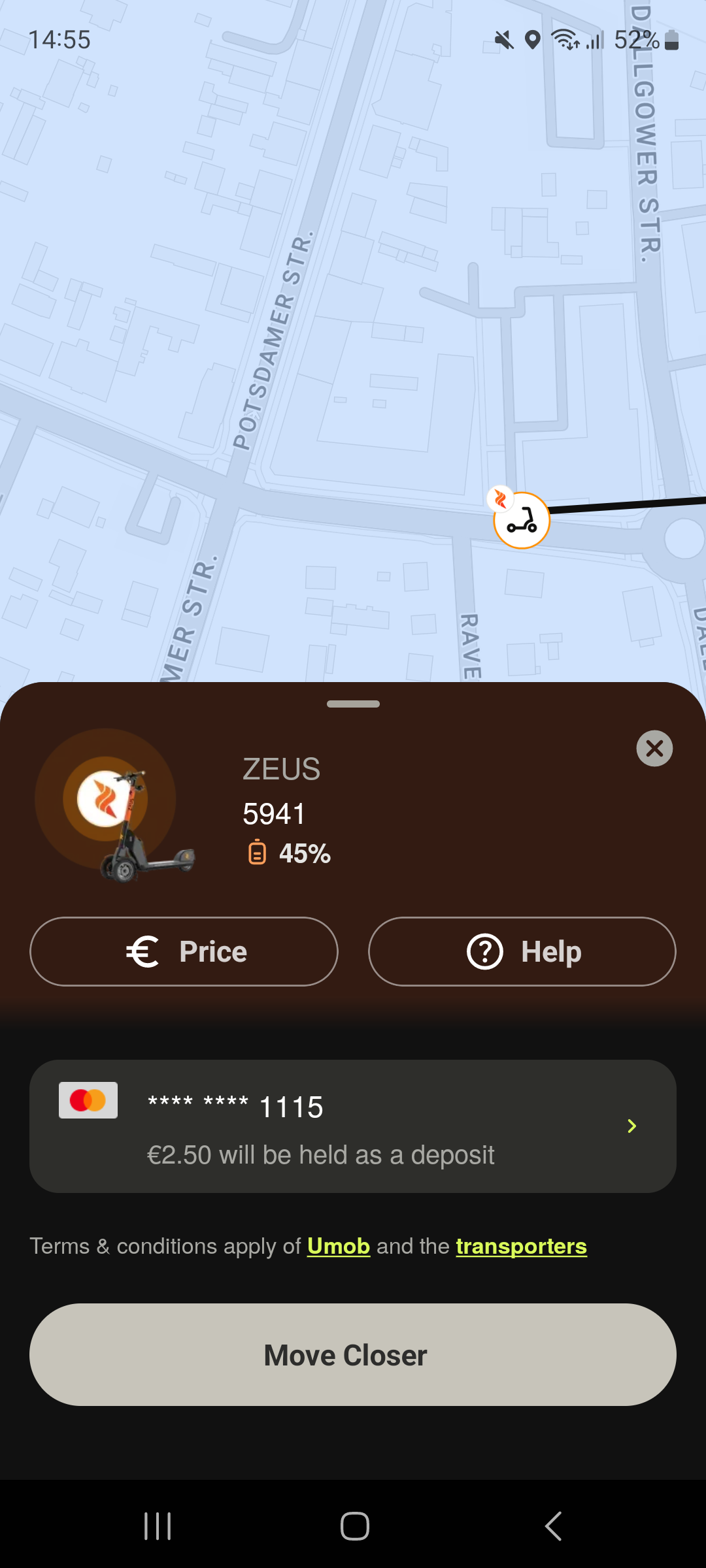
Once connected, vehicles from participating operators can appear in Umob alongside other available mobility options, giving users one clear overview of the different ways they can get from A to B.
Users can discover an available vehicle, reserve and unlock it, start and end their ride, and pay directly through Umob.
The integration is designed to support:
Operators continue to manage their fleet, pricing, service areas and day-to-day operations through the ATOM Mobility platform, while Umob provides an additional channel through which users can discover and access their vehicles.
For mobility operators, connecting with Umob creates an additional distribution channel without changing the way they manage their day-to-day operations through ATOM Mobility.
By making vehicles available to thousands of Umob users, operators can increase their visibility at the moment people are actively looking for a ride. This creates the potential to attract new users, generate additional bookings and improve fleet utilization over time.
Every market is different, but many operators see MaaS partnerships as an important part of their long-term growth strategy.
One of the first ATOM Mobility operators to launch through the Umob integration is ZEUS Mobility, an ambitious European e-scooter sharing provider with a strong focus on innovation, a dynamic approach and challenging the established players in the market.
Fittingly, the partnership itself started through the ATOM Mobility network.
ZEUS and Umob first met at an ATOM Mobility event in Riga. While the initial introduction happened during the event, it was over drinks later that evening that the conversation really started.
ZEUS had already come across the Umob brand on mobility vehicles while travelling and had been impressed by the professional approach the company was taking. That recognition quickly turned into a conversation about how both companies could strengthen their propositions by working together.
From there, the integration moved forward quickly. ZEUS describes the preparation and integration process so far as “clean, professional and smooth.”
For ZEUS, the partnership creates an opportunity to strengthen the visibility of its brand, reach new customers and support its wider European growth ambitions.
Following its acquisition of Superpedestrian in May 2026, ZEUS is looking to accelerate its growth throughout 2026 and 2027, with the Umob partnership forming part of that ambition.
“ZEUS is thrilled to be partnering with Umob in European markets. Following our acquisition of Superpedestrian in May 2026, ZEUS is seeking to rapidly grow through 2026 and 2027. This partnership can help to drive this growth and reach new customers in new markets. We look forward to a rewarding partnership.” - Damian Young, ZEUS Mobility
One app to ride them all. Umob is an all-in-one mobility platform that brings different mobility providers and transport options together in one app.
Users can find, compare, book and pay for shared bikes, e-bikes, scooters, mopeds, public transport, taxis and other available mobility options through one account and one payment experience. Instead of downloading and registering with a separate app for every provider or every new city, users can open Umob and see the available mobility options around them.
Today, Umob is available in 28+ countries and 300+ cities, giving thousands of users an easier way to access different forms of mobility both at home and while travelling.
Key facts
If you're already operating your shared mobility service on the ATOM Mobility platform, connecting with Umob could be the next step toward reaching more users and becoming part of a truly connected mobility ecosystem.
If you're interested in enabling the integration or learning more about how it works, get in touch with our team. We look forward to helping more operators connect, collaborate, and make sustainable mobility easier for everyone.
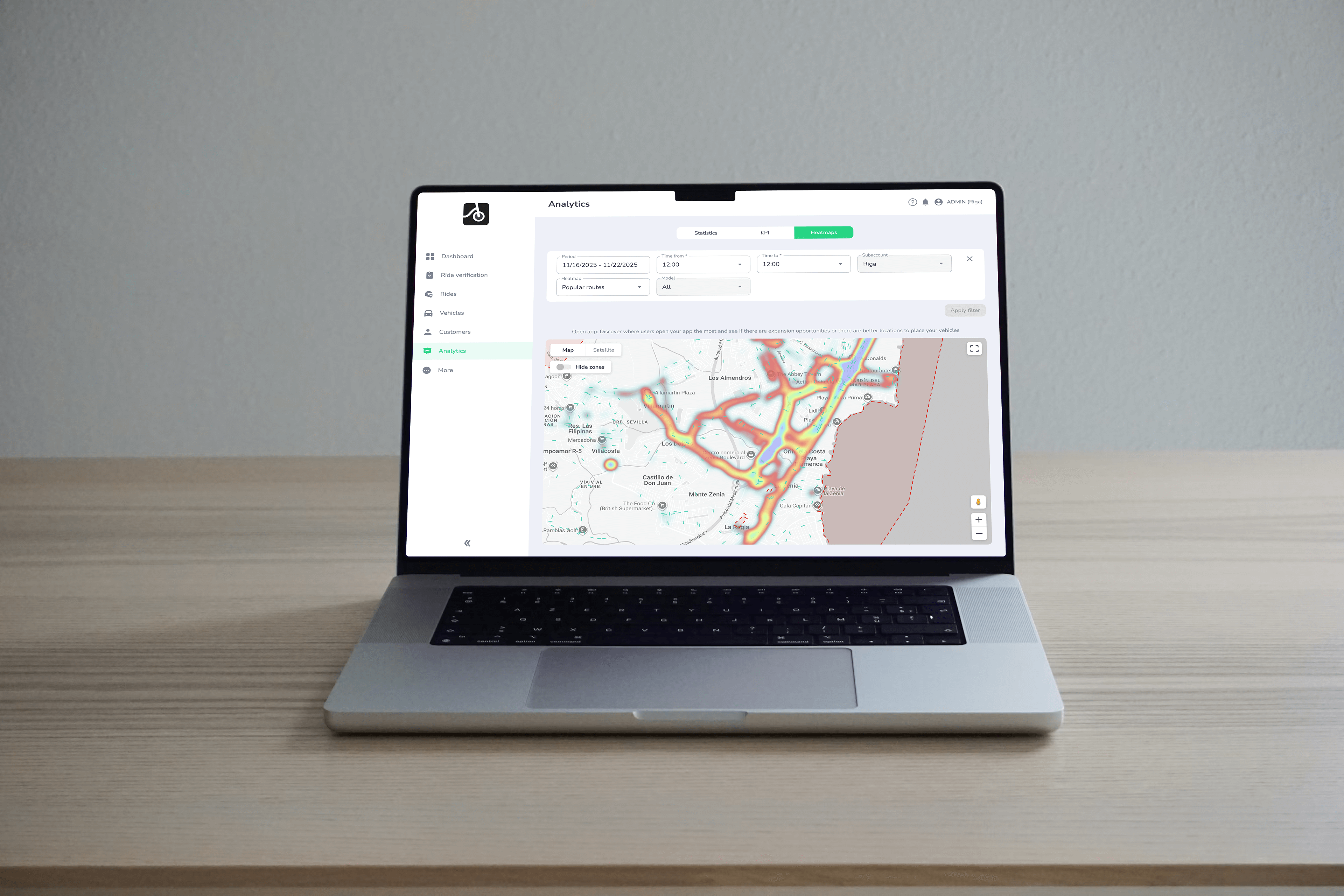
📊 One of the most requested features in ATOM Mobility is finally live. Meet Popular route heatmap - a new analytics layer that shows which streets and areas your riders actually use most, based on real ride data over time.
📊 One of the most requested features in ATOM Mobility is finally live. Meet Popular route heatmap - a new analytics layer that shows which streets and areas your riders actually use most, based on real ride data over time.
Until now, operators could see where rides start and end. Now you can see how people move in between.
Why it matters?
With Popular Route Heatmap, operators can:
🚲 Optimize vehicle placement based on real rider behavior
🏙️ Support discussions with municipalities using clear, visual usage data
📍 Identify missing infrastructure where demand already exists
📊 Make smarter, data-backed operational decisions
The feature was the #1 most upvoted idea on our merchant suggestion platform for years - and we’re excited to finally ship it.
.png)
How to use it
Go to Analytics → Heatmaps
Select heatmap type Popular routes
Filter by time period and city
Zoom in to see the busiest routes your riders take
Data availability: Popular route data is available from November 1, 2025 and will continue accumulating going forward.
Inspired by how athletes analyze movement patterns with Strava - now applied to shared mobility operations.

🚗📲 Whether you're renting out cars, bikes or scooters, the best rental businesses in 2025 are fully digital. No more paper contracts or office keys – just tap, unlock, and go. In our latest article, we explore top apps (like Donkey Republic, MOBY Bikes and Forest) that show what a modern rental experience looks like. Plus, we explain where a full platform like ATOM Mobility fits in when you're ready to scale.
Running a rental or sharing business today means delivering a smooth, digital-first experience. Whether you rent cars, bikes, scooters or other vehicles – users expect to book online, pay, verify identity if needed, unlock a vehicle, and ride or drive without extra friction.
To make that happen reliably, you need good vehicle rental software or platform backing your service. Below are some successful examples of apps and platforms that show how this works and what is possible.
Operates in several European cities offering shared bikes and e‑bikes. Users find a bike in the app, unlock it with a smartphone, ride, then park at a designated drop‑off spot and end the rental. Pay‑as‑you‑go, daily rates or memberships are all handled via the app.
Targets electric bicycles and e‑cargo bikes across certain regions, with a “tap‑and‑ride” system that uses its proprietary app for booking, unlocking, and rental management. The platform supports mixed-use fleets (shared bikes, cargo bikes, delivery fleet, even B2B rentals), which illustrates flexibility – useful for operators exploring different business models beyond simple consumer rentals.

It is a dockless e‑bike sharing operator in London. It runs a large fleet and offers bike‑sharing through a mobile app. The service demonstrates how a relatively simple, dockless rental model can scale at urban level using app‑based rentals, unlocking, and flexible parking.
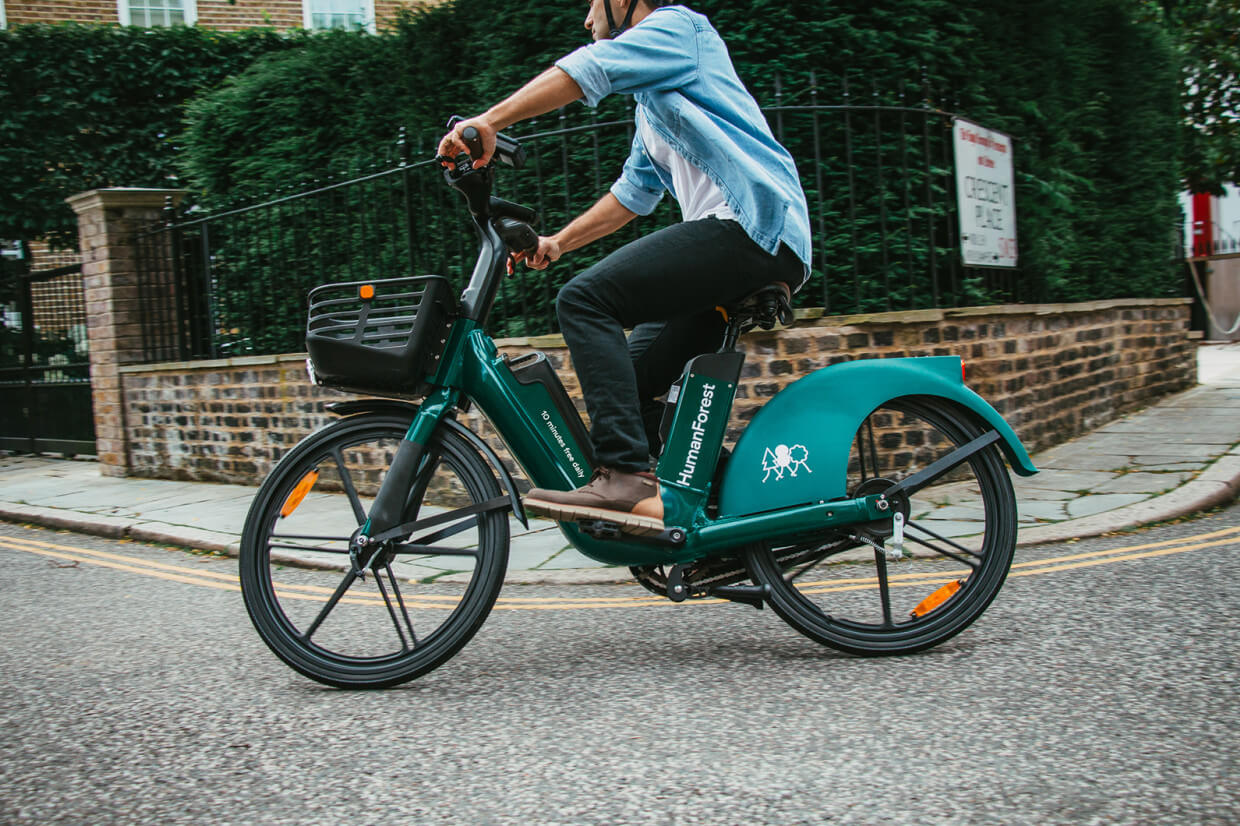
These examples show how micromobility‑focused services already rely on booking, payment, unlocking and fleet management tech – the same core capabilities needed by any modern vehicle rental business.
From these operators you can observe several useful traits that a good rental/sharing software should provide:
These are exactly the kinds of features you need when you move from small‑scale operation to proper fleet business.
If you plan to just test the market or to operate a larger and more complex fleet - multiple vehicle types, multiple cities, or advanced operational requirements - a full-stack platform like ATOM Mobility becomes essential.
ATOM Mobility is designed for operators who need full control over the entire mobility operation: booking flows, unlocking logic, payments, KYC/ID verification, backend administration, fleet analytics, dynamic pricing, and multi-modal rentals across cars, scooters, bikes, and more.
The platform provides a unified backend that supports cars, scooters, e-bikes, mopeds, and additional vehicle types within a single system. Operators can manage bookings, payments, users, smart locks or connected vehicles, fleet health, and city-level scaling without fragmenting their tech stack as the business grows.
This approach offers far greater flexibility than single-vehicle or bike-only solutions and removes the need to migrate systems when expanding into new vehicle categories or markets. Check out the full service here.
Join a franchising when you:
- prefer operating under an established brand
- value a clear operational playbook and central support
- want simpler marketing thanks to brand recognition
- are comfortable with limited control over technology and product decisions
- accept franchise fees or revenue sharing in exchange for convenience
- don’t need heavy customization or experimentation
Use a full platform (like ATOM Mobility) when you:
- aim to manage a larger, mixed fleet (cars, scooters, bikes, e-bikes)
- need full backend control (admin, analytics, pricing, reporting)
- require payments, KYC/ID verification, and automation built in
- want freedom to customize booking flows, pricing, and partnerships
- plan to scale across cities or add new vehicle types over time
- prioritise brand ownership and customer relationship control
- want no revenue sharing or franchise fees
For simple bike or e-bike fleets, the technology barrier is already low. Joining a franchise can be a fast way to get operations running with minimal setup.
However, operators with long-term ambitions - expanding into multiple vehicle types, scaling across locations, or maintaining consistent service quality - typically outgrow narrow tools. In those cases, a full-stack platform like ATOM Mobility offers the flexibility and control needed to support growth without rebuilding the tech foundation later.
Some operators start small and migrate as complexity increases. Others choose to build on a full platform from day one to avoid future transitions. The right choice depends on how clearly you define your growth path, desired level of control, and operational complexity from the start.
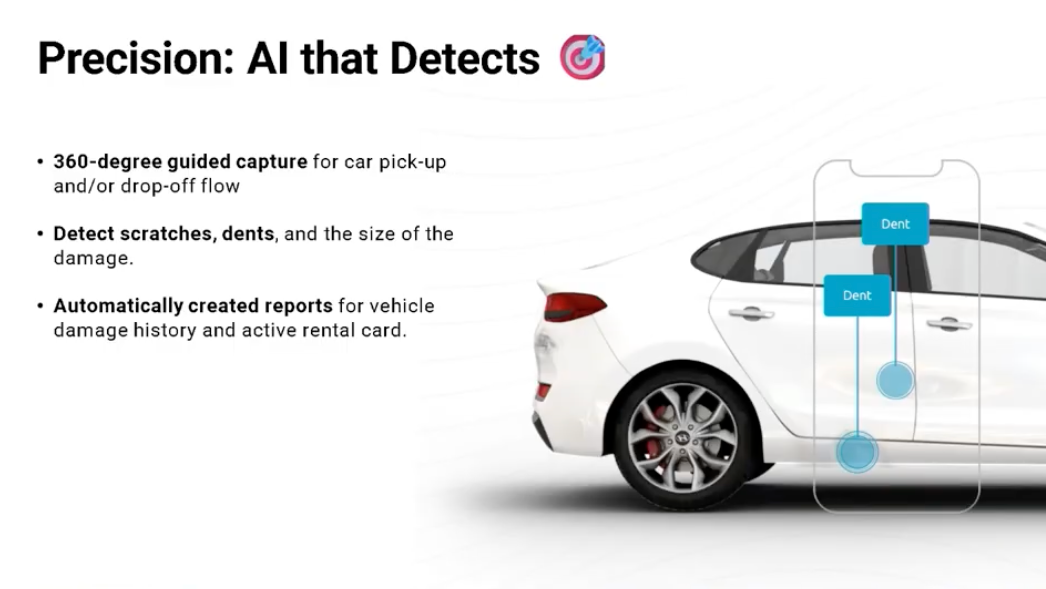
📱AI in shared mobility isn’t a future trend – it’s already here, and for good. From detecting car damage to forecasting demand and verifying parking in real time, operators are using AI to reduce manual work and run more efficient fleets. In this new article, we break down 3 real use cases already live on the ATOM Mobility platform: 👁️ Vision AI, 🔍 Precision AI, 📊 Prediction AI. See how AI is changing shared mobility, and how you can start using it now.
Artificial intelligence is no longer just a trend in mobility. For modern vehicle sharing and rental services, AI is already solving real operational problems and unlocking new ways to grow. At ATOM Mobility, several AI-powered features have already been implemented into live products and tested by operators across Europe.
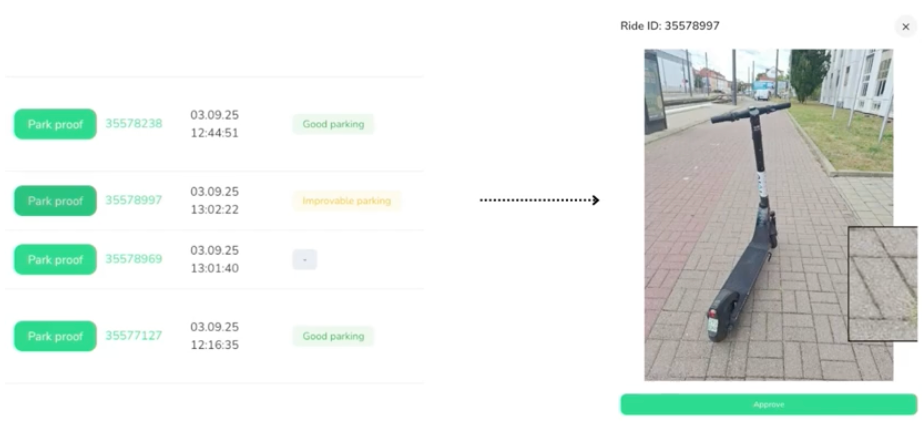
This article shares three real-world AI use cases that are already helping operators reduce manual work, improve asset control, and better match vehicle availability to demand.
1. Vision AI: Camera-based parking control for micromobility
Micromobility parking continues to be a challenge in cities where dockless vehicles can end up blocking sidewalks, crossings or entrances. Manual checks are costly and often too slow to solve the problem in real time.
ATOM Mobility now uses computer vision to solve this. With Vision AI, riders take a photo when ending their ride. The system analyses the image using a neural network to understand if the vehicle is parked correctly – within a designated zone and without creating obstructions. If not, the app notifies the user and prevents trip completion until the parking is corrected.Each parking photo is automatically tagged as “Good parking”, “Improvable parking” (the user receives guidance on how to improve the parking), or “Bad parking” (the user is asked to re-park).
If the user fails to submit a “Good parking” photo after several attempts, the system will accept the photo with its current tag (“Improvable” or “Bad parking”) and flag it in the dashboard for further customer support review.
This solution has been live with many operators already. It helps reduce complaints, improve compliance with city regulations, and lowers the need for manual reviews.
2. Precision AI: Detecting car rental damages with cameras and machine learning
In traditional car rental, damage inspection is slow, manual, and often inconsistent. With self-service rentals becoming more popular, operators need a smarter and faster way to verify a vehicle’s condition between trips.
ATOM Mobility has integrated AI-powered damage detection using computer vision. Customers scan the vehicle at pick-up and drop-off. The app compares images and flags scratches, dents, or other visible damage with high accuracy. This allows operators to quickly assess responsibility and reduce disputes.
The system helps protect the fleet, lowers repair costs, and adds trust for both users and operators. It’s especially useful for car sharing and self-service rental models where physical handovers are skipped.
3. Prediction AI: Forecasting demand and automating vehicle relocation
One of the biggest cost factors in shared mobility is rebalancing the fleet. If scooters or cars are idle in the wrong location, revenue is lost. At the same time, relocating vehicles manually is expensive and not always efficient.
ATOM’s AI models use historical trip data, usage trends and contextual signals (such as day of the week or weather) to forecast demand and suggest the best relocation zones. This gives operators a map of where and when to move vehicles – improving utilisation and saving time.
The system can even be combined with automated relocation logic, where users are incentivised to park in high-demand areas. This shifts part of the rebalancing cost from operators to riders and keeps the fleet productive.
Why this matters now
AI tools are finally reaching the stage where they can operate reliably, even in complex environments like cities. These examples are not abstract ideas or lab tests. They’re active features helping ourcustomers run leaner, smarter fleets today.
For micromobility operators, Vision AI reduces complaints and ensures regulatory compliance. For car rental providers, Precision AI saves hours of staff time and improves trust. And for both, Prediction AI improves margins by making sure vehicles are where users need them.
What’s up next?
These are just the first steps. AI in mobility will continue to expand with smarter pricing engines, voice-based support, predictive maintenance, and more. But the examples above already prove that even small AI integrations can bring major improvements.
At ATOM Mobility, we continue building these tools directly into our platform so that operators don’t need to develop them in-house. If you want to see how these AI-powered features work in action, get in touch with our team.
AI in shared mobility is not about replacing people. It’s about giving operators better tools to run faster, smarter, and more efficient services.
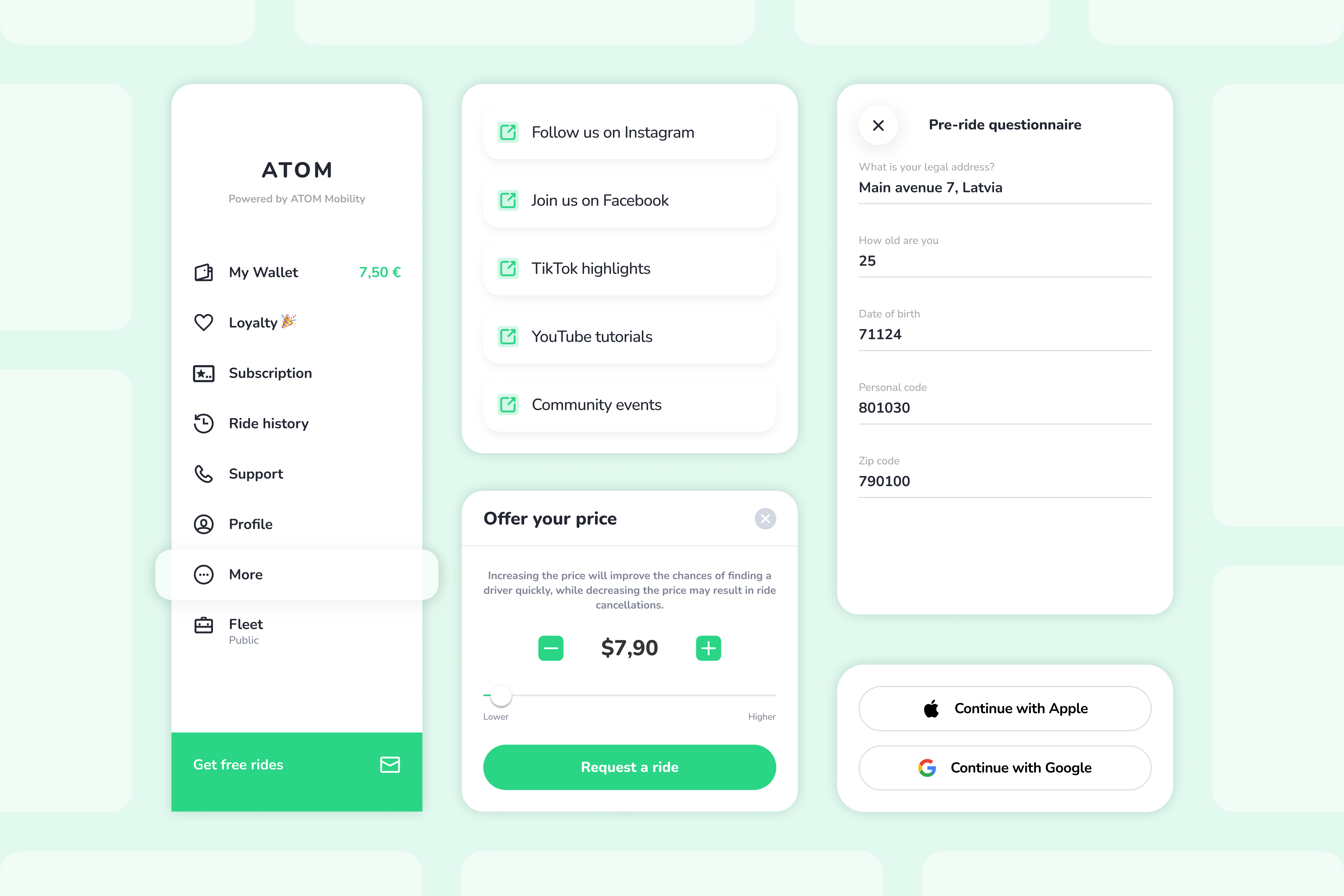
🚀📱2025 was all about automating more and reducing friction across mobility. ATOM Mobility introduced OpenAPI, new sign-in flows, a rental web-booker, smarter fleet automation, and a wide range of new hardware and payment integrations. A faster, more flexible, more scalable mobility platform - built for operators who want to grow.
2025 has been a defining year for shared mobility, digital rentals, and ride-hailing. Competition is stronger, operational costs are rising, and users expect instant, reliable digital experiences. Operators who succeed are the ones who automate more, reduce friction, and stay flexible with hardware, payments, and integrations.
This year, ATOM Mobility shipped a series of features designed to help operators achieve exactly that:
grow revenue, reduce costs, improve fleet quality, and scale into new markets with less complexity.
Here are the 10 most impactful (out of more than 70) features ATOM Mobility released in 2025, and why they matter.

The launch of ATOM’s OpenAPI marks a major step forward for operators seeking greater flexibility, automation, and integration possibilities.
What it is
A fully documented API layer allowing operators and partners to build custom flows, integrations, booking systems, analytics dashboards, or MaaS connections on top of ATOM Mobility.
Who it helps
All verticals: micromobility, car-sharing, moped sharing, rentals, ride-hail, and enterprise partners.
How it works
OpenAPI enables third-party developers to build on top of the ATOM Mobility infrastructure, allowing seamless integrations with external apps, internal tools, and automated workflows. With OpenAPI, operators can extend their service in almost any direction: a partner app (like FreeNow or Uber) can show your vehicles, unlock them, and process payments on your behalf; or internal systems can trigger automated actions - such as sending a survey email after every completed ride. The possibilities are nearly unlimited, giving operators full flexibility to innovate and scale however they choose.
Why it matters
- Enables deeper integrations with partners and local platforms
- Supports custom business logic and automations
- Makes it easier to enter new markets with local-specific requirements
- Opens the door to MaaS distribution and enterprise collaborations

Across mobility, the registration flow is often the first point of friction. ATOM Mobility introduced modern authentication options to simplify onboarding.
What it is
One-tap sign-in using Apple ID or Google Account instead of relying solely on SMS verification.
Who it helps
All operators - especially those targeting tourists, or markets with unreliable SMS delivery.
How it works
When creating a new account or logging in, users can choose to log in/register using Apple ID or Google Account - this will allow account creation in just 2 taps.
Why it matters
- Faster user onboarding experience -> happier rider -> more frequent rides
- Fewer SMS-related issues (and lower SMS related costs) and failed verifications
- Reduced support load from login problems

What it is
A customizable slot in the app menu where operators can add up to five external links - websites, ecommerce pages, tour pages, extra FAQ pages, social media, partner offers, etc.
How it works
- Enable in Settings → System preferences → External links
- Add titles + URLs
- Links automaticaly appear in the app under “More”
Value for operators
- A space where you can display any information you consider important for the user
- Supports cross-promotion and partnership campaigns
- Allows communication updates without app releases
- Creates additional monetisation opportunities, such as launching your own e-commerce or merchandise shop
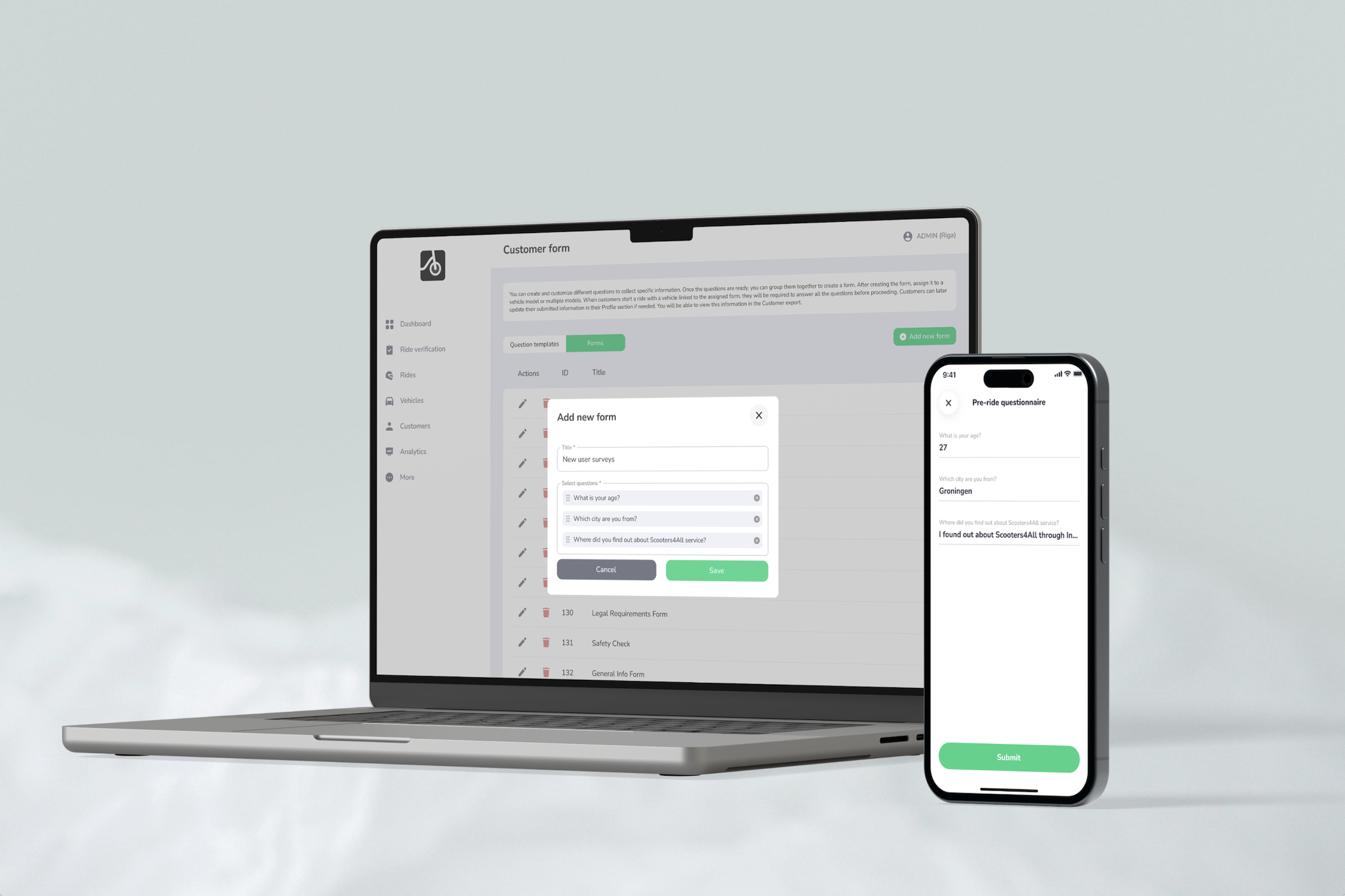
What it is
A form that users must complete before starting a ride - ideal for compliance, reporting, invoicing, or gathering important data.
Who it helps
Operators needing regulatory data, reporting, consent collection, or structured user feedback.
How it works
Create a question (or several) in “Customer form” -> Group questions into a pre-ride form -> Assign a form to specific vehicle models/classes.
Once completed, the customer must answer predefined questions before starting the ride. Their responses appear in both customer and ride exports. For example, you can ask for a personal ID code, legal address, or any other required information.
Value for operators
- Helps meet regulatory or municipal requirements
- Ensures correct invoicing details
- Provides a structured way to capture essential user data
What it is
Automatic payout splitting: driver earnings go to the driver’s payout account, and platform commission goes to the operator - all processed automatically after each ride.
Who it helps
Ride-hail operators using Stripe or Adyen.
How it works
- Operator has a Stripe/Adyen merchant account
- Drivers onboard as payout recipients
- After completed rides, payouts split automatically
- Supports mixed payment methods (cash and non-cash)
Value for operators
- Reduces manual payout work
- Minimises accounting errors
- Improves driver experience through transparency and instant pay out
- Makes scaling easier when the driver base grow
What it is
A tool to override or manually set a vehicle’s GPS position when IoT data is unavailable (no IoT placed on the vehicle at all) or inaccurate.
Who it helps
Operators with underground parking, poor GPS coverage, or long-term rentals without IoT can use this setup. A typical scenario is long-term bike rental without IoT: the user completes ID verification, payment, and booking in the app, then sees the vehicle assigned to a predefined location (station) where it is picked up and later returned. This serves as a workaround for vehicles that do not support IoT or where adding IoT device is too costly.
How it works
Edit vehicle → update “Location” field. The system assumes this as the correct coordinate. Works for individual vehicles or via mass import.
Value for operators
- Avoids user frustration when vehicles appear in the wrong location
- Supports business modesl with fleets operating without IoT devices
What it is
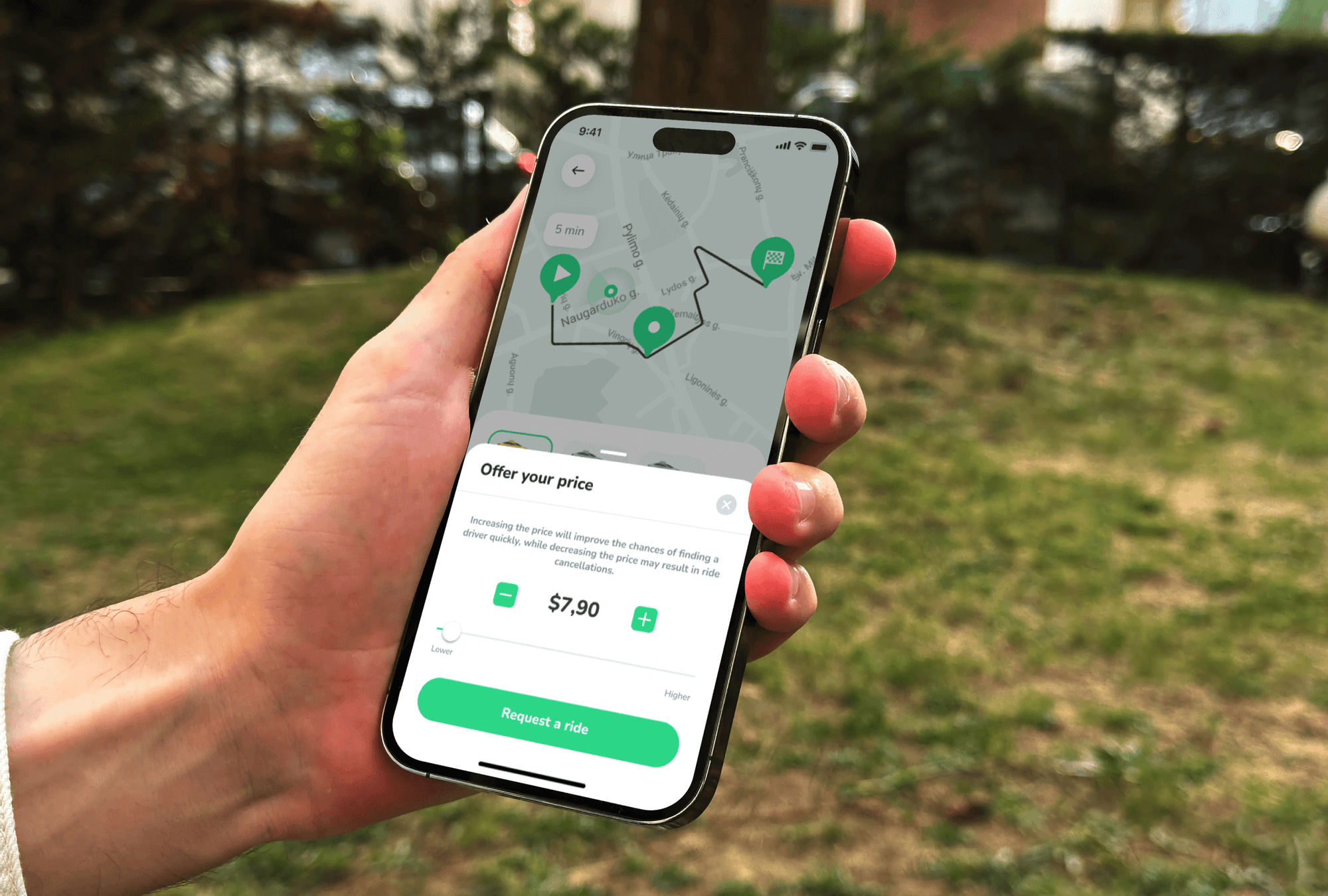
A flexible pricing feature that lets passengers propose their own fare - higher or lower than the system-calculated price, within limits set by the operator. Drivers see the offer instantly and can choose to accept or reject it.
Who it helps
Ride-hailing operators in competitive, price-sensitive, or highly dynamic markets where price shifts demand quickly.
How it works
When requesting a ride, the user selects “Offer your price”. A slider or +/– buttons allow them to adjust the fare within operator-defined boundaries. If the user lowers the price, the app explains that the offer may reduce the chance of driver acceptance.
Drivers see a clear banner showing whether the rider is offering more or less than the standard fare. Drivers can accept or decline based on their preference.
Operators can enable or disable the feature per vehicle class.
Why it matters
- Creates a clear differentiator in markets dominated by fixed-fare competitors
- Helps convert riders who compare multiple apps before booking
- Gives drivers more control over their earnings and decisions, improving transparency and satisfaction
- Supports better ride matching during off-peak hours or less profitable routes
- Allows operators to experiment with more flexible pricing strategies without changing their core fare model
What it is
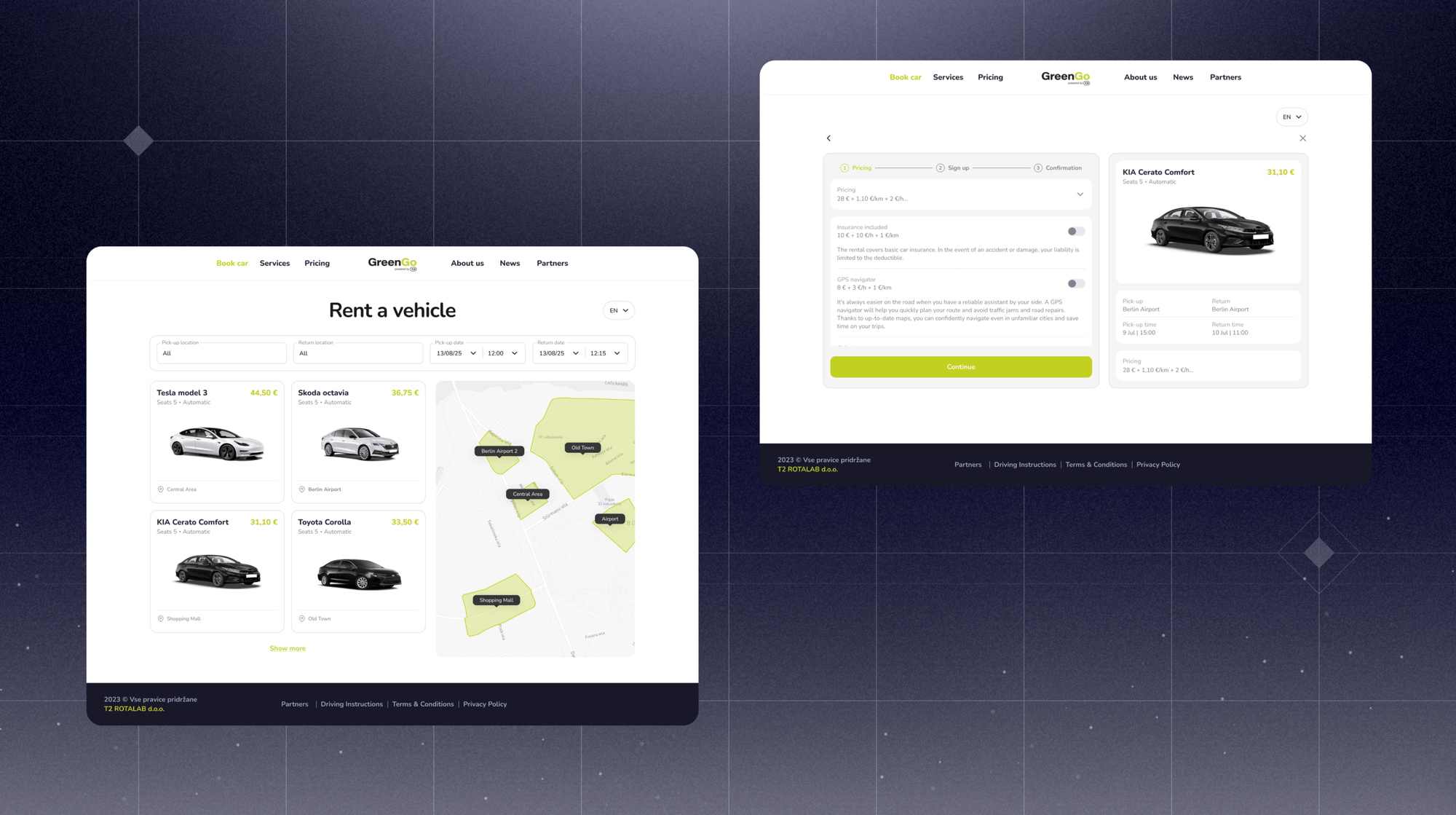
A lightweight, embeddable booking widget that lets customers reserve a rental vehicle directly from your website - without installing the mobile app first. It’s designed to capture spontaneous bookings, convert website visitors, and unify online and in-app rental experiences.
Who it helps
Car, moped, and bike rental operators, as well as hospitality and tourism partners such as hotels, resorts, coworking spaces, real-estate developers, and travel service providers.
How it works
Every operator receives a branded rental URL: merchantname.atommobility.com/rent
Users select their area, vehicle type, and rental period directly in the widget. Once confirmed and the account created, the booking syncs automatically into the ATOM Mobility dashboard. Customers see a confirmation screen with a QR code to open the booking in the mobile app. Payment, ID verification, and vehicle unlock actions are completed in the ATOM Mobility-powered app before the trip begins.
The widget automatically adapts to the operator’s brand color for a visually seamless integration. In the dashboard, each booking displays its source: App, Web, or Booker - helping operators track where rentals originate.
Why it matters
- Converts first-time users browsing your website into paying customers - without forcing an app install
- Enables plug-and-play rental flows for partners such as hotels, rental desks, cafés, coworking spaces, or tourist spots
- Supports QR-based rental journeys from physical locations
- Reduces friction for users who want a fast, simple booking experience
- Helps operators expand distribution with minimal effort, unlocking new sales channels
- Unifies online and mobile rental flows under a single backend and operational system
Demo: https://app.atommobility.com/rental-widget
What it is
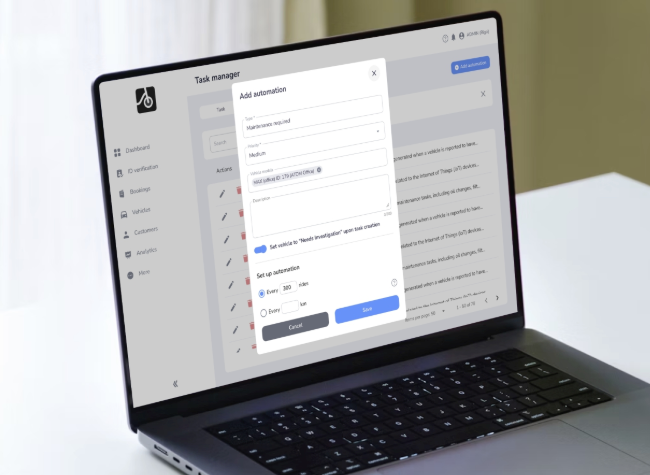
Bad user experiences often happen when several riders encounter the same faulty vehicle. ATOM Mobility now prevents this automatically. Automation rules detect problematic vehicles and instantly set them to “Needs investigation,” hiding them from the user app so the operator can inspect the vehicle before the next rider can take it.
Who it helps
Sharing and rental operators managing medium or large fleets.
How it works
System monitors low ratings, repeated short rides, and user reports. When triggered, it:
- creates a maintenance task
- switches vehicle status
- hides the vehicle from users
Why it matters
- Prevents recurring complaints from the same issue
- Reduces refunds and reputational damage
- Helps maintain a healthier, more reliable fleet
- Automates routine operational checks
What was added
2025 brought a wave of new integrations that give operators more flexibility in choosing hardware, payments, charging, and regulatory tools. What was added:
- Ridemovi IoT
- Wave payment gateway
- Linka smart lock support
- 2Hire IoT
- Kuhmute charging stations
- Eskiz.uz OTP service
- Atmos payment gateway
- Chiron API (regulatory)
- Fitrider charging station
- Azericard payment gateway
Why it matters
- Easier entry into markets with local payment or OTP requirements
- More hardware options for scooters, bikes, e-bikes, and cars
- Better compatibility with charging infrastructure
- Reduced integration time when expanding
- Support for regulatory compliance where required
These ten features represent only a small selection of what we delivered this year. In total, our team shipped more than 70 new features, dozens of integrations, and countless small improvements that quietly make the platform faster, more stable, and more enjoyable for operators and end-users every single day. Behind each release is a team focused on one idea: helping entrepreneurs build stronger, more efficient, and more profitable mobility businesses.
And we’re just getting started.
Our 2026 tech pipeline is already packed with ambitious and exciting solutions - from deeper AI-powered automation to smarter fleet intelligence and new tools that will change how operators run mobility services. We're looking forward to pushing the industry even further together.

"State of art technology in mobile apps and dashboard, very good SLA!"
"Easy, nice looking, continuously updated and developed every month and most of all very reliable with a extreme high uptime"
"We used to work with a different service provider which wasn't fitting our needs. Switching to ATOM was an improvement on our side"
Use test credentials to log in - Phone number: +1 123123123, Code: 777777


Driver App demo credentials - Email: test@atom.com, Password: driver