Blog
Insights and news from the ATOM Mobility team
We started our blog to share free valuable information about the mobility industry: inspirational stories, financial analysis, marketing ideas, practical tips, new feature announcements and more.

We started our blog to share free valuable information about the mobility industry: inspirational stories, financial analysis, marketing ideas, practical tips, new feature announcements and more.
%20(1).jpg)
🚗 Choosing car sharing software? Look beyond the rider app. Our checklist covers what to test in a demo, from keyless access and fleet operations to costs and support for both car sharing and digital rental.
Choosing car sharing software is more than choosing an app where customers can find and unlock a car. The same system has to verify drivers, take payments, communicate with vehicles, handle problems during a trip, and give your team the tools to keep cars available. The difference between two platforms often becomes clear only when something goes wrong: a customer cannot unlock a car, a payment fails, a vehicle needs to be taken out of service, or an operator wants to introduce advance bookings alongside short trips.
If you are comparing providers, ask them to show how these situations work in the actual product. Here is what to check.
“Car sharing” can mean several different things. A free-floating service lets customers find a nearby car and end a trip within an allowed area. A station-based service may require them to return the car to a specific location. Corporate fleets, peer-to-peer services, and self-service rentals have different booking, access, and approval rules.
Write down how your service will work before requesting demos:
Ask the provider to configure these rules in a demo. A platform that supports “car sharing” in general may still require development to support your exact model.
The app needs to do more than display vehicles on a map. Follow one booking from the first app open to the final receipt. Check registration, ID and driver's licence verification, vehicle discovery, booking, payment authorisation, keyless access, trip extension, damage reporting, and trip completion.
For advance rentals, check whether customers can book from your website as well as the app. Ask to see the complete web-to-app journey: selecting a vehicle and dates, confirming the reservation, and continuing to payment, licence verification, and vehicle access. Find out whether the website can complete the entire rental or whether customers must install the app after booking. ATOM Mobility's web-booker, for example, lets customers reserve on the web and then complete payment, and ID verification in the app.
Then test the exceptions. What does the customer see if verification fails, the car does not unlock, the vehicle is no longer available, or the payment cannot be collected? Can your support team see what happened and resolve it without contacting a developer?
This matters because customers judge the entire journey, including how quickly they can recover when a step fails.
Car sharing depends on reliable communication between the platform and the vehicle. Depending on the vehicle and hardware, this may include location, lock and unlock commands, mileage, fuel or battery level, and other status data. Ask for a list of supported telematics providers, rather than accepting a general statement that the platform is “hardware agnostic.” For your proposed fleet, establish:
Hardware flexibility is valuable when you expand or change suppliers, but the integration for the vehicles you plan to buy now is the first thing to verify.
The customer app gets the attention, but your team will spend much of its time in the management dashboard and operator tools. Ask a provider to show how staff:
Try these tasks with the roles your own team would use. The question is not only whether a feature exists, but how many manual steps it takes to run your fleet every day.
Car sharing and digital rental increasingly overlap. An operator might offer cars for short city trips and also accept bookings for a weekend. A rental business may begin with advance reservations and later add app-based, keyless access for shorter trips.
The technology shares many components, but the booking rules can differ. A rental may require advance pickup and return times, vehicle or category allocation, availability calendars, deposits, extensions, and different customer handover processes.
If you may operate both models, ask for a demonstration of both: an immediate hourly trip and an advance weekend booking. Check how the system prevents overlapping reservations, applies the correct pricing and deposit rules, and gives your team a clear view of availability. Also establish whether both models can use the same customer account and management setup, or whether additional products and fees are required.
ATOM Mobility supports vehicle sharing and digital rental on its platform. The useful question for any provider, including us, is how your exact combination of models would be configured and operated.
A low monthly licence fee can be attractive, but it may be only one part of the cost. Request a proposal that separates:
Launch, Setup, branding, app publication, migration, and training
Monthly minimums, fees per vehicle or booking, and included modules
Payment processing, refunds, deposits, and any additional transaction fees
Telematics hardware, installation, data plans, and new integrations
Ongoing work such as support level, custom development, and third-party services
Compare the likely cost at your launch fleet size and at a realistic larger fleet. Ask what happens if the fleet is seasonal or grows more slowly than planned.
Building in-house can make sense when a company has the engineering capacity and needs a customer experience or operating model that available platforms cannot support. It also means taking responsibility for project management, app updates, payments, vehicle integrations, security, monitoring, and support long after launch.
A white-label platform can shorten the route to market and spread that technical work across an established product. In return, you depend on the provider's supported features, integrations, development priorities, and service levels.
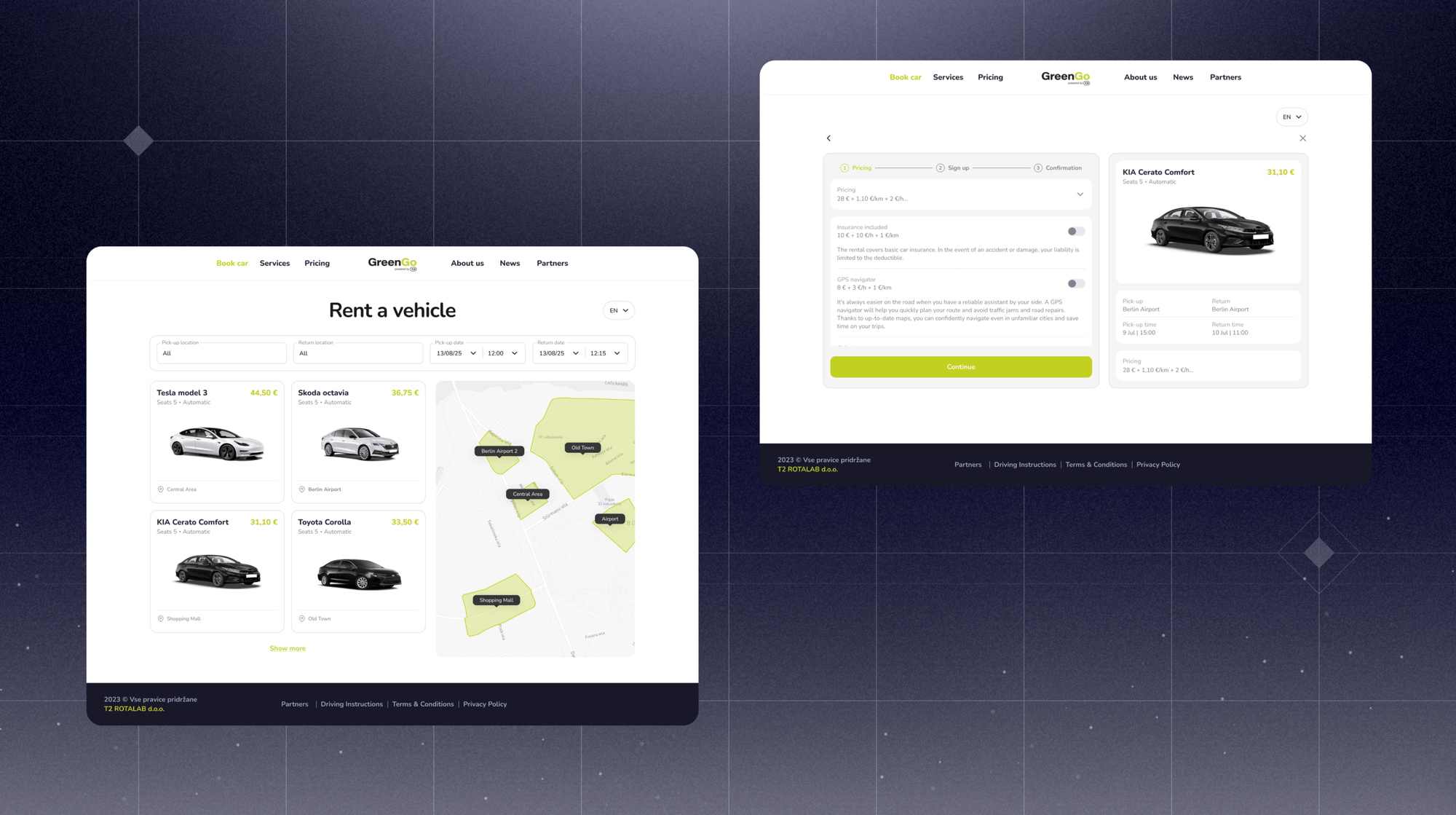
Slovenian car-sharing operator GreenGo initially spent two years developing its own app before switching to ATOM Mobility. Its experience shows why it is worth comparing the time and resources required to build with what an existing platform can already deliver. Read GreenGo's story: https://www.atommobility.com/blog/greengo-chooses-atom-mobility-to-power-its-electric-car-sharing-business
There is also a middle option: use a platform for core bookings, fleet management, and vehicle connectivity while building selected experiences or integrations yourself through APIs. If this is your plan, review the API documentation and confirm what your team can actually read, change, and automate.
Before signing, ask each shortlisted provider to demonstrate the same scenarios:
Use your intended vehicle models, payment markets, and operating rules in the discussion. For anything that cannot be shown, ask whether it is already available, needs configuration, requires paid development, or is only planned.
The best car sharing software is the one that supports your model reliably, gives your team control over daily operations, and leaves room for the business you intend to build next. A practical demo and a complete cost proposal will tell you more than a long feature list.
If you are evaluating car sharing alongside self-service rental, talk to ATOM Mobility about your fleet and operating model. We can show you how both models work on the platform and help you plan migration and scaling.
.jpg)
🌍 🚗 Want to stay on top of the latest trends in mobility? Check out the must-attend conferences in 2025! From urban transportation to micromobility, these events offer great networking opportunities and valuable insights into the future of mobility. 👉 ATOM Mobility will be at several events, so make sure to stop by our booth and chat with us!
The mobility industry is rapidly evolving, and staying ahead means connecting with the right people, discovering new technologies, and learning from experts. Conferences are a great way to do just that. Whether you’re a policy maker, an entrepreneur, or a fleet manager, the year ahead is packed with events where you can grow your network and gain valuable insights. Here’s a list of some of the top mobility conferences happening this year that are worth attending!

The Velo-city conference is a must for anyone involved in urban transportation. With a focus on cycling and sustainable mobility, Velo-city brings together policy makers, city planners, and transportation experts to discuss how cities can become more bike-friendly and sustainable.
This year, ATOM Mobility will have a booth at the event, so if you’re attending, don’t forget to stop by and chat with our team. It’s a great opportunity to explore how new tech can make urban transportation smarter and more efficient.
Where: Gdansk, Poland
When: 10-13 June
Check it out: https://www.velo-city-conference.com
If you’re interested in micromobility – whether it’s e-scooters, bikes, or mopeds – Micromobility Europe is the place to be. This conference is the hub for mobility entrepreneurs, vehicle manufacturers, and operators of sharing services. You’ll hear from innovators in the space, explore the latest products, and attend workshops on everything from regulation to scaling your fleet.
At Micromobility Europe, ATOM Mobility will not only have a booth but our CEO will also be on a panel discussion on day two of the event (“Fleet Tech 2.0: The Tools Powering the Next Generation of Operators”). You can check out the full agenda here. We’d love to meet you, so make sure to stop by and say hi.
Where: Brussels, Belgium
When: 17-18 June
Check it out: https://micromobility.io
For fleet managers, car-sharing operators, and telematics professionals, the Gurtam Fleet Management Conference is a key event to attend. This conference focuses on optimizing fleet operations, the latest in vehicle tracking, and telematics technologies. ATOM Mobility will be among the visitors, and we’ll also be presenting on stage, where we’ll discuss some of the latest trends in fleet management and the use of AI ("AI-powered mobility: Vision, Precision, Prediction. A Look into How AI Transforms Fleet Parking Compliance, Vehicle Damage Detection, and Demand Forecasting.").
If you’re in the fleet management space, this is a great event to gather insights and share ideas with like-minded professionals.
Where: Vilnius, Lithuania
When: 10-11 September
Check it out: https://conference.gurtam.com
One of the biggest mobility events in Europe, IAA Mobility gathers everyone from policymakers to automakers to discuss the future of transportation. With a wide range of topics including light electric vehicles (LEVs), micromobility, public transport, and Mobility as a Service (MaaS), this is a great conference for anyone interested in the broader scope of mobility.
Whether you’re looking to explore the latest in automotive technology or learn about policy changes affecting the mobility industry, IAA Mobility is a must-attend event.
Where: Munich, Germany
When: 9-12 September
Check it out: https://www.iaa-mobility.com/en
If you’re looking to tap into the growing mobility market in Saudi Arabia and MENA, Mobility Live Saudi is one of the largest events focused on urban transportation in the region. The conference brings together policy makers, car rental entrepreneurs, and mobility infrastructure developers to discuss the latest trends and innovations in connected vehicles, MaaS, and micromobility.
It’s an exciting event to explore the unique challenges and opportunities in the Saudi Arabian market, especially in terms of infrastructure and emerging mobility solutions.
Where: Riyadh, Saudi Arabia
When: 9-21 October
Check it out: https://www.terrapinn.com/exhibition/mobility-live-saudi
Each of these events offers a unique opportunity to connect with people in the mobility ecosystem. Whether you're looking to learn about new technologies, hear from industry experts, or network with potential partners, attending these conferences can help you stay ahead of the curve.
Plus, many of these events offer in-person interaction, which can be crucial for building strong relationships and fostering meaningful collaborations. From policy changes to new tech, these conferences are where you’ll find the insights that can shape the future of mobility.
If you plan on attending any of these conferences, make sure to stop by ATOM Mobility’s booth. We’ll be happy to talk about how we’re making micromobility, corporate car-sharing and mobility more efficient, sustainable, and accessible. Our team is excited to connect with fellow professionals, share insights, and discuss how we can all contribute to the future of mobility.
See you there!

🛵 Planning to start a scooter, bike, or moped sharing service? Choosing the right vehicles is a huge part of your success. This guide explains where to buy used or new vehicles, what to expect from each option, and which brands are best for fleet operations.
Starting a micromobility business means making smart decisions early on. One of the most important is choosing the right vehicles. Whether you're planning to launch a fleet of e-scooters, bikes, or mopeds, the vehicles you choose will affect how fast you can get to market, how much you spend upfront, and how reliable your service will be.
There are two main ways to source vehicles: buy them used or buy them new from manufacturers. Both have their pros and cons, depending on your goals, budget, and timeline.
Buying used scooters, bikes or mopeds can be a great way to reduce costs when starting out. This is especially useful if you're still testing the waters or want to launch quickly without investing too much.

If you're planning to scale or want full control from the start, buying new vehicles directly from a manufacturer or distributor might be a better fit. You get full warranty, better quality, and longer lifespan.
If you're comparing both options, here are the main differences you should keep in mind:
Used vehicles are usually available faster and cost less upfront. You don’t have to commit to big orders and can start with just a few units. But they may need more maintenance, have shorter lifespan, and does not include any warranty.
New vehicles require more investment, but you get full warranty, latest models, and better support. Manufacturers may have minimum order requirements and longer delivery timelines, especially if shipping from Asia. However, the quality and reliability usually make up for it in the long run.

If you're considering ordering directly from manufacturers, here are some of the most popular and proven brands used in shared mobility:
Each of these manufacturers offers models built specifically for sharing and large fleets. Features like swappable batteries, fleet dashboards, and rugged design come standard.
Choosing the right supplier depends on your goals. If speed and low cost are most important, used vehicles may help you get started faster. If you're building something long-term, investing in new vehicles may pay off through better reliability and longer lifespan.
In both cases, make sure the vehicles you choose are compatible with your platform – and that spare parts and support will be available. ATOM Mobility works with both used and new fleets and can help match you with the right vehicle options.

🛵 Thinking about launching a mobility business? One key decision can shape your entire growth path: go with a franchise or build your own brand with a white label solution. 🔍 This guide breaks down the pros and cons of each model – and shows how you can even grow your own partner network under your brand with ATOM Mobility’s white label platform.
Starting a new mobility business comes with many decisions, but one of the most important is choosing the right model for growth. Whether you're thinking about launching an electric scooter fleet, a ride-hailing app, or car sharing in your city, there are two main paths to consider: joining a franchise or building your own brand using a white label solution.
Both models offer clear benefits – and both have downsides. What works best depends on your goals, experience, and long-term vision.
Franchising means joining an existing brand and operating under their name, systems, and technology. For example, a local taxi fleet might become a Bolt ride-hailing partner, gaining access to Bolt's technology, user base, and reputation. Similarly, in the micromobility space, some brands allow local entrepreneurs to launch electric scooter or bike-sharing services as franchisees.
This model is popular because it can significantly reduce the time and effort needed to launch. Instead of developing your own technology, brand, marketing strategy, and operational systems, you get a package, a “ready to use” business, from a brand that already knows the ropes.
The main advantage of franchising is speed and simplicity. You don’t need to build everything from scratch. You operate under a recognized name, which can make marketing easier. Often, you also get operational support and a clear playbook to follow.
But there are also downsides. As a franchisee, you don’t fully control the brand, customers and the technology. You may have limited flexibility to experiment or adapt the service to your local needs. Franchise fees or revenue sharing models can also reduce your profit margin. And if the brand suffers reputational issues elsewhere, it can impact your local business – even if you’re doing everything right.
LEVY, an US-based electric scooter-sharing company, has successfully expanded through a franchise model by partnering with local operators across USA. Entrepreneurs can launch and operate Levy-branded services in their cities, leveraging LEVY’s tested software, hardware, and operational know-how. This model has helped LEVY scale quickly while maintaining a consistent brand and service quality.
Nextbike, based in Germany, is one of the world’s leading public bike-sharing providers. It works with cities and franchise-like partners to operate local services under the Nextbike brand. These partners handle operations on the ground, such as maintenance and customer service, while benefiting from Nextbike’s established platform, brand, and international experience. With a presence in over 300 cities, it’s a clear example of how a micromobility business can scale through distributed partnerships.
A white label solution allows you to launch your own mobility platform – under your own brand – using someone else's ready-made technology. This means you can create a ride-hailing app, car-sharing service, or scooter fleet that looks and feels 100% yours, but without needing to build the software from scratch.
If you’re not familiar with how white label works, here’s a good explanation.
With white label, you take ownership of your brand and operations, while leveraging reliable, tested software that’s been used in dozens of markets. You’re not just a local operator – you’re the brand owner.
The biggest benefit of a white label approach is independence. You control the brand, the marketing, pricing, partnerships, everything. You can build a unique business that reflects your vision and local market needs. There’s no revenue sharing or ongoing franchise fees.
However, white label also means more responsibility. You have to manage marketing, customer support, local partnerships, and operations yourself. While the software is provided, the business is yours to run. It requires more involvement but also brings more potential reward.

If you want a fast, low-risk way to enter the market with support and clear systems, franchising may be a good fit – especially if you’re new to mobility or want to test the waters.
If you want to build a long-term business under your own brand, with full control and higher potential margins, white label is likely the better option. It gives you room to grow and adapt without being tied to someone else’s rules.
Many successful businesses start with white label software to speed up their launch, then focus on building a strong local brand and user base. Over time, this approach can offer more strategic freedom and better returns.
One advantage of choosing a white label provider like ATOM Mobility is that you’re not just building for yourself. With ATOM’s platform, you can also expand by inviting partners to operate under your brand in other cities or regions.
This means that you can launch as an independent operator and, over time, create your own franchise-style network. ATOM’s software allows you to add partners to your platform, assign them specific territories, limit access to data, and manage operations from one central system. Your partners operate under your brand – and you stay in control of the bigger picture.
This is exactly how several of our clients have grown. They started locally, proved the model, then expanded by partnering with others – all without giving up their brand or independence.
Both franchising and white label are valid ways to launch a mobility business, and both come with clear advantages. But if your goal is long-term brand ownership, flexibility, and the ability to scale on your own terms, white label is often the smarter path.
With ATOM Mobility’s platform, you can launch fast, operate efficiently, and even build your own network of partners under your brand – creating a franchise model that works for you.

🚕 Thinking of launching your own ride-hailing service? You don’t need a giant budget or years of development. With the right tools and a local-first mindset, you can go from zero to launch in just 90 days. From platform setup and driver onboarding to beta testing and your first 1,000 rides - this guide covers it all.
Starting a ride-hailing or shared mobility venture can seem overwhelming, but with a clear plan, it's possible to launch in just 90 days. This guide outlines a three-phase process: laying the foundation, building your product and team, and launching - plus tips for growth beyond day 90. By following this roadmap, you’ll validate your idea, ensure legal compliance, create your brand and technology, recruit drivers, and hit the market ready.
Day 0–30: Foundation
Finding a niche
Start with market validation and legal setup. Research your target area to identify unmet transport needs. Maybe large providers don’t serve certain areas, or there’s demand for eco-friendly, or premium segment or niche services like women-only rides.
Looking to stand out in the competitive ride-hail market? Check out these two insightful reads:
- Finding a niche in the competitive ride-hail market: https://www.atommobility.com/blog/how-to-find-your-niche-in-the-competitive-ride-hail-market-real-world-examples-of-businesses-that-resonate
- Discover how a local taxi union in Sweden supports a new platform to reshape industry standards and build a fairer ecosystem: https://www.atommobility.com/blog/driving-change-with-fair-how-a-small-platform-is-redefining-the-taxi-industry-in-sweden
This should help you define your niche, unique positioning or angle, and ultimately your unique selling proposition to stand out from other players in the market.
Legal compliance
Next step will be forming your business (e.g., LLC) to protect liability and later attract investors. Apply for the necessary permits, such as TNC licenses, and consult local regulations. Insurance is essential – you’ll need commercial liability coverage that also includes drivers. Run background checks to ensure safety and compliance.
Legal compliance checklist:
Budgeting for MVP launch
Outline core costs: software, licenses, insurance, marketing, driver incentives, customer support, accounting services, and some reserve. Use a white-label software like ATOM Mobility to avoid costly custom builds. These platforms offer rider/driver apps and backend systems for a fraction of development costs.
Plan an initial marketing budget (e.g., €1,000–€5,000) and allocate driver sign-up bonuses (€100 for 20 rides, for example). Include small expenses like Apple developer accounts or a place in co-working to work from. Keep costs lean and prepare a detailed budget for the first 6-12 months.
Financing: Bootstrapping vs. investors
Once you have a 6-12 month budget prepared, you can choose between personal funding, angel investors, or crowdfunding. Bootstrapping (using your personal capital) offers control but limits scale. Local group of angel investors can contribute €50k–€500k in total and extra mentorship. Crowdfunding helps raise funds while building a local supporter base. For example, you can engage drivers to invest via crowdfunding in exchange for a small equity share in your company and free usage of the platform for a certain period.
Here’s a helpful resource on using crowdfunding to kickstart your venture and get inspired: https://www.atommobility.com/blog/crowdfunding-for-your-vehicle-sharing-business
If your budget analysis shows you need external funding, try at least to launch a small-scale, working prototype with personal funds or an FFF (friends, family, and fools funding) round before entering the investment process. Demonstrating even modest traction significantly boosts your chances of a successful raise.
Please note that securing your first round of funding - whether from crowdfunding or business angels - typically takes six or more months. To keep momentum going, launch an initial version of your product or service, then start the fundraising process.

Day 30–60: Build & integrate
Software
Choosing the right software partner can make or break your new ride-hail venture. From cost efficiency and faster time-to-market to reliability and specialized industry knowledge, the benefits of a white-label solution often outweigh the complexities and expense of building from scratch. Be sure to evaluate each provider’s platform features - rider and driver apps, dispatch system, and payment tools—alongside their proven track record of scaling and entering different markets. Confirm their customization capabilities, pricing transparency, and ability to expand into new service zones as your business grows. Ultimately, opt for a partner that delivers both the technology and the strategic support you need. For more insights on this decision-making process, explore white-label solutions vs. building from scratch and discover Why ATOM for a deeper dive into selecting the right tech partner.
Create a clear branding identity
Start by selecting a memorable name that reflects both your niche and city - AI-powered tools like ChatGPT can speed up brainstorming. Next, design a simple logo and choose core colors using user-friendly platforms such as Canva or Looka. Consistency is key, so use these design elements across your website and social channels.
When it’s time to launch your online presence, opt for no-code platforms like Squarespace, or Carrd to create a minimal landing page in minutes -no developers needed. Clearly present your core message (e.g., “Premium, all-black Mercedes rides in [City].”), include links to your rider/driver apps, and offer driver sign-up form. This straightforward approach helps potential users and drivers quickly understand and trust your brand.
Driver onboarding (first 50 drivers)
Your service can’t run without drivers, so make their onboarding experience as smooth and appealing as possible. Start by defining tangible benefits - like 0% commissions for the first three months, niche perks, or local partnerships—that set you apart. Reach out via social media, online communities, and direct messaging to recruit your initial loyal driver base. Host webinars or info sessions to keep them engaged and address any concerns.
Keep in mind, your first drivers are crucial for user satisfaction: they are the face of your service and heavily influence each ride’s quality. Consider providing branded merchandise and clear guidelines—such as offering free candies or bottled water, opening doors, or any other gesture aligned with your unique selling proposition (USP).
To streamline onboarding, create a simple website form for sign-ups, ensure fast document verification, run background checks, and offer concise training modules. Incentives like sign-up bonuses or a zero-commission period can help you recruit your first group of drivers quickly. You might also guarantee initial earnings (covering fixed fees from your budget) to build driver trust while you grow your user base.
Goal: By day 60, aim to have at least 50 drivers signed up and ready to serve your launch zone, setting a solid foundation for your platform’s success.
Day 60–90: Test & launch
Closed beta testing
Before a full launch, invite a small group of friends, family, or early supporters to test your app and simulate real-world scenarios. Focus on the essentials: ride requests, payment processing, GPS accuracy, and cancellation flows -ideally at various times of day and on different devices. Take a few actual rides with real drivers to see how they follow outlined procedures and interact with riders. Gather feedback to uncover any usability issues or unexpected driver behaviors.
During this phase, refine your internal processes as well. Decide how you’ll handle customer inquiries - whether via a dedicated help email, chat support, or both - and respond promptly to build trust. If you have a team, ensure everyone is on the same page about responsibilities, communication guidelines, and how to address rider or driver concerns. This targeted approach helps you iron out potential issues, polish the user experience, and establish robust support protocols before going public.
Public launch
Decide whether to roll out quietly (a soft launch) to iron out any last-minute bugs or make a big announcement with a press release. If you choose the latter, pitch your story to local media outlets, emphasizing your community-first approach to mobility. Launch promotions - like 50% off first rides or a €5 sign-up credit - are a great way to attract early adopters and generate buzz.
Make sure your driver pool is ready to handle demand by coordinating schedules and availability. Consider offline tactics, too: distributing flyers in high-traffic areas, setting up campus booths, or sponsoring community events can help you gain local exposure. Once you’re live, keep a close eye on rider feedback (e.g., ride ratings, app store reviews) and address issues swiftly to maintain a positive user experience.
Marketing & growth to 1,000 rides
Partner with local influencers to promote your app, offering free rides or small payments in exchange for authentic social media posts. Focus on influencers your target audience trusts. Implement app referral programs - reward users and their friends with ride credits to spark word-of-mouth growth.
Keep engagement high by sharing milestones and user success stories online. Show up at local events, offering exclusive promo codes to attract new riders. Begin with small-scale digital advertising, reinvesting as you generate revenue and learn which channels work best. Track core metrics like sign-ups, ride volume, and wait times so you can make data-driven decisions and refine your strategy in real time.
Post 90 days: Scaling
Customer support & operations
As your platform grows, consider outsourcing or automating aspects of customer support. Create a help center or FAQ to guide users to quick solutions, and keep daily operations under close watch so you can resolve any issues swiftly. To remain efficient, hire part-time help (e.g., marketers or fleet managers) who can handle specialized tasks without inflating your overhead.
Fundraising
With initial traction in place, you’re in a strong position to secure additional funding. Present clear data on ride volume, user retention, and revenue growth to potential angel investors or crowdfunding platforms. Government grants may also be available for sustainable transport initiatives, so explore those opportunities. Be specific about how the funds will be used - for instance, "We need €100 000 to expand into two new cities and reach 10,000 rides per month."
The 90-day timeline
Although launching a ride-hail platform in 90 days is ambitious, a focused strategy and lean tooling can make it possible. Stay agile, keep service quality at the forefront, and set tangible milestones for each stage. With strong local insights and consistent execution, you can carve out a lasting presence in the mobility space.
Growth & expansion
Before moving into new cities, solidify your position in your initial market. Continue recruiting drivers and reaching fresh rider segments through targeted partnerships and loyalty programs. If you decide to scale further, use your 90-day playbook again—tweaking it for each new region’s unique challenges and opportunities. Good luck!

"State of art technology in mobile apps and dashboard, very good SLA!"
"Easy, nice looking, continuously updated and developed every month and most of all very reliable with a extreme high uptime"
"We used to work with a different service provider which wasn't fitting our needs. Switching to ATOM was an improvement on our side"
Use test credentials to log in - Phone number: +1 123123123, Code: 777777


Driver App demo credentials - Email: test@atom.com, Password: driver