Blog
Insights and news from the ATOM Mobility team
We started our blog to share free valuable information about the mobility industry: inspirational stories, financial analysis, marketing ideas, practical tips, new feature announcements and more.

We started our blog to share free valuable information about the mobility industry: inspirational stories, financial analysis, marketing ideas, practical tips, new feature announcements and more.
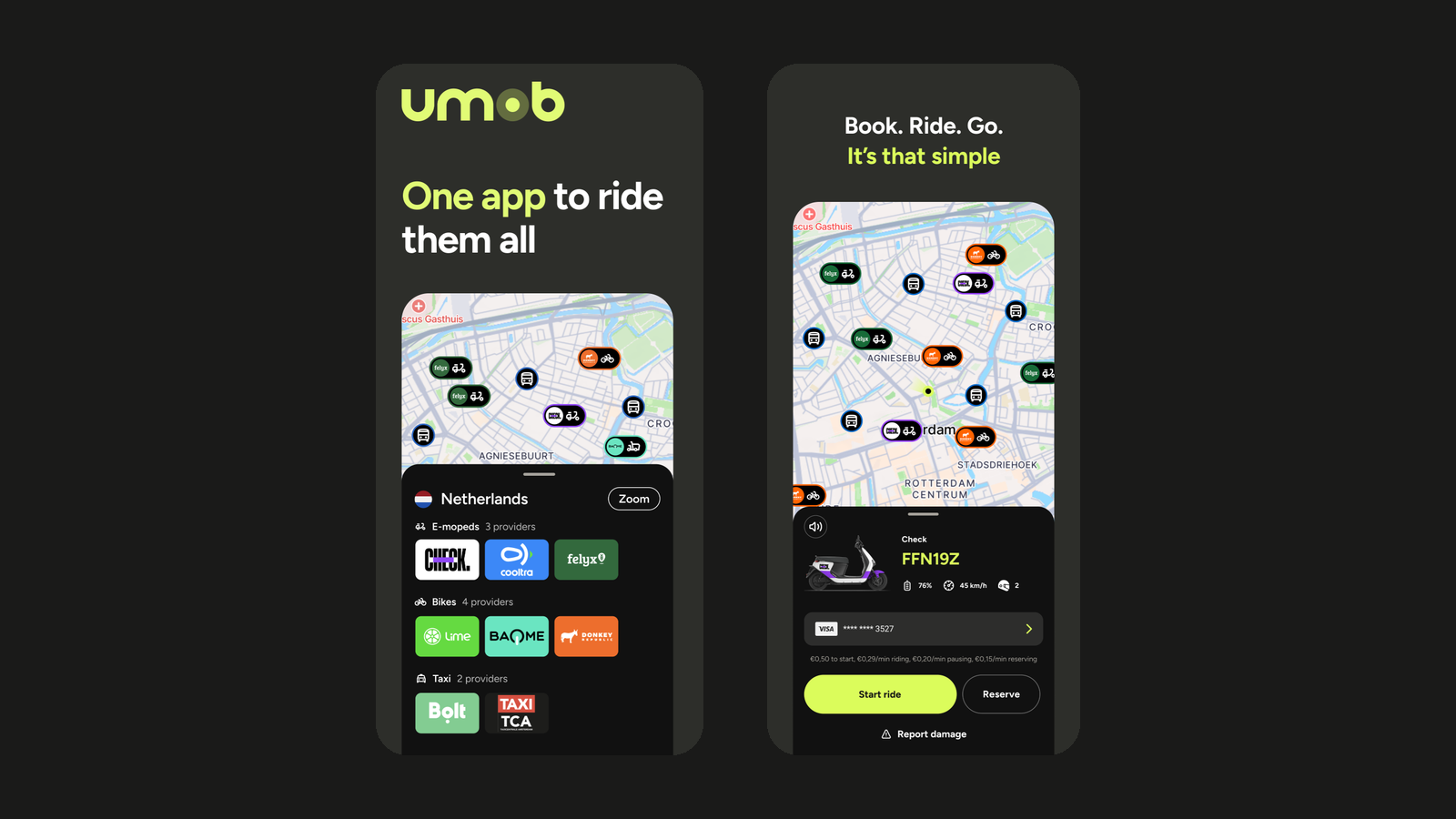
🌍 Reach more riders with ATOM Mobility and Umob. The integration gives shared mobility operators an additional distribution channel, helping attract new customers, generate more bookings and improve fleet utilization.
The future of mobility is not just about operating vehicles. It is about creating convenient journeys that bring different transportation options together in one simple customer experience.
That is why we are excited to highlight our partnership with Umob, helping mobility operators expand their reach and become part of a growing multimodal mobility ecosystem.
Whether you operate shared cars, scooters, bikes or mopeds through the ATOM Mobility platform, integrating with Umob allows your service to become accessible to thousands of Umob users looking for a convenient way to travel.
Today's users expect flexibility. They don't think in terms of individual mobility providers, they simply want the fastest, easiest, and most convenient route from A to B.
Umob brings different mobility providers and transport options together in one app. Users can find, compare, book and pay for different mobility options without having to download a separate app or create a new account for every provider.
By connecting your fleet to Umob, operators can:
For ATOM Mobility customers, the integration is designed to provide a straightforward way to unlock new distribution opportunities while continuing to manage their core operations through the ATOM Mobility platform.
Through the ATOM Mobility platform, participating operators can connect their fleets with Umob, enabling users to discover and use available vehicles directly through the Umob app.
Once connected, vehicles from participating operators can appear in Umob alongside other available mobility options, giving users one clear overview of the different ways they can get from A to B.
Users can discover an available vehicle, reserve and unlock it, start and end their ride, and pay directly through Umob.
The integration is designed to support:
Operators continue to manage their fleet, pricing, service areas and day-to-day operations through the ATOM Mobility platform, while Umob provides an additional channel through which users can discover and access their vehicles.
For mobility operators, connecting with Umob creates an additional distribution channel without changing the way they manage their day-to-day operations through ATOM Mobility.
By making vehicles available to thousands of Umob users, operators can increase their visibility at the moment people are actively looking for a ride. This creates the potential to attract new users, generate additional bookings and improve fleet utilization over time.
Every market is different, but many operators see MaaS partnerships as an important part of their long-term growth strategy.
One of the first ATOM Mobility operators to launch through the Umob integration is ZEUS Mobility, an ambitious European e-scooter sharing provider with a strong focus on innovation, a dynamic approach and challenging the established players in the market.
Fittingly, the partnership itself started through the ATOM Mobility network.
ZEUS and Umob first met at an ATOM Mobility event in Riga. While the initial introduction happened during the event, it was over drinks later that evening that the conversation really started.
ZEUS had already come across the Umob brand on mobility vehicles while travelling and had been impressed by the professional approach the company was taking. That recognition quickly turned into a conversation about how both companies could strengthen their propositions by working together.
From there, the integration moved forward quickly. ZEUS describes the preparation and integration process so far as “clean, professional and smooth.”
For ZEUS, the partnership creates an opportunity to strengthen the visibility of its brand, reach new customers and support its wider European growth ambitions.
Following its acquisition of Superpedestrian in May 2026, ZEUS is looking to accelerate its growth throughout 2026 and 2027, with the Umob partnership forming part of that ambition.
“ZEUS is thrilled to be partnering with Umob in European markets. Following our acquisition of Superpedestrian in May 2026, ZEUS is seeking to rapidly grow through 2026 and 2027. This partnership can help to drive this growth and reach new customers in new markets. We look forward to a rewarding partnership.” - Damian Young, ZEUS Mobility
One app to ride them all. Umob is an all-in-one mobility platform that brings different mobility providers and transport options together in one app.
Users can find, compare, book and pay for shared bikes, e-bikes, scooters, mopeds, public transport, taxis and other available mobility options through one account and one payment experience. Instead of downloading and registering with a separate app for every provider or every new city, users can open Umob and see the available mobility options around them.
Today, Umob is available in 28+ countries and 300+ cities, giving thousands of users an easier way to access different forms of mobility both at home and while travelling.
Key facts
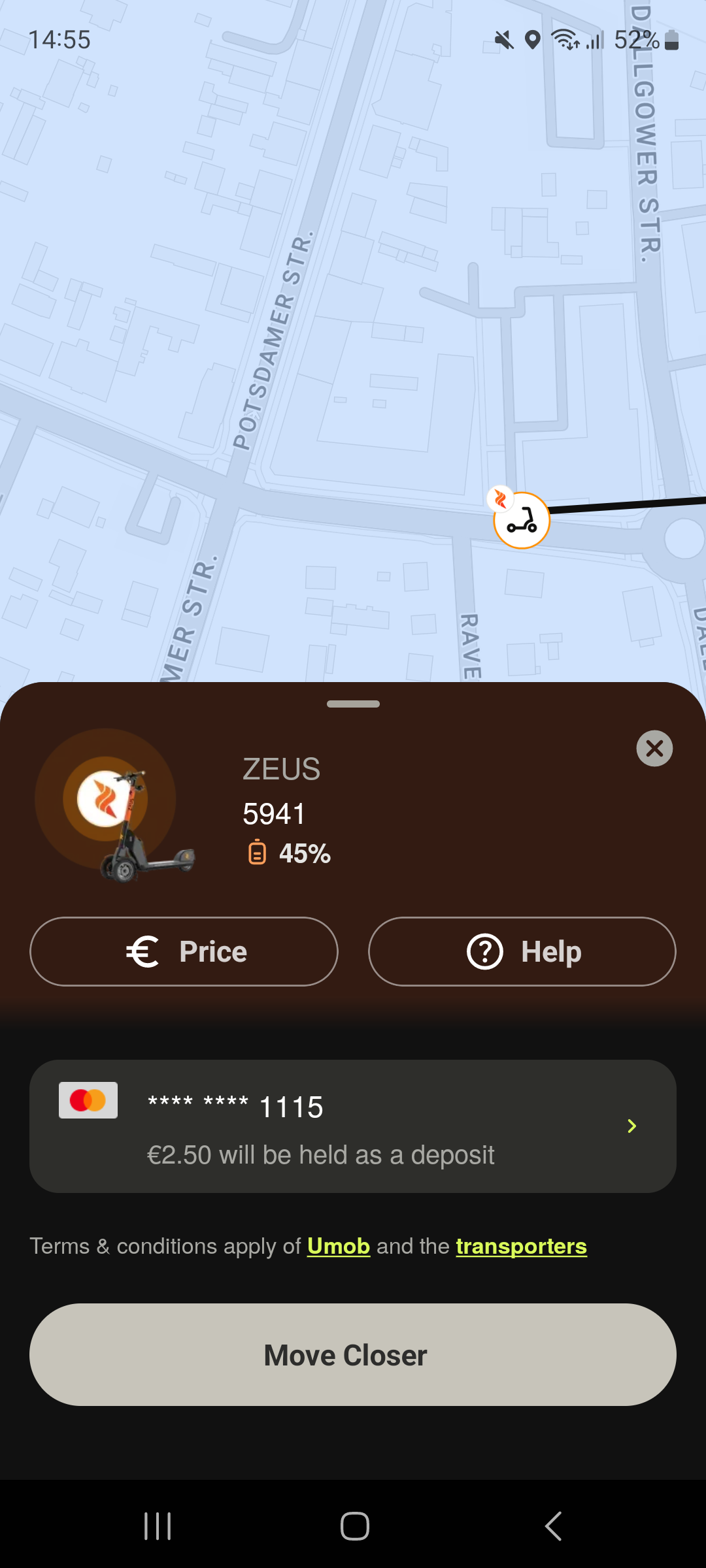
If you're already operating your shared mobility service on the ATOM Mobility platform, connecting with Umob could be the next step toward reaching more users and becoming part of a truly connected mobility ecosystem.
If you're interested in enabling the integration or learning more about how it works, get in touch with our team. We look forward to helping more operators connect, collaborate, and make sustainable mobility easier for everyone.

Summer season in Europe is approaching - it is exactly the best time for most companies and entrepreneurs to enter the shared micromobility market. We have put together a useful handbook for everyone who still plans to start operations before Summer 2021. Yes, you still have time and using our guidelines you can be ready to launch in 1-3 months even if at the moment you have just the idea.
Summer season in Europe is approaching - it is exactly the best time for most companies and entrepreneurs to enter the shared micromobility market. We have put together a useful handbook for everyone who still plans to start operations before Summer 2021. Yes, you still have time and using our guidelines you can be ready to launch in 1-3 months even if at the moment you have just the idea.
What you'll discover inside this handbook:
- Business model. Different vehicle sharing business models and how to calculate the total costs and revenues;
- Financing. If you start a new venture, you can learn how other entrepreneurs get funded;
- Operations. What else you need to think about in terms of daily operations.
Click here to grab your free PDF guide: http://bit.ly/atommobility-handbook
👍 Have some questions? We are here to help you with all the challenges you will face. ATOM Mobility provides reliable and proven white label technology helping entrepreneurs to focus on marketing and operations. Now serving customers in over 18 countries worldwide.
Check what our customers are saying: Story of Ride, Story of Qick, Story of GOON

Millennials and younger generations tend to be reluctant to buy items. Instead, they prefer to have access to products via different sharing models. “25 years from now, car sharing will be the norm, and car ownership an anomaly,” says author and economist Jeremy Rifkin in the latest Goldman Sachs Global Investment Research.
Millennials and younger generations tend to be reluctant to buy items. Instead, they prefer to have access to products via different sharing models. “25 years from now, car sharing will be the norm, and car ownership an anomaly,” says author and economist Jeremy Rifkin in the latest Goldman Sachs Global Investment Research.
What we experience in Atom Mobility - a vehacle sharing software platform that can be adjusted to any sharing model and type of vehicle - is that people of any age are willing to share vehicles they own. From cars to e-scooters and even forklifts. Moreover, people are willing to start their own businesses based on sharing.
This will be a practical guide for those who are seriously considering starting a sharing business. As this business niche isn’t new, a lot of people have suffered bumps during the launch process and have learned their lessons. Atom Mobility has collected them and created a practical guide highlighting what you should consider when you are considering entering the vehicle sharing business.
🛴 Choose the vehicle type and operation model
This seems like a simple decision, but it’s not. Currently, the most popular vehicles for sharing are bikes and e-bikes, scooters, e-mopeds and cars. If you already own a fleet, then the offering will be obvious. If not, you’ll have to start by calculating which vehicle type you can afford. Here is some meaningful insight into the difference between launching a vehicle sharing business with scooters, e-bikes, and mopeds. By the way, the brand is not important. The most important parameter that can later reduce maintenance costs is the quality of the IoT system fitted into the vehicle and, of course, the quality of the vehicle itself.
You will need a minimum of 50-100 vehicles to start your business. Accordingly, you can calculate the amount of the initial investment you require. Obviously, car sharing requires way more money than creating a bike fleet of 100 vehicles. However, leasing is also an option. In addition, you have to do the market research, because your success depends on demand - if there are already two or three companies in town offering e-scooters, you will have to invest a lot of money on marketing to persuade people to use your services instead those of your competitors. So you should probably consider choosing another type of vehicle to establish a point of difference and thus secure competitive advantage.
When you start to do your calculations, start with the vehicle price. From one perspective, this is the easiest part, but it is very important to calculate:
● How many rides should be taken with one vehicle during the day for it to be profitable? For example, take a look at this Shared Mobility Report from France. It might help you to get an impression of the demand and fragmentation of the market.
● What is the value of one ride? Bear in mind that the price per ride in a car is approximately three times higher than on a bike, but so are the expenditures.
● What is the structure of your costs? You have to insure every vehicle. Taxes have to be paid and vehicles have got to be inspected from time to time. Are all these positions included in your cost estimate? By the way, this is a great resource with an Excel table showing how market leaders estimate their income and expenses.

The next decision to make regards the sharing model. Currently, there are several on the market that have demonstrated proven value:
● Charging stations - there are charging stations all over the city. When the ride ends, the vehicle is left at a charging station and it is charged in readiness for the next time it is going to be used. Although this approach can create significant additional costs, it lowers everyday servicing costs.
● Free-floating vehicles - shared vehicles can be left wherever it is convenient for the customer. The city council may not be happy with it as this model sometimes clutters up the streets. So you should definitely check out whether there are any existing regulations in this regard before you launch this model.
● B2B or corporate vehicle sharing - the company owns the fleet that can be used by their employees. This is quite a secure way to run your business, but you will need to sell it to other SMEs which is not an easy task and requires significant sales resources and expertise.
● P2P sharing - anyone can register a vehicle on the platform, which can be rented by any other user. This may seem easy, but it is actually quite complicated, because the owner is putting his property on the platform which he wants to get back in the same condition as it was before. As a sharing service provider, how can you guarantee that the vehicle won’t be broken? You should run background check on users, as well as have insurance in case anything happens.
You can also read more about different operational models here.
🏢 Check the city regulations
In recent years both the demand and offering for ridesharing have grown to such an extent that cities have been forced to regulate this business sector. If you are planning to operate within city limits, you’ll definitely have to check out the relevant legislation.
Regulations may be in place that have been set by the City Council. So the first thing to find out is - is vehicle sharing allowed at all? In cities with high vehicle ridesharing service and density, the city council might organize tenders to identify which companies can provide the most appropriate ridesharing service. Other requirements for companies might also apply, so you should monitor this situation carefully.
As far as density is concerned, there’s no point in creating a new ridesharing business if the vehicle density is already more than 700 shared vehicles per 100,000 people. If the ratio is one shared vehicle per 100 - 140 people, very careful calculations should be done as it could signal that the market is overcrowded so demand might be low.

💰 Consider all costs
Every business plan starts with an Excel sheet. As always, it is not possible to predict all costs but you can sneak peek into existing companies and take a look at their cost structure. You should take the following items into account:
● Maintenance costs - every vehicle now and then will have to be repaired.
● Vehicle purchase and depreciation costs - you need to know after how many kilometres you are going to have to replace your existing vehicle with a new one.
● Charging costs – you will need a team to take care of vehicle charging. Of course, costs will differ depending on the ridesharing model, but there are going to be charging costs in some shape or form.
● Bank commissions and payment transaction costs - even if you haven’t used credit to buy vehicles, your bank will still charge you commission for its services. If you use Stripe, Adyen, or a similar payment operator, you should take into account additional costs for every transaction.
● Marketing - it is vital to go loud upon launch so that everyone notices the new company in town. This requires a sizable marketing budget. If you decide to use promo codes, free rides, and other bonuses to attract new customers, this will reduce your profit margin on a certain amount of rides.
● Customer support - customers always have questions, which they will ask via Messenger, phone or any other platform. You have to have a team in place that can provide answers right away.
● IT system support - it is crucial that the service is up and running all the time. And there are a lot of different parts involved starting from software to IoT systems and data.
● Additional costs - always leave space for unplanned costs. The industry average is approximately 3 - 5% per ride.
At this point, you are ready to start to talk to manufacturers, haggle about prices, and ask them to send you a vehicle for a test. You should not forget to discuss the prices and delivery policy of spare parts, in order to avoid unplanned downtime.
🤑 Financing options
If you already own a company and see ridesharing as an additional direction in the development of your business, then most likely you will be ready to invest in its launch. If not, and you are planning to start a new company, the first thing to consider is how can you launch a test? The idea of a vehicle sharing business alone will not be enough to attract investors or convince banks to give you a loan. You will always have to prove that this business can really take you somewhere in this particular place. And a successful test with a small number of vehicles could be good proof.
You could consider crowdfunding as an option if you want to get some seed capital. Consider choosing the most popular platforms like Spark Crowdfunding, Seedrs, Fuderbeam, or Crowdcube. They are so interested in your success that they will also put their effort into marketing your campaign on their channels. This is your opportunity to make some savings on your marketing expenditures, which will definitely benefit you later on.

🛵 Plan fleet management
So far so good. You have a plan and a budget, so what’s next? Now you have to put your fleet management system on paper:
● Maintenance and charging - at the end of each day you are going to have to check the condition of every vehicle. Does it need to be charged? Is everything working smoothly or do some details need to be changed? This everyday care usually “eats” 30 - 40% of overall costs.
● Spare parts - you should be ready to spend about 10% of the total value of the vehicle on spare parts. In addition, you should have a proper warehouse. Losing 30% of the fleet for three months due to a spare parts’ shortage is a nightmare for any business.
● People on the streets - your company will require two employees per 100 vehicles to inspect and collect them. So estimate their salaries. Remember that these people won’t have regular working hours. They might charge you overtime for work at night. And another thing to consider is how they are going to get about the city. If the vehicle is broken, how are they going to be able to take it to be serviced?
● Customer support - no matter how mature the market is - your customers will always have questions. Who’s going to answer them? Remember that customer reviews create a rating that builds the further success of the company.
As the ridesharing business is becoming more popular, you should probably consider outsourcing the vehicle service. There are new companies on the market that focus on servicing vehicle sharing platforms.
📈 Build your marketing strategy
Marketing starts with the brand. You have to decide whether you’re going to hire a marketing agency or work with the designers and marketers yourself. Either way, you will need a brand name, logo, web page, and corporate colours.
Our experience shows that the success of the launch event is a bridge to the future success of the vehicle sharing company. So it is really worth focusing your attention on the big bang at the beginning. It is crucial to get as many downloads during the first days of the operation as possible. Even if not everyone uses your service straight away, you will have a database of potential customers with whom you can work, for example, by sending push notifications - consider using Intercom or Mailchimp for this.
Oftentimes collaboration with influencers is a good channel to use. And local media are interested in vehicle sharing businesses entering the city. But never forget social media - it is the most appropriate channel for marketing, as well as quick responses to customer requests.
Now sit back, relax and enjoy your amazing results… 😆 No, the vehicle sharing business doesn’t work that way. During the first month you will have to put a lot of your effort and the effort of the whole team into adapting your initial plan to real life. The first season is usually full of experiments and failures, but the most rewarding part of this business is the opportunity to scale.
👍 ATOM Mobility is here to help you with all the challenges you will face. ATOM Mobility provides reliable and proven white label technology helping entrepreneurs to focus on marketing and operations. Now serving customers in over 15 countries worldwide. Check what our customers are saying: Story of Ride, Story of Qick, Story of GOON

Some of the most frequent questions we receive are regarding how many rides per day each vehicle will make and how many vehicles should be placed in a specific city. Recently we found great report from France (provided by Fluctuo). This report has a lot of useful data for anyone who operates or plan to operate in shared mobility market. According to this report September was a good month for shared mobility in France 🇫🇷
Some of the most frequent questions we receive are regarding how many rides per day each vehicle will make and how many vehicles should be placed in a specific city. Recently we found great report from France (provided by Fluctuo). This report has a lot of useful data for anyone who operates or plan to operate in shared mobility market. According to this report September was a good month for shared mobility in France 🇫🇷
7 key facts about shared mobility in France:
👉 13 shared mobility providers are operating in Paris (2x bikes, 3x scooters, 2x mopeds and 6x cars)
👉 Only 10% of all cities (where population is below 200 000 people) in France has access to shared scooters and only 3% have access to shared mopeds
👉 Station based bike-sharing program is surprisingly popular in France with 70% off all cities have access to it
👉 In September (high season for micromobility) 2 145 000 trips were made on 25 650 free-floating shared vehicles with an average of 2.8 rides/vehicle/day
👉 Average number of rides per free-floating vehicle per day in Paris varies from 1,7 (for car) up to 4,9 rides per day (for moped). In other cities rides per vehicle per day varies from 0,5 (for bike) up to 4,8 rides per day (for scooter)
👉 Average trip length: 1.5-2 km for scooters, 2.5-3 km for bikes, 4-5km for mopeds
👉 Total number of free-floating shared vehicles in Paris is around 15 000 vehicles (bikes, scooters, mopeds and cars). It is around 700 vehicles per 100 000 people
Full report available here: http://bit.ly/sharedmobilityreport
P.S. All graphics and tables appearing in the report are the exclusive property of fluctuo. Thanks to Fluctuo team for sharing this information.


Is ATOM platform suitable for hotels that plan to operate a small fleet of scooter or bikes as an additional service? Sure, it is even possible to get 20% of the small town population to become users of your platform.
Is ATOM Mobility platform suitable for hotels and guest houses that wants to operate a small fleet of scooter or bikes as an additional service for guests? - Yes, sure.
Is ATOM Mobility platform suitable for hotels and guest houses that wants to operate a small fleet of scooter or bikes as an additional service for guests? - Yes, sure.
It is even possible to get 20% of the total population in a small town to become users of the e-scooter sharing platform. That’s what the story of the GOON is about. The company operates in the small town of Zarasai, Lithuania with a population around 8 000 people and reached almost 2 000 users in the first few months.
Launch date: Spring 2020
Country: Lithuania
Fleet: Segway MAX
Web page: https://www.facebook.com/GOONZarasuose
App Store: https://apps.apple.com/app/goon-e-scooter-sharing/id1498086237
Google Play: https://play.google.com/store/apps/details?id=goon.app
“We got the idea for this business from the example of big cities where big companies like BOLT, CityBee, and others operate. We also took into account the lack of entertainment for the guests and residents of the small resort city of Zarasai,” says GOON’s founder Darius Kilbauskas, sharing the story of starting his own business.
Drew on Support for Startups to Begin
GOON started at the moment when its founders decided to use support from the Zarasai Startup training programme for young entrepreneurs. It is a project funded by the European Social Fund Agency and initiated by the National Institute for Social Integration. The GOON team was selected to participate in the programme in April 2019. Within a couple of months, they were joined by business consultant Ugnius Savickas, who diligently traveled to regular meetings with the project participants. This is how the business idea succeeded.

Just to give you an idea of how small the town is - only 8,000 people live there. GOON started to offer its services at the beginning of the 2020 season and had 1,700 users which amounts to 20% of the total population!
“Our scooter sharing fleet has only nine scooters, so the number of users is really impressive. In addition, this year was different - many chose to stay in Zarasai for the whole summer due to the pandemic or visited a neighbouring country - Latvia. And the biggest number of tourists also came from Latvia and one of its largest cities – Daugavpils which is only 25 km away. Zarasai has beautiful nature, lakes, and excellent infrastructure to offer tourists,” says Darius. In addition, he mentions that original and attention-grabbing e-scooter design, advertising, and ATOM Mobility’s modern rental platform played a significant role in creating a success story. “The app by ATOM has never let us down and has met all our expectations. We are grateful to those professionals for their quality work,” says Darius, thanking his partners.
The collaboration with ATOM Mobility started unexpectedly. Initially, the team was looking for a GPS device for IoT scooters. “We were interested in how much it would cost to build our own platform. Then we realized that this amount would be far too high for our small business. I found a Lithuanian company TELTONIKA that produces devices we were interested in. And then a representative of this company hooked us up with ATOM. This saved us a lot of money and time. ATOM helped us to launch the app in 20 days!” says Darius.

“This is proof for us that even with the super small fleet, it is possible to run successful operations. And the ATOM Mobility platform is also an affordable solution on such a small scale. It helps small businesses such as guest houses and hotels to offer e-scooters or bikes as an additional entertainment option,” comments ATOM Mobility CEO Arturs Burnins.
Aim to Entertain and Surprise
Currently, there are two people involved in the team of GOON. Darius is the supervisor of the e-scooter park and is responsible for administrative work. While his colleague Augustė is responsible for increasing the customer base and overseeing advertising and design. “We do everything ourselves,” says Darius proudly.
This is just the beginning of GOON. The company is considering expansion and not only in terms of buying additional vehicles and also working in other neighbouring cities but also in increasing diversity and choice so that it is possible to attract and surprise both tourists and locals.

If you ever visit Zarasai, don’t forget to take an e-scooter and enjoy the most beautiful route around Lake Zarasas, an 11 km circle. Darius also recommends visiting the watermill along the route in Šlininkai and enjoying a great meal there.

"State of art technology in mobile apps and dashboard, very good SLA!"
"Easy, nice looking, continuously updated and developed every month and most of all very reliable with a extreme high uptime"
"We used to work with a different service provider which wasn't fitting our needs. Switching to ATOM was an improvement on our side"
Use test credentials to log in - Phone number: +1 123123123, Code: 777777


Driver App demo credentials - Email: test@atom.com, Password: driver