Blog
Insights and news from the ATOM Mobility team
We started our blog to share free valuable information about the mobility industry: inspirational stories, financial analysis, marketing ideas, practical tips, new feature announcements and more.

We started our blog to share free valuable information about the mobility industry: inspirational stories, financial analysis, marketing ideas, practical tips, new feature announcements and more.
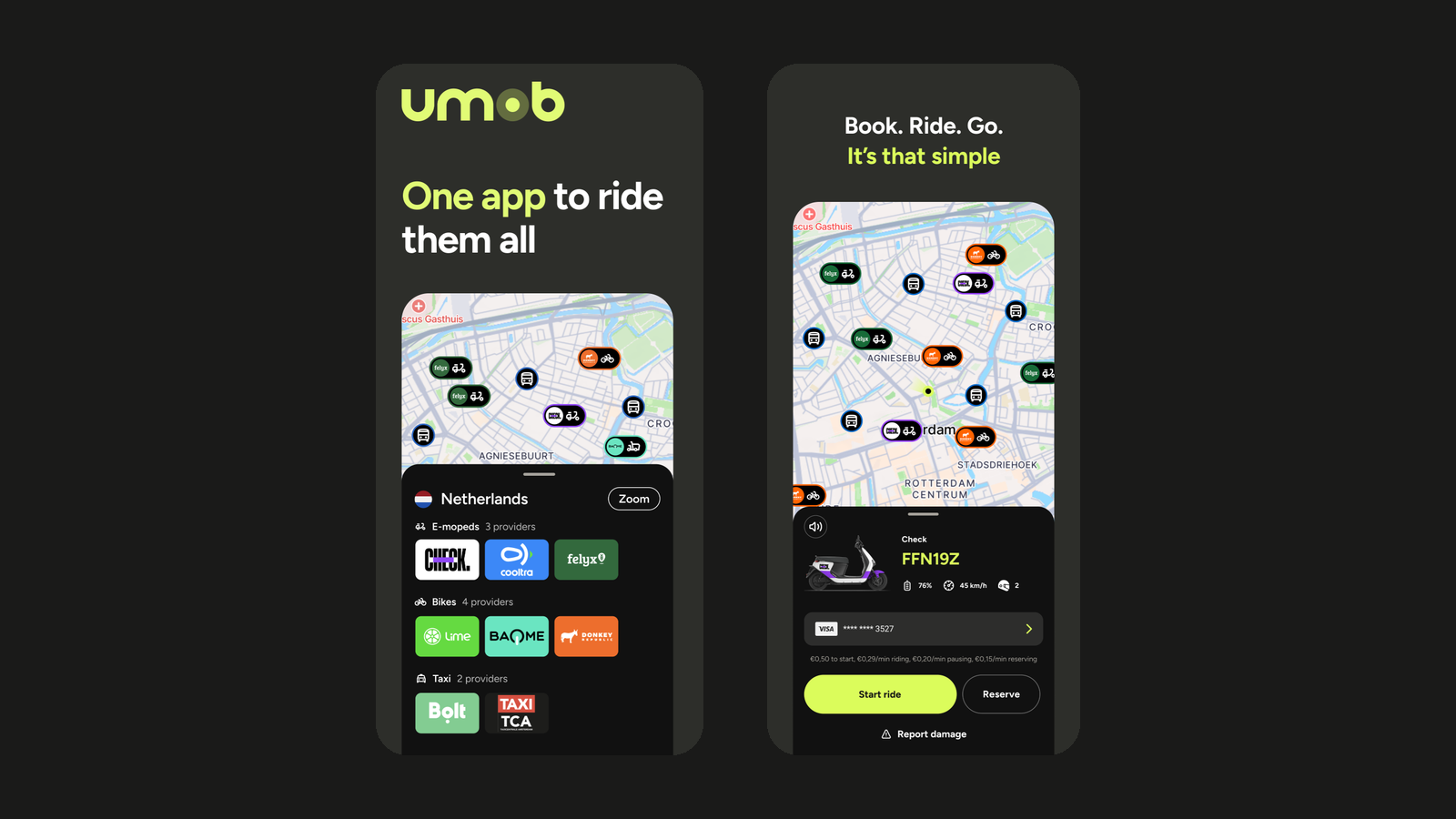
🌍 Reach more riders with ATOM Mobility and Umob. The integration gives shared mobility operators an additional distribution channel, helping attract new customers, generate more bookings and improve fleet utilization.
The future of mobility is not just about operating vehicles. It is about creating convenient journeys that bring different transportation options together in one simple customer experience.
That is why we are excited to highlight our partnership with Umob, helping mobility operators expand their reach and become part of a growing multimodal mobility ecosystem.
Whether you operate shared cars, scooters, bikes or mopeds through the ATOM Mobility platform, integrating with Umob allows your service to become accessible to thousands of Umob users looking for a convenient way to travel.
Today's users expect flexibility. They don't think in terms of individual mobility providers, they simply want the fastest, easiest, and most convenient route from A to B.
Umob brings different mobility providers and transport options together in one app. Users can find, compare, book and pay for different mobility options without having to download a separate app or create a new account for every provider.
By connecting your fleet to Umob, operators can:
For ATOM Mobility customers, the integration is designed to provide a straightforward way to unlock new distribution opportunities while continuing to manage their core operations through the ATOM Mobility platform.
Through the ATOM Mobility platform, participating operators can connect their fleets with Umob, enabling users to discover and use available vehicles directly through the Umob app.
Once connected, vehicles from participating operators can appear in Umob alongside other available mobility options, giving users one clear overview of the different ways they can get from A to B.
Users can discover an available vehicle, reserve and unlock it, start and end their ride, and pay directly through Umob.
The integration is designed to support:
Operators continue to manage their fleet, pricing, service areas and day-to-day operations through the ATOM Mobility platform, while Umob provides an additional channel through which users can discover and access their vehicles.
For mobility operators, connecting with Umob creates an additional distribution channel without changing the way they manage their day-to-day operations through ATOM Mobility.
By making vehicles available to thousands of Umob users, operators can increase their visibility at the moment people are actively looking for a ride. This creates the potential to attract new users, generate additional bookings and improve fleet utilization over time.
Every market is different, but many operators see MaaS partnerships as an important part of their long-term growth strategy.
One of the first ATOM Mobility operators to launch through the Umob integration is ZEUS Mobility, an ambitious European e-scooter sharing provider with a strong focus on innovation, a dynamic approach and challenging the established players in the market.
Fittingly, the partnership itself started through the ATOM Mobility network.
ZEUS and Umob first met at an ATOM Mobility event in Riga. While the initial introduction happened during the event, it was over drinks later that evening that the conversation really started.
ZEUS had already come across the Umob brand on mobility vehicles while travelling and had been impressed by the professional approach the company was taking. That recognition quickly turned into a conversation about how both companies could strengthen their propositions by working together.
From there, the integration moved forward quickly. ZEUS describes the preparation and integration process so far as “clean, professional and smooth.”
For ZEUS, the partnership creates an opportunity to strengthen the visibility of its brand, reach new customers and support its wider European growth ambitions.
Following its acquisition of Superpedestrian in May 2026, ZEUS is looking to accelerate its growth throughout 2026 and 2027, with the Umob partnership forming part of that ambition.
“ZEUS is thrilled to be partnering with Umob in European markets. Following our acquisition of Superpedestrian in May 2026, ZEUS is seeking to rapidly grow through 2026 and 2027. This partnership can help to drive this growth and reach new customers in new markets. We look forward to a rewarding partnership.” - Damian Young, ZEUS Mobility
One app to ride them all. Umob is an all-in-one mobility platform that brings different mobility providers and transport options together in one app.
Users can find, compare, book and pay for shared bikes, e-bikes, scooters, mopeds, public transport, taxis and other available mobility options through one account and one payment experience. Instead of downloading and registering with a separate app for every provider or every new city, users can open Umob and see the available mobility options around them.
Today, Umob is available in 28+ countries and 300+ cities, giving thousands of users an easier way to access different forms of mobility both at home and while travelling.
Key facts
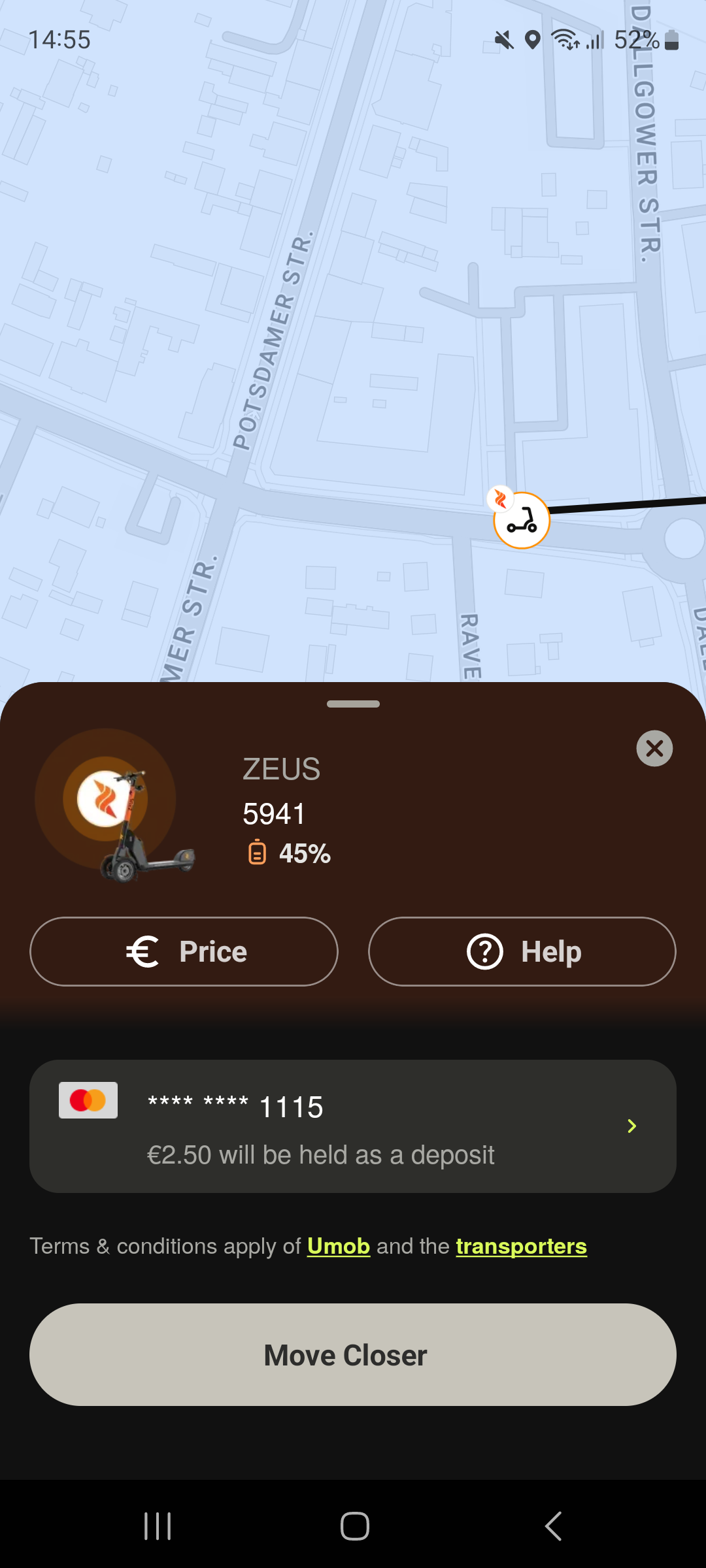
If you're already operating your shared mobility service on the ATOM Mobility platform, connecting with Umob could be the next step toward reaching more users and becoming part of a truly connected mobility ecosystem.
If you're interested in enabling the integration or learning more about how it works, get in touch with our team. We look forward to helping more operators connect, collaborate, and make sustainable mobility easier for everyone.

Back in August, together with innovation management company Helve, we launched the open call for ATOM Mobility Lab, a FREE venture-building / accelerator program helping ambitious entrepreneurs to build mobility companies from ZERO in just 9 weeks. Along with October, comes the beginning of our 9-week program. Out of more than 100 applications, we have selected 12 teams from 11 countries developing various shared mobility, ride-hailing, and on-demand services. It's about time you meet them!
Back in August, together with innovation management company Helve, we launched the open call for ATOM Mobility Lab, a FREE venture-building / accelerator program helping ambitious entrepreneurs to build mobility companies from ZERO in just 9 weeks. Along with October, comes the beginning of our 9-week program. Out of more than 100 applications, we have selected 12 teams from 11 countries developing various shared mobility, ride-hailing, and on-demand services. It's about time you meet them!
Aver Mobility (Bulgaria) 🇧🇬
The utilitarian approach to shared mobility.
Aver Mobility is a car sharing company that’s involved in solving urban mobility challenges. Their mission is widening the adoption of shared mobility with greener means of transportation in Eastern Europe without requiring anyone to step out of their cars. As we all know the personal car is an irreplaceable limb for the average Eastern European. Aver Mobility knows that they couldn't influence that. They don’t want to do so, either. They want to step on that assumption but make it greener. The company will launch with a 100% EV fleet in Sofia (Bulgaria) and plans on replicating the same utilitarian approach while exporting the operational model in the rest of Eastern Europe.
ChargeM (Germany) 🇩🇪
All-inclusive Shared Micro-Mobility System for A2A models
ChargeM provides an end-to-end solution for you guests, employees, and tenants: E-Scooter, wireless charging station, app, labeling, and operations. The company allows locations to passively provide an extra mobility solution to profit from every ride.The system comes with a wireless charging infrastructure for shared e-scooters to significantly reduce costs for collecting/ swapping and recharging of the vehicles. Their automated charging solution will allow providers to reach profitability sooner and make micromobility more sustainable - ecologically, economically, and socially.
Dodai (Ethiopia) 🇪🇹
Affordable mobility ownership in Ethiopia
Dodai is an asset financing platform that offers underbanked customers access to life-enhancing products, and services. The company provides affordable mobility ownership for Ethiopian gig workers who intend to increase their earnings and comfort through the financing of electric two wheelers.
Drop (Romania) 🇷🇴
Electric last-mile deliveries
Drop is a one-stop-shop solution, which not only offers delivery as a solution, but covers a large range of other services such as rider supply management, operational lease and rental options for EVs and LEVs, micro fulfillment as a service, and OOH delivery.
EcoTaxi (Estonia) 🇪🇪
Safe, inclusive, and sustainable mobility
EcoTaxi is the first inclusive and sustainable logistics company in the Baltics that intends to solve emission problems by providing a platform for sustainable vehicles only. Their platform will actively reduce male to female assault by onboarding more female drivers and make accessibility easier for differently-abled persons. ExoTaxi's customers are people who care about the planet and are interested in using sustainable methods to get to wherever they need to go.
Greenclick (US) 🇺🇸
Disrupting over-the-counter desks with technology
Greenclick is scaling the on-site car rental market at hotels where >1% in the US offers car rental services out of 70k hotels. They're carving out a new car rental market by solving congestion, long lines and waiting at airports, and serving guests when all rental locations close, disrupting over-the-counter desks with technology. With their vertical, they're accelerating the adoption of electric vehicles and providing a broad consumer market with their first test drive of an electric car.
JETT (France) 🇫🇷
Rental subscription service without commitment
JETT is an e-moped rental subscription service without commitment. An easy and flexible, weekly or monthly, plan with no hidden or sign-up fees! They handle everything: insurance, maintenance, helmet, and even delivery to your doorstep! You just have to enjoy your own JETT!
MaaS in Tourism (Greece) 🇬🇷
Mobility app for tourists and citizens to use at their destination
MaaS in Tourism company’s app will integrate all the means of transport that are available in the tourist destination that will be developed with the main goal to minimize the use of cars with carbon emissions. They also want to promote the use of public transport combined with other eco-friendly mobility choices such as electric scooters or bikes. This will be a g2c/b2c product and the target group will be mostly municipalities in Greece that are tourist destinations and offer a variety of means of transport and services around mobility. The company wants to make the citizens love their city more and the tourists to enjoy their vacation in a more sustainable and fun way.
MobiEV (Egypt) 🇪🇬
Bringing micro-mobility and convenience to Egypt
MobiEV is on a mission to bring EV Micro-mobility to the Egyptian market of 100 million residents and 13 million annual tourists. Their aim is to pair convenience and pleasure into the service by strategically placing EVs servicing commercial and tourist hotspots. MobiEV will leverage technology, competitive energy prices, and 350 days of sunshine to provide sustainable shared mobility to their customers.
SHRINK Scooters (UK) 🇬🇧
The UK’s first student-run socially conscious scooter sharing platform
SHRINK Scooters are the UK’s first student-run socially conscious scooter sharing platform integrating students living in the peripherals of Durham city into university life. The company plans to involve a fleet of 30-40 scooters to begin with and are currently exchanging discourse with the University and, with the support of numerous consultants, are preparing to tackle the challenge of obtaining a license form the Council.
Sun Spirit (Latvia) 🇱🇻
Bringing sustainable water traffic to RigaSun Spirit believes that Riga has a resource that has not been properly used - the river Daugava. They want to build green, energy-powered, odorless, noiseless, modern, and sustainable traffic within the river and make it enjoyable for city residents and guests. Book on-the-go and hop-on or off whenever you want.
Swap-City (Latvia) 🇱🇻
Compact car-sharing at the lowest prices
Swap-City is a service based in Riga that specializes in electric car sharing, using only unique compact cars with swappable batteries. This makes these cars always available, never out of power. Most exterior and interior spare parts are made by a 3D printer. Light and small two-seater cars that can travel a distance of up to 150km. They bring the most compact cars, at the lowest prices!
During the next 2 months, these 12 teams will work closely together with our lead mentors Johanna Braun and Mario Gamper to successfully launch their businesses at the end of the program. The program will conclude with a demo day on December 1 (16:00 CET), during which, the teams will present their progress and business plans to a panel of jurors to battle for prizes in the value of up to 30k EUR provided by ATOM Mobility, Funderbeam, KNOT, ACTON, Fluctuo, Sumsum, and movmi.
.webp)

Go Green City quickly landed with ATOM Mobility as it met Jose's criteria – professional, responsive, and not too big. The two companies have been working together ever since, with a shared outlook toward the future.
Moped-sharing company operating in several cities across Switzerland.
“Being small allows Go Green City to be responsive and offer solutions tailored to a particular environment. Flexibility and agility are our advantages and that's why I wanted a software partner with the same qualities” – Jose Tavares, the founder and CEO of Go Green City, explains why he chose to partner with ATOM Mobility.
Launch date: August 2021
Country: Switzerland
Fleet size: 200 e-mopeds
Web page: https://go-greencity.ch
App Store: https://apps.apple.com/ch/app/id1583947739
Google Play: https://play.google.com/store/apps/details?id=ggc.app
Jose began building Go Green City, a Swiss electric moped sharing company, with another well-known software provider on the market. Still, he quickly grew disillusioned after experiencing delays in communication and a generally passive attitude. Moving quickly is a key advantage of starting a new enterprise, and being held back by outside parties was unacceptable. This became clear early on in Jose's journey, when he was still just validating the viability of his solution.
“The initial partner company was just too big and took too long to react,” explains Jose. “I wanted a partner that can match my pace and with whom I could establish strong foundations for a long-term partnership.”
After tasking his son with finding an alternative provider, Go Green City quickly landed with ATOM Mobility as it met Jose's criteria – professional, responsive, and not too big. The two companies have been working together ever since, with a shared outlook toward the future, and, as they say, the rest is history.

For Jose, Go Green City is about giving back. Having had a career in the automotive industry for most of his life, Jose wanted to create something that improves the lives of city folk and helps the environment. An electric alternative for urban last-mile mobility is his answer.
“We considered and tested electric car sharing and scooters, before landing on mopeds. The problem I wanted to solve was to get people from B to C. Not A to B, because I would compete against public transport and create more traffic and congestion. I firmly believe that public transport is the best and greenest solution that should serve as the backbone of urban transit,” says Jose. “That's why I'm focusing on a last-mile solution. My goal is to get people into the bus and then onto the electric moped, rather than replace the bus.”
Go Green City started operating in 2022 and today its 200 e-mopeds have done over 120,000 km inside the city with zero emissions. But for Jose, that's just the beginning. Looking to grow his fleet more than tenfold and launch next year in Portugal, Jose is steadily carving out his place in urban mobility through smart partnerships and sheer grit.
Jose has built Go Green City from the ground up almost single-handedly. Up until now, the company's operations were virtually 100% outsourced, save for the considerable efforts of Jose himself. “I've done my job when I can go on a vacation and everything runs smoothly without me,” Jose shares.
Today, Go Green City demands around 2 hours of Jose's time a day, but this is the result of 5 years of hard work and long nights. “To be a good leader, even to freelancers, you have to know every nook and cranny of the business and have to be willing to do the hard work yourself. You can't ask more of others than you do of yourself.”
Over the years, there have been a lot of hiccups – from vehicle hacks to delivery problems due to the Suez canal's blockage – but having trusted partners at your side and extensive industry knowledge helped Jose navigate all the ups and downs right up until the launch and beyond.
The launch of Go Green City happened without much fanfare. The idea was to launch smoothly and quietly, to avoid antagonizing competition and give citizens the opportunity to discover the advantages of Go Green City themselves. It was a tremendous success that was quickly amplified further through word-of-mouth marketing.
People were eager to engage with the new and convenient e-mopeds and became loyal customers once they discovered that it was the cheapest mobility option available. This also encouraged people to share feedback, all of which was quickly managed on the other end by Jose himself to further improve the service and foster a sense of community.
“I wanted people to feel heard and make them feel like a part of the business. That's why I always ended my communications with 'Thank you for being part of our club' and that really resonated with people.”

After an illustrious 30-year career in the automotive industry and a strong start with Go Green City, Jose's advice to future entrepreneurs is “don't talk, just do it”. Don't tell people where you are going, but announce when you've arrived.
“Sharing your plans and ambitions will only make people question you and you'll spend a lot of energy and time arguing and justifying yourself to friends, family, and partners,” explains Jose. “Sometimes, don't even tell your wife”.
“People have amazing ideas and initiatives, but they seek validation and support from acquaintances who can never really give you what you need. Usually, they just make you question yourself. Instead, just do it. Try. Even if you fail, the most important thing is that you've learned and you'll do better next time,” concludes Jose.
Thanks to an alignment in business philosophies, ATOM Mobility and Go Green City collaborate like a well-oiled machine. And Jose can continue his entrepreneurial mission of improving the lives of travelers and contributing to the well-being of the environment.

When it comes to the future of e-scooter sharing, there are some pretty conflicting opinions out there. Some say it's the future of micromobility, others are less optimistic.
When it comes to the future of e-scooter sharing, there are some pretty conflicting opinions out there. Some say it's the future of micromobility, others are less optimistic.
Ultimately, the success of scooter operators all depends on their ability to find profitability.
Let's be honest – this industry has higher-than-average overhead costs. The hardware itself is a major investment, and profits are further seeped by the maintenance workforce, storage, relocation costs, and new regulatory requirements that are regularly introduced.
But profitability is possible.
We spoke to Heiko Hildebrandt, co-founder of Bullride, which helps mobility companies offload their assets from their balance sheet to keep them in the black.
The economy is just starting to stabilize as we exit the Covid slump and enter the new normal. How did Covid affect the micromobility sphere?
A study published in Bloomberg found that monthly ridership fell drastically in 2021, but made a comeback in 2022 when people returned to office.

Source: Bloomberg
Now, that's using US-based brands as a model.
Heiko Hildebrandt shares that the scooter operators he's worked with have experienced a similar effect:
“Corona was the greatest fuel you could pour onto the micromobility fire. During Corona times, people hardly used public transport, and most people switched to scooters. We saw two of the biggest micromobility brands in Europe, Bolt and Tier, raise record-setting VC investment at the end of 2021 – totaling 1.4B EUR – a clear sign of traction. And since Covid has ended, we've seen a 30%-40% slump in demand. So was Covid bad for business? Not according to my perspective.”
However, according to Heiko, the real challenge is to make the unit economics work. Because the question is not about whether the product is in demand. The question is does it make sense from a business perspective.
The scooter industry, while in demand, must face challenges that directly impact their unit economics. For some businesses, it pushes them over the edge and drives them into insolvency.
By knowing what those challenges are, scooter businesses can better set up their business models to protect their profitability.
In order for a scooter's lifetime to be profitable, it has to be in use for at least 2 seasons – some even say, for 4 years. That means that the scooter has to be durable, easily maintained, with cost-efficient replacement parts.
“Scooters are usually imported from abroad (mostly China), and shipping costs are now 8x higher than they were two years ago. The costs of electronics components are ever increasing.”
Jürgen Sahtel, Manager of the ATOM Vehicle Marketplace, agrees that the prices have gone up over the past two years.
“For example, hardware prices for the new Segway models have increased more than 40% over the last 16 months. And this trend is across all manufacturers – new scooters could be obtained starting from 650EUR and up, while more advanced models readily available in EU are priced at around 1000EUR per unit.”
The hardware is one of the biggest up-front investments that a scooter operator faces. But it's also critical to balance cost with quality, as you need to be so resilient that it can withstand public use over the course of 2-4 years.
When the e-scooter sharing industry took off, the industry was so fresh that there wasn't any regulation in place to keep it in check. It was the wild west, and operators were able to take advantage of the regulatory grey area.
Now, municipalities are starting to crack down on the industry and putting laws into place. Regulation, overall, is a good thing. However, the way it's done now shows a lack of understanding about the unit economics and its regulation that is being enacted.
“Most municipalities are limiting the size of a fleet that one scooter competitor can have. Their goal is to reduce the amount of scooter clutter on the streets. But that number is often too low to ensure what we call “natural floating” – the process of humans moving the scooters around the city. This puts a larger strain on relocation and charging teams.”
Other burdens placed on scooter brands is the stricter demarcation of allowable parking zones. This is a factor that impacts relocation teams – those responsible for bringing scooters from less popular zones back to city centers and transport hubs. Additionally, mandatory tenders with the municipality are usually offered only for one year, making planning rather difficult.
A new trend that Heiko mentions seeing from a regulatory perspective is the emergence of mandatory insurance.
“Scooters used to be classified as bikes, and thus, similarly regulated. Now, they're being reclassified as motored vehicles, which have different regulatory requirements, including mandatory insurance.”
This further skews the unit economics of each ride.
On the other hand, regulation can also play an enabling factor. Heiko shares that if tenders could be extended for, say, 3 years, it could provide scooter brands with planning stability. If municipalities limited only 2 competitors in a city, this would ensure enough demand to make the unit economics work.
Heiko believes that the future lies in the shared economy. He's among the 4 co-founders of Bullride, an investment platform that shoulders the burden of the hardware investment and splits the scooter rent with the operating brand.
How does it work?
The idea works for a number of reasons.
The operating brand then may use a leading vehicle-sharing platform ATOM Mobility, to fast-track their time to market. ATOM takes profitability even further with its unique pricing model. Instead of the common model of cost-per-vehicle, ATOM uses a cost-per-ride model. That means that if you have less demand (and as a result, less income) in a certain month, then you pay less for use of the ATOM platform.
But scooter sharing is just the beginning. This same model, Heiko believes, can be applied to e-bikes, e-scooters, carsharing, even wind turbines and major investments like that. Why shouldn't a community be able to jointly invest in and co-own the infrastructure that they need to live?
This is a unique model that hasn't been commonly seen elsewhere. It's more than just scooters – Bullride believes that at the heart of it, what they're doing is democratizing asset ownership.
If you're looking to launch or scale your own vehicle-sharing business, contact the ATOM Mobility team to learn more abut this opportunity.

The venture building program ATOM Mobility Hub is run by technology company ATOM Mobility in close cooperation with innovation management company Helve to help ambitious entrepreneurs build mobility ventures from zero. ATOM Mobility Hub is the first accelerator designed for new entrepreneurs with no IT knowledge and tech skills with the ambition to start vehicle sharing, ride-hailing or on-demand delivery businesses. Applications for the venture-building program are open to any talented entrepreneur until September 13.
The venture building program ATOM Mobility Hub is run by technology company ATOM Mobility in close cooperation with innovation management company Helve to help ambitious entrepreneurs build mobility ventures from zero. ATOM Mobility Hub is the first accelerator designed for new entrepreneurs with no IT knowledge and tech skills with the ambition to start vehicle sharing, ride-hailing or on-demand delivery businesses. Applications for the venture-building program are open to any talented entrepreneur until September 13.
The nine-week online acceleration program is created to support aspiring entrepreneurs and mobility professionals in launching their next mobility venture in three verticals - shared mobility, ride-hailing, or on-demand delivery. The program will take place from October to December and under the guidance of experienced mentors from companies such as Adyen, Funderbeam, Movmi, and EIT Urban Mobility and many others, the participants will work on ideation and goal setting, market exploration, product building, sales and marketing, as well as road-mapping. At the end of ATOM Mobility Hub, the participants will be ready to launch their Minimum Viable Product (MVP), face investors, both attracted by the program and not, to pitch their new venture concepts to attract investment, and start their mobility businesses.
“For us at ATOM Mobility, the mission is to help talented entrepreneurs launch and scale their businesses in the mobility space. We see that some very talented founders and startups have limited access to the necessary technology, expertise, and funding. We have created ATOM Mobility Hub to solve this exact challenge. As the technology is expensive and developing it takes time, with this program, we can help to speed up the process and act as a technology partner,” states Arturs Burnins, the founder and CEO at ATOM Mobility.
The total prize fund of the accelerator exceeds 30 000 EUR in technology and business support and will be split among the strongest teams at the end of the programme. In addition to ATOM Mobility's software, the teams ready to innovate will also compete to receive prizes from such accelerator partners as Adyen, Funderbeam, Fluctuo, Sumsub, ACTON, Movmi, and Knot, all to facilitate the launch of their businesses as well as help with attracting external funding.

In photo: Marija Ručevska, Partner and Founder at Helve, and Jurgen Sahtel, Partnerships Manager at ATOM Mobility
"Venture building programs like ATOM Mobility Hub enable teams to efficiently build startups with the support they need right at the early stages. Founders have access not only to experienced mentors-founders but also directly to mobility professionals with industry experience and learnings to pass on. The global mobility market in 2021 was estimated at almost $40 billion, with an expected annual growth rate of 25%. This indicates great potential for program participants to continue what they started and develop their startups into strong market players after the program," reveals Marija Ručevska, founder and partner at Helve.
ATOM Mobility and Helve invite any talented entrepreneurs to apply for the program with their idea either individually or as a team. The applications are open until September 13, the online program will kick off on October 3 and conclude on December 14 with a demo day event. More information about ATOM Mobility Hub and the application form can be found on the program website

"State of art technology in mobile apps and dashboard, very good SLA!"
"Easy, nice looking, continuously updated and developed every month and most of all very reliable with a extreme high uptime"
"We used to work with a different service provider which wasn't fitting our needs. Switching to ATOM was an improvement on our side"
Use test credentials to log in - Phone number: +1 123123123, Code: 777777


Driver App demo credentials - Email: test@atom.com, Password: driver