Blog
Insights and news from the ATOM Mobility team
We started our blog to share free valuable information about the mobility industry: inspirational stories, financial analysis, marketing ideas, practical tips, new feature announcements and more.

We started our blog to share free valuable information about the mobility industry: inspirational stories, financial analysis, marketing ideas, practical tips, new feature announcements and more.
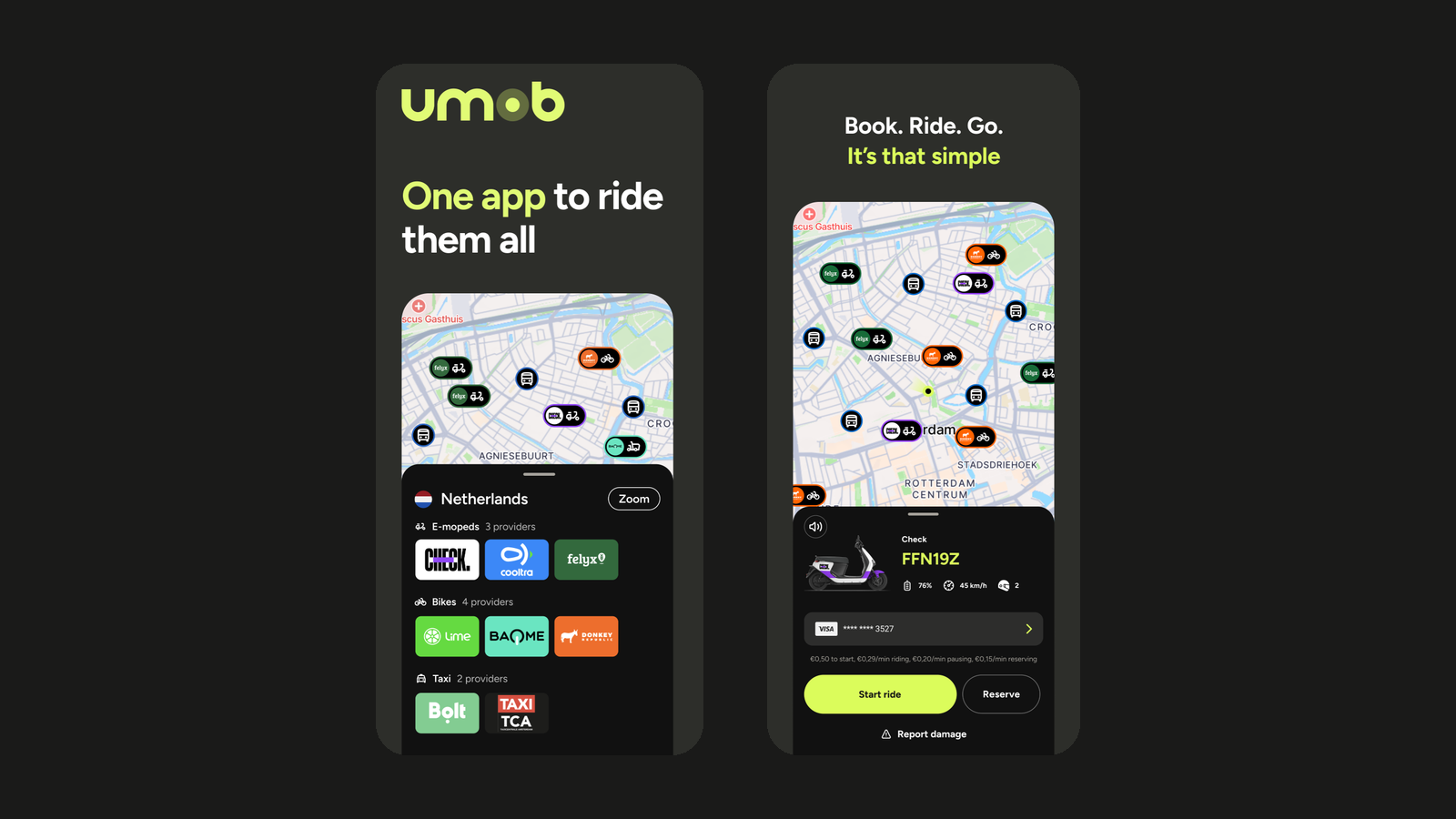
🌍 Reach more riders with ATOM Mobility and Umob. The integration gives shared mobility operators an additional distribution channel, helping attract new customers, generate more bookings and improve fleet utilization.
The future of mobility is not just about operating vehicles. It is about creating convenient journeys that bring different transportation options together in one simple customer experience.
That is why we are excited to highlight our partnership with Umob, helping mobility operators expand their reach and become part of a growing multimodal mobility ecosystem.
Whether you operate shared cars, scooters, bikes or mopeds through the ATOM Mobility platform, integrating with Umob allows your service to become accessible to thousands of Umob users looking for a convenient way to travel.
Today's users expect flexibility. They don't think in terms of individual mobility providers, they simply want the fastest, easiest, and most convenient route from A to B.
Umob brings different mobility providers and transport options together in one app. Users can find, compare, book and pay for different mobility options without having to download a separate app or create a new account for every provider.
By connecting your fleet to Umob, operators can:
For ATOM Mobility customers, the integration is designed to provide a straightforward way to unlock new distribution opportunities while continuing to manage their core operations through the ATOM Mobility platform.
Through the ATOM Mobility platform, participating operators can connect their fleets with Umob, enabling users to discover and use available vehicles directly through the Umob app.
Once connected, vehicles from participating operators can appear in Umob alongside other available mobility options, giving users one clear overview of the different ways they can get from A to B.
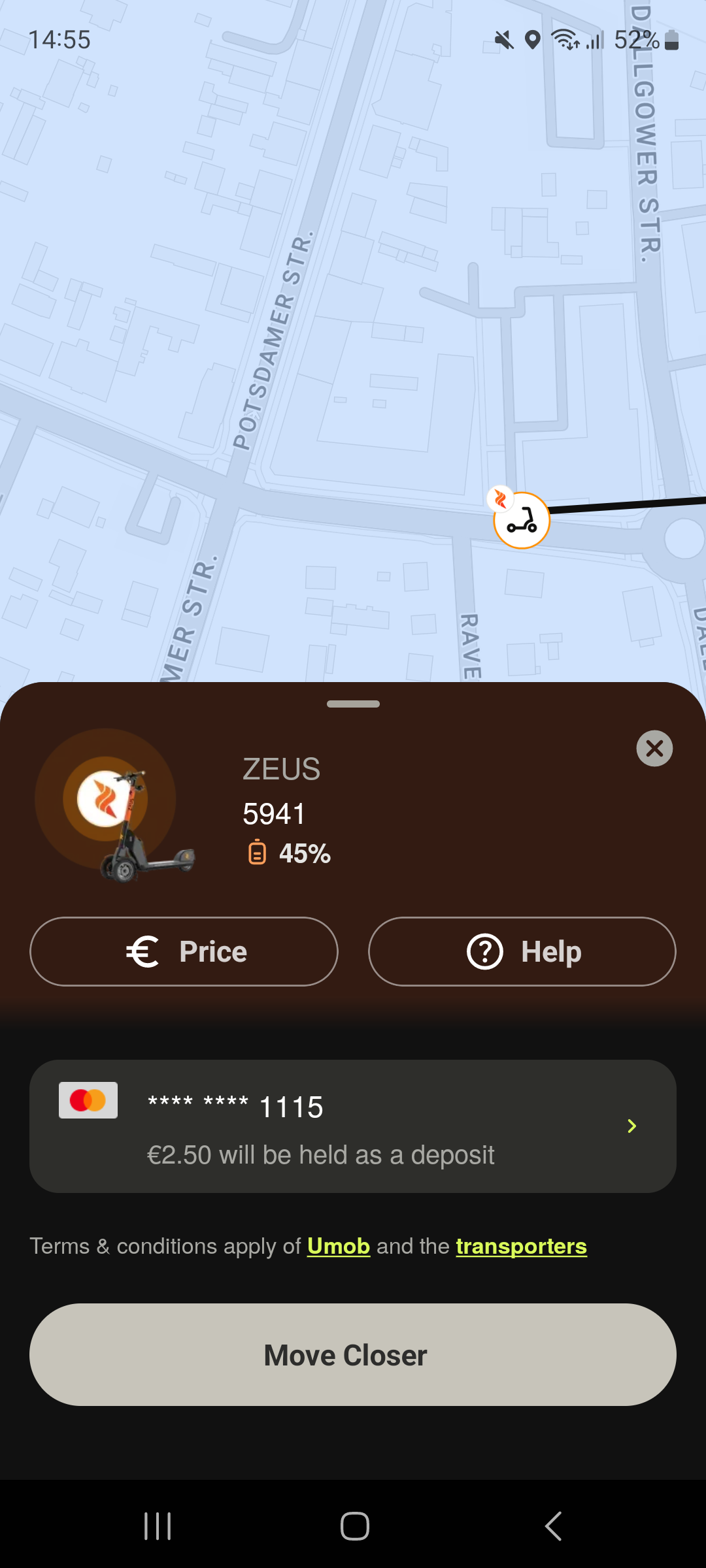
Users can discover an available vehicle, reserve and unlock it, start and end their ride, and pay directly through Umob.
The integration is designed to support:
Operators continue to manage their fleet, pricing, service areas and day-to-day operations through the ATOM Mobility platform, while Umob provides an additional channel through which users can discover and access their vehicles.
For mobility operators, connecting with Umob creates an additional distribution channel without changing the way they manage their day-to-day operations through ATOM Mobility.
By making vehicles available to thousands of Umob users, operators can increase their visibility at the moment people are actively looking for a ride. This creates the potential to attract new users, generate additional bookings and improve fleet utilization over time.
Every market is different, but many operators see MaaS partnerships as an important part of their long-term growth strategy.
One of the first ATOM Mobility operators to launch through the Umob integration is ZEUS Mobility, an ambitious European e-scooter sharing provider with a strong focus on innovation, a dynamic approach and challenging the established players in the market.
Fittingly, the partnership itself started through the ATOM Mobility network.
ZEUS and Umob first met at an ATOM Mobility event in Riga. While the initial introduction happened during the event, it was over drinks later that evening that the conversation really started.
ZEUS had already come across the Umob brand on mobility vehicles while travelling and had been impressed by the professional approach the company was taking. That recognition quickly turned into a conversation about how both companies could strengthen their propositions by working together.
From there, the integration moved forward quickly. ZEUS describes the preparation and integration process so far as “clean, professional and smooth.”
For ZEUS, the partnership creates an opportunity to strengthen the visibility of its brand, reach new customers and support its wider European growth ambitions.
Following its acquisition of Superpedestrian in May 2026, ZEUS is looking to accelerate its growth throughout 2026 and 2027, with the Umob partnership forming part of that ambition.
“ZEUS is thrilled to be partnering with Umob in European markets. Following our acquisition of Superpedestrian in May 2026, ZEUS is seeking to rapidly grow through 2026 and 2027. This partnership can help to drive this growth and reach new customers in new markets. We look forward to a rewarding partnership.” - Damian Young, ZEUS Mobility
One app to ride them all. Umob is an all-in-one mobility platform that brings different mobility providers and transport options together in one app.
Users can find, compare, book and pay for shared bikes, e-bikes, scooters, mopeds, public transport, taxis and other available mobility options through one account and one payment experience. Instead of downloading and registering with a separate app for every provider or every new city, users can open Umob and see the available mobility options around them.
Today, Umob is available in 28+ countries and 300+ cities, giving thousands of users an easier way to access different forms of mobility both at home and while travelling.
Key facts
If you're already operating your shared mobility service on the ATOM Mobility platform, connecting with Umob could be the next step toward reaching more users and becoming part of a truly connected mobility ecosystem.
If you're interested in enabling the integration or learning more about how it works, get in touch with our team. We look forward to helping more operators connect, collaborate, and make sustainable mobility easier for everyone.

Having a great business idea is rarely enough – you also need money to get the ball rolling. But what if you don't have tens of thousands just laying around to bootstrap your business? Or don't want to go the traditional way and attract VC funding in exchange for a large number of company shares?
Having a great business idea is rarely enough – you also need money to get the ball rolling. But what if you don't have tens of thousands just laying around to bootstrap your business? Or don't want to go the traditional way and attract VC funding in exchange for a large number of company shares?
This is where many founders choose to crowdfund.
Crowdfunding is a way of raising money for your business from a large number of people through online platforms. In 2000, ArtistShare became the first dedicated crowdfunding platform, and since then, crowdfunding has become one of the top funding sources for businesses, with the global market estimated to reach $300 billion by 2030.
If you're looking to fund your vehicle-sharing business, crowdfunding might be one of the options. It can not only help you attract money but also test your business idea in the first place. After all, if enough people are ready to back your idea, it's a clear sign it has a place in the market.

Screenshot from www.funderbeam.com crowdfunding platform.
For your vehicle-sharing business, there are three main types of crowdfunding to consider – rewards, debt, and equity. Let's take a closer look at each of them!
This is considered the “traditional” type of crowdfunding and is currently the most popular. The idea is simple – people contribute to a business idea, expecting to receive a reward, such as products or services, at a later stage.
Platforms for rewards-based crowdfunding (few examples):
Who are the backers?
Regular people with little or no experience in investing; early adopters – people who embrace new things before most other people do. Generally, these people invest because they truly believe in the idea and want to help it come to life, as well as because they just want to be the first in the world to receive the product.
Best for:
Businesses at early stages – idea or early development. Rewards crowdfunding is also for established businesses looking to launch a new product or expand to new markets.
Debt-based crowdfunding – also known as peer-to-peer (P2P) lending – means that the crowd lends money to a company, which it needs to repay with interest by a certain deadline. The idea is similar to borrowing a loan from a bank, except that in this case, there are many lenders instead of one.
Platforms for debt-based crowdfunding (few examples):
Who are the lenders?
Lenders that support companies via debt-based crowdfunding are individual investors looking to earn a higher profit on their cash savings and/or diversify their portfolio. These investors care about two things – whether the company will be able to repay the loan and how much they'll earn in interest payments. Everything else is secondary.
Best for:
Companies with a stable revenue that can more or less accurately predict their cash flow to repay their lenders. Generally, this is for companies at different stages when they've started to make a profit.
Equity-based crowdfunding allows businesses to give away a portion of their company to a number of investors in exchange for investment. Investors receive shares in the company based on how much money they've contributed.
Typically, equity-based crowdfunding is done in a way that first, the crowdfunding platform takes the company's equity, then sells the shares on their platform.
Platforms for equity-based crowdfunding (few examples):
Who are the investors?
Typically, these are quite seasoned investors with experience in stock and/or startup investments who are now looking for higher-risk, higher-yield investments. These people might be less interested in the idea or cause behind the business and more in its potential future growth and profits.
Best for:
Businesses at all growth stages, except for the exit/acquisitions stage.
How much a successful crowdfunding campaign raises can differ greatly depending on the stage of your business and the type of crowdfunding you've chosen.
For example, according to the equity-based crowdfunding platform Seedrs, businesses with MVPs usually raise between €30k and €50k, whereas early-stage businesses – between €50k and €250k.
In the meantime, on Kickstarter, the rewards-based crowdfunding platform, the majority of successfully funded projects raise less than $10k. Tech products typically raise between €20k and €100k.
How about vehicle-sharing businesses? Here are two successful examples:
To start a bike-sharing or scooter-charing business with 40 vehicles, you should aim for at least €40k. This is doable with all types of crowdfunding models if done right.
Now, let's see what “right” means and how to make your crowdfunding campaign a success.
A successful crowdfunding campaign can help you get your business off the ground and raise even more funds than you had expected. The harsh reality, however, is this: as many as 85% of crowdfunding campaigns fail and never reach their set goal.
To increase your chances of a successful crowdfunding campaign here's your basic to-do list:
This depends on your funding goal, the stage of your business, the type of your product, and even your target market. For example, AppBackr is an app-specific crowdfunding platform, StartNext is for products for the German market, while Kickstarter is only available to creators in 25 countries.
People backing projects on Kickstarter vs Funderbeam can differ greatly. For example, on Kickstarter, people are more interested in the “coolness” of the product, whereas investors funding companies via debt-based or equity-based crowdfunding platforms care more about the company's projected growth and cash flow, and the money this investment is going to make them. Keep this in mind when crafting your pitch!
One of the key secrets to launching a successful crowdfunding campaign is investing heavily in pre-campaign lead generation. Start building a community and an email list of supporters as early as you can – these people will give your campaign the necessary first push to succeed. You should aim to collect 30% of your funding goal within the first week – then, the campaign is likely to reach the goal.
Good storytelling is the key to your campaign's success, no matter who your investors are. That said, the stories they want to hear differ. For a reward-based campaign, craft a story around your product that evokes emotions – make people laugh, help them imagine themselves with your product, or be angry about the issue it's going to solve. For an equity-based campaign, you should focus more on highlighting your team's strengths, market knowledge, and long-term vision.
Apart from an option to buy your product, it's recommended to include some lower-priced options for people who just want to support you. For example:
Other things that can help you launch a successful crowdfunding campaign include:
One of the biggest mistakes founders make is assuming that it's enough to have their campaign launched on the chosen crowdfunding platform, and people will come and invest in it.
The reality, however, is this:
A successful campaign requires a lot of work outside the crowdfunding platform – you need to proactively and systematically look for supporters and persuade them to invest. So, to improve your chances of succeeding, start preparing months before the launch of the campaign.

ATOM Mobility, a leading developer of shared mobility platforms, and Anadue, a leader in profitability automation for shared mobility, today announced that they will be working together to improve the competitiveness and profitability of shared bikes, scooters, and mopeds. This cooperation will provide benefits to shared mobility operators and the cities that host them.
ATOM Mobility, a leading developer of shared mobility platforms, and Anadue, a leader in profitability automation for shared mobility, today announced that they will be working together to improve the competitiveness and profitability of shared bikes, scooters, and mopeds. This cooperation will provide benefits to shared mobility operators and the cities that host them.
Shared Micromobility is a transport movement that is sweeping the world. Small, clean, powered vehicles, typically electric bikes, scooters or mopeds, are increasingly being used as a cheaper, greener, and more flexible alternative to cars. Shared micromobility adds an additional level of convenience as riders can hop on and off vehicles whenever and wherever they need, without the need to invest in a vehicle or worry about maintenance and recharging.
“ATOM Mobility has built an all-in-one solution that allows new shared mobility operators to launch in 20-days. ATOM empowers entrepreneurs to launch their own vehicle-sharing platforms. Our platform relieves all the technological headaches. Our customers are entrepreneurs, who understand the local market needs better than anybody. We help them to focus on marketing and operations and we take care of the technology.” said Jürgen Sahtel, Head of Partnerships at ATOM Mobility. “Our cooperation with Anadue helps our customers reach profitability faster while providing an edge over competitors”.
Anadue does smart mobility analytics particularly for micromolbility to help make vehicle sharing business profitable. “It is a data-driven business. The bigger you become, the more complicated it gets. Using powerful Machine Learning and deep systems automation, Anadue solution identifies ways to improve fleet utilization and availability, and executes actions to rectify issues, driving up rides,” comments Mike Manchip, CEO, Anadue.
ATOM Mobility and Anadue are working together to deliver the best shared mobility solutions possible. Anadue’s Profit Automation ensures ATOM Mobility’s customers launch fast, grow fast and provide the best possible shared mobility service to their customers.
About Anadue
Anadue is growing shared micromobility in over 25 cities across 6 countries. We provide Operators and Cities with the tools they need to grow shared micromobility. Our technology combines real-time data from shared vehicles with a wide range of other data, and uses Machine Learning and Predictive Analytics to support new features, automate processes, and generate high-value insights needed to provide clean, safe and profitable mobility services.
About ATOM Mobility
ATOM empowers entrepreneurs to launch their own vehicle-sharing platforms. ATOM’s software is represented in more than 100 cities worldwide and is dedicated to providing the best experience to its customers. In order to do that, ATOM has partnered with more than 40 hardware and software partners to help its customers thrive.

The traveling industry is starting to recover from the pandemic. There are more and more tourists appearing and hotels are considering new services to attract them. It is an easy task with ATOM - the hotel can offer different vehicle sharing services for the convenience of their clients as well as for additional income.
The traveling industry is starting to recover from the pandemic. There are more and more tourists appearing and hotels are considering new services to attract them. It is an easy task with ATOM - the hotel can offer different vehicle sharing services for the convenience of their clients as well as for additional income.
This is also an additional opportunity for fleet owners to set up financially beneficial partnerships with the hotel owners. Fleet representatives can reach out to hotels and offer to have vehicles available for their guests and earn money on that as well.
WIN-WIN-WIN situation for all
Why should hotels be interested in this setup? Well, this is their opportunity to earn a percentage from the monthly revenue created by their customers. Offering vehicles for its guests is only a natural next step for providing an even better guest experience. The fleet owner and hotel can sign an agreement and divide the profit between themselves. Moreover, the hotel will have its own dashboard on ATOM platform so it is easy to follow the usage of the fleet that is allocated to the hotel. And it is possible to offer multiple vehicle types - vehicle sharing is not restricted to only bikes in the ATOM app.
Vehicles for both short-term and long-term rental
Hotels have all sorts of guests with various agendas for their trips. As a fleet owner, you can help hotels provide a comprehensive set of mobility solutions that would match all the different needs. For a tourist looking to explore a city or attend a meeting nearby, a daily bike or scooter rental would work great. For tourists interested in exploring the surroundings of the city over the weekend, a 2-3 day car rental would fit the bill nicely. With ATOM software, customers can pre-book the chosen vehicle even before the arrival if the plans are known. If the plans are made on the go, they could grab the suitable vehicle with an on-demand model without the hassle of pre-booking. The best part for the hotel is the fact that its employees do not have to engage with customers regarding vehicle rentals. The rental process is fully automated via the app.
Private branding
In bigger cities, it is worth it for fleet owners to even consider closer cooperation with larger hotel chains. It is easy with ATOM to create a separate app for the particular hotel chain that is branded accordingly. In this case, it is even worth considering branding the part of the fleet that is allocated to the hotel. If the hotel chain is active in several cities where the vehicle sharing company operates as well, then it gives even bigger options for successful collaboration. ATOM doesn't market its software directly to hotels. This opportunity is open for ATOM customers, so they are able to form strong partnerships and even built their whole business model based on this approach, as many of our customers have chosen to do.
And if you are a fleet owner you don't have to stop there. Remember that also resorts and commercially managed "villa villages", or large building complexes (both corporate and private end-users) would like to use vehicle sharing services. Also, employers with a large number of employees are usually thinking about how to make their movement throughout the city more efficient. Vehicle sharing service is one of the best solutions. Employers could even consider using branded fleets to provide the opportunity to move around the city or corporate property.
With the help of ATOM Software and private fleet functionality, our customers have the ability to truly transform their local mobility landscape into a more sustainable one. Be creative!

Although the younger generation uses mobile technology for everything, most car rentals still operate the same way as they did 20 years ago - there are counters, employees who will issue keys, sign the papers, check the documents, process the payment, and then walk around the car together with the person, who rents in order to make sure they’re on the same page as far as the existing damages go. This process is time-consuming, and when the flight arrives, car rental booths have queues up to the gates.
Although the younger generation uses mobile technology for everything, most car rentals still operate the same way as they did 20 years ago - there are counters, employees who will issue keys, sign the papers, check the documents, process the payment, and then walk around the car together with the person, who rents in order to make sure they’re on the same page as far as the existing damages go. This process is time-consuming, and when the flight arrives, car rental booths have queues up to the gates.
However, some car rentals have already introduced a fully automated mobile-first experience to get rid of the issues that a traditional approach faces. If you operate a car rental business, you'll discover the solution below.

The previous example explained the pain points of airport car rentals. Most in-city car rentals do not have the kind of rush hours that their airport branches do. Some car rentals have even set up a fully online reservation system that will allow you to book the car, verify your identity, pay in advance, and then wait until an employee brings the car to your doorstep.
However, even in the scenario mentioned above, there are the same people working behind the scenes to make all this happen. The difference is that they are not sitting in the booth and communicating with the customer face-to-face. They are sitting in the office and dealing with all of that remotely. And when the car is delivered, the handoff processes are still in-person.
While a fully online experience solves some of the problems that the traditional car rental model faces, is this really the way people want to rent cars? While website designs and user interfaces are improving every day, navigating and booking processes are still often painful experiences for the users.
It takes a lot of resources to build a mobile-friendly browser-based booking system, such as AirBnB or Booking.com. However, if you are using a phone when browsing their site, even they are naturally guiding you to download their app for a better user experience.
The younger generation manages all their day-to-day errands from their phone, so naturally, they would do the same when renting their car. And it would be even better if they don’t have to see another human in the process of getting and returning their car - doesn’t that sound familiar and quite like AirBnB’s standard self-check-in model?
If apps deliver a better user experience on mobile, then why not allow your customers to rent cars via your mobile app?
Development costs - so far the main obstacle has been the fact that car rental companies do not want to become software developers, and hiring a company to build the apps that actually work would end up being too expensive to deliver ROI in the near future. That’s why it would be easier to stick with the status quo.
Technical limitations - another reason why apps haven’t become a popular medium for car rentals is that apps have technical limitations, and human interaction is still required to issue keys, sign the documents, and make sure the car is in good condition when returned.
We see a huge trend in app usage for on-demand car-sharing, which is a different business model entirely. Since the car-sharing industry is relatively young, the companies are not restricted by the bureaucracy and procedures that traditional car rentals are facing. While car-sharing apps may take the business of short-distance trips away from traditional car rentals, they won’t threaten the bread and butter of long-term rental businesses just yet.
How could a traditional car rental business step into the 21st century and automate the whole rental process without spending a fortune on app development while making sure to still leverage its standard operating procedures and current risk management practices?
With a proper technology suite that doesn’t cost an arm and a leg - https://atommobility.com/products-rent
ATOM Mobility has been offering white-label software solutions for the mobility industry since 2019. With customers in more than 40 countries and 140 cities worldwide, any car rental business will be in good company.
An ideal car rental flow - with ATOM Mobility, a car rental would get its own apps for IOS and Android, where users would go through the following (simplified) journey:
Download the app and register.
Upload a driver’s license that will be verified by artificial intelligence (AI).
Choose dates, location, and the model.
Pay in advance.
Unlock the car with the app.
Enjoy the rental car.
Return and complete a standard walk-around-the-car handoff inspection powered by FocalX that automatically recognizes and reports any scratches.
The whole process is automated, and the information for each rental transaction will be available in the back-end for car rental businesses.
The freedom that this new mobile-first flow provides for both users and rental businesses is a great example of how technology can help to provide a better service. Opening up a new location is as simple as driving the cars to a new parking lot.
If you operate a car rental business, we’d be happy to chat - https://atommobility.com/demo

"State of art technology in mobile apps and dashboard, very good SLA!"
"Easy, nice looking, continuously updated and developed every month and most of all very reliable with a extreme high uptime"
"We used to work with a different service provider which wasn't fitting our needs. Switching to ATOM was an improvement on our side"
Use test credentials to log in - Phone number: +1 123123123, Code: 777777


Driver App demo credentials - Email: test@atom.com, Password: driver