Blog
Insights and news from the ATOM Mobility team
We started our blog to share free valuable information about the mobility industry: inspirational stories, financial analysis, marketing ideas, practical tips, new feature announcements and more.

We started our blog to share free valuable information about the mobility industry: inspirational stories, financial analysis, marketing ideas, practical tips, new feature announcements and more.
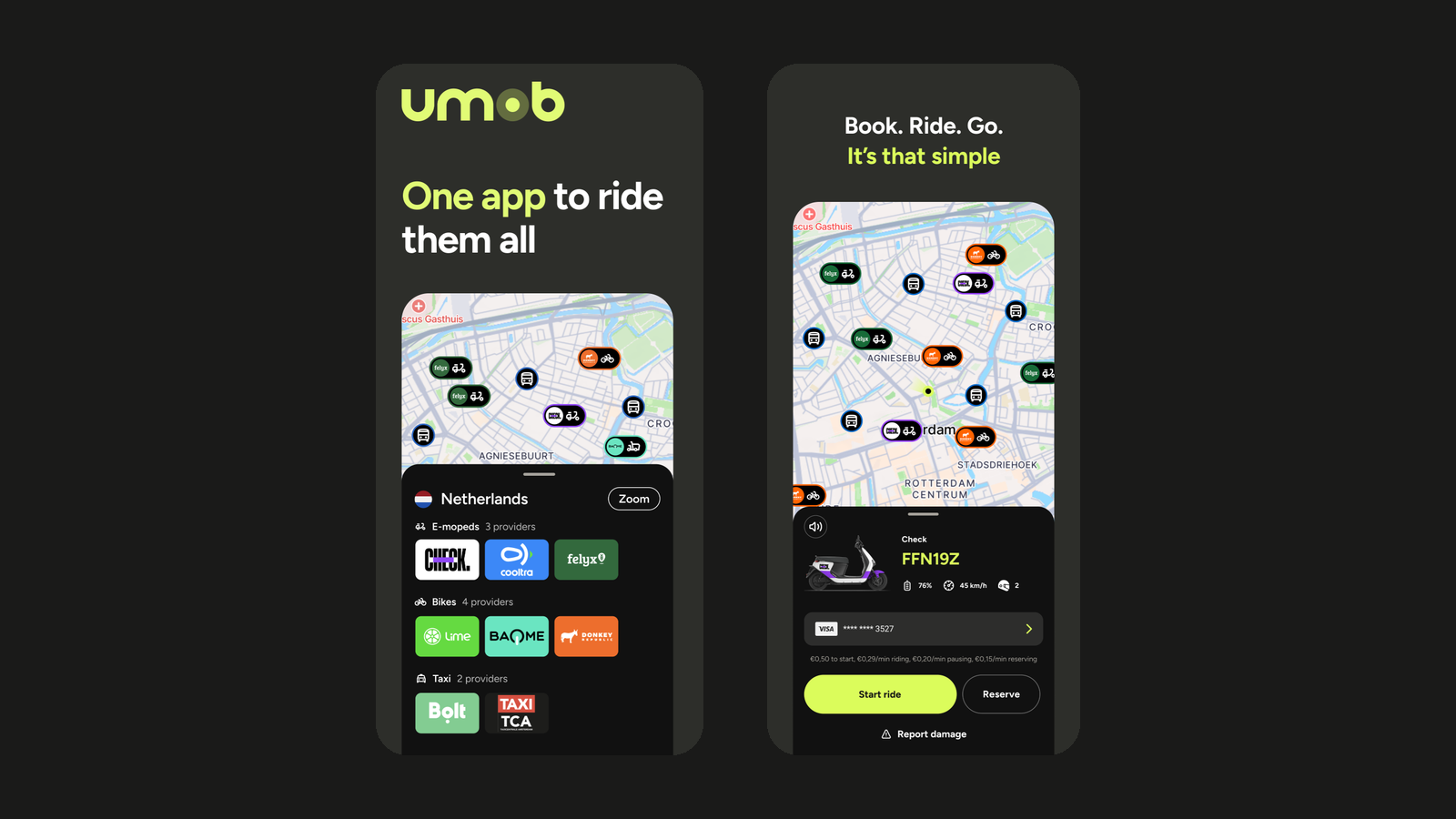
🌍 Reach more riders with ATOM Mobility and Umob. The integration gives shared mobility operators an additional distribution channel, helping attract new customers, generate more bookings and improve fleet utilization.
The future of mobility is not just about operating vehicles. It is about creating convenient journeys that bring different transportation options together in one simple customer experience.
That is why we are excited to highlight our partnership with Umob, helping mobility operators expand their reach and become part of a growing multimodal mobility ecosystem.
Whether you operate shared cars, scooters, bikes or mopeds through the ATOM Mobility platform, integrating with Umob allows your service to become accessible to thousands of Umob users looking for a convenient way to travel.
Today's users expect flexibility. They don't think in terms of individual mobility providers, they simply want the fastest, easiest, and most convenient route from A to B.
Umob brings different mobility providers and transport options together in one app. Users can find, compare, book and pay for different mobility options without having to download a separate app or create a new account for every provider.
By connecting your fleet to Umob, operators can:
For ATOM Mobility customers, the integration is designed to provide a straightforward way to unlock new distribution opportunities while continuing to manage their core operations through the ATOM Mobility platform.
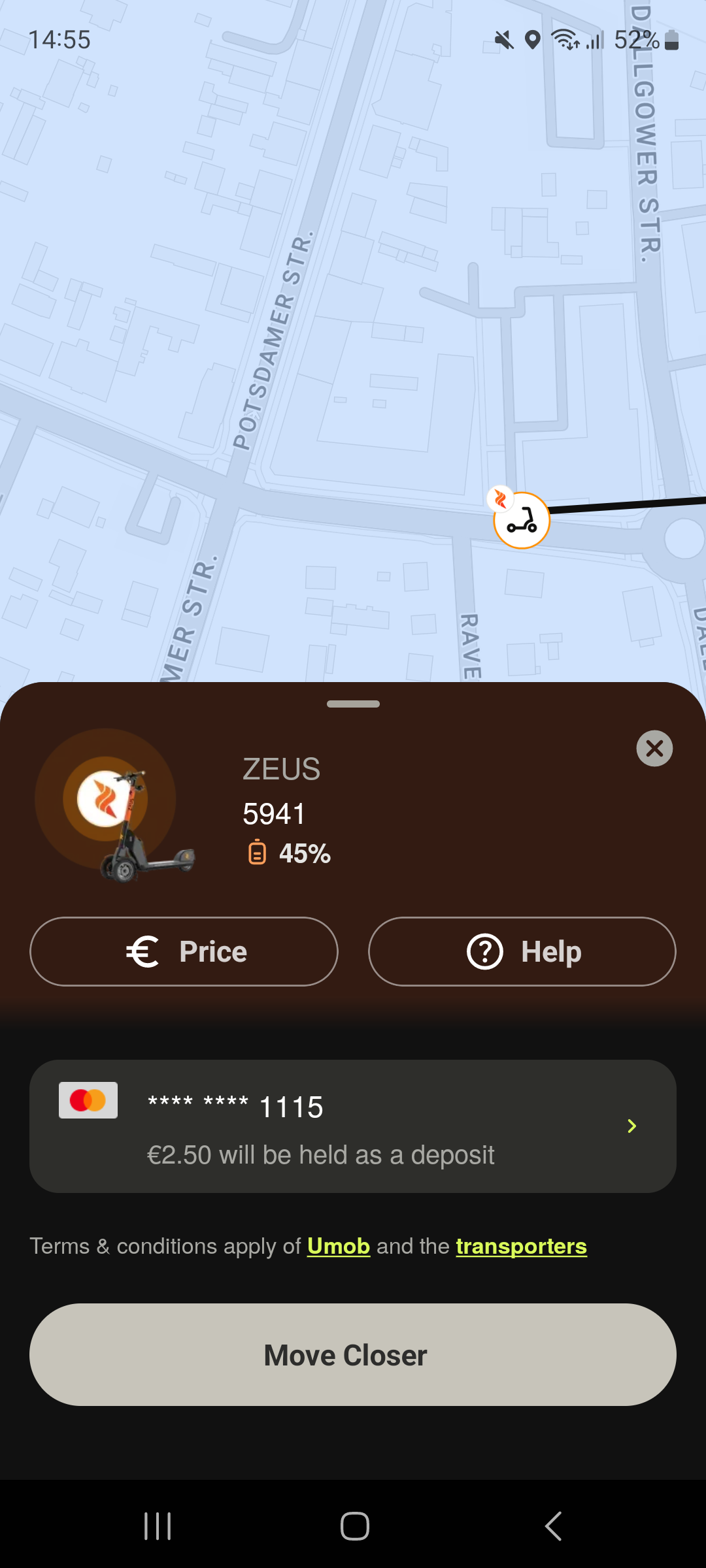
Through the ATOM Mobility platform, participating operators can connect their fleets with Umob, enabling users to discover and use available vehicles directly through the Umob app.
Once connected, vehicles from participating operators can appear in Umob alongside other available mobility options, giving users one clear overview of the different ways they can get from A to B.
Users can discover an available vehicle, reserve and unlock it, start and end their ride, and pay directly through Umob.
The integration is designed to support:
Operators continue to manage their fleet, pricing, service areas and day-to-day operations through the ATOM Mobility platform, while Umob provides an additional channel through which users can discover and access their vehicles.
For mobility operators, connecting with Umob creates an additional distribution channel without changing the way they manage their day-to-day operations through ATOM Mobility.
By making vehicles available to thousands of Umob users, operators can increase their visibility at the moment people are actively looking for a ride. This creates the potential to attract new users, generate additional bookings and improve fleet utilization over time.
Every market is different, but many operators see MaaS partnerships as an important part of their long-term growth strategy.
One of the first ATOM Mobility operators to launch through the Umob integration is ZEUS Mobility, an ambitious European e-scooter sharing provider with a strong focus on innovation, a dynamic approach and challenging the established players in the market.
Fittingly, the partnership itself started through the ATOM Mobility network.
ZEUS and Umob first met at an ATOM Mobility event in Riga. While the initial introduction happened during the event, it was over drinks later that evening that the conversation really started.
ZEUS had already come across the Umob brand on mobility vehicles while travelling and had been impressed by the professional approach the company was taking. That recognition quickly turned into a conversation about how both companies could strengthen their propositions by working together.
From there, the integration moved forward quickly. ZEUS describes the preparation and integration process so far as “clean, professional and smooth.”
For ZEUS, the partnership creates an opportunity to strengthen the visibility of its brand, reach new customers and support its wider European growth ambitions.
Following its acquisition of Superpedestrian in May 2026, ZEUS is looking to accelerate its growth throughout 2026 and 2027, with the Umob partnership forming part of that ambition.
“ZEUS is thrilled to be partnering with Umob in European markets. Following our acquisition of Superpedestrian in May 2026, ZEUS is seeking to rapidly grow through 2026 and 2027. This partnership can help to drive this growth and reach new customers in new markets. We look forward to a rewarding partnership.” - Damian Young, ZEUS Mobility
One app to ride them all. Umob is an all-in-one mobility platform that brings different mobility providers and transport options together in one app.
Users can find, compare, book and pay for shared bikes, e-bikes, scooters, mopeds, public transport, taxis and other available mobility options through one account and one payment experience. Instead of downloading and registering with a separate app for every provider or every new city, users can open Umob and see the available mobility options around them.
Today, Umob is available in 28+ countries and 300+ cities, giving thousands of users an easier way to access different forms of mobility both at home and while travelling.
Key facts
If you're already operating your shared mobility service on the ATOM Mobility platform, connecting with Umob could be the next step toward reaching more users and becoming part of a truly connected mobility ecosystem.
If you're interested in enabling the integration or learning more about how it works, get in touch with our team. We look forward to helping more operators connect, collaborate, and make sustainable mobility easier for everyone.

👉 ATOM Connect 2025 is an exclusive shared mobility networking event hosted by ATOM Mobility in collaboration with INVERS. This focused gathering will bring together industry leaders, innovators, and decision-makers from Europe's car-sharing and car-rental sectors to explore the future of shared mobility.
What happens when professionals from Europe’s car sharing and car rental industries gather under one roof? You get a day filled with fresh ideas, insightful discussions, and valuable connections that help shape the future of mobility. That’s what awaits at ATOM Connect 2025 - a dedicated industry event hosted by ATOM Mobility in partnership with INVERS.
This year’s gathering takes place on October 30, 2025, in Riga, Latvia, at the panoramic top floor of the AC Hotel by Marriott. With views stretching across Riga’s historic Art Nouveau district, the setting offers an inspiring backdrop for meaningful conversations about the next steps in shared mobility.
Date & Time: October 30, 2025, from 15:00 onwards
Location: AC Hotel by Marriott, Riga (top floor with panoramic views)
Hosts: ATOM Mobility & INVERS
Format: Expert talks, interactive Q&A, networking sessions, and evening drinks
Topics covered:
- Market insights from INVERS
- Scaling car sharing businesses
- Digital transformation in rentals
- Corporate mobility opportunities
- Eastern Europe’s shared mobility landscape
Learn from industry experts
The agenda is designed to address today’s most relevant mobility challenges. Expect data-driven insights from INVERS, practical strategies for scaling car sharing operations, discussions on digital rental solutions and corporate mobility, plus a closer look at the unique opportunities and challenges in Eastern Europe.
The event will also be joined by BYD, one of the world’s fastest-growing electric vehicle makers, who will showcase their innovative, affordable EVs at our event.
Build valuable connections
ATOM Connect 2025 is a focused gathering that brings together operators, rental businesses, and mobility experts from across Europe. With a mix of talks, networking breaks, and an evening reception, the event offers the perfect setting to exchange experiences, discuss challenges, and explore future partnerships.
If you’re active in car sharing or rental industry and want to stay ahead in a rapidly evolving market, ATOM Connect 2025 is a must-attend event. Together with INVERS, we’re creating a space where the European shared mobility community can connect, learn, and look toward the future.
👉 Save the date and request your spot today*: https://www.atommobility.com/atom-connect-2025
*Please note: ATOM Connect 2025 is intended for shared car mobility and car rental industry professionals. Registration requests will be reviewed before confirmation.

🌴 How e-moob became Aruba’s leading scooter operator 🚲⚡ From a Bird partnership in 2020 → to full independence with ATOM Mobility in 2023. Today: 150+ scooters in Aruba + fleet in Costa Rica. ⭐ 4.9/5 ranking on iOS & 4.8/5 on Android.
🌴 How e-moob became Aruba’s leading scooter operator 🚲⚡ From a Bird partnership in 2020 → to full independence with ATOM Mobility in 2023. Today: 150+ scooters in Aruba + fleet in Costa Rica. ⭐ 4.9/5 ranking on iOS & 4.8/5 on Android.
What began as a local partnership with Bird in 2020 has since grown into a fully independent scooter-sharing business with operations in Aruba and Costa Rica – and soon, mopeds in Spain. At the heart of this shift is e-moob’s decision to take full control of its fleet, its brand, and its technology. That control, Santos says, came with switching to ATOM Mobility.
Launch date: 2020 (with Bird), independent launch with ATOM Mobility in December 2024
Country: Aruba and Costa Rica
App Store: 4.9 / 5 ⭐
Google Play: 4.8 / 5 ⭐
Fleet: 150+ scooters in Aruba, smaller fleet in Costa Rica
Web page: https://e-moob.com
App Store: https://apps.apple.com/us/app/e-moob/id6642640340
Google Play: https://play.google.com/store/apps/details?id=e.moob.app
In a market as compact and tourism-driven as Aruba, micromobility is a unique challenge. There’s limited space, high operational costs, and intense competition for visitor attention. But for Luis Santos, co-founder of e-moob, it was also the perfect opportunity.
Starting in a market built for tourism
e-moob launched in Aruba, where the economy relies heavily on tourism - over 3 million visitors per year. Almost all of e-moob’s users are tourists, with 99% of rides coming from short-term visitors. The island’s layout and mild weather make it ideal for short scooter trips along the coastline, especially in popular resort areas.
“Aruba is a super small market, and it can get flooded quickly,” says Santos. “We learned from experience that we can’t go beyond 1,000 scooters here. So when we wanted to grow, we had to expand outside the island.”
That led to e-moob’s second market: Tamarindo, Costa Rica – another sunny, coastal town with a young, active tourist crowd. The business model remains the same: light, flexible mobility for short-distance use, tailored to tourism patterns.
Long setup, fast scale
Launching operations in Aruba wasn’t quick. “Before we even started, it took almost a year to get everything ready – registering the company, getting licenses, even just opening a bank account,” Santos explains.
The technical launch also had its challenges. When e-moob moved to its own brand using ATOM Mobility in December 2024, there were initial issues with starting rides due to firmware and hardware compatibility. “Some scooters couldn’t be unlocked properly, and we had a few tough days. But the team at ATOM Mobility helped fix it quickly, and within a week we had everything working smoothly.”
Before launching under the name e-moob, the team operated using their own brand called Evikes on the Bird platform. “That’s how Bird was working with partners back then,” says Santos. “It was our brand, but the operations were fully integrated with Bird’s system.” This setup helped them gain visibility among tourists – especially American visitors who already had the Bird app – but also came with limitations.
Switching to ATOM Mobility: Gaining control
Before launching under their own name, e-moob operated under Bird’s platform. While that brought initial visibility and trust – especially from American tourists who already had the Bird app installed – it came with limitations. All changes, pricing, or refunds had to go through Bird’s team. When parts or new scooters were needed, delays became a serious problem.
Eventually, the lack of flexibility pushed e-moob to go independent.
With ATOM Mobility, Santos and his team gained full control. “Now I can change prices, send bonuses, and refund directly. We also choose and buy our own units from Okai, instead of waiting for Bird. We manage customer service in-house. It’s been a major change.”
The result? e-moob is now operating at nearly the same revenue level with their new ATOM-powered fleet of 160 scooters as they were with their much larger Bird fleet of around 300 to 400 units. “We make almost the same amount of money with half the scooters,” says Santos. “That was an unexpected success.”
Adapting to the local market
Electricity prices in Aruba are high – around 2.5 times higher than in Miami – which directly impacts scooter charging costs. This shaped e-moob’s pricing strategy. Rides cost about $0.56 per minute and $1.07 to unlock, including the local 7% tax. These prices are slightly higher than in mainland U.S. markets but necessary to maintain profitability.
As for user features, subscriptions and loyalty programs haven’t played a big role yet. “Most of our users are tourists – they come, ride, and leave. There’s no long-term user behavior,” Santos explains.
Running the business day-to-day
Santos still handles customer support personally and uses ATOM’s admin tools daily to manage refunds, view ride history, and track issues. “We get very few support emails – maybe 10 to 15 a month, even with thousands of rides. Most issues come from signal delays when the scooters are in sleep mode.”
While e-moob doesn’t rely heavily on heatmaps or demand analytics (the team already knows exactly where to place the scooters in such a small market), the monthly dashboards and ride data remain useful for tracking performance.
Santos is also looking forward to using upcoming feature that allows tagging locations on the map – restaurants, hotels, or partner businesses – to increase visibility and engagement.
Challenges and strategic pivots
One of the biggest challenges came when Bird stopped supplying new hardware. “Our competitors arrived, and we needed new scooters, but Bird couldn’t deliver. We waited over a year, and that’s when we realized we had to build our own brand.”
Buying directly from Okai and using ATOM Mobility gave e-moob independence. It also opened the door to support multiple vehicle types. That’s essential for their next move: launching moped (Vespa-style) sharing in Spain.
“We’re already negotiating with suppliers,” says Santos. “We’re aiming to start next summer in Spain – our first European market. It’s a big step, especially since mopeds are a new category for us. New parts, new maintenance, new challenges. But we’re ready.”

Looking ahead: Europe and beyond
The moped launch in Spain isn’t just about growth. It’s a way to move into more scalable, tourism-driven markets. Aruba has reached its limit, and Costa Rica has proven slow to scale due to logistics and local bureaucracy. Europe offers a more mature market – and new opportunities.
e-moob is also in discussions with local delivery apps for third-party integrations. While current scooter zones are too limited to justify monthly fees, mopeds will expand the service range and open new B2B possibilities.
Santos is also exploring the potential of building stronger local loyalty by partnering with businesses and hotels. It’s a small use case, but one that could help bridge the gap between tourism and local use.
From hobby to ecosystem
Surprisingly, e-moob is a side business for Santos. His main company provides IT infrastructure for hotels and casinos, while he also manages a real estate firm and a smart home business in the U.S.
That existing network actually helped launch e-moob. “We started by placing scooters in private buildings developed by people I already worked with. Public spaces weren’t available at first, so private locations made it possible,” he recalls. “Now, we even have scooter parking inside the Ritz-Carlton and St. Regis hotels.”
Community, growth, and the power of being present
Santos regularly attends industry events like the Micromobility Conference. “It’s small, but valuable,” he says. “Meeting partners in person helps us move deals forward. Last year we made great connections. This year we’re closing our first moped deal because of those conversations.”
For Santos, success is not about buzzwords or fast scaling. It’s about growing smart, solving real problems, and building sustainable operations. “We’re proud of how far we’ve come. We’ve grown the fleet, expanded the business, and made something that works.”
Advice for new operators?
“Get full control from day one. Don’t depend on someone else’s rules,” Santos says. “The more control you have – over the operations, the pricing, the support – the better you can react to what your market really needs.”
With its strong base in Aruba, growing operations in Costa Rica, and exciting plans for Europe, e-moob is not just a scooter company – it’s a case study in smart, independent micromobility growth.
%20(1).png)
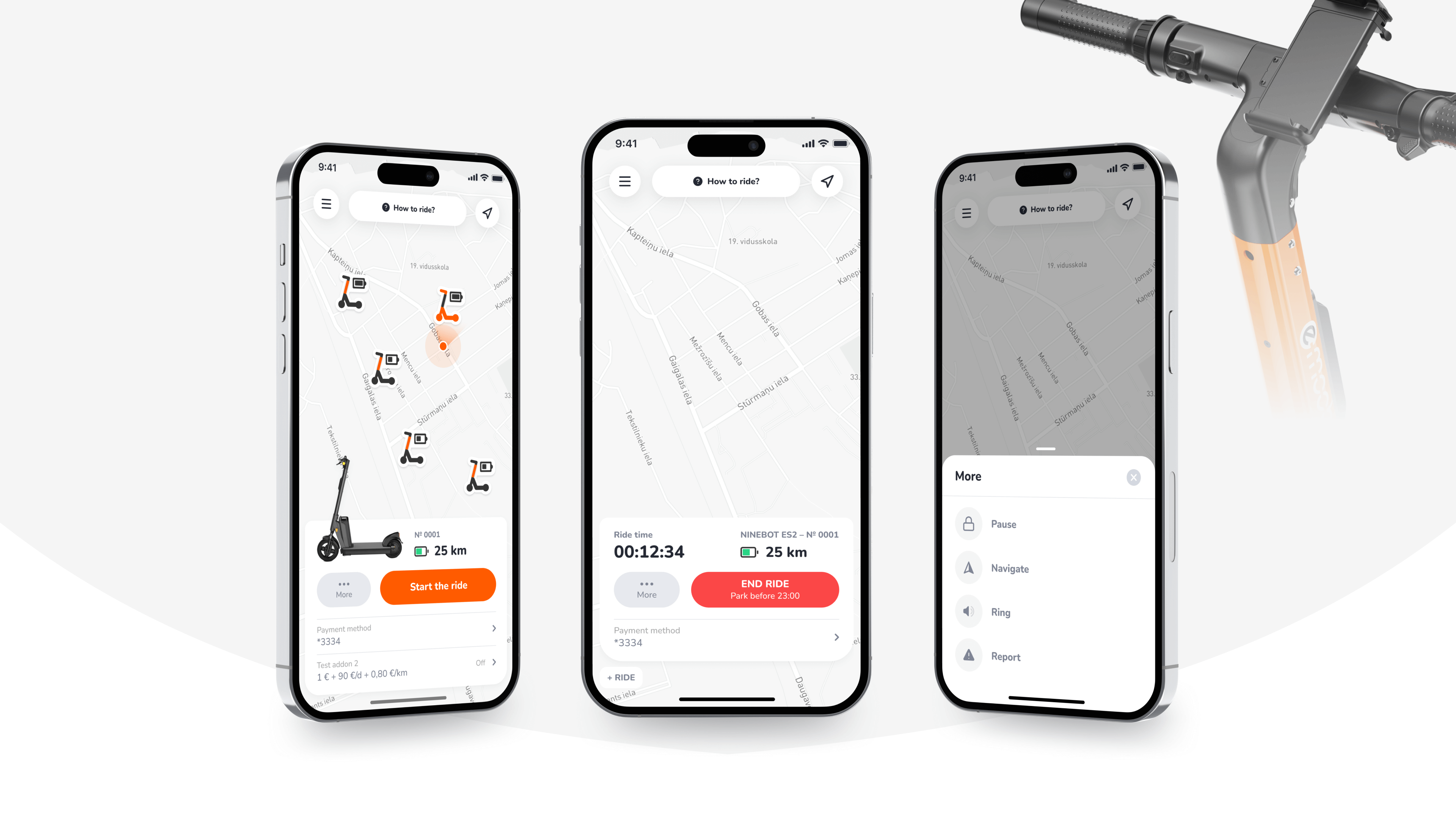
🚗 ATOM Mobility launches a new Web-booker for Digital Rental 🗓️ - letting customers book vehicles directly from the website. Frictionless, branded, and enabled by default for all rental merchants ✅
ATOM Mobility is introducing a new way for users to start their rental journey: the Web-booker widget 🗓️
With this tool, users can book a car (or other vehicle) directly from merchant's website without first downloading the rider app. It creates a smoother entry point for new users while keeping the app central for payments, ID verification, and ride management.
✅ A dedicated booking link for every merchant
✅ Customers choose area, vehicle, and rental period → confirm booking in seconds
✅ Widget syncs bookings into system automatically
✅ After booking, a QR code + App Store / Google Play links are shown so users can continue in the app
✅ In the mobile app, users finalize payment and ID/driver’s license verification before starting the trip
🎨 The widget matches app’s primary color for a seamless, branded look.
📊 Every booking now shows its Source – App, Web-booker, Dashboard, or API.
👉 Demo it here: app.atommobility.com/rental-widget
Many successful digital rental and mobility platforms combine web and app booking flows to maximize conversion.
Take Turo for example:
New ATOM Web-booker works the same way - creating an easy on-ramp from website, while letting the app handle verification and payments.
This feature also aligns with the broader industry evolution we covered in Traditional Car Rental vs Peer-to-Peer Car Sharing vs On-demand Car Sharing artticle. As booking models diversify, offering multiple access points - web + app + api – is becoming a standard expectation from customers.
The global car-sharing market (including peer-to-peer sharing) is projected to reach USD 28.7 billion by 2030, growing from USD 11.5 billion in 2025 at 20% annual growth rate, with digital-first players outpacing traditional operators. One of the biggest success drivers? Reducing onboarding friction and providing automated processes.
The message is clear: giving customers multiple, seamless entry points directly impacts conversion and utilization.
The Web-booker is enabled by default for all ATOM Mobility digital rental merchants for free. Just place the booking button on your website, and your customers are ready to go.
📩 Want to see how the Web-booker can boost your conversion and simplify rentals? Get in touch with our team and let’s set it up for you.
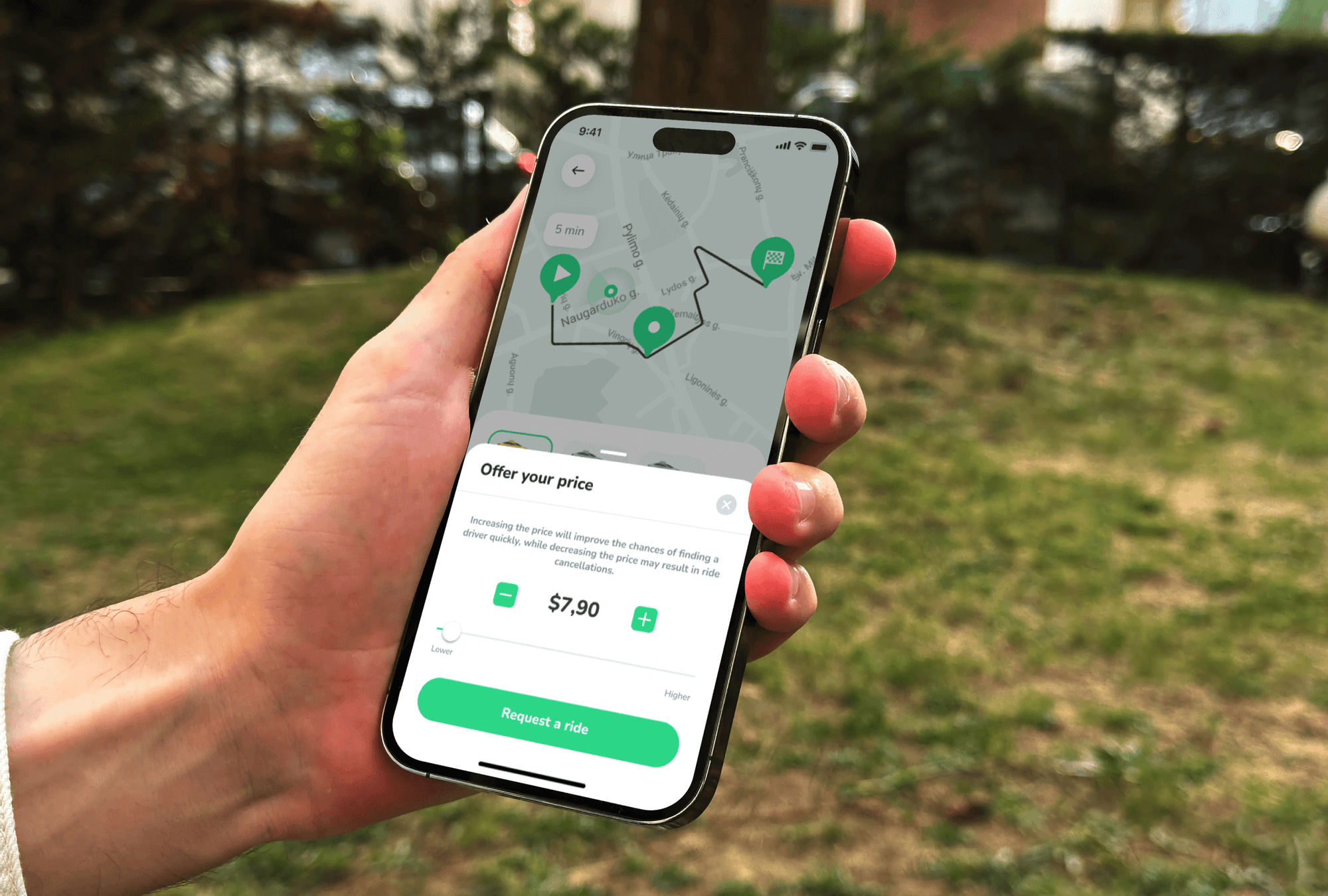
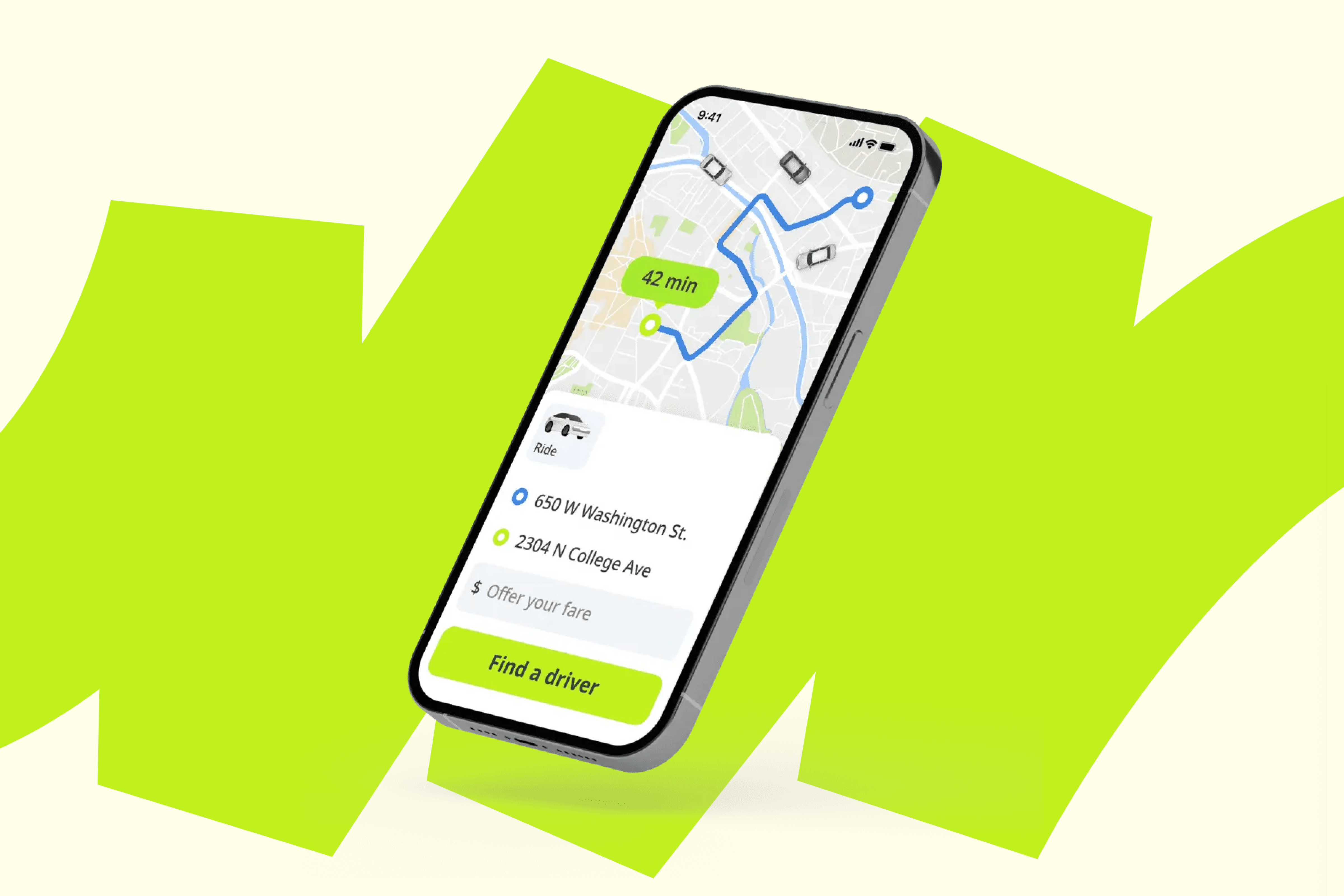
💸 ATOM Mobility launches “Offer your price” - a rider-controlled pricing feature. Riders can suggest higher or lower fares within pre-set limits. Boosts demand & helps stand out in competitive ride-hail markets 🚖🌍
The ride-hailing market is always changing. From Latin America to Eastern Europe, platforms like inDrive have popularized a new norm: letting riders suggest what they want to pay. Now, in response to this growing global trend, ATOM Mobility is proud to introduce: Offer your price – a fully configurable pricing feature built right into your rider app.
Available on all ride-hail projects, this feature lets riders propose a price – higher or lower than the default fare – within operator-set limits. Drivers can then accept or decline based on the offer.
Here’s how it reshapes the experience:
Your admin dashboard defines the limits – say, up to +500% from regular price and down to -30% – and the app calculates step sizes automatically:
Slider position adapts dynamically, depending on your defined range. And yes – the button color and style can be customized to match your brand 🎨.
You’ll find complete control and clarity:
In the driver app:
Real-world companies are already proving that rider-defined pricing works:
🚘 inDrive (LATAM, Africa, Asia)
Now one of the top global ride-hailing players outside the U.S. (over 200M downloads, active in 700+ cities across 45+ countries), inDrive built its brand around rider-negotiated pricing. It helps them stand out in price-sensitive markets and win over both drivers and passengers with more transparent pricing dynamics.
🚖 Comin (France)
A local success story, Comin has embraced flexible rider pricing to gain traction in several French cities (onboarded 6,000+ drivers). The feature gives them an edge against larger platforms, offering more freedom for users and better utilization for drivers.
These examples show that letting riders bid their price isn’t just a gimmick – it’s a growth strategy.
From our previosu blog “How to Find Your Niche in the Ride-Hail Market”, we saw how localisation and user control drive loyalty and conversion.
This new pricing flexibility supports:
This is just one of the 300+ features available in ATOM’s white-label ride-hailing platform.
Let’s talk about how to launch or upgrade your app with “Offer your price”, advanced pricing logic, and more tools to dominate your niche.
👉 Contact our team and explore how to become the market leader: www.atommobility.com

"State of art technology in mobile apps and dashboard, very good SLA!"
"Easy, nice looking, continuously updated and developed every month and most of all very reliable with a extreme high uptime"
"We used to work with a different service provider which wasn't fitting our needs. Switching to ATOM was an improvement on our side"
Use test credentials to log in - Phone number: +1 123123123, Code: 777777


Driver App demo credentials - Email: test@atom.com, Password: driver