Blog
Insights and news from the ATOM Mobility team
We started our blog to share free valuable information about the mobility industry: inspirational stories, financial analysis, marketing ideas, practical tips, new feature announcements and more.

We started our blog to share free valuable information about the mobility industry: inspirational stories, financial analysis, marketing ideas, practical tips, new feature announcements and more.
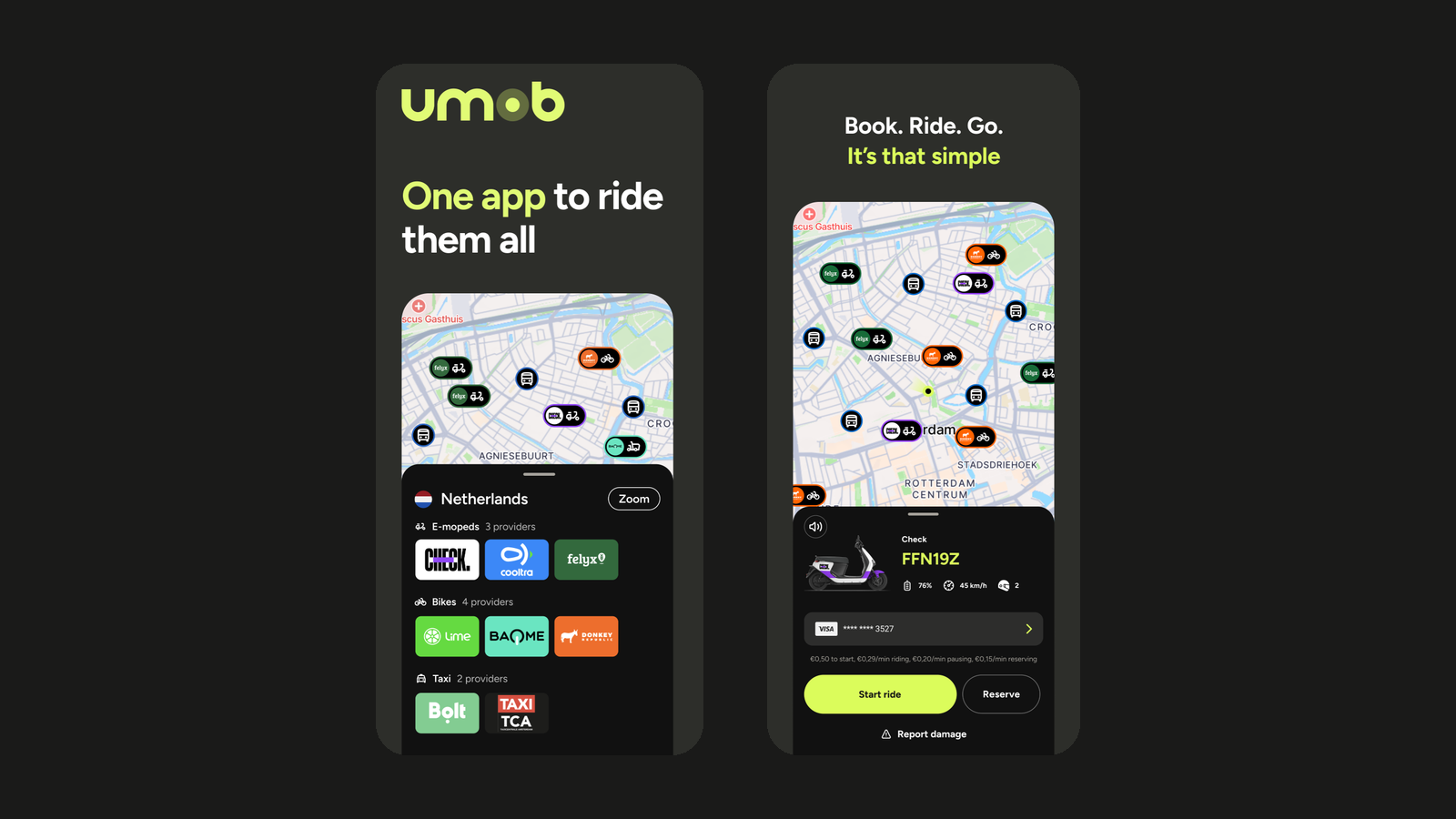
🌍 Reach more riders with ATOM Mobility and Umob. The integration gives shared mobility operators an additional distribution channel, helping attract new customers, generate more bookings and improve fleet utilization.
The future of mobility is not just about operating vehicles. It is about creating convenient journeys that bring different transportation options together in one simple customer experience.
That is why we are excited to highlight our partnership with Umob, helping mobility operators expand their reach and become part of a growing multimodal mobility ecosystem.
Whether you operate shared cars, scooters, bikes or mopeds through the ATOM Mobility platform, integrating with Umob allows your service to become accessible to thousands of Umob users looking for a convenient way to travel.
Today's users expect flexibility. They don't think in terms of individual mobility providers, they simply want the fastest, easiest, and most convenient route from A to B.
Umob brings different mobility providers and transport options together in one app. Users can find, compare, book and pay for different mobility options without having to download a separate app or create a new account for every provider.
By connecting your fleet to Umob, operators can:
For ATOM Mobility customers, the integration is designed to provide a straightforward way to unlock new distribution opportunities while continuing to manage their core operations through the ATOM Mobility platform.
Through the ATOM Mobility platform, participating operators can connect their fleets with Umob, enabling users to discover and use available vehicles directly through the Umob app.
Once connected, vehicles from participating operators can appear in Umob alongside other available mobility options, giving users one clear overview of the different ways they can get from A to B.
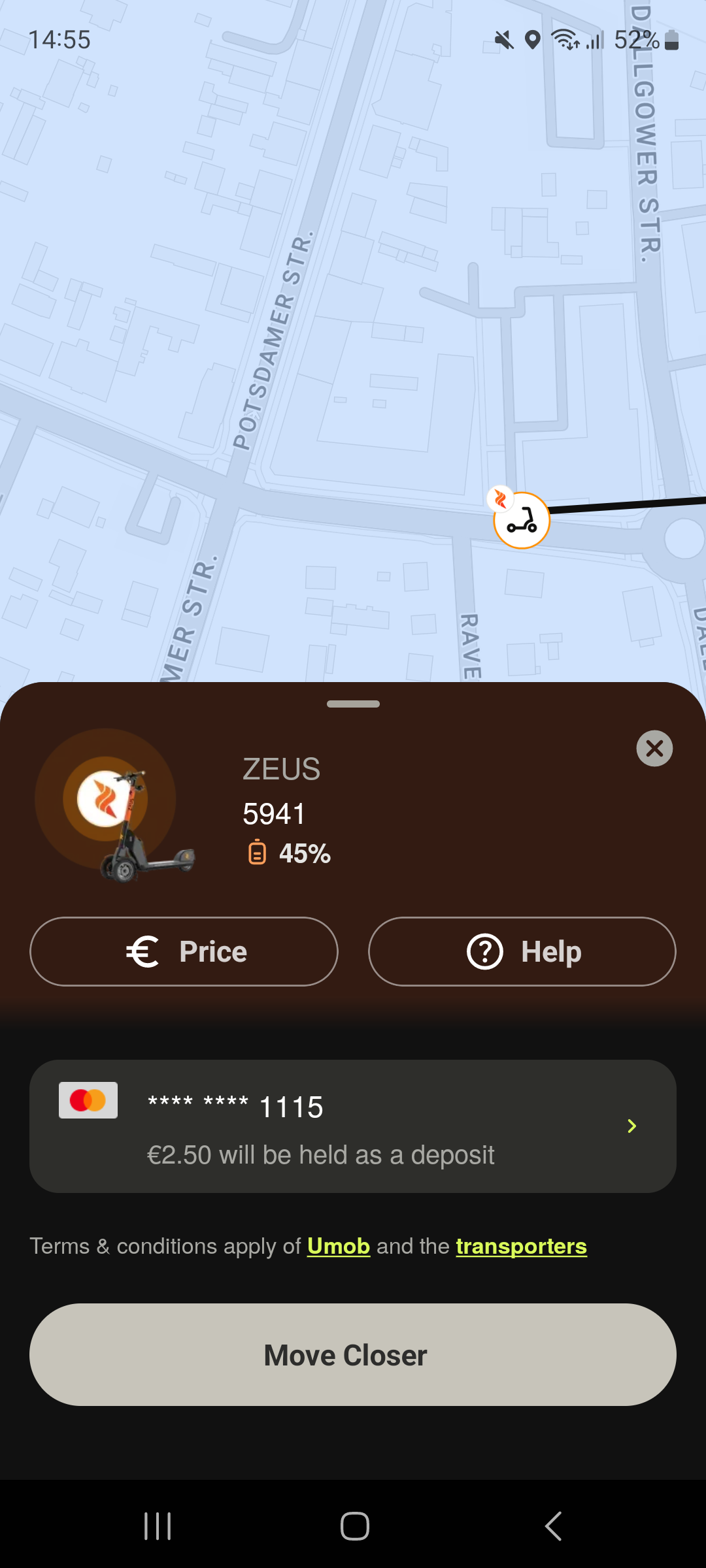
Users can discover an available vehicle, reserve and unlock it, start and end their ride, and pay directly through Umob.
The integration is designed to support:
Operators continue to manage their fleet, pricing, service areas and day-to-day operations through the ATOM Mobility platform, while Umob provides an additional channel through which users can discover and access their vehicles.
For mobility operators, connecting with Umob creates an additional distribution channel without changing the way they manage their day-to-day operations through ATOM Mobility.
By making vehicles available to thousands of Umob users, operators can increase their visibility at the moment people are actively looking for a ride. This creates the potential to attract new users, generate additional bookings and improve fleet utilization over time.
Every market is different, but many operators see MaaS partnerships as an important part of their long-term growth strategy.
One of the first ATOM Mobility operators to launch through the Umob integration is ZEUS Mobility, an ambitious European e-scooter sharing provider with a strong focus on innovation, a dynamic approach and challenging the established players in the market.
Fittingly, the partnership itself started through the ATOM Mobility network.
ZEUS and Umob first met at an ATOM Mobility event in Riga. While the initial introduction happened during the event, it was over drinks later that evening that the conversation really started.
ZEUS had already come across the Umob brand on mobility vehicles while travelling and had been impressed by the professional approach the company was taking. That recognition quickly turned into a conversation about how both companies could strengthen their propositions by working together.
From there, the integration moved forward quickly. ZEUS describes the preparation and integration process so far as “clean, professional and smooth.”
For ZEUS, the partnership creates an opportunity to strengthen the visibility of its brand, reach new customers and support its wider European growth ambitions.
Following its acquisition of Superpedestrian in May 2026, ZEUS is looking to accelerate its growth throughout 2026 and 2027, with the Umob partnership forming part of that ambition.
“ZEUS is thrilled to be partnering with Umob in European markets. Following our acquisition of Superpedestrian in May 2026, ZEUS is seeking to rapidly grow through 2026 and 2027. This partnership can help to drive this growth and reach new customers in new markets. We look forward to a rewarding partnership.” - Damian Young, ZEUS Mobility
One app to ride them all. Umob is an all-in-one mobility platform that brings different mobility providers and transport options together in one app.
Users can find, compare, book and pay for shared bikes, e-bikes, scooters, mopeds, public transport, taxis and other available mobility options through one account and one payment experience. Instead of downloading and registering with a separate app for every provider or every new city, users can open Umob and see the available mobility options around them.
Today, Umob is available in 28+ countries and 300+ cities, giving thousands of users an easier way to access different forms of mobility both at home and while travelling.
Key facts
If you're already operating your shared mobility service on the ATOM Mobility platform, connecting with Umob could be the next step toward reaching more users and becoming part of a truly connected mobility ecosystem.
If you're interested in enabling the integration or learning more about how it works, get in touch with our team. We look forward to helping more operators connect, collaborate, and make sustainable mobility easier for everyone.

🚗💡 Is car sharing still a profitable business in 2025? Short answer – yes, if done right. From rising fleet costs to smarter user behavior and green transport trends, the shared mobility game is changing fast. Learn what makes a car sharing business work today – and why some succeed while others shut down. 👉 Real stories, data-backed tips, and practical advice for operators and mobility founders.
In 2024, the global car-sharing market was valued at approximately €8.9 billion, with Europe accounting for over 50.2% of that total. Analysts forecast it will grow at a CAGR of 11.8% between 2025 and 2033, reaching roughly €24.4 billion by 2033. This blend of urbanization, environmental regulation and a growing preference for flexible mobility continues to create fertile ground for operators - yet not every service finds a clear path to profitability.
Success hinges on your location, business model, fleet, operations and local market dynamics. There are strong success stories, but also many high-profile failures. Here’s a closer look at what really affects profitability in today’s car-sharing market - and what you can learn from real-world cases.
Profitability in car sharing boils down to securing enough paid usage while keeping costs under control. Every unused hour or unnecessary expense erodes margins.
Key factors:
The operators who win are those who combine solid daily usage with lean operations.
29 March 2025 marked the end of Panek’s car-sharing experiment. Despite peaking at 2 700–3 000 vehicles, Panek never turned a profit in over seven years.
Faced with persistent losses, Panek’s leadership refocused on profitable core segments: daily/weekly rentals, corporate leasing and Fleet-as-a-Service.
WiBLE (50/50 joint venture between Kia Europe and Repsol) launched in 2018 and has just closed its second consecutive year with positive EBITDA.
Key enablers:
After five years of absorbing fixed-cost drag and depreciation, WiBLE now leverages Madrid’s regulatory environment (low-emission zones, parking benefits) and delivers lean, tech-driven operations.
SOCAR (backed by SoftBank, SK Inc. and Lotte Group) operates 20 000 vehicles, generates nearly €300 million in annual turnover and has 20% of South Koreans signed up.
By pairing massive scale with savvy car lifecycle management, extra-long rental duration, SOCAR converts high utilization into robust profitability.
30 August 2024: Carguru (est. 2017) acquired EV-focused OX Drive (est. 2021), adding 200+ Tesla to the fleet.
Outcome: A combined ICE, hybrid and EV fleet—backed by local expertise and strategic acquisitions - has driven strong growth and high utilization.
With clear benchmarks and smart execution - drawing on lessons from Panek, WiBLE, SOCAR and Carguru - car sharing can still be a highly profitable component of a modern mobility portfolio.
If you’re planning to start or improve your service, ATOM Mobility is ready to help. We’ve built the platform and supported dozens of teams worldwide - reach out, and we’ll share what we’ve learned.
Image credit: https://kursors.lv/2018/03/13/carguru-palielina-autoparku-un-paplasina-darbibas-zonas-mikrorajonos

✅ ATOM Mobility has launched OpenAPI v1 - giving vehicle-sharing, rental, and ride-hailing operators full control to integrate their services into MaaS platforms, websites, and partner apps. Discover how this powerful tool can help you expand reach, automate operations, and drive more bookings.
We’re thrilled to announce the launch of the ATOM Mobility OpenAPI v1 - a major step toward enabling mobility operators to seamlessly integrate their services with third-party platforms, partner systems, and custom applications.
With the OpenAPI, ATOM Mobility opens up new possibilities for businesses running vehicle-sharing, rental, and ride-hailing services to extend their digital reach, enhance customer experience, and unlock new revenue streams.
An OpenAPI (or application programming interface) is a set of standardized protocols that allows external software systems to interact with your platform. In simple terms, it acts like a bridge between your mobility service and the outside world — enabling secure data sharing and functional integration.
For mobility businesses, OpenAPIs have become a key tool for:
While many mobility providers offer GBFS (General Bikeshare Feed Specification) to share read-only data (ATOM Mobility will continue supporting GBFS) - such as vehicle locations and availability - these feeds are typically limited to visibility. Users still need to switch to a provider's app to complete the ride.
ATOM Mobility’s OpenAPI is different. It offers full read-write access to the core functions of your platform - similar to what operators can already do in the back-office dashboard. This means that third-party apps can not only display your vehicles but also handle booking, payments, and ride management entirely within their own interface.
This is a game-changer for expanding your service footprint beyond your app.
The first version of the OpenAPI supports all core modules — Vehicle sharing, Digital rental, and Ride-Hailing — with both public and private endpoints for:
Here are some examples of how mobility operators are already planning to use the ATOM OpenAPI:
Connect your fleet to fast-growing MaaS platforms, for example:
Allow users to book rentals or ride directly from your website without needing to download an app upfront. This is especially useful for tourists, first-time users or hotels. The app would only be needed to unlock the vehicle or track the driver (in case of ride-hailing).
Want to offer mobility through hotels, offices, or real estate platforms? Now they can show your vehicles and complete bookings within their apps - driving high-value B2B usage without manual overhead.
Support agents can pull up a rider’s active trip data in external helpdesk tools using ride ID endpoints - improving efficiency and resolution speed.
Build your own reporting layer by pulling real-time and historical ride, user, and revenue data into tools like Power BI, Tableau, or custom CRMs.
The OpenAPI is available to all ATOM clients on the Premium Plan, which includes:
Whether you’re exploring new channels, seeking B2B integrations, or joining a MaaS platform, the ATOM OpenAPI gives you the tools to scale faster and smarter. Want to learn more or schedule a call with our integrations team?
Contact us: https://www.atommobility.com/ask

In a significant move signaling further consolidation within the micro-mobility software sector, industry leader ATOM Mobility announced its strategic acquisition of ScootAPI. The deal, finalized on June 1, 2025, strengthens ATOM Mobility's dominant position in the B2B SaaS Micro-Mobility market.
In a significant move signaling further consolidation within the micro-mobility software sector, industry leader ATOM Mobility announced its strategic acquisition of ScootAPI.
The deal, finalized on June 1, 2025, strengthens ATOM Mobility's dominant position in the B2B SaaS Micro-Mobility market. This deal also marks a successful and timely exit for ScootAPI founder, George Kachanouski, who is already channeling his entrepreneurial energy into a new AI Venture in stealth mode for now.
For years, both ATOM Mobility and ScootAPI have been key players, providing essential software solutions for micro-mobility operators worldwide. This acquisition sees ATOM Mobility, led by CEO Arturs Burnins, proactively solidifying its market leadership. The move was driven by a strategic imperative to win the top spot in a competitive landscape by integrating ScootAPI’s valuable assets and client base.
About ATOM Mobility:

Founded in 2018 by Arturs Nikiforovs and CEO Arturs Burnins, ATOM Mobility empowers entrepreneurs to launch and scale mobility platforms worldwide, including vehicle sharing (scooters, bikes, mopeds, cars), digital rental, and ride-hailing businesses. With a suite of products including customizable rider apps, comprehensive dashboards, operator apps, and robust analytics, ATOM Mobility supports over 200 projects and 35,000 vehicles, facilitating over 1,000,000 rides monthly. The company is committed to providing reliable, agile, and well-designed technology with a strong focus on customer revenue growth and system stability, aiming to be the leader in B2B SaaS for micro-mobility.
About ScootAPI:

Founded in 2019 by CEO George Kachanouski, ScootAPI established itself as a significant player in the micro-mobility software space. The company delivered a robust white-label SaaS platform that empowered entrepreneurs and operators worldwide, successfully launching more than 50 distinct micro-mobility projects across diverse international markets. ScootAPI was dedicated to fostering 'smart' city transportation, thereby contributing to reduced CO2 emissions and an improved quality of urban life for communities worldwide.
"This is an acceleration moment for ATOM Mobility and the micro-mobility SaaS market as a whole," said Arturs Burnins, CEO of ATOM Mobility. "Acquiring ScootAPI aligns with our strategy to lead the industry and provide the most comprehensive, reliable, and innovative solutions to operators globally. We're excited to welcome ScootAPI’s clients into the ATOM Mobility platform, further accelerating the growth and efficiency of shared mobility worldwide."

For George, this move wasn't initially on his roadmap. He was invested in ScootAPI's growth. However, the recent explosion in AI technology sparked a new, compelling passion. “Selling ScootAPI wasn't something I was planning to do," George admitted. "We had built a good product, and the journey was far from over in my mind. But then the AI revolution really took off, and I found myself completely captivated by the potential of agentic workflows to automate business processes. The idea of building a new company in the AI space, something potentially even bigger and on a brand new frontier, became incredibly exciting."
As the transition moves ahead, George remains confident that ScootAPI's clients are in good hands. “ATOM Mobility has a clear vision and the technical depth to support operators long-term,” he said. “That was important to me. I didn’t want to hand things over to just anyone – I wanted to be sure the people relying on our platform would still be supported and able to grow.”
The integration of ScootAPI into ATOM Mobility promises a smooth transition for clients, who will now benefit from an expanded suite of features and robust support under the ATOM Mobility umbrella, further streamlining operations for micro-mobility entrepreneurs globally.
.jpg)
🌍 🚗 Want to stay on top of the latest trends in mobility? Check out the must-attend conferences in 2025! From urban transportation to micromobility, these events offer great networking opportunities and valuable insights into the future of mobility. 👉 ATOM Mobility will be at several events, so make sure to stop by our booth and chat with us!
The mobility industry is rapidly evolving, and staying ahead means connecting with the right people, discovering new technologies, and learning from experts. Conferences are a great way to do just that. Whether you’re a policy maker, an entrepreneur, or a fleet manager, the year ahead is packed with events where you can grow your network and gain valuable insights. Here’s a list of some of the top mobility conferences happening this year that are worth attending!

The Velo-city conference is a must for anyone involved in urban transportation. With a focus on cycling and sustainable mobility, Velo-city brings together policy makers, city planners, and transportation experts to discuss how cities can become more bike-friendly and sustainable.
This year, ATOM Mobility will have a booth at the event, so if you’re attending, don’t forget to stop by and chat with our team. It’s a great opportunity to explore how new tech can make urban transportation smarter and more efficient.
Where: Gdansk, Poland
When: 10-13 June
Check it out: https://www.velo-city-conference.com
If you’re interested in micromobility – whether it’s e-scooters, bikes, or mopeds – Micromobility Europe is the place to be. This conference is the hub for mobility entrepreneurs, vehicle manufacturers, and operators of sharing services. You’ll hear from innovators in the space, explore the latest products, and attend workshops on everything from regulation to scaling your fleet.
At Micromobility Europe, ATOM Mobility will not only have a booth but our CEO will also be on a panel discussion on day two of the event (“Fleet Tech 2.0: The Tools Powering the Next Generation of Operators”). You can check out the full agenda here. We’d love to meet you, so make sure to stop by and say hi.
Where: Brussels, Belgium
When: 17-18 June
Check it out: https://micromobility.io
For fleet managers, car-sharing operators, and telematics professionals, the Gurtam Fleet Management Conference is a key event to attend. This conference focuses on optimizing fleet operations, the latest in vehicle tracking, and telematics technologies. ATOM Mobility will be among the visitors, and we’ll also be presenting on stage, where we’ll discuss some of the latest trends in fleet management and the use of AI ("AI-powered mobility: Vision, Precision, Prediction. A Look into How AI Transforms Fleet Parking Compliance, Vehicle Damage Detection, and Demand Forecasting.").
If you’re in the fleet management space, this is a great event to gather insights and share ideas with like-minded professionals.
Where: Vilnius, Lithuania
When: 10-11 September
Check it out: https://conference.gurtam.com
One of the biggest mobility events in Europe, IAA Mobility gathers everyone from policymakers to automakers to discuss the future of transportation. With a wide range of topics including light electric vehicles (LEVs), micromobility, public transport, and Mobility as a Service (MaaS), this is a great conference for anyone interested in the broader scope of mobility.
Whether you’re looking to explore the latest in automotive technology or learn about policy changes affecting the mobility industry, IAA Mobility is a must-attend event.
Where: Munich, Germany
When: 9-12 September
Check it out: https://www.iaa-mobility.com/en
If you’re looking to tap into the growing mobility market in Saudi Arabia and MENA, Mobility Live Saudi is one of the largest events focused on urban transportation in the region. The conference brings together policy makers, car rental entrepreneurs, and mobility infrastructure developers to discuss the latest trends and innovations in connected vehicles, MaaS, and micromobility.
It’s an exciting event to explore the unique challenges and opportunities in the Saudi Arabian market, especially in terms of infrastructure and emerging mobility solutions.
Where: Riyadh, Saudi Arabia
When: 9-21 October
Check it out: https://www.terrapinn.com/exhibition/mobility-live-saudi
Each of these events offers a unique opportunity to connect with people in the mobility ecosystem. Whether you're looking to learn about new technologies, hear from industry experts, or network with potential partners, attending these conferences can help you stay ahead of the curve.
Plus, many of these events offer in-person interaction, which can be crucial for building strong relationships and fostering meaningful collaborations. From policy changes to new tech, these conferences are where you’ll find the insights that can shape the future of mobility.
If you plan on attending any of these conferences, make sure to stop by ATOM Mobility’s booth. We’ll be happy to talk about how we’re making micromobility, corporate car-sharing and mobility more efficient, sustainable, and accessible. Our team is excited to connect with fellow professionals, share insights, and discuss how we can all contribute to the future of mobility.
See you there!

"State of art technology in mobile apps and dashboard, very good SLA!"
"Easy, nice looking, continuously updated and developed every month and most of all very reliable with a extreme high uptime"
"We used to work with a different service provider which wasn't fitting our needs. Switching to ATOM was an improvement on our side"
Use test credentials to log in - Phone number: +1 123123123, Code: 777777


Driver App demo credentials - Email: test@atom.com, Password: driver