Blog
Insights and news from the ATOM Mobility team
We started our blog to share free valuable information about the mobility industry: inspirational stories, financial analysis, marketing ideas, practical tips, new feature announcements and more.

We started our blog to share free valuable information about the mobility industry: inspirational stories, financial analysis, marketing ideas, practical tips, new feature announcements and more.
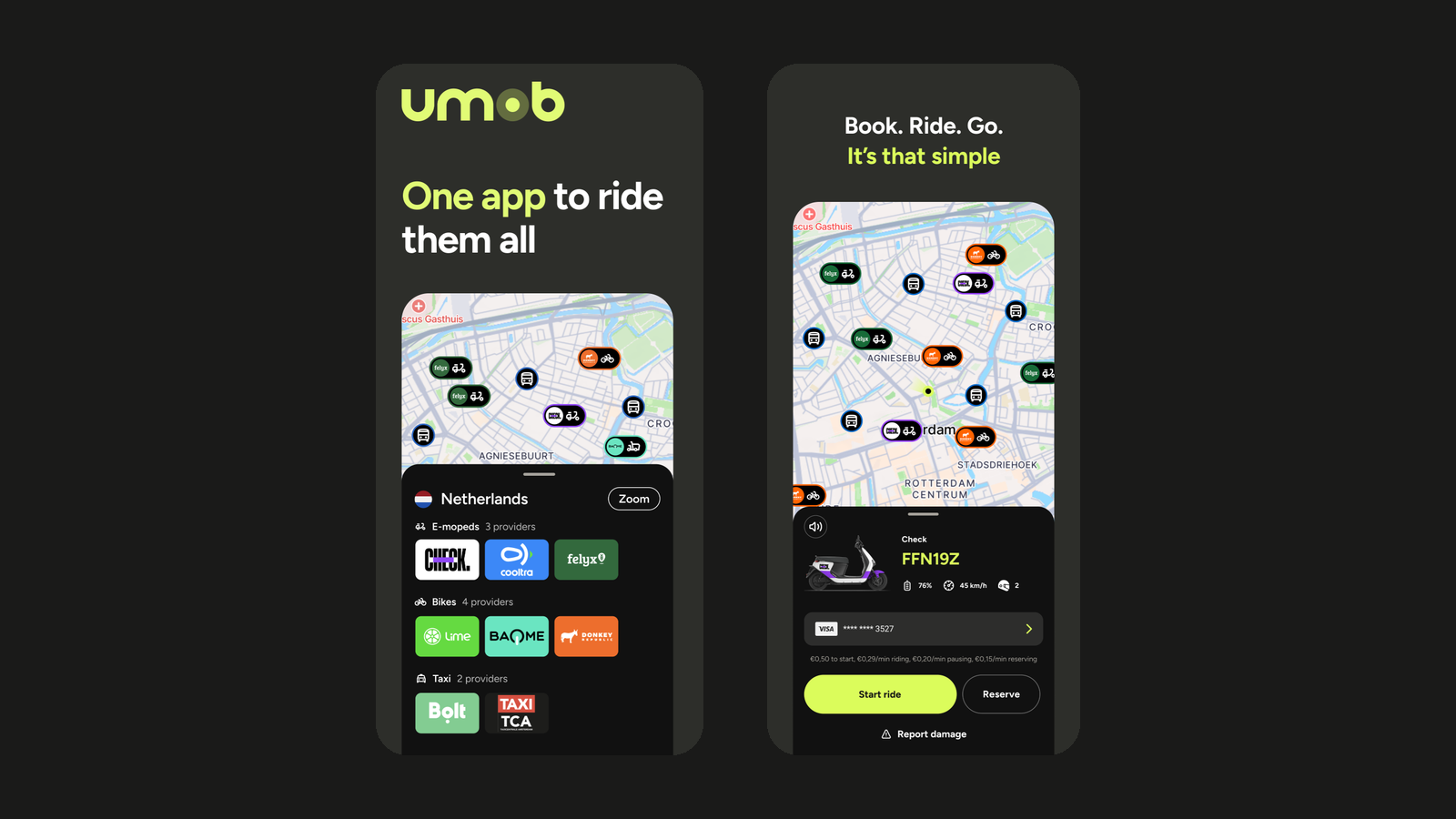
🌍 Reach more riders with ATOM Mobility and Umob. The integration gives shared mobility operators an additional distribution channel, helping attract new customers, generate more bookings and improve fleet utilization.
The future of mobility is not just about operating vehicles. It is about creating convenient journeys that bring different transportation options together in one simple customer experience.
That is why we are excited to highlight our partnership with Umob, helping mobility operators expand their reach and become part of a growing multimodal mobility ecosystem.
Whether you operate shared cars, scooters, bikes or mopeds through the ATOM Mobility platform, integrating with Umob allows your service to become accessible to thousands of Umob users looking for a convenient way to travel.
Today's users expect flexibility. They don't think in terms of individual mobility providers, they simply want the fastest, easiest, and most convenient route from A to B.
Umob brings different mobility providers and transport options together in one app. Users can find, compare, book and pay for different mobility options without having to download a separate app or create a new account for every provider.
By connecting your fleet to Umob, operators can:
For ATOM Mobility customers, the integration is designed to provide a straightforward way to unlock new distribution opportunities while continuing to manage their core operations through the ATOM Mobility platform.
Through the ATOM Mobility platform, participating operators can connect their fleets with Umob, enabling users to discover and use available vehicles directly through the Umob app.
Once connected, vehicles from participating operators can appear in Umob alongside other available mobility options, giving users one clear overview of the different ways they can get from A to B.
Users can discover an available vehicle, reserve and unlock it, start and end their ride, and pay directly through Umob.
The integration is designed to support:
Operators continue to manage their fleet, pricing, service areas and day-to-day operations through the ATOM Mobility platform, while Umob provides an additional channel through which users can discover and access their vehicles.
For mobility operators, connecting with Umob creates an additional distribution channel without changing the way they manage their day-to-day operations through ATOM Mobility.
By making vehicles available to thousands of Umob users, operators can increase their visibility at the moment people are actively looking for a ride. This creates the potential to attract new users, generate additional bookings and improve fleet utilization over time.
Every market is different, but many operators see MaaS partnerships as an important part of their long-term growth strategy.
One of the first ATOM Mobility operators to launch through the Umob integration is ZEUS Mobility, an ambitious European e-scooter sharing provider with a strong focus on innovation, a dynamic approach and challenging the established players in the market.
Fittingly, the partnership itself started through the ATOM Mobility network.
ZEUS and Umob first met at an ATOM Mobility event in Riga. While the initial introduction happened during the event, it was over drinks later that evening that the conversation really started.
ZEUS had already come across the Umob brand on mobility vehicles while travelling and had been impressed by the professional approach the company was taking. That recognition quickly turned into a conversation about how both companies could strengthen their propositions by working together.
From there, the integration moved forward quickly. ZEUS describes the preparation and integration process so far as “clean, professional and smooth.”
For ZEUS, the partnership creates an opportunity to strengthen the visibility of its brand, reach new customers and support its wider European growth ambitions.
Following its acquisition of Superpedestrian in May 2026, ZEUS is looking to accelerate its growth throughout 2026 and 2027, with the Umob partnership forming part of that ambition.
“ZEUS is thrilled to be partnering with Umob in European markets. Following our acquisition of Superpedestrian in May 2026, ZEUS is seeking to rapidly grow through 2026 and 2027. This partnership can help to drive this growth and reach new customers in new markets. We look forward to a rewarding partnership.” - Damian Young, ZEUS Mobility
One app to ride them all. Umob is an all-in-one mobility platform that brings different mobility providers and transport options together in one app.
Users can find, compare, book and pay for shared bikes, e-bikes, scooters, mopeds, public transport, taxis and other available mobility options through one account and one payment experience. Instead of downloading and registering with a separate app for every provider or every new city, users can open Umob and see the available mobility options around them.
Today, Umob is available in 28+ countries and 300+ cities, giving thousands of users an easier way to access different forms of mobility both at home and while travelling.
Key facts
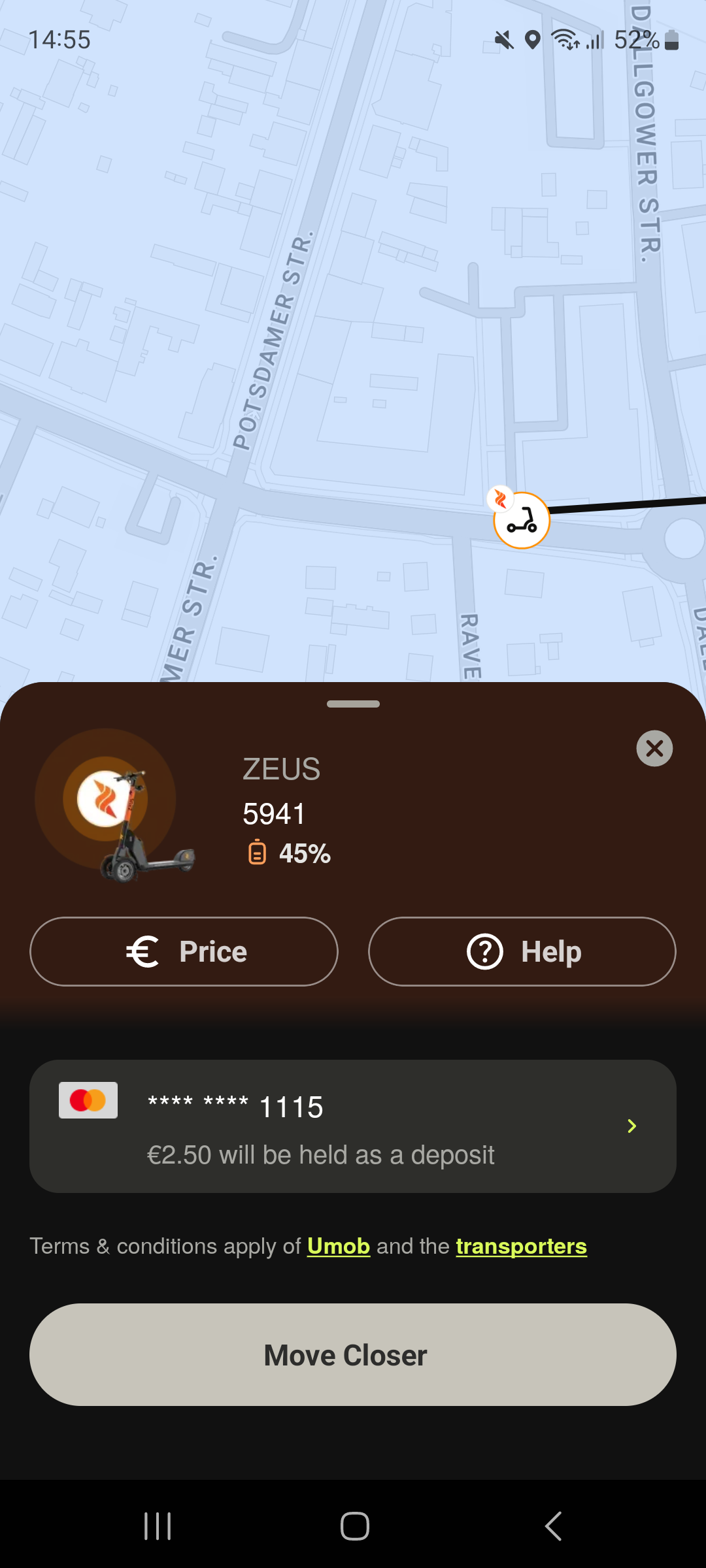
If you're already operating your shared mobility service on the ATOM Mobility platform, connecting with Umob could be the next step toward reaching more users and becoming part of a truly connected mobility ecosystem.
If you're interested in enabling the integration or learning more about how it works, get in touch with our team. We look forward to helping more operators connect, collaborate, and make sustainable mobility easier for everyone.

🌐 There’s no denying it – we are quickly entering a world we cannot imagine without Artificial Intelligence. That also means changes for the micromobility industry, as AI can help address its challenges, including damage detection, safety, and pricing strategies. 💡 But how is AI transforming the industry? Let’s dive in.
Artificial Intelligence (AI) is revolutionizing various sectors, and micromobility is no exception. By integrating AI into e-scooters, e-bikes, cars and other small vehicles, the industry is becoming smarter, safer, and more efficient. AI’s prowess in data processing, predictive analytics, and machine learning is driving this transformation, making operations more innovative and productive, and setting a bright future for micromobility.
Let's explore how AI is making a significant impact on the micromobility industry through smart parking, dynamic pricing and rebalancing, and damage detection.
From automating routine tasks to providing deep insights through data analysis, AI is reshaping how we navigate urban environments. Its ability to learn from vast amounts of data and make real-time decisions is crucial for developing efficient, sustainable, and user-friendly transportation solutions.
Micromobility refers to small, easy-to-maneuver vehicles like e-scooters, e-bikes, and shared bicycles that operate at speeds typically below 25 km/h. The rise of micromobility is driven by the need for convenient, cost-effective, and eco-friendly urban transport. AI helps tackle critical challenges in the micromobility industry, including parking management, pricing strategies, fleet rebalancing, and damage detection. Companies like SWITCH are leading the way by using advanced algorithms to generate synthetic data, predict demand, optimize fleet distribution, and support strategic planning.
Improper parking can clutter sidewalks and create accessibility issues, frustrating many urban dwellers. AI-driven parking analysis provides a practical solution:
Results? Studies show AI parking analysis can drastically improve compliance. For instance, 52% of improperly parked vehicles are correctly re-parked on the second attempt, rising to 82% by the third attempt.
If you're interested in exploring these solutions further, you can read a case study by ATOM Mobility in collaboration with Captur's AI-Powered Photo Verification solution.
AI enhances fleet utilization and customer satisfaction through dynamic pricing and rebalancing strategies:
A case study revealed that scooters placed in AI-recommended areas saw a 6% increase in average revenue, and rebalanced vehicles experienced a 10.8% usage increase within 24 hours.
Maintaining vehicle condition is crucial for safety and longevity. AI-powered damage detection systems offer a solution:
Automating damage detection helps operators maintain high safety standards and reduces downtime from manual inspections. Companies such as FocalX streamline the damage detection functionality.
Integrating AI in micromobility is revolutionizing the industry by enhancing operational efficiency, user experience, and safety. As AI technology continues to evolve, its role in shaping the future of micromobility will grow, driving the industry toward smarter, more sustainable urban transportation solutions.
For micromobility operators, embracing AI technologies is not just an option but a necessity to stay competitive and meet the growing demands of urban commuters. The future of micromobility is intelligent, efficient, and AI-driven.
Ready to dive deeper into the world of shared mobility and learn how to use AI to transform your business? Join the ATOM Academy for FREE expert knowledge, practical insights, and innovative strategies that will help you stay ahead in the rapidly evolving micromobility industry. Visit ATOM Mobility to learn more. Let's drive the future of urban transportation together!
.jpg)
The world of taxi apps is booming, but the idea of building your own from scratch can be daunting. 🚕 What if there was a faster, more cost-effective way to launch your ride-hailing service? Enter white label taxi apps. These pre-built solutions provide a shortcut to your business while skipping the lengthy and costly software development process. In this guide, we'll explore the many advantages of white label taxi apps, from quicker launch times to features that help you attract and retain riders.
The world of taxi apps is booming, but the idea of building your own from scratch can be daunting.
What if there was a faster, more cost-effective way to launch your ride-hailing service?
Enter white label taxi apps.
These pre-built solutions provide a shortcut to your business while skipping the lengthy and costly software development process.
In this guide, we'll explore the many advantages of white label taxi apps, from quicker launch times to features that help you attract and retain riders. We'll also guide you through the process of building your vision, from defining your target audience to crafting a unique selling proposition.
Why build a taxi app using white label software?
The answer is simple – white label taxi app solutions help to bridge your business idea with reality. There’s no need to build a taxi app from ground zero, since the solutions are already there – tried, tested and waiting for your branding.
If you’re still not sure about the benefits of using a white label taxi platform over building your own, consider these advantages:
White label apps are pre-built, allowing you to launch your service much quicker and skip the lengthy and expensive process of custom development. In addition, such mobility software is continuously updated and developed, complying with the latest regulations and meeting user demands in specific markets.
Building a custom app requires significant investment. White label solutions like ATOM Mobility offer a cost-effective alternative, allowing you to test and refine your concept without breaking the bank.
Once your app is up and running, white label taxi app platforms help you reduce operational costs by automating tasks and increasing operational efficiency for your taxi business.
Don't be fooled by the "white label" – your branding can make your taxi app unique. A white label platform gives you the freedom to completely customize the app's look and feel without worrying about the technical intricacies of the app’s operation.
How exactly do you personalize your app’s brand identity? It’s simple and fun – start by adding your logo, choosing your color scheme, and creating in-app copy to match your brand’s voice. Think about creating a seamless user experience that reflects your unique concept and resonates with your target audience.
White label solutions are designed to be scalable, allowing you to easily add features and accommodate a growing user base. If you choose to build your taxi app with ATOM, you get a user-friendly booking and dispatch software and a powerful admin panel to manage drivers, customers and follow the stats. With time, you can quickly expand to other business verticals and create your unique superapp, keeping it all customized for your brand.
Gone are the days of hailing cabs or waiting on hold. Your white label taxi app should have the option to get a ride in seconds, with features that are meticulously designed to be as intuitive as possible. With just a few taps, customers should be able to create accounts, book rides, and track their driver's arrival in real time.
When building custom taxi fleet software, this level of convenience and sense of control can take years. White label taxi apps have refined their features to enhance customer satisfaction and build loyalty. Thus you won’t have to lose customers due to technical glitches or slow features.
Before you take the first steps in building your white label taxi app, take a moment to solidify your vision. What will be special about your app and who will be its target users? This roadmap will guide your decisions and ensure your app caters to a specific need within the market.
Lay out a plan including important aspects of your vision, such as:
It sure is tempting to offer your services to all the taxi riders on the market, but in reality, differentiation works much better. We recommend defining a user segment that would be the primary target audience for your taxi app. Will you focus on budget-minded students, busy business travelers, or families with young children? Choose a niche that's large enough to be sustainable, but targeted enough to stand out.
Your USP is what will differentiate your app. For example, are you known for eco-friendly vehicles, flat fares, or focusing on specific areas? Maybe you’re a kid and pet-friendly company that offers extras like different-size booster seats and cartoons on board.
It’s also important to consider what app features are imperative for your business. Which functionalities should definitely be there besides having a rider app, driver app, and admin panel? For example, do you want to offer in-app chat, rider verification options, multiple payment options, etc., or any other special features?
Let’s imagine you’ve already launched your white label taxi app by selecting the right platform (like ATOM Mobility), choosing your branding and integrating the desired functionalities. What next?
To ensure long-term success, ongoing marketing and customer acquisition strategies are crucial for the success of your ride-hailing business.
Here's how to hit the ground running:
Know your riders
Leverage built-in analytics within your taxi fleet software to understand rider behavior and preferences. This allows you to create detailed user personas – representations of your ideal customers. By understanding their needs and habits, you can tailor your marketing efforts for maximum impact.
Targeted acquisition
Armed with your user personas, launch targeted advertising campaigns across relevant channels. Social media platforms, local publications, and strategic partnerships with businesses frequented by your target audience can be effective avenues for reaching potential riders.
Loyalty programs to stay top-of-mind
Entice new customers with attractive introductory offers and discounts. Once you've hooked them, implement loyalty programs that reward repeat rides. This could include points systems for free rides, different memberships with exclusive benefits, or referral programs that incentivize existing riders to spread the word.
Harnessing the power of "deals"
Don't underestimate the power of discount codes and promotions. Strategic use of these tools can attract deal-conscious customers and encourage them to try your service.
Top taxi fleet software, like ATOM Mobility, offers various marketing tools, from loyalty and referral programs to integrated email marketing and push notifications that help stay top of mind and re-activate users.
The world of taxi apps is brimming with potential, and white label solutions empower you to claim your share.
If you’re ready to turn your dream into reality, choose trustworthy taxi fleet software like ATOM Mobility to eliminate all technological headaches. Instead, you can focus on marketing and operations and grow your business with unlimited possibilities.
Contact ATOM Mobility today for a free consultation and explore how we can transform your vision into a thriving ride-hailing business.

📱One mobility app to rule them all? MaaS, or Mobility-as-a-service, promises to reshape the urban mobility landscape. But what is it? What are the most noteworthy MaaS solutions out there? And why is MaaS something micromobility service providers should be mindful of? Learn all that and more in our latest article exploring everything MaaS.
What is Mobility-as-a-Service and why MaaS matters for your mobility business?
MaaS is short for Mobility-as-a-Servive, and simply put, it combines various mobility options into a single unified mobility app for a city or region.
Today, we have more options for getting from point A to point B than ever before. Vehicle-sharing, ride-hailing, and all sorts of rental services for all types of transports have grown deeply ingrained in our day-to-day lives, fundamentally changing how we choose to move and commute through cities.
But, as we all know, quantity doesn't necessarily equal quality. Just because there are many more options for transportation, doesn't mean that they're the most effective for getting where you want to go:
That's where MaaS comes in.
In what follows, we'll take a closer look at what is Mobility-as-a-Service, explore some examples of MaaS implementations, and how MaaS may impact your own mobility business.
MaaS solutions integrate various forms of transport services into a single multimodal mobility service accessible on demand. These different transport forms include public transport, as well as ride, car-sharing, and bike-sharing, and others.
Multimodal simply means that users can combine various types of mobility when planning their journeys, e.g. taking a bus for the first leg of the trip and then hopping on a scooter for the last mile.
MaaS has been the talk of the mobility industry for years now and the Mobility-as-a-Service market size is projected to grow explosively over the coming years, especially in the Asia Pacific region.
Multimodality is one of the main ones for end-users. Others include a single payment system and general ease-of-use made possible by having multiple mobility services under one roof.
Typically, there are different payment plans available – a monthly subscription model with a fixed monthly fee or “pay-as-you-go” model, where each booked trip is priced separately.
But MaaS is not JUST a mobility service aggregator for city dwellers.
The primary client of a MaaS solution is the municipality. A MaaS solution is first and foremost intended as a way for a city to modernize and gain control over its mobility networks and data.
MaaS lets the local government offer a convenient mobility solution, while equipping the city with insight on transit data, movement flows, and mobility preferences. It also empowers the city to nudge desirable traveler behavior, i.e. promote certain modes of mobility.
For example, the city might subsidize discounts for an integrated bike rental solution during the summer to encourage people to choose cycling over other types of transportation.
MaaS brings together both public and private players – MaaS platform developers, mobility service providers, public transport authorities, and others – and project ownership typically lies with a public institution, hence it may be inaccurate to speak of a general Mobility-as-a-Service business model.
While individual mobility providers may profit from integration as it allows them to reach a broader audience, the MaaS project as a whole will usually operate at a loss. After all, at its core lies public transportation and its core purpose is to improve quality of urban life, not make profit.
Still, MaaS comes in all shapes and sizes, so what are the models of Mobility-as-a-Service? Let's explore this through some examples.
One textbook example of a MaaS solution is Berlin's Jelbi. Created by Trafi and Berlin's public transport authority BVG, it brings together every kind of public and shared mobility – ready to be booked in a moment’s notice right from the app.
With Jelbi, Berliners can easily plan multimodal journeys, buy public transport tickets, and pay for services with all the most popular payment methods. With public transport as the backbone, Berlin has built mobility hubs – physical stations across the city, where people can switch from public transport to shared mobility – to facilitate convenient multimodal transport and encourage people to leave their cars at home.

Trafi was also behind yumuv in Switzerland, which was one of the first that trialed a regional MaaS solution with subscriptions connecting the three cities of Zurich, Bern, and Basel. Though it was only a research project, its ambitious scope spells the potential future of MaaS – a country-wide mobility solution accessible from a single app.
In fact, such a solution has already seen the light of day – glimble. Created by another major player in the MaaS development scene, Moovit, glimble enables easy travel within the Netherlands, offering most of the same benefits as Jelbi, but on a national scale.
Technically, if we look at MaaS as a unified multimodal mobility app, then Google Maps also qualifies as a MaaS solution, though it stands out for its global scope and not being tied to any particular city.
Google has proactively partnered with micro mobility partners in various regions, has integrated public transport timetables, and done more to offer a convenient route planning solution. However, the lack of payment integrations and minimal adaptation to local markets makes Google Maps more of a map application with some MaaS capabilities, rather than a full fledged MaaS solution. By the way, are you aware that ATOM Mobility customers can easily showcase their vehicles on Google Maps for free?
If you're a micro mobility service provider and your city is mulling over launching a MaaS solution, it may be wise to get your foot in the door. Having your service integrated within the city mobility app confers various benefits.
For one, it enables you to reach more people. Being on the city's MaaS app will expose your service to commuters that might otherwise elect to choose other modes of transportation. It also helps overcome a critical adoption barrier – people will be able to conveniently use and pay for your solution, without having to download and sign-up on your individual app.

Secondly and continuing the previous point, it's potentially free advertising. Cities are invested in maximizing their MaaS solution's adoption and spend significant resources in popularizing it. As a result, partnering service providers can piggyback on the marketing efforts of the public transport authority.
Thirdly, it embeds your business with an additional layer of legitimacy. Namely, your solution being chosen by the city gives it an air of “official”ness, especially if your competitors aren't on it. Once again, this may help attract more users.
MaaS lets cities and their citizens take control over a rapidly evolving mobility landscape. With so many different types of transportation and dozens of companies competing over customers, it can all get a bit hectic.
At the end of the day, finding the best way – be it quickest, cheapest, or environmentally friendliest – is in the interests of both cities and travelers and that's exactly what MaaS tries to offer.
Whether MaaS will become a standard across cities is yet to be seen, as MaaS companies, much like other large-scale mobility businesses, continue to struggle to reach profitability with Finnish startup MaaS Global recently filing for bankruptcy. Still, the technology behind it was snatched up soonafter by Dutch MaaS company umob, signalling faith in the MaaS project at large.
So, if you're a mobility service provider, MaaS is something that you shouldn't ignore.

🚲 Considering bike-sharing for your city or business? Learn about the advantages and disadvantages before diving in. 🚀 The global bike-sharing market is booming, projected to reach $12.68 billion by 2027. As the second most popular shared mobility transport mode, it offers both advantages and disadvantages worth considering.
The shared mobility industry has seen immense growth within the past few years, and shared micromobility vehicles, such as shared bikes, are no exception. Various reports on the shared mobility market have emphasized that revenue from bike-sharing is projected to continue rising, with the sector expected to reach US$12.68 billion by 2027.
Data and statistics speak for themselves – the bike-sharing market's future is bright and shiny. But are there any disadvantages to bike-sharing? And what are the biggest benefits of this micromobility type? Read this article to find out.
Before we discuss the pros and cons of bike-sharing, let's define what this term actually means.
Also known as bike rental or public bicycle sharing, bike-sharing is a system where individuals can use bikes on a short-term basis. Bikes that are available for sharing are commonly placed in designated areas or docking stations, mainly in urban environments. Bike-sharers rent and return the micromobility vehicles for a certain fee, depending on the bike-sharing service provider.
An equally important part of the bike-sharing system are the various mobile applications and payment systems that enable users to grab a shared bike when needed and conveniently pay for the service.
As you can likely guess, bike-sharing is primarily an urban phenomenon. It has become one of the key components of sustainable transportation strategies in cities around the world. Plus, it's convenient, cool, and… well, continue reading for more pros.
Besides making urban areas look hip, bike-sharing systems have a bunch of advantages that range from user convenience to sustainability and beyond.
Those who care about sustainability have all the reasons to love bike-sharing. It provides an alternative mode of transportation that is also environmentally friendly. Access to bike-sharing helps make greener choices (read – drive cars less often), which helps reduce air pollution and carbon emissions. Moreover, riding a bike for a short trip around the city is an amazing way to reduce your personal carbon footprint.
Traffic congestion is a common issue in many cities and urban areas. Bike-sharing systems can significantly help deal with this problem, as they provide a convenient way to complete short trips around the city. Biking instead of driving a car, taking public transport, or paying for a taxi during rush hours also shortens the time spent on the road and improves the traffic flow overall.
Cycling is not only a convenient way to get around but also benefits one's health. Just think about it – you're commuting while getting some exercise at the same time. How cool is that? Well-built bike-sharing systems such as Tretty can encourage people to bike more often, contributing to overall public health as a result.
And cost-effective not only for bike-sharers but also for micromobility service providers. The growing demand for shared micromobility vehicles, bikes included, clearly shows that it's a profitable niche. Plus, today, there are plenty of ways to start your bike-sharing business quickly and easily. For example, with ATOM Mobility, you can launch a bike-sharing platform in 20 days. We offer a fully customizable white-label solution for all kinds of sharing businesses. You'll love it, and your bike-sharers will, too.
Another advantage of bike-sharing from the perspective of micromobility businesses or businesses-to-be – it's scalable and has relatively low operational costs. Bikes require less maintenance than, for example, e-scooters and have no fuel expenses, contrary to car-sharing. Moreover, bike-sharing businesses can be easily expanded to new locations – cities or even countries, and it's relatively easy to grow the bike fleet in response to user demand.
As with all seemingly perfect things, there are always at least a few downsides to them, and bike-sharing is no exception. What are its disadvantages? Scroll down.
Despite being a relatively safe way of getting around a city, bikes raise some safety concerns, mainly when interacting with motorized vehicles. Not all roads have bike lanes, and not all drivers are used to sharing the road with cyclists, which can lead to heightened accident risk. Moreover, those new to bike riding may be particularly vulnerable to accidents and injuries.
Increasing safety for cyclists requires the involvement of public authorities. However, if you're a micromobility service provider, you can customize your app and add information on safety concerns and things to remember when cycling around the block.
It's no secret that bikes are a catch loved by thieves and vandals. Even the best safety locks and docking systems can sometimes get hacked, resulting in financial losses for operators and inconvenience for bike-sharers. What can be done is adding GPS tracking to shared bikes, picking extra resistant locks, and placing surveillance cameras around bike docks to prevent theft and purposeful damage.
Of course, there are cyclists who ride their bikes in rain or thunder, but the usual bike-sharing client may not be up for cycling in a snowstorm, rainfall, or extreme heat. Hence, bad weather can decrease bike-sharing, and if it sticks for long, bike fleet owners may feel it financially.
Whether you're a municipality thinking of implementing a bike-sharing system or a micromobility business owner looking towards bikes, consider the weather of your location. As simple as that.
Yes, we mentioned low maintenance costs among the benefits of bike-sharing. However, bike fleet maintenance requires quite a lot of work. A bike is not a complex ride, but if the fleet is used constantly, the rides wear out fast. Regular check-ups – cleaning, inspections, repairs, and parts replacement – are essential to prevent mechanical failures and ensure a positive user experience. Doing so requires both human and financial resources.
Now that you're familiar with the main bike-sharing advantages and disadvantages, you can take the next step and look for ways to start your micromobility service or improve your already existing one by adding bikes to the game.
But solid rides are not the only crucial thing – bike-sharers love convenient bike-sharing apps, too. And that's where ATOM Mobility comes in. Our software is suited for any type of vehicle-sharing and has 200+ features to bring you to the top of the bike-sharing game. What are you still waiting for?

"State of art technology in mobile apps and dashboard, very good SLA!"
"Easy, nice looking, continuously updated and developed every month and most of all very reliable with a extreme high uptime"
"We used to work with a different service provider which wasn't fitting our needs. Switching to ATOM was an improvement on our side"
Use test credentials to log in - Phone number: +1 123123123, Code: 777777


Driver App demo credentials - Email: test@atom.com, Password: driver